Rolling Without Slipping
Rolling motion combines translation of a body’s center of mass with rotation about the center of
mass.
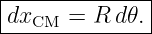
For a circular body of radius R rolling on a stationary surface without slipping, the kinematic
constraint is
If the rolling direction and angular sign convention are chosen consistently, the signed relation can
be written
Differentiating while the no-slip constraint remains valid gives
The physical meaning of the no-slip condition is especially important:
The contact point is not permanently at rest. A different material point becomes the contact point
as the body rolls.
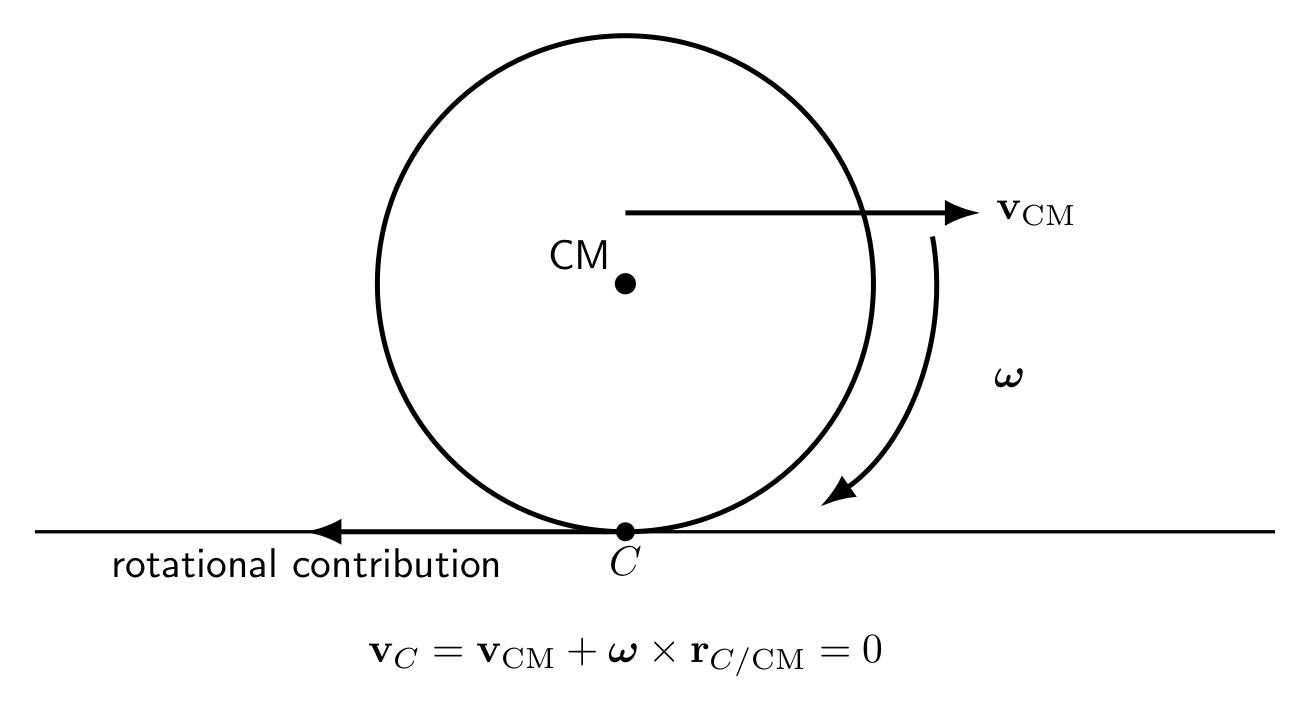
Figure 1. Rolling without slipping combines translation of the center of mass with rotation. For a
wheel moving to the right, the rotational velocity of the contact point cancels the translational
velocity, giving zero instantaneous contact velocity.
1 Translation plus rotation
Let the center of mass have velocity
For any material point P on the rigid body,
where
is the position of P relative to the center of mass.
This equation separates:
- translation of the body as a whole,
- rotation about the center of mass.
Rolling is therefore a special case of general plane rigid body motion.
2 Derivation of the no-slip velocity constraint
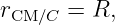
Consider a wheel of radius R rolling to the right on a stationary horizontal surface.
At the contact point C,
For clockwise rolling,
when ω denotes the positive magnitude.
The contact-point velocity is
| vC | = vCM + ω × rC∕CM | (10)
|
| = vCMex + (−ωez) × (−Rey). | (11) |
Because
Rolling without slipping requires
Therefore
3 Arc-length interpretation
The same relation can be obtained geometrically.
If the wheel rotates through angle
the length of rim that rolls onto the surface is
Without slipping, the center of mass advances by exactly this amount:
Thus
Integrating,
when the rolling constraint holds continuously and the signs are chosen consistently.
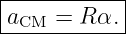
Differentiate once:
Differentiate again:
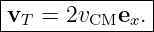
4 Speeds of points on a rolling wheel
For a wheel rolling right without slipping at center of mass speed vCM:
- the center moves at vCM,
- the instantaneous contact point has speed 0,
- the top point has speed 2vCM.
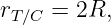
At the top point T,
Then
Therefore
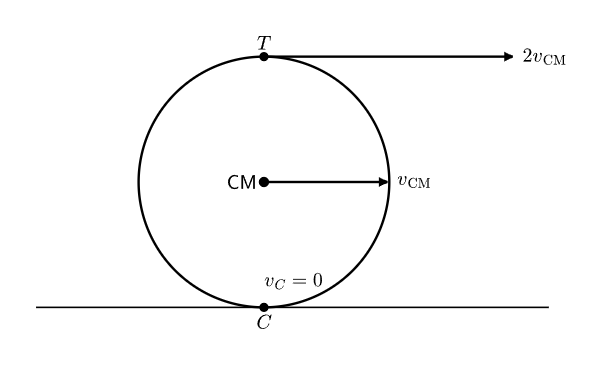
Figure 2. In pure rolling on a stationary surface, the contact point has zero instantaneous speed,
the center of mass has speed vCM, and the top point has speed 2vCM.
5 Velocity of an arbitrary rim point
Let a rim point be located at
relative to the center.
For clockwise rolling,
Then
| ω × r | = −ωR![[cos ψ(ez × ex) + sin ψ(ez × ey)]](https://images.physicslibrary.org/cache/objects/1476/make4ht/RollingWithoutSlipping25x.png) | (28)
|
| = −ωR![[cos ψ ey − sin ψex ]](https://images.physicslibrary.org/cache/objects/1476/make4ht/RollingWithoutSlipping26x.png) . . | (29) |
Using
This velocity field produces the cycloidal motion of a marked point on the rim.
6 The contact point has zero velocity, not zero acceleration
A common mistake is to conclude that because
the contact point also has
That is false.
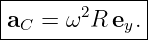
For a rigid body,
At the contact point of a wheel rolling right,
For no-slip acceleration,
in magnitude.
The translational and tangential rotational acceleration terms cancel horizontally at the contact
point.
The Normal rotational acceleration remains upward:
Thus the instantaneous contact point can have zero velocity and nonzero acceleration.
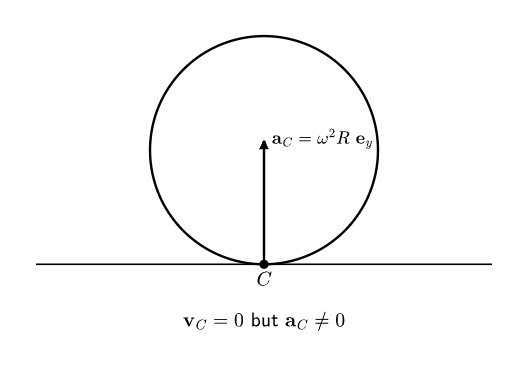
Figure 3. The contact point of a purely rolling wheel is instantaneously at rest, but it generally
has nonzero acceleration. For horizontal rolling, the remaining contact-point acceleration is
upward with magnitude ω2R.
7 Instantaneous center of zero velocity
In planar rolling without slipping, the contact point is an instantaneous center of zero
velocity.
At that instant, the velocity of any point can be written as though the body were rotating about
the contact point:
For the center of mass,
so
For the top point,
so
This is a kinematic construction.
The contact point is not a permanently fixed pivot, and it generally has nonzero acceleration.
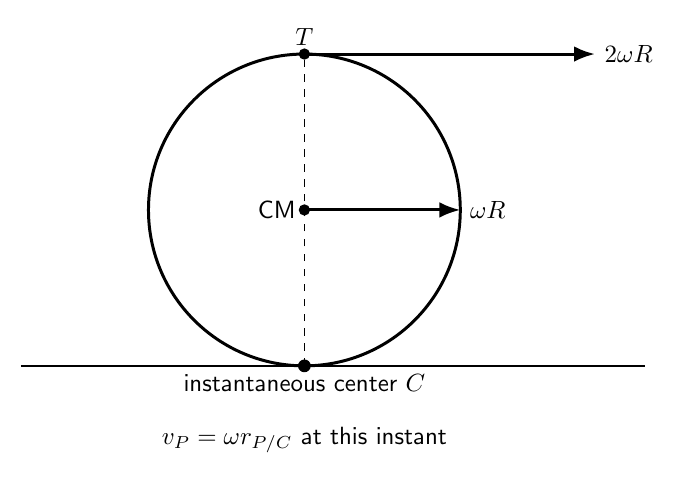
Figure 4. At one instant of pure rolling, the contact point is the instantaneous center of zero
velocity. Point speeds equal ω times their instantaneous distance from the contact point.
8 Kinetic energy of a rolling rigid body
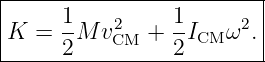
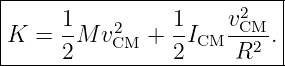
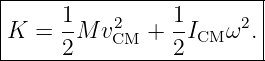
For general plane motion,
For rolling without slipping,
Therefore
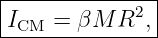
Write
where β is a dimensionless shape factor.
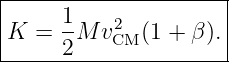
Then
Examples include
| βhoop | = 1, | (48)
|
| βdisk | =  , , | (49)
|
| βsolid sphere | =  . . | (50) |
9 Kinetic energy about the instantaneous contact point
The parallel-axis theorem gives
Then
 ICω2 ICω2 | =  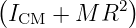 ω2 ω2 | (52)
|
| =  ICMω2 + ICMω2 +  MvCM2. MvCM2. | (53) |
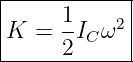
Thus, algebraically,
for pure rolling.
This is useful as an instantaneous energy representation.
It does not mean the wheel is dynamically equivalent to a body rotating about a permanently fixed
contact pivot.
10 Why static friction can produce rolling
A contact force is required whenever the translational and rotational dynamics would otherwise
violate
If there is no slipping, the Friction is static friction.
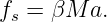
Static friction obeys
Its magnitude is determined by the equations of motion, up to the maximum value
It is not automatically equal to
11 Static friction does not necessarily oppose center of mass motion
Friction opposes relative slipping or the tendency to slip at the contact.
It does not necessarily point opposite the center of mass velocity.
Depending on how forces and torques are applied, static friction can point:
- forward,
- backward,
- or be zero.
The direction must be determined from the dynamics.
12 Rolling down an incline
Consider a rigid body of mass M, radius R, and
rolling down an incline of angle 𝜃 without slipping.
Take positive direction down the incline.
Translation gives
Static friction acts uphill for this freely rolling symmetric body.
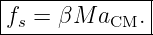
Taking torque about the center of mass,
With the rolling constraint
| fsR | = βMR2 | (63)
|
| = βMRaCM. | (64) |
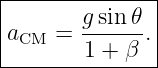
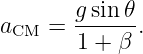
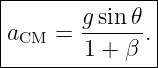
Therefore
Substitute into translation:
Thus
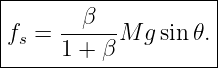
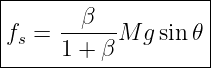
The required static friction is
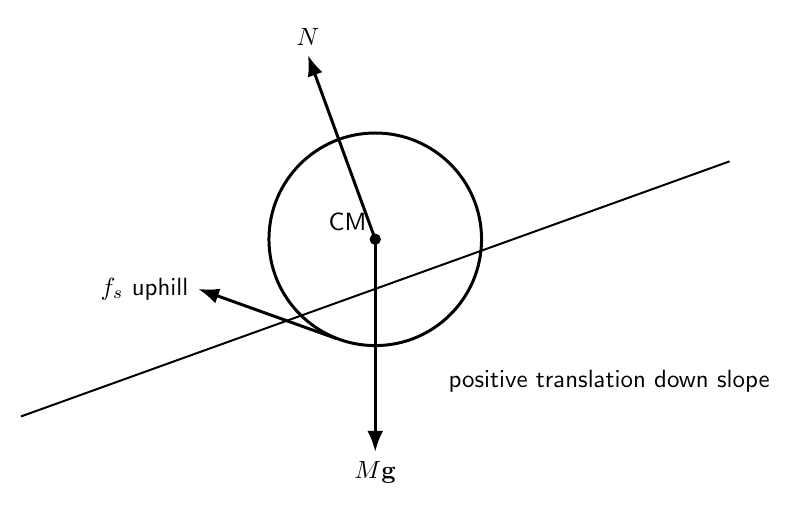
Figure 5. A symmetric body rolling freely down an incline requires uphill static friction to supply
the torque that produces its rotational acceleration.
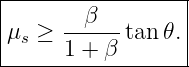
13 Condition for rolling without slipping on an incline
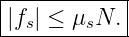
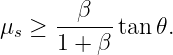
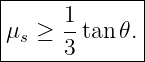
The required static friction must satisfy
Since
the condition becomes
Therefore
If this condition is not satisfied, the body slips and
is no longer valid.
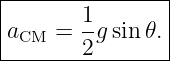
14 Example 1: solid cylinder down an incline
For a uniform solid cylinder,
Therefore
| aCM | =  | (75)
|
| =  g sin 𝜃. g sin 𝜃. | (76) |
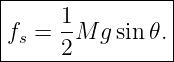
The static friction magnitude is
| fs | =  Mg sin 𝜃 Mg sin 𝜃 | (77)
|
| =  Mg sin 𝜃. Mg sin 𝜃. | (78) |
It acts uphill.
15 Example 2: hoop down an incline
For a thin hoop,
Thus
The required static friction is
Because the hoop has larger Rotational Inertia relative to MR2, more of the gravitational energy
goes into rotation and its translational acceleration is smaller.
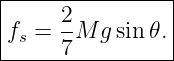
16 Example 3: solid sphere down an incline
For a uniform solid sphere,
Thus
| aCM | =  | (83)
|
| =  g sin 𝜃. g sin 𝜃. | (84) |
The friction magnitude is
17 Which rolling body wins a race?
For bodies rolling without slipping down the same incline,
Thus smaller β gives larger acceleration.
For equal outer radius and starting height:
| βsolid sphere | =  , , | (87)
|
| βdisk | =  , , | (88)
|
| βhoop | = 1. | (89) |
Therefore
The result is independent of mass and radius for geometrically similar ideal bodies.
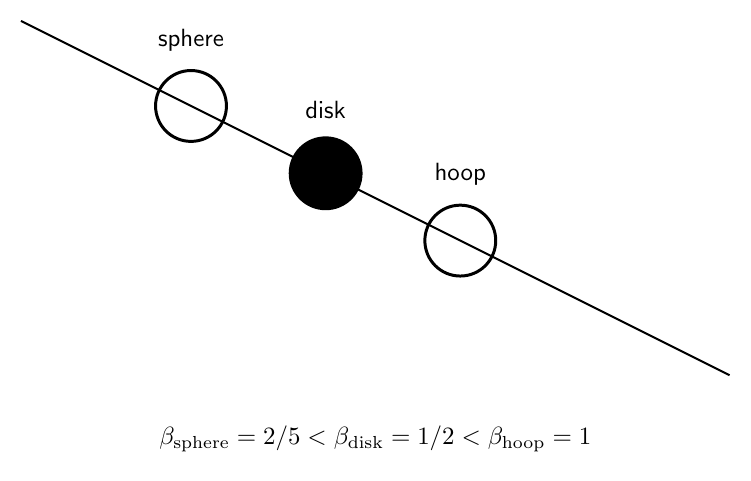
Figure 6. For equal starting conditions on an incline, the body with the smaller dimensionless
inertia factor β = ICM∕(MR2) has the larger translational acceleration.
18 Energy derivation for rolling down a height
Suppose a rigid body starts from rest and rolls without slipping through vertical drop
h.
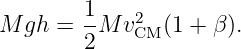
If static friction does no net mechanical work on the ideal stationary contact,
Using
and
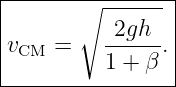
Therefore
This produces the same shape dependence as the force-and-torque method.
19 Does static friction do work in pure rolling?
For an ideal rigid body rolling without slipping on a stationary rigid surface, the instantaneous
material point at contact has
The instantaneous power delivered by the contact friction force is
Therefore
Static friction can exert a torque about the center of mass while doing zero instantaneous work at
the stationary contact point.
This is not a contradiction.
The torque redistributes the mechanical response between translation and rotation while the
gravitational potential energy supplies the total kinetic energy.
20 Force applied through the center of mass
Consider a wheel on a horizontal surface with a horizontal force F applied through its center of
mass.
Without friction, the force would translate the wheel but produce no torque about the center of
mass.
To roll without slipping, static friction must create the required angular acceleration.
For rightward translation, the friction acts backward.
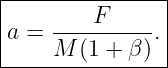
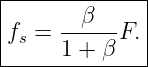
Let
Translation:
Rotation:
With
Therefore
Hence
The static friction magnitude is
21 Applied torque with no horizontal force at the center
Now suppose a clockwise external torque τ is applied to a wheel on a horizontal surface, with no
separate horizontal force through the center.
To roll right without slipping, static friction acts forward and accelerates the center of
mass.
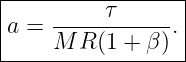
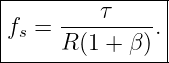
Translation:
Rotation in the clockwise sense:
Use
in magnitude:
Thus
Therefore
The friction magnitude is
It points forward.
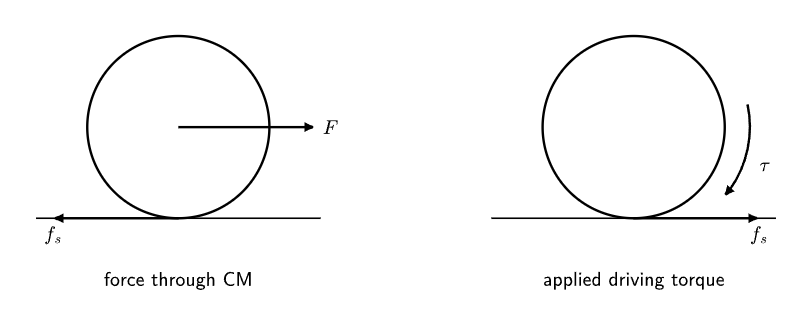
Figure 7. Static friction does not have one universal direction in rolling problems. A force through
the center of mass can require backward friction, while an applied driving torque can require
forward friction.
22 When slipping begins
The no-slip condition requires that the needed static friction not exceed its maximum
magnitude:
If the required friction exceeds this value, the contact begins to slip.
Then:
- kinetic friction generally applies,
- vCM = Rω is no longer valid,
- aCM = Rα is no longer valid,
- translation and rotation must be solved independently.
23 Slip velocity
For a wheel on a stationary horizontal surface, define the contact-point velocity
The tangential contact velocity relative to the ground measures slipping.
Pure rolling:
Slipping:
Kinetic friction acts opposite the relative sliding velocity at the contact.
This is the correct physical criterion for friction direction during slipping.
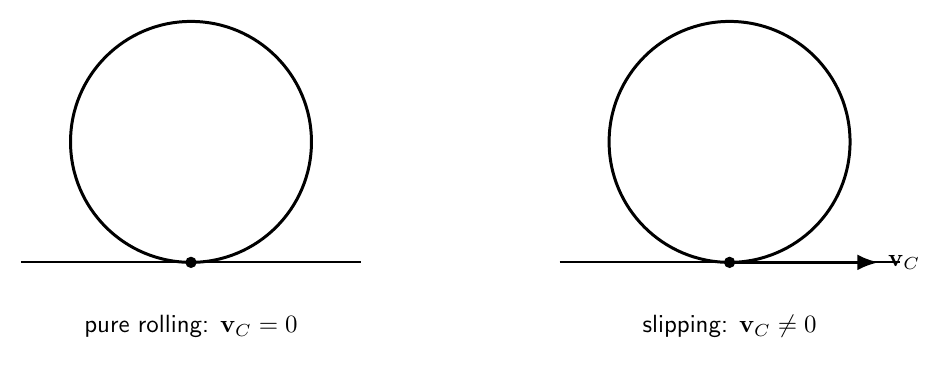
Figure 8. Pure rolling is defined by zero relative velocity at the contact point. During slipping, the
contact point has nonzero tangential velocity relative to the surface and the simple rolling
constraint no longer applies.
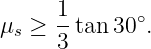
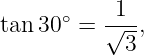
24 Example 4: insufficient friction on an incline
A solid cylinder rolls on an incline of angle 𝜃.
For a solid cylinder,
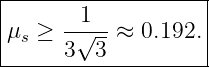
Pure rolling requires
Thus
If
then
Since
If the available coefficient is lower than this value, the cylinder cannot maintain pure
rolling.
25 Rolling resistance
Real wheels and surfaces deform.
The normal pressure distribution can shift so that the resultant normal force does not pass exactly
through the geometric contact directly below the center.
This produces a small resisting torque commonly called rolling resistance.
Rolling resistance is different from the ideal static friction responsible for maintaining a no-slip
constraint.
In the ideal rigid body model:
In real systems, deformation and hysteresis can dissipate mechanical energy.
26 Rolling on a moving surface
If the supporting surface itself moves, the contact condition is not
Instead,
for no slipping.
Thus the general rolling condition is equality of contact-point velocities, not necessarily zero
contact velocity.
27 Angular momentum about the contact point
At an instant of pure rolling,
It can be useful to express angular momentum about C.
For planar motion,
with
However, because the contact point changes with time and is generally accelerating, torque
equations about the instantaneous contact point must be used with care.
The safe general dynamics equations are:
and
for planar rigid body motion.
28 A note on signs
Rolling problems are especially vulnerable to sign errors because translation and rotation can have
opposite conventional signs.
For a wheel rolling right:
It is often simplest to:
- use vectors explicitly, or
- define a positive rolling angular variable whose magnitude is positive for the actual
rolling sense.
Never insert
without first deciding whether ω means a signed vector component or a positive rolling
magnitude.
29 Common mistakes
- Assuming rolling without slipping means the entire wheel is instantaneously at rest.
- Forgetting that only the contact point has zero instantaneous velocity on a stationary
surface.
- Assuming the contact point has zero acceleration because its velocity is zero.
- Applying vCM = Rω when slipping occurs.
- Applying aCM = Rα after the no-slip constraint has failed.
- Treating static friction as always equal to μsN.
- Assuming static friction always points opposite the center of mass velocity.
- Assuming static friction always does negative work.
- Forgetting the rotational kinetic-energy term.
- Comparing rolling bodies using only their masses and ignoring ICM∕(MR2).
- Using a fixed-axis energy formula without including center of mass translation.
- Treating the instantaneous contact point as a permanently fixed pivot.
- Using torque about an accelerating contact point as though it were automatically an
inertial fixed origin.
- Confusing rolling resistance with ideal static friction.
- Forgetting that the general no-slip condition on a moving surface requires equal contact
velocities, not zero contact velocity.
30 Practice exercises
- Derive the condition vCM = Rω from the velocity of the contact point.
- Derive ΔxCM = RΔ𝜃 using the arc-length interpretation of rolling.
- Show that the top point of a rolling wheel has speed 2vCM.
- Derive the velocity components of an arbitrary point on the rim.
- Show that the contact point can have zero velocity while its acceleration is nonzero.
- Prove that for horizontal pure rolling the contact-point acceleration has upward
magnitude ω2R.
- Show that the contact point is an instantaneous center of zero velocity.
- Starting from K =
 MvCM2 +
  ICMω2, derive K =
  MvCM2(1 + β).
- Derive the acceleration of a body with ICM = βMR2 rolling down an incline.
- Derive the minimum coefficient of static friction required for pure rolling down an
incline.
- Compare the accelerations of a hoop, uniform disk, and solid sphere rolling down the
same incline.
- Use energy conservation to derive the speed after rolling through vertical drop h.
- A horizontal force is applied through the center of a wheel. Determine the required
static-friction direction and derive the acceleration.
- A clockwise torque is applied to a wheel on a horizontal surface. Determine the
static-friction direction required for rightward rolling.
- Explain how the equations must change once the wheel begins to slip.
31 Summary
For a rigid body,
Pure rolling on a stationary surface requires
For a circular body,
| vCM = Rω, | | (136)
|
| aCM = Rα | | (137) |
in consistent rolling magnitudes.
The rolling kinetic energy is
For
a body rolling down an incline has
The required static friction is
for the freely rolling symmetric body considered here.
Static friction enforces the rolling constraint, but its direction depends on the full dynamics.
M05-08 extends these ideas beyond circular rolling into General Plane Motion of a Rigid
Body.
References
References
[1] J. R. Taylor, Classical Mechanics, University Science Books, 2005.
[2] D. Kleppner and R. Kolenkow, An Introduction to Mechanics, 2nd ed., Cambridge
University Press, 2014.
[3] K. R. Symon, Mechanics, 3rd ed., Addison-Wesley, 1971.
[4] OpenStax, University Physics, Volume 1, Rice University, 2016.
























![|----------------------------------|
|v = vCM [(1 + sin ψ)ex − cos ψ ey].|
-----------------------------------](https://images.physicslibrary.org/cache/objects/1476/make4ht/RollingWithoutSlipping28x.png)