E01: Electric Charge, Electric Potential, and Voltage
Foundations of Electricity and Electrical Measurement, mini-lecture 1.
A voltmeter has two leads. It compares two points and displays a number in volts. To
understand that simple measurement, we need three distinct ideas: Electric Charge,
electric potential energy, and electric potential. The distinction is important because the
voltage between two points is not the same as the energy possessed by one particular
charge.
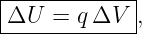
The central relationship is
where ΔU is the change of electrostatic potential energy of a test charge q moved between two
points, and ΔV is the potential difference between those points. This relationship applies to a fixed
test charge in a prescribed electrostatic field.
Learning objectives
After this lecture, the reader should be able to:
- distinguish positive and negative charge and convert coulombs into numbers of
elementary charges;
- explain why electric potential energy depends on the chosen charge, while electric
potential describes the electric environment;
- calculate changes in energy from voltage, including the sign;
- derive the potential difference from the electric work integral;
- predict the direction of electric-field force on positive and negative charges;
- explain why a voltmeter has two leads and why a voltage requires a reference point;
- interpret battery terminal voltage and separate it from an ideal source model.
1 Electric charge
Electric charge is a property of matter that determines its electric interactions. There are two
signs, positive and negative. Protons carry positive elementary charge, electrons carry negative
elementary charge, and neutrons are electrically neutral.
The elementary charge is defined exactly in the SI system as
An electron has charge −e and a proton has charge +e.
For a macroscopic object whose net charge is due to an imbalance of elementary charges, we may
write
where n is an integer that may be positive or negative. This form describes the net charge of
ordinary objects made from charged particles. The coulomb, written C, is the SI unit of
charge.
An object with charge −3e has three more electrons than needed for an electrically neutral object
of the same composition. A positive charge need not mean that protons moved: a solid can become
positively charged by losing electrons.
Charge conservation
Electric charge is conserved. In a closed system the algebraic total charge cannot change merely
because charge moves from one object to another. Rubbing, contact, and electrostatic induction
redistribute charge; they do not create net charge. E02 will connect this principle to the current at
a circuit junction.
How charge interacts
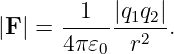
For two stationary point charges separated by distance r in vacuum, Coulomb’s law gives the force
magnitude
Like charges repel and opposite charges attract. This force can do work when charges move. The
work provides the connection to electric potential energy.
2 From mechanical work to electric potential energy
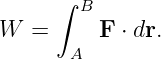
Recall the mechanical definition of work:
For an electrostatic field, the electric force is conservative. We can therefore define an electric
potential energy U such that
This is the same sign convention used with gravitational potential energy: if a conservative force
does positive work on a particle, its associated potential energy decreases.
The magnitude and sign of the energy change depend on which charge is moved. For
example, a charge twice as large experiences twice the force at the same point in a
prescribed field and therefore has twice the change in potential energy between two fixed
locations.
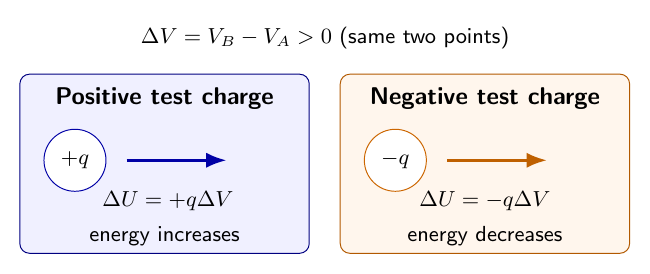
Figure 1. For the same electrostatic potential difference, the energy change depends on the sign
and magnitude of the test charge.
3 Electric potential: energy per unit charge
To describe the electric environment independently of the charge we use to probe it, we define an
electric potential difference by
The ratio is independent of the small test charge q, provided that the test charge does not
appreciably disturb the charges creating the field.
The electric potential V at a point is potential energy per unit charge, relative to a chosen
reference:
when the same zero of potential energy is used consistently. More generally, it is the potential
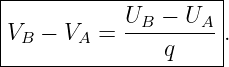
difference that is directly meaningful:
The SI unit follows immediately:
A potential difference of one volt means a change in electrostatic potential energy of one joule per
coulomb of charge moved between the two locations. It does not mean that every particle acquires
one joule of energy.
The sign matters
Suppose V B − V A = +5 V. Moving a positive +2 μC test charge from A to B changes its
potential energy by
| ΔU | = qΔV, | (11)
|
| =  2 × 10⁻⁶ C  (5 J∕C), | (12)
|
| = +1.0 × 10⁻⁵ J. | (13) |
The energy has increased by 10 μJ. For a negative −2 μC charge taking the same path in the
same fixed field,
The potential difference has not changed. The sign of the moving charge changes the sign of its
energy change.
4 Electric fields and voltage
An electric field is defined through the force on a small positive test charge:
For a stationary test charge in an electrostatic field,
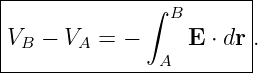
Combining this with dU = −dWelectric and dU = q dV yields
Cancel the nonzero test charge:
After integration,
This is the fundamental connection between an electrostatic field and a voltage difference.
Along a displacement parallel to the electric field, potential decreases. A positive test charge
accelerates in the field direction if no other forces oppose it. A negative test charge feels a force
opposite the field and may move toward higher potential while its potential energy
decreases.
Uniform-field example: parallel plates
Consider two large, oppositely charged parallel plates separated by d. Far from their edges, the
field can be treated approximately as uniform:
If A is on the left and B on the right, with separation d in the field direction, then
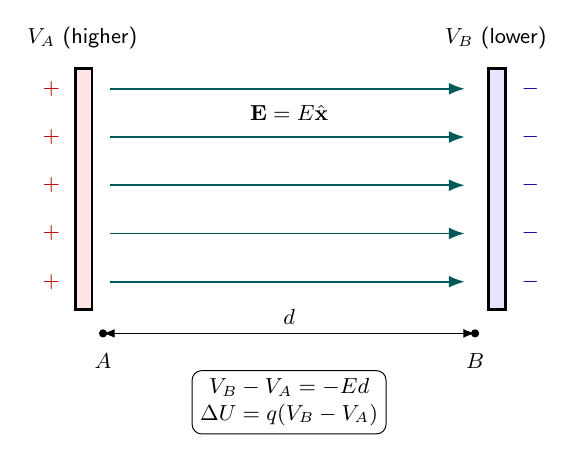
Figure 2. Between idealized parallel plates, the electric field points from the positive plate to
the negative plate, while the electric potential decreases in that direction. The uniform-field
approximation is best away from plate edges.
As an example, for E = 200 V∕m and d = 0.050 m,
A positive 2 nC charge moving from A to B changes its potential energy by
| ΔU | = qΔV, | (23)
|
| = (2 × 10⁻⁹)(−10) J, | (24)
|
| = −2.0 × 10⁻⁸ J. | (25) |
The field does +20 nJ of work on the charge.
Scope of the electrostatic formula
The line integral above is path independent when the electric field is electrostatic. In more general
situations, changing magnetic flux can produce electric fields for which the integral around a closed
path is not zero. A single-valued scalar potential alone then does not describe the entire
electric field. We will revisit that distinction in the induction and electromagnetic-wave
laboratories.
5 Potential near a point charge
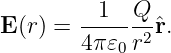
Outside a stationary point charge Q in vacuum, Coulomb’s law gives the radial electric
field
Choose V (∞) = 0. From the potential integral,
| V (r) − V (∞) | = −∫
∞r  ds, | (27)
|
| =   . | (28) |
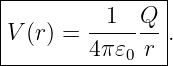
Thus
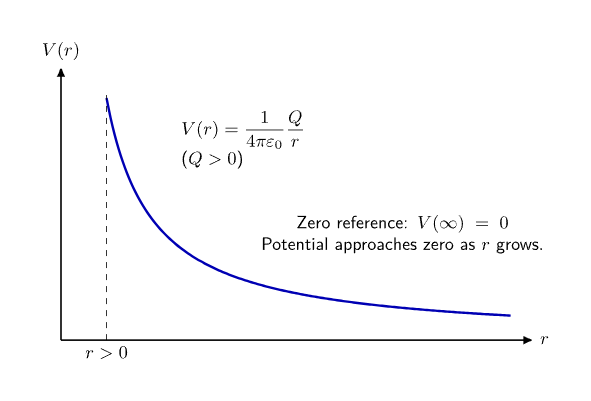
Figure 3. Electric potential versus distance from a positive point charge when the potential is
defined to be zero at infinity. The magnitude decreases with distance.
This is a simple example where the absolute numerical value of V becomes meaningful only after
we state a chosen reference. For an extended circuit with a selected reference node, we usually set
that node to 0 V instead of using infinity.
6 Voltage means a difference between two points
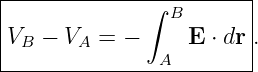
The expression voltage at point A is shorthand. A voltage must be relative to another point or
reference. Define
A voltmeter with its red lead connected to A and its black lead connected to B ideally displays
V AB.
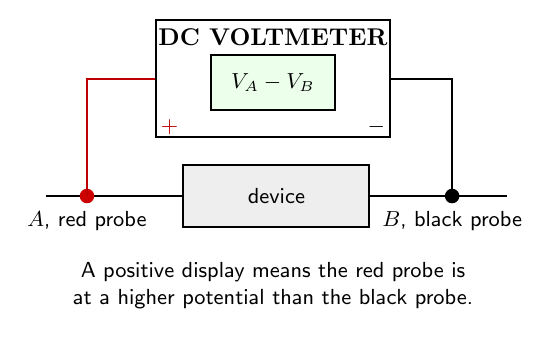
Figure 4. A voltmeter reports the electric potential of its red probe relative to its black probe.
Reversing the leads reverses the displayed sign.
Suppose V A = +4.0 V and V B = +1.5 V relative to a chosen reference. Then
Swapping the voltmeter leads produces
The circuit has not changed; only the order of the comparison changed.
Reference potential and circuit ground
We may add the same constant C to all potentials without changing any potential difference:
That freedom is why one node is often designated ground or 0 V in a circuit diagram.
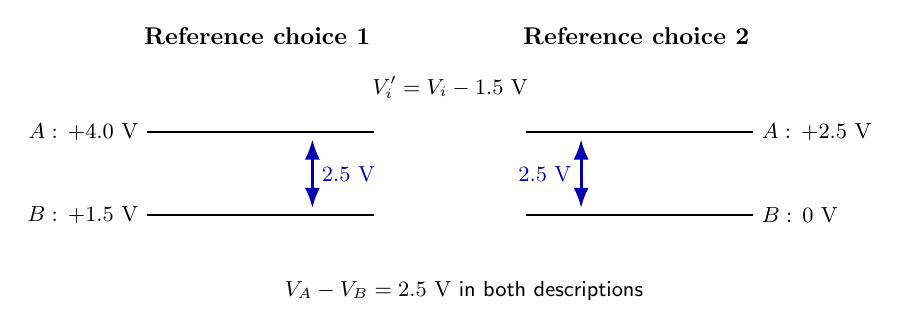
Figure 5. Adding the same constant to every node potential changes the numerical labels but
leaves all measured voltage differences unchanged.
A reference node is not automatically a physical connection to Earth. Protective Earth, chassis
ground, and signal reference are different concepts, even though some instruments connect them
internally. The practical wiring and safety implications are covered in E05, E13, and
EDL01.
7 Batteries and terminal voltage
A battery uses chemical processes to separate charge and maintain a potential difference between
its terminals. The source provides energy per unit charge to charges moving through it via
nonelectrostatic forces. This energy per unit charge is the battery’s electromotive force, often
represented by ℰ and measured in volts. Despite its name, electromotive force is not a mechanical
force measured in newtons.
For a simple battery model with internal resistance r, delivering a positive current I to an external
load,
When I ≈ 0 and the battery is approximately at equilibrium, the terminal voltage is often close to
ℰ. Under load, the terminal voltage can be smaller. Real batteries may have more complicated
behavior, but the simple model is useful for our first measurements.
An ideal voltage source maintains its specified terminal voltage regardless of current. A real
battery and a real function generator are not perfect ideal sources. E08 develops their circuit
models.
What the voltmeter measures
A digital multimeter set to DC voltage mode estimates the potential difference between its input
terminals. It is normally connected in parallel with the two points being compared. A
practical voltmeter has finite input resistance, so it draws a small current and can alter the
potential difference it is trying to measure. E09 and E10 quantify that measurement loading
effect.
8 The electronvolt: a unit of energy
A particle with charge magnitude e that undergoes a potential difference of magnitude 1 V has an
energy change of magnitude
We define the electronvolt:
An electronvolt is a unit of energy, not a unit of voltage. It is especially useful when the energies of
individual electrons or ions are much smaller than a joule.
If an electron moves from A to B and V B − V A = +3 V,
If its potential energy decrease becomes kinetic energy without losses, its kinetic energy increases
by 3 eV.
9 A simple EDL01 measurement
Use a battery-operated digital multimeter and a small, low-voltage battery. Never use the current
input for this voltage measurement.
- Set the multimeter to DC voltage mode. Place the black lead in COM and the red lead
in the marked voltage input.
- Touch the red probe to the positive battery terminal and the black probe to the negative
terminal. Record the reading and its polarity.
- Reverse the leads without changing the battery. Record the reading.
- Connect two cells in series using an appropriate holder. Predict the voltage across both
cells from the individual terminal voltages, then measure it.
- Choose a reference terminal as 0 V and label the potentials at the other terminals.
Check differences by direct measurement.
Safety. Use only low-voltage, current-limited or small dry-cell sources. Do not short a battery,
connect a multimeter’s current input across a source, or connect a grounded oscilloscope lead
without checking its ground connections. Avoid mains wiring and energized Power equipment in
this introductory laboratory.
10 Worked example: energy and polarity
A charge of q = −4.0 μC moves from point A to B, where
Find the change in the charge’s electrostatic potential energy and the work done by the electric
force.
Step 1: Determine the potential difference.
Step 2: Apply the energy relation.
| ΔU | = qΔV, | (40)
|
| = (−4.0 × 10⁻⁶)(−3.0) J, | (41)
|
| = +12 μJ. | (42) |
Step 3: Relate work to potential energy.
The field does negative work along the stated displacement and the negative charge gains
electrostatic potential energy. No statement about the charge’s actual speed follows without
additional information about other forces and its initial motion.
11 Common misconceptions
- Voltage is not charge. Charge is measured in coulombs; voltage is energy per unit
charge in joules per coulomb.
- Voltage is not energy. A 10 V difference changes the energy of a 1 C charge by
10 J, but changes the energy of a 2 C charge by 20 J.
- Higher potential does not always mean higher potential energy. For a negative
test charge, increasing potential lowers its potential energy.
- Zero volts does not mean zero electric field. A point or node may be labeled
0 V while experiencing a nonzero field.
- Ground is not necessarily Earth. Many isolated battery circuits use an arbitrary
local voltage reference.
- A voltmeter is not an ideal observer. Its finite input resistance can load the circuit
and change the displayed voltage.
- EMF is not a force. It represents the work supplied per unit charge by an energy
source in the relevant source model.
12 Concept checks
- If the red and black probes of an ideal voltmeter are reversed, what happens to the
displayed reading?
- Two different charges move between the same points in the same unperturbed
electrostatic field. Which quantity is the same for both: ΔV or ΔU?
- Can an electron lose potential energy while moving toward a point of higher electric
potential?
- Is a circuit node labeled 0 V necessarily connected to physical Earth?
- In what direction does the electrostatic potential change when moving along an electric
field line?
Answers
- The ideal reading changes sign but not magnitude.
- The potential difference is the same; the energy change scales with charge and its sign.
- Yes. Since q = −e, ΔU = qΔV is negative when ΔV > 0.
- No. It may simply be the chosen local reference.
- It decreases, since dV = −E ⋅ dr.
For more numerical practice, see E01E1, Worked Problems in Charge, Potential, and
Voltage.
13 Summary and next step
Electric charge determines how matter responds to an electric field. Electrostatic potential energy
describes the energy of a particular charge in a prescribed field. Electric potential describes the
field’s energy landscape per unit charge.
The defining equations are
and
A voltmeter compares two points, so choosing a reference and reading the polarity correctly are
central measurement skills. In E02 we introduce electric current and show how conservation of
charge constrains current flow through a circuit.
References and learning connections
References
[1] OpenStax, University Physics, Volume 2, chapters on electric charge, electric fields,
and electric potential.
[2] D. J. Griffiths, Introduction to Electrodynamics, sections on electrostatics, potential,
and work.
[3] PhysicsLibrary, E00, Foundations of Electricity and Electrical Measurement: A
Mini-Lecture Roadmap.
[4] PhysicsLibrary, EDL01, Practical Electricity and Measurement for Electrodynamics.