Wave Mechanics Series Overview and Article Guide
The PhysicsLibrary Wave mechanics collection is organized as a progressive self-study path rather
than as a list of disconnected wave formulas. It begins with oscillation at one point, separates
temporal and spatial periodicity, introduces phase, wavelength, Wavenumber, and translating
disturbances, and only then assembles the sinusoidal traveling wave. The sequence next
develops superposition, Standing Waves, resonance, and boundary conditions before
introducing partial derivatives and deriving the one-dimensional string wave equation
from Newton’s second law. The final part of the present volume develops traveling-wave
solutions, initial-value problems, energy, Power, intensity, flux, and Mechanical Wave
Impedance.
The purpose of the ordering is deliberate: the wave equation is something the student earns from
the physics rather than something presented at the beginning without context. By the end of
WM23, the reader should be able to move between kinematics, dynamics, boundary conditions,
PDE solutions, and energy transport within a coherent one-dimensional classical-wave
framework.
1 Article sequence
The main sequence is listed below. The article titles are PhysicsLibrary links.
2 How the articles fit together
The material naturally falls into four stages.
2.1 Stage 1: Build the language of one traveling wave
Begin with WM01 through WM08. These articles deliberately avoid beginning from a partial
differential equation.
WM01 introduces a single time-dependent quantity u(t), equilibrium, amplitude, period, and
frequency. WM02 adds sinusoidal motion and angular frequency,
WM03 develops phase and phase difference. WM04 then makes the parallel move in space by
introducing u(x) and wavelength. WM05 packages spatial phase accumulation into the angular
wavenumber
WM06 introduces shape-preserving translation through F(x−ct) and F(x + ct). WM07 combines
the temporal and spatial pieces into the sinusoidal traveling wave,
for propagation toward increasing x. WM08 closes the kinematic block by deriving
At this point every symbol in the standard traveling-wave equation has been introduced separately
and given a physical interpretation.
2.2 Stage 2: Combine waves and constrain them
WM09 through WM12 develop the consequences of linear superposition and finite boundaries.
WM09 introduces
for a linear wave system. WM10 applies that rule to equal counter-propagating sinusoids and
obtains the standing-wave identity
WM11 distinguishes an allowed normal mode from resonant response to an external
driver. WM12 then makes the physical edge constraints explicit. For the ideal transverse
string,
These conditions control reflection phase and determine the allowed standing-wave spectra of finite
systems.
2.3 Stage 3: From calculus to the wave equation and its solutions
WM13 through WM17 form the mathematical and dynamical core of the first volume.
WM13 interprets
as spatial slope, local time rate, curvature measure, and local acceleration for a transverse string
displacement. WM14 then applies force balance and Newton’s second law to a differential string
element and derives
and therefore
WM15 verifies directly that translated profiles solve the PDE. WM16 develops the two
independent propagation families and the general two-way form
WM17 then uses initial displacement and initial velocity to determine those two families through
the d’Alembert solution,
This completes the whole-line initial-value solution of the ideal one-dimensional wave
equation.
2.4 Stage 4: Energy and transport
WM18 through WM23 develop the energetic side of wave mechanics.
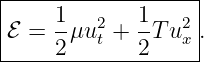
WM18 derives the energy per unit length of an ideal string,
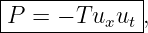
WM19 derives the signed instantaneous power crossing a fixed position,
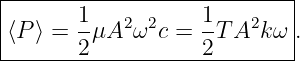
and its associated local conservation law. WM20 specializes to a sinusoidal traveling wave and
obtains
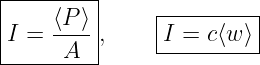
WM21 makes the dimensional transition from one-dimensional power to areal intensity and general
energy flux,
for an ideal nondispersive progressive wave with volume energy density w. WM22 introduces the
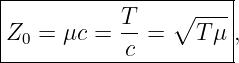
characteristic mechanical impedance of the ideal string,
and uses it to organize reflection and transmission at an interface. WM23 closes the present block
by separating the kinematic notion of amplitude from the energetic quantities that depend on
amplitude, frequency, derivatives, and medium properties.
3 Self-study companions
Every main lesson from WM01 through WM23 has a separate E1 companion containing exercises
followed by complete worked solutions. The convention is
For example, WM08 is the Wave speed lesson and WM08E1 is its exercise-and-solution companion.
The companion entries follow the same notation and physical assumptions as their parent
articles.
The standard structure is:
- Part I: all exercises are stated before any solutions;
- Part II: complete worked solutions are given in the same order;
- common mistakes are identified where they illuminate a recurring conceptual issue;
and
- graphical problems use reproducible TikZ/PGFPlots source with PNG versions for
PhysicsLibrary inclusion.
WM14 also has the additional WM14E2 numerical and conceptual review, which emphasizes
inverse problems, parameter inference, local PDE reasoning, experimental interpretation, and
model validity rather than repeating the Newton-law derivation.
4 Recommended reading paths
4.1 First introduction to waves
A compact introductory route is
This path builds period, frequency, phase, wavelength, wavenumber, translation, the sinusoidal
traveling wave, and wave speed without requiring partial differential equations.
4.2 Wave equation and mathematical physics
For a reader whose main goal is the governing PDE and its solutions, first obtain the basic
language from WM01–WM08 and then emphasize
WM12 supplies the role of boundary and initial data, WM13 supplies the partial-derivative
language, WM14 derives the PDE from mechanics, and WM15–WM17 develop its traveling and
initial-value solutions.
4.3 Standing waves, modes, and resonance
For strings, cavities, structures, and modal reasoning, emphasize
Superposition leads to standing waves; boundaries select allowed patterns; natural frequencies
make resonance possible.
4.4 Energy transport and impedance
For applications involving power flow, measurements, interfaces, acoustics, transmission lines, or
preparation for RF wave concepts, emphasize
This path distinguishes stored energy from transported power, extends power to intensity and flux,
and then introduces impedance and interface matching.
5 Core formula map
The main formulas of WM01–WM23 can be summarized compactly as
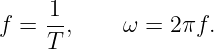
| f | =  , , | ω | = 2πf, | k | =  , , | (23)
|
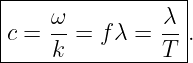
| c | =  = fλ, = fλ, | u | = ∑
iui. | | | (24) |
| u→(x,t) | = F(x − ct), | (25)
|
| u←(x,t) | = G(x + ct), | (26)
|
| ustanding(x,t) | = 2A cos(kx) cos(ωt). | (27) |
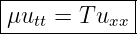
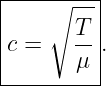
| μutt | = Tuxx, | c | =  , , | (28)
|
| u(x,t) | = F(x − ct) + G(x + ct). | | | (29) |
The d’Alembert solution for whole-line initial data is
The transport formulas are
| ℰ | =  μut2 + μut2 +  Tux2, Tux2, | P | = −Tu
xut, | (31)
|
| ⟨P⟩ | =  μA2ω2c, μA2ω2c, | I | =  , , | (32)
|
| Z0 | = μc =  = =  . . | | | (33) |
This map is a guide, not a substitute for the derivations. In particular, the same symbol A is used
for wave amplitude and, in the intensity definition, area is written explicitly in words or with
context so that the two meanings are not confused.
6 Conceptual relationships that recur throughout the series
Several distinctions are intentionally repeated across multiple lessons.
- Time period and wavelength are different kinds of repetition. T is measured
in time; λ is measured in distance.
- Frequency and wave speed are not the same thing. Frequency describes temporal
cycling. Propagation speed describes motion of a feature through space.
- Angular frequency and wavenumber are phase rates. ω measures radians of
phase per unit time; k measures radians of phase per unit distance.
- A translating pattern is not the same as material transport. A crest can move
along a string while the string elements move mainly transversely.
- Superposition is a property of the linear model. It is not a universal rule for
arbitrary nonlinear waves.
- standing wave does not mean stationary material. nodes are fixed, but material
between nodes generally oscillates.
- A normal mode and a resonance are related but different. A mode is an allowed
free pattern; resonance is a large forced response near a natural frequency.
- Initial conditions and boundary conditions play different roles. Initial
conditions specify how the field starts; boundary conditions constrain the spatial edges.
- The wave equation contains local physics. Global behavior emerges only after
initial and boundary information is supplied.
- Amplitude is not energy. Energy and power depend on derivatives and medium
parameters; A2 scaling is conditional on what else is held fixed.
- Power is signed in one dimension. Positive and negative signs encode the direction
of energy transport.
- Impedance and wave speed are not the same property. For a string, c depends
on the ratio T∕μ, whereas Z0 depends on the product Tμ.
7 Series-wide verification checks
A compact set of checks catches many common mistakes.
- Verify units in every relation. For example, ω∕k must have units of speed.
- Test the sign of x ∓ ct by following a fixed feature rather than memorizing a verbal
rule.
- Distinguish a spatial snapshot u(x,t0) from a time history u(x0,t).
- When using u = A cos(kx ∓ ωt + ϕ), check that the entire phase is dimensionless.
- For the ideal string, verify that T∕μ has dimensions of speed squared.
- Check a proposed solution by computing utt and c2u
xx independently.
- At a fixed boundary verify u = 0; at an ideal free boundary verify ux = 0.
- For a right-moving pure wave verify ut = −cux; for a left-moving pure wave verify
ut = +cux.
- For energy and power, check that energy density has units of J/m and power has units
of W.
- At an ideal lossless impedance junction verify that reflected and transmitted power
fractions sum to one.
These checks are intentionally repetitive. Most wave-mechanics errors are easier to expose with a
sign, unit, limiting-case, or conservation check than with more algebra.
8 Where the series goes next
WM00–WM23 form a complete first volume in one-dimensional classical wave mechanics. The next
natural branch is the frequency-domain description of waves:
That branch can then support Fourier series and transforms, wave packets, phase and group
velocity, dispersion, higher-dimensional wave equations, plane and spherical waves, and ultimately
the bridge to quantum wave mechanics and the Schrödinger equation.
The important point is that those later subjects reuse the structure already established here. The
higher-dimensional and quantum developments should therefore feel like extensions of familiar
wave ideas rather than unrelated collections of formulas.
9 Series references
The individual WM articles contain topic-specific references. The following sources recur
throughout the present volume.
References
[1] A. P. French, Vibrations and Waves, M.I.T. Introductory Physics Series, W. W.
Norton & Company, 1971.
[2] Frank S. Crawford, Jr., Waves, Berkeley Physics Course, Volume 3, McGraw-Hill,
1968.
[3] William Moebs, Samuel J. Ling, and Jeff Sanny, University Physics, Volume 1,
OpenStax, 2016, Chapter 16, “Waves.”
[4] Richard P. Feynman, Robert B. Leighton, and Matthew Sands, The Feynman Lectures
on Physics, Volume I, especially Chapters 47–49 on the wave equation, wave propagation,
and modes.
[5] Massachusetts Institute of Technology, 8.03SC Physics III: Vibrations and Waves,
MIT OpenCourseWare, Fall 2016.
[6] Walter A. Strauss, Partial Differential Equations: An Introduction, 2nd ed., Wiley,
2008.
Summary
The PhysicsLibrary Wave Mechanics sequence WM00–WM23 proceeds from the language of
oscillation and phase to spatial periodicity, traveling waves, superposition, standing waves,
resonance, boundaries, the Newtonian derivation of the string wave equation, its right- and
left-moving solutions, the d’Alembert initial-value solution, and finally energy and power transport
through intensity, flux, and impedance.
A reader who follows the sequence should be able not only to quote standard wave formulas, but
also to explain what each variable means, determine which quantity is being held fixed, derive the
governing relationships from physical assumptions, verify signs and units, distinguish displacement
from energy transport, and connect local wave behavior to global boundary and initial-value
problems.
License
This article is an original synthesis prepared for PhysicsLibrary and intended for release under CC
BY-SA 4.0.








![|----------------------------------------------------|
| 1 1 ∫ x+ct |
|u(x,t) = --[f (x − ct) + f(x + ct)] + --- g (s) ds .
----------2--------------------------2c-x−-ct---------](https://images.physicslibrary.org/cache/objects/1195/make4ht/WaveMechanicsSeriesOverviewAndArticleGuide11x.png)





![|----------------------------------------------------|
| 1 1 ∫ x+ct |
|u(x,t) = --[f (x − ct) + f(x + ct)] + --- g (s) ds .
----------2--------------------------2c-x−-ct---------](https://images.physicslibrary.org/cache/objects/1195/make4ht/WaveMechanicsSeriesOverviewAndArticleGuide26x.png)
