Angular Momentum, Areal Velocity, and Kepler’s Second Law
Kepler’s second law states that the line from an orbiting body to the attracting center sweeps out
equal areas in equal times.
In modern mechanics, this law follows directly from conservation of angular momentum.
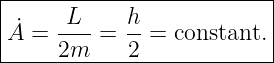
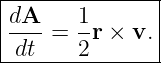
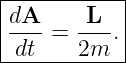
The essential chain is
The result is more general than Newtonian gravity.
Any motion governed by a central force has constant areal velocity about the force
center.
1 Central force and zero torque
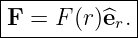
A central force has the form
The force is parallel or antiparallel to the position vector
The torque about the force center is therefore
Angular momentum obeys
Hence
and
2 Planarity of central force motion
For a particle,
The vector
is perpendicular to both
and
If
is constant in direction, the position and velocity remain in one fixed plane perpendicular
to
Thus nonradial central force motion is planar.
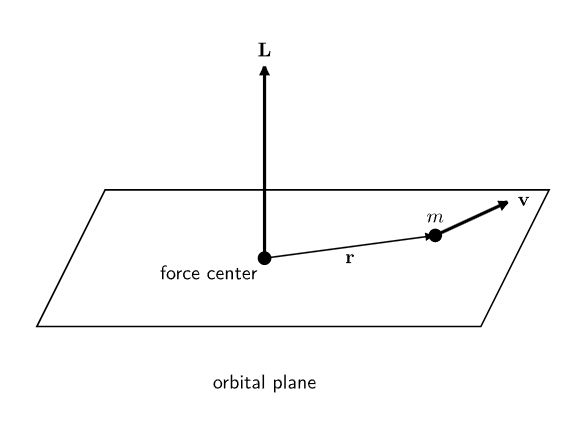
Figure 1. For central force motion, the constant angular-momentum vector is perpendicular to the
orbital plane. The position and velocity vectors remain in that plane.
3 Angular momentum in polar coordinates
In the orbital plane,
Then
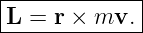
| L | = mr × v | (16)
|
| = m × 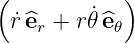 . | (17) |
The radial term vanishes because
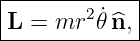
Therefore
where
is the fixed unit Normal to the orbital plane.
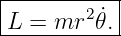
The magnitude is
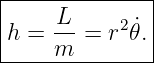
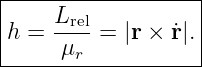
Define specific angular momentum
4 The infinitesimal swept area
During a small time interval
the radius vector changes by
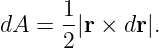
The small triangle swept by the radius vector has area
Since
| dA | =  |r × v|dt. | (27) |
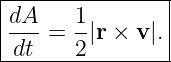
Thus
Because
we obtain
Equivalently,
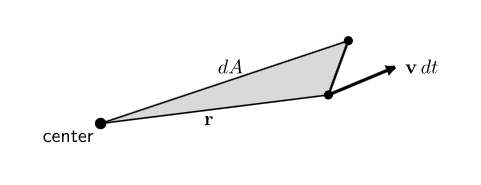
Figure 2. In time dt, the radius vector sweeps an infinitesimal triangular area dA =  |r × v|dt.
5 Areal velocity
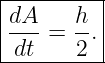
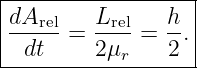
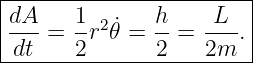
The quantity
is called the areal velocity.
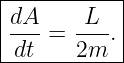
For central force motion,
is constant, so
The units are
This is the modern mechanical statement of Kepler’s second law.
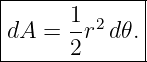
6 Areal velocity in polar coordinates
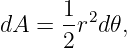
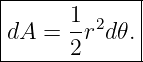
A small sector of radius
and angle
has area
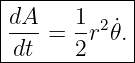
Divide by
Since
this again gives
7 Vector form of areal velocity
A signed area vector can be defined perpendicular to the orbital plane:
Using
Thus both the magnitude and direction of the areal-velocity vector are constant in a central
force.
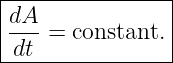
8 Kepler’s second law
Because
is constant,
Therefore equal time intervals produce equal swept areas:
This is Kepler’s second law:
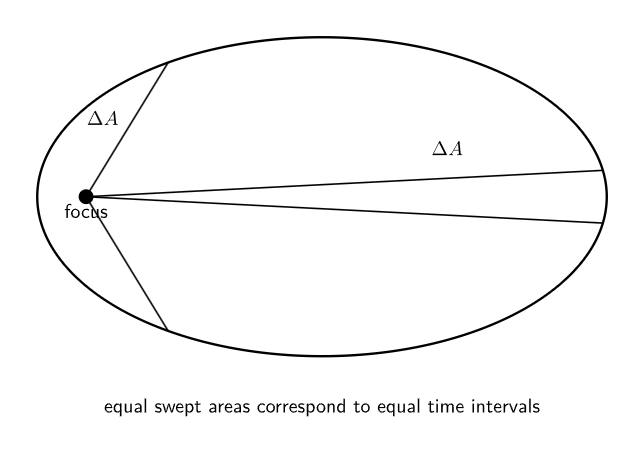
Figure 3. Equal time intervals correspond to equal swept areas. Near periapsis the body traverses
a longer arc in the same time because the radius is smaller and the angular rate is larger.
9 Why the body moves faster near periapsis
Specific angular momentum is
Therefore
When
is small,
is large.
When
is large,
is smaller.
Thus equal area does not mean equal angular displacement.
It also does not mean equal arc length.
10 Tangential speed and angular momentum
The transverse component of velocity is
Using
At smaller radius, the transverse speed required by fixed angular momentum is larger.
This is the same angular-momentum effect that produced the small-radius barrier in
M07-06.
11 Periapsis and apoapsis
At a radial turning point,
Therefore the velocity is purely transverse:
At periapsis,
At apoapsis,
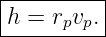
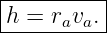
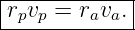
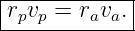
Hence
Thus
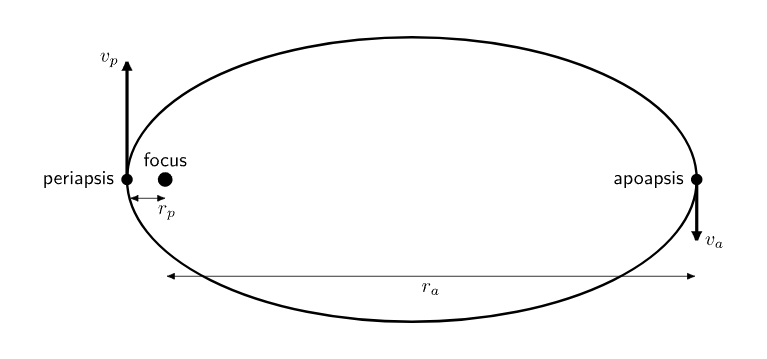
Figure 4. At periapsis and apoapsis the radial velocity vanishes, so angular-momentum
conservation gives rpvp = rava.
12 Example 1: apsidal speed ratio
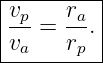
Suppose
Then
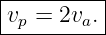
Therefore
The body moves twice as fast at periapsis as at apoapsis.
This statement follows from angular momentum alone.
13 Example 2: areal velocity in a circular Earth orbit
Consider a circular orbit at
around Earth.
Using
the circular speed is
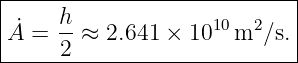
The specific angular momentum is
| h | = rvcirc | (71)
|
| ≈ 5.282 × 10¹⁰ m2∕s. | (72) |
Therefore the areal velocity is
14 Circular-orbit check using total area
For a circle,
Since
the orbital period is
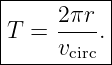
| T | =  | (76)
|
| =  . | (77) |
For a circular orbit,
so
Thus the area-law description reproduces the familiar circumference-over-speed result.
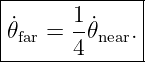
15 Angular rate versus radius
Since
the angular rate scales as
along one orbit with fixed
If the radius at one point is twice the radius at another,
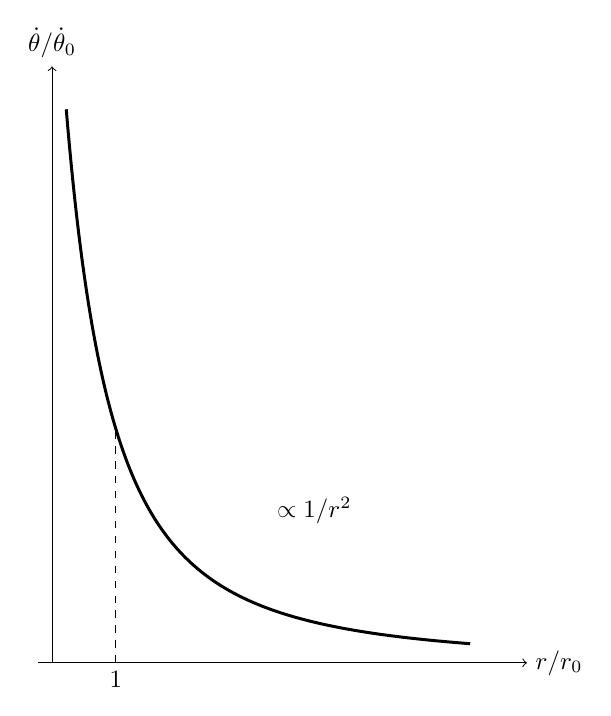
Figure 5. For fixed specific angular momentum, the instantaneous angular rate varies as 1∕r2. A
larger orbital radius therefore corresponds to slower angular sweep.
16 Equal areas do not require an ellipse
The derivation used only
It did not use the inverse-square form
Therefore
The inverse-square gravitational law is needed for the specific conic shapes of Keplerian
trajectories, not for the area law itself.
This distinction is important:
- central force gives Kepler’s second-law structure,
- inverse-square central force gives the Keplerian conic orbit.
17 Historical interpretation
Kepler inferred the equal-areas law from astronomical observations before Newtonian mechanics
existed.
Newton’s mechanics later explained why the law follows from a central gravitational
force.
In modern language:
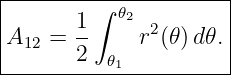
18 Finite-area integration
Because
the area swept as the orbit moves from
to
is
The elapsed time is
Once
is known, the area law can therefore be used to relate orbital position and elapsed time.
The orbit equation will be developed in M07-08.
19 Period from the area law
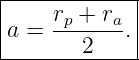
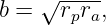
Suppose a bound orbit is known to be an ellipse with semimajor axis
and semiminor axis
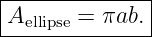
Its total area is
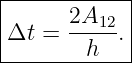
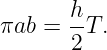
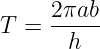
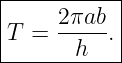
One full orbital period sweeps the entire ellipse, so
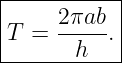
Therefore
This is a purely area-law relation.
Additional gravitational dynamics are needed to express
in terms of
and the central mass.
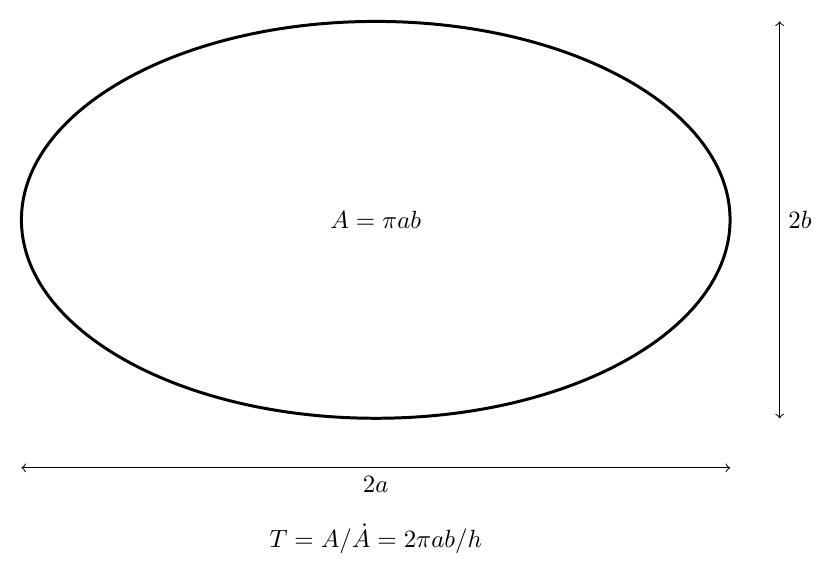
Figure 6. Over one full period an elliptical orbit sweeps its entire area πab. Constant areal
velocity therefore gives T = 2πab∕h.
20 Connection to Kepler’s third law
The area law by itself gives
For Newtonian inverse-square gravity, the conic-orbit dynamics will later give a relation
among
Combining those results leads to Kepler’s third law:
We postpone that derivation until the orbital conic has been established.
21 Exact two-body relative motion
For two finite masses
and
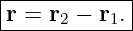
define the relative position
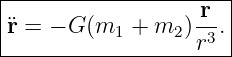
The relative equation of motion is central:
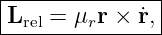
The relative angular momentum is
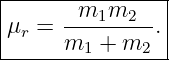
where the reduced mass is
Since the relative force is central,
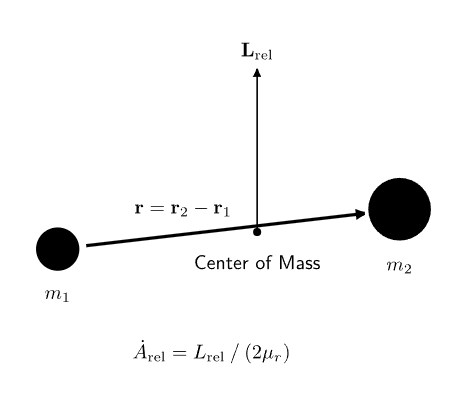
Figure 7. In the exact two-body problem, the relative position vector obeys a central equation. Its
constant relative angular momentum produces constant relative areal velocity.
22 Relative areal velocity
Define the specific relative angular momentum
Then the area swept by the relative position vector obeys
Thus Kepler’s second law applies exactly to the relative orbit of the two-body problem.
The approximation of a small body orbiting a fixed massive body is obtained when one mass is
much larger than the other.
23 Each body about the Center of Mass
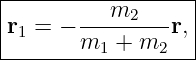
In the center of mass frame,
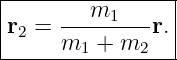
The positions of the two bodies are proportional to the relative vector:
and
Each body therefore sweeps area at a constant rate about the Center of Mass as well.
The two rates differ because the orbital sizes differ.
24 Example 3: continuing the M07-06 Earth orbit
M07-06 considered a turning point at
with purely tangential speed
The specific angular momentum is
| h | = rpvp | (118)
|
| = 5.60 × 10¹⁰ m2∕s. | (119) |
Therefore
The other turning radius found in M07-06 was
Angular-momentum conservation gives the apoapsis speed:
| va | =  | (122)
|
| ≈ 6.236 × 10³ m∕s. | (123) |
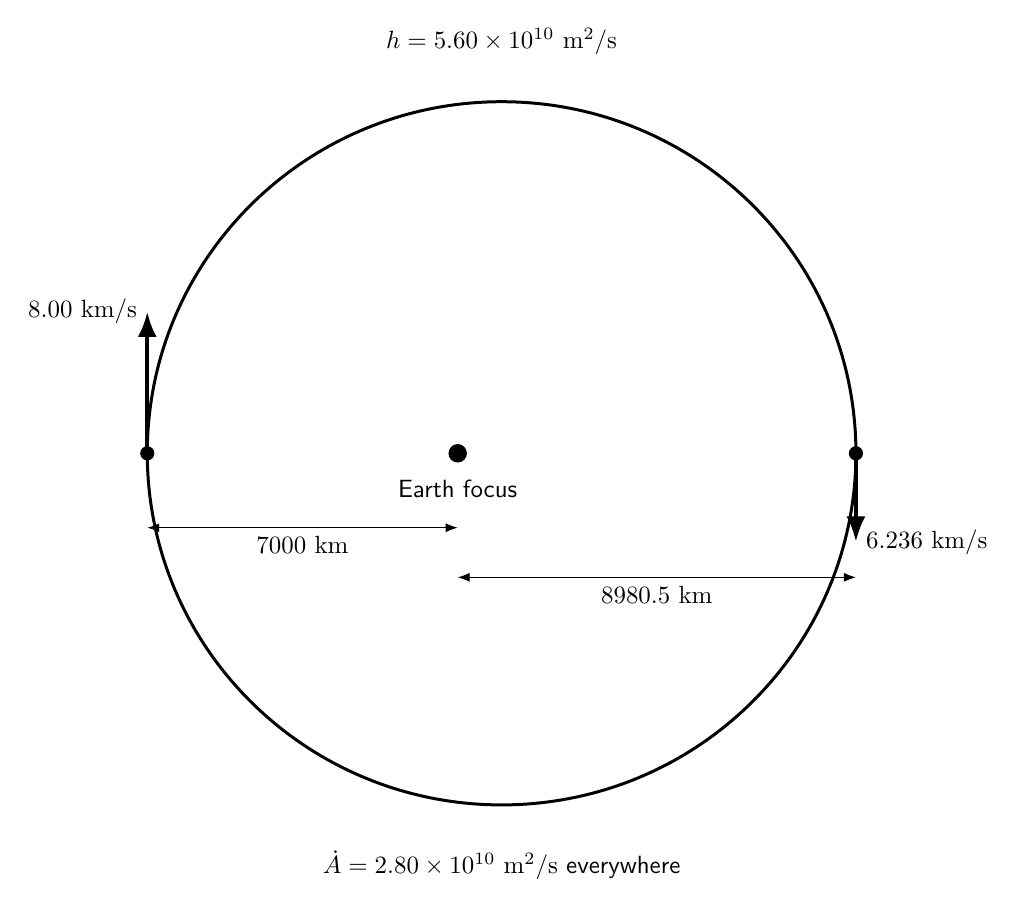
Figure 8. For the M07-06 Earth example, the radius is larger and speed is smaller at apoapsis, but
the product rv𝜃 = h and therefore the areal velocity remain constant.
25 Example 3 continued: orbital area and period
For an ellipse with apsidal radii
and
the semimajor axis is
For the numerical example,
Using the ellipse geometry
we obtain
Then
gives
This is a useful geometric preview of the orbital-period relations developed later.
26 Equal area versus equal distance
Suppose two equal time intervals occur at different radii.
Kepler’s second law requires
It does not require
Near periapsis:
- radius is smaller,
- angular rate is larger,
- tangential speed is larger.
Near apoapsis:
- radius is larger,
- angular rate is smaller,
- tangential speed is smaller.
The changing speed is precisely what preserves equal swept area.
27 Radial motion as a limiting case
If
then
The areal velocity is
The position vector does not sweep area because the motion is entirely along one radial
line.
This is consistent with Kepler’s second law in its angular-momentum form.
28 Common mistakes
- Assuming Kepler’s second law requires an elliptical orbit.
- Forgetting that the law follows from zero torque, not specifically from inverse-square
gravity.
- Confusing angular momentum L with specific angular momentum h.
- Missing the factor 1∕2 in dA =
 r2d𝜃.
- Writing Ȧ = h instead of Ȧ = h∕2.
- Treating equal swept areas as equal arc lengths.
- Treating equal swept areas as equal angular displacements.
- Forgetting that 𝜃 = h∕r2 varies around a noncircular orbit.
- Assuming the orbiting body stops at periapsis or apoapsis.
- Forgetting that rpvp = rava applies because the velocity is transverse at the apsides.
- Applying the apsidal-speed relation at arbitrary points with nonzero radial velocity.
- Assuming planarity without connecting it to the fixed direction of L.
- Confusing the force center with the geometric center of an ellipse.
- Using the test-particle form when exact two-body relative motion is required.
- Forgetting that zero angular momentum gives zero areal velocity.
29 Practice exercises
- Show that a central force produces zero torque about the force center.
- Derive L = mr2𝜃n from the polar-coordinate velocity.
- Derive dA =
 |r × dr|.
- Derive Ȧ = L∕(2m) = h∕2.
- Show that equal time intervals produce equal swept areas.
- Explain why the proof applies to every central force.
- Derive 𝜃 = h∕r2 and explain its orbital meaning.
- Derive rpvp = rava.
- For ra = 3rp, find vp∕va.
- Reproduce the circular-Earth-orbit areal velocity example.
- Derive T = 2πr2∕h for a circular orbit.
- Derive T = 2πab∕h for a known elliptical orbit.
- Derive the exact relative areal velocity for the two-body problem.
- Reproduce the apoapsis speed in the M07-06 Earth example.
- Explain why purely radial motion has zero areal velocity.
30 Summary
For any central force,
and therefore
In planar polar coordinates,
The swept area satisfies
Therefore the areal velocity is
Since angular momentum is conserved,
This is Kepler’s second law.
At periapsis and apoapsis,
For a known ellipse,
Kepler’s second law is therefore the geometric expression of angular-momentum conservation in
central force motion.
References
References
[1] PhysicsLibrary, M07-06, Effective Potential and Radial Motion in Central Gravity.
[2] PhysicsLibrary, M04-08, Conservation of Angular Momentum and Central Force
Motion.
[3] PhysicsLibrary, M01-10, Polar-Coordinate Particle Kinematics.
[4] J. Kepler, Astronomia Nova, 1609.
[5] J. R. Taylor, Classical Mechanics, University Science Books, 2005.