Newton’s Third Law and Conservation of Linear Momentum: Examples and Complete Worked
Solutions
This companion entry develops the connection between Newton’s Third Law and Conservation of
Linear Momentum through worked mechanics problems. The central idea is that internal third-law
forces exchange momentum between parts of a system, while the net external force changes the
momentum of the system as a whole.
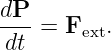
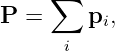
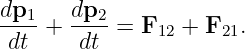
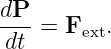
For a system of particles,
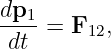
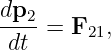
and, when internal forces occur in equal-and-opposite Newtonian pairs,
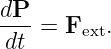
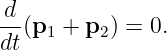
Therefore an isolated system obeys
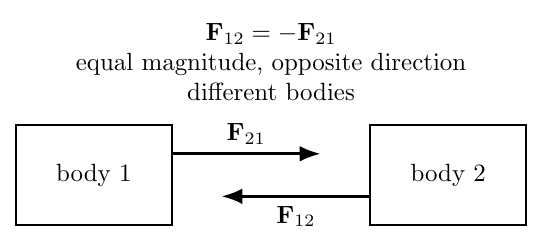
Figure 1. A third-law interaction pair acts on two different bodies. The forces cancel only when
the two bodies are included in the same system momentum balance.
Part I: Exercises
Exercise 1: identify the third-law pair
A person pushes horizontally on a crate with a force of 120 N to the right. State the corresponding
Newton’s-third-law force. On which object does each force act? Explain why the two forces should
not both appear on the crate’s Free-body diagram.
Exercise 2: equal forces do not imply equal accelerations
Two carts of masses
push on one another with an interaction force of magnitude 20 N. Neglect external horizontal
forces. Find the acceleration of each cart and verify that the center of mass has zero horizontal
acceleration.
Exercise 3: derive total momentum conservation for two particles
Particles 1 and 2 interact only with each other. Starting from
and Newton’s third law, derive conservation of total momentum.
Exercise 4: equal and opposite impulse
Two initially stationary carts interact through a constant internal force of magnitude 30 N for
0.40 s. Cart 1 has mass 2.0 kg and cart 2 has mass 3.0 kg. Find the impulse on each cart, the final
velocity of each cart, and the final total momentum.
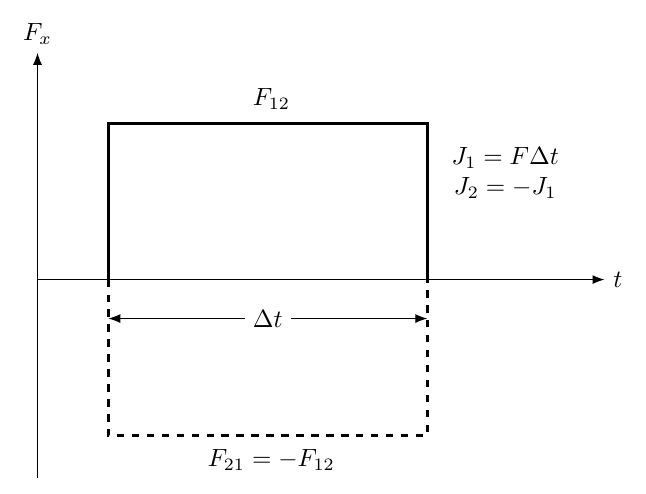
Figure 2. Equal-and-opposite interaction forces produce equal-and-opposite areas under the
force-time curves, and therefore equal-and-opposite impulses.
Exercise 5: two skaters push apart
Two skaters initially rest on nearly frictionless ice. Their masses are
After they push apart, skater 1 moves at 2.0 m∕s to the right. Find the velocity of skater
2.
Exercise 6: recoil as momentum exchange
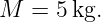
A launcher of mass 4.0 kg is initially at rest and ejects a 0.010 kg projectile horizontally at 400 m∕s
relative to the ground. Neglect external horizontal impulse during the short launch interval. Find
the recoil velocity of the launcher.
Exercise 7: perfectly inelastic collision
A 2.0 kg cart moving at +5.0 m∕s collides with a 3.0 kg cart moving at −1.0 m∕s. The carts stick
together. Find their common final velocity. Is kinetic energy conserved?
Exercise 8: elastic collision and momentum exchange
A 2.0 kg cart moving at 6.0 m∕s collides elastically in one dimension with a stationary 3.0 kg cart.
Find the final velocities and verify conservation of total momentum.
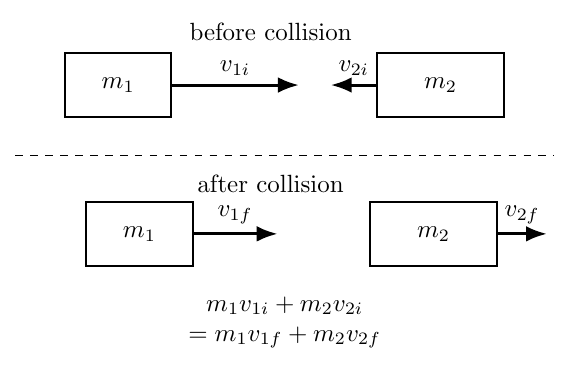
Figure 3. Collision bookkeeping. The interaction forces act during the collision, but for an isolated
two-cart system the total momentum before and after is the same.
Exercise 9: external impulse changes system momentum
A two-cart system has initial total momentum
An external horizontal force of 12 N acts on the system for 0.50 s. Find the external impulse and
final total momentum.
Exercise 10: choosing the system boundary
A ball strikes a massive wall and rebounds. During the impact the ball’s momentum changes from
+3.0 to −2.0 kg m∕s. (a) Is the ball’s momentum conserved? (b) What impulse acts on the ball?
(c) Explain how momentum conservation can be restored by enlarging the chosen system
boundary.
Exercise 11: many-particle cancellation
Three particles interact pairwise. Write the total internal force sum
and use Newton’s third law to show that the net internal force is zero. State the resulting equation
for the total momentum when an external force is present.
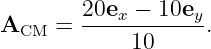
Exercise 12: center-of-mass acceleration
A system of several particles has total mass
and net external force
Find the center-of-mass acceleration.
Exercise 13: two-dimensional explosion
An object initially at rest breaks into three fragments. The fragment data after the explosion
are
Find v3 if external impulse is negligible.
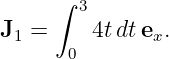
Exercise 14: time-dependent interaction force
Two particles interact through
for 0 ≤ t ≤ 3 s. Find the impulse on particle 1 and the impulse on particle 2. What is the change in
the total momentum of the two-particle system?
Exercise 15: when matter momentum alone is not conserved
In an electromagnetic process, the mechanical momentum of matter changes by
Suppose no external momentum enters or leaves the complete matter-plus-field system.
What change in field momentum is required? Explain why this example shows that
momentum conservation is more general than a simple instantaneous mechanical third-law
pair.
Exercise 16: synthesis - internal redistribution plus external impulse
Three carts begin at rest. Internal spring forces act while an external impulse
is applied to the three-cart system. After all interactions are complete, carts 1 and 2 have
momenta
Cart 3 has mass 3.0 kg. Find p3 and v3. Identify which parts of the momentum bookkeeping are
internal and which are external.
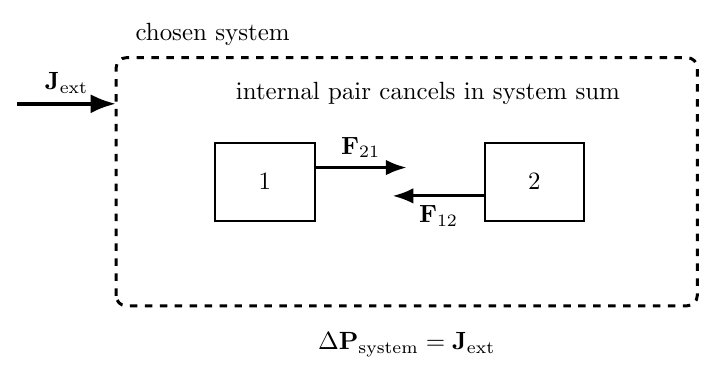
Figure 4. System boundaries determine which forces count as internal and which count as external.
Internal third-law pairs cancel in the system sum; external impulse changes total momentum.
Part II: Complete Worked Solutions
Solution 1: identify the third-law pair
The person exerts on the crate
Newton’s third law gives
The first force acts on the crate; the second acts on the person. They are equal and opposite, but
they act on different bodies. Therefore only the first belongs on the crate’s free-body
diagram.
Solution 2: equal forces do not imply equal accelerations
Take the force on cart 1 to be in the positive x direction:
Then
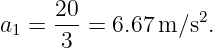
For cart 1,
For cart 2,
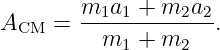
The center-of-mass acceleration is
Thus
Equal interaction forces do not imply equal accelerations; acceleration also depends on
mass.
Solution 3: derive total momentum conservation for two particles
Add the two momentum equations:
Newton’s third law gives
Therefore
Defining
we obtain
so
Solution 4: equal and opposite impulse
The impulse magnitude is
Choose the impulse on cart 1 to be positive:
The carts start from rest, so
Hence
For cart 2,
so
The final total momentum is
Thus the internal interaction changes the individual momenta but not the total momentum.
Solution 5: two skaters push apart
Initially,
With negligible external horizontal impulse,
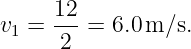
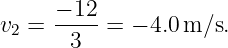
Thus
Substitution gives
Therefore
The lighter skater moves faster so that the two momenta are equal in magnitude and opposite in
direction.
Solution 6: recoil as momentum exchange
Initial total momentum is zero. Therefore
Using
we obtain
Thus
The negative sign means that the launcher recoils opposite the projectile motion.
Solution 7: perfectly inelastic collision
Initial momentum is
After sticking, the total mass is
Momentum conservation gives
so
The initial kinetic energy is
The final kinetic energy is
Kinetic energy is not conserved in this perfectly inelastic collision, even though momentum is
conserved.
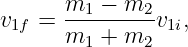
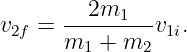
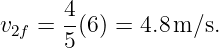
Solution 8: elastic collision and momentum exchange
For a one-dimensional elastic collision with particle 2 initially at rest,
Substituting m1 = 2, m2 = 3, and v1i = 6 gives
Initial momentum:
Final momentum:
Thus total momentum is conserved.
Solution 9: external impulse changes system momentum
The external impulse is
The impulse-momentum theorem for the complete system gives
Hence
Internal forces do not appear in this total-system equation because their third-law pairs
cancel.
Solution 10: choosing the system boundary
For the ball alone,
Therefore the ball’s momentum is not conserved.
The impulse on the ball is
The wall exerts this external impulse on the ball-only system.
If the chosen system is enlarged to include the ball, wall, and Earth, then the wall-ball
interaction is internal. The ball’s momentum loss is accompanied by momentum transferred
to the wall/Earth. The total momentum of the enlarged isolated system can remain
conserved.
Solution 11: many-particle cancellation
Group the internal forces into third-law pairs:
Each pair vanishes:
Therefore
The total momentum equation is consequently
For zero external force, total momentum is constant.
Solution 12: center-of-mass acceleration
The center-of-mass equation is
Therefore
Hence
Internal forces can change the relative motions inside the system, but they do not alter this
center-of-mass acceleration when third-law cancellation holds.
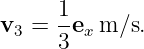
Solution 13: two-dimensional explosion
The object starts from rest, so total initial momentum is zero. Therefore
The first two momenta are
Thus
Since m3 = 1.5 kg,
Therefore
Solution 14: time-dependent interaction force
The impulse on particle 1 is
Thus
Newton’s third law gives
so
Therefore
Solution 15: when matter momentum alone is not conserved
For the complete matter-plus-field system,
Therefore
Matter momentum alone changed, but total matter-plus-field momentum did not. This is why
momentum conservation is more general than the simple Newtonian picture in which every
mechanical force on one body is paired instantaneously with an equal-and-opposite mechanical
force on another body.
Solution 16: synthesis - internal redistribution plus external impulse
The system initially has zero momentum. The external impulse changes total system momentum
by
Thus the final total momentum must be
Using
we have
Hence
Since m3 = 3.0 kg,
The spring interactions are internal and redistribute momentum among the carts. The 3 N s
applied impulse is external and is responsible for the nonzero final momentum of the three-cart
system as a whole.
Summary
These examples reinforce four complementary statements:
- Newton’s third-law forces act on different bodies.
- Internal third-law pairs cancel when the momentum equations of the complete system
are added.
- The total momentum obeys
- Momentum conservation is the broader organizing principle; in field theories the
conserved total may include both matter momentum and field momentum.
References
References
[1] John R. Taylor, Classical Mechanics, University Science Books, 2005.
[2] Daniel Kleppner and Robert Kolenkow, An Introduction to Mechanics, 2nd ed.,
Cambridge University Press, 2014.
[3] Stephen T. Thornton and Jerry B. Marion, Classical Dynamics of Particles and
Systems, 5th ed., Brooks/Cole, 2004.
[4] Richard P. Feynman, Robert B. Leighton, and Matthew Sands, The Feynman Lectures
on Physics, Vol. I, Basic Books, 2010.
[5] David J. Griffiths, Introduction to Electrodynamics, 4th ed., Pearson, 2013.

![[parent]](https://images.physicslibrary.org/images/uparrow.png)

































































![[ 2]3
J1 = 2t 0ex = 18exN s.](https://images.physicslibrary.org/cache/objects/1287/make4ht/NewtonsThirdLawAndConservationOfLinearMomentumExamplesAndCompleteWorkedSolutions82x.png)