|
|
|
|||||||
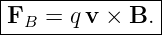
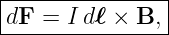
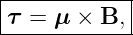
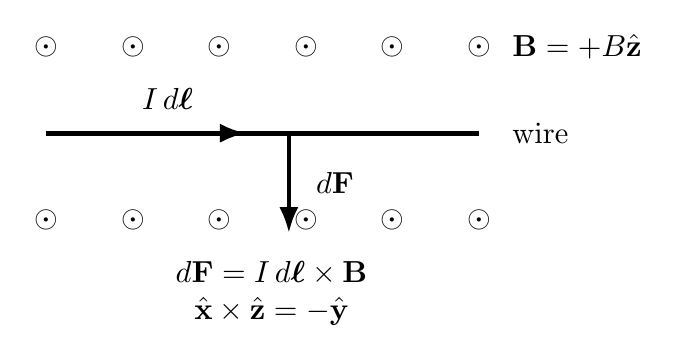
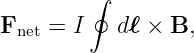
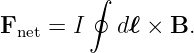
For a thin current element,
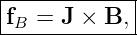
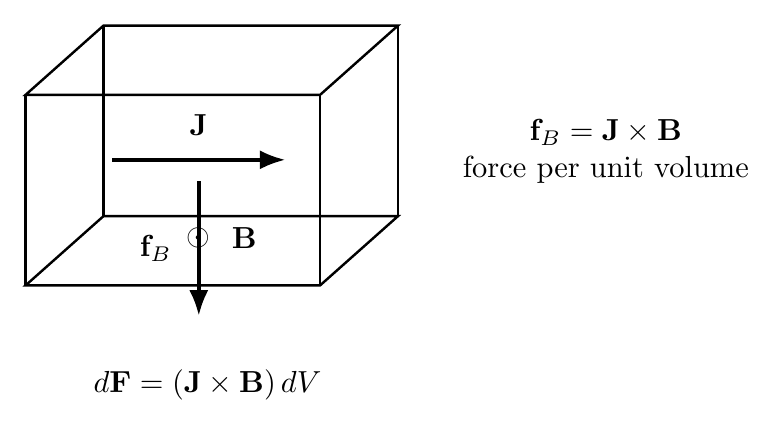
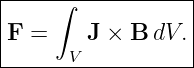
and for a continuous current distribution,
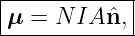
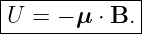
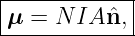
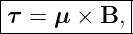
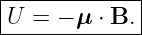
where fB is force per unit volume. For a planar N-turn current loop,
and
These are the same definitions and conventions developed in EM10 [1, 2, 3, 5].
How to use this problem setAttempt every problem in Part I before consulting Part II. For vector-force problems, determine the cross-product direction before inserting numerical values. For current-loop problems, distinguish carefully among
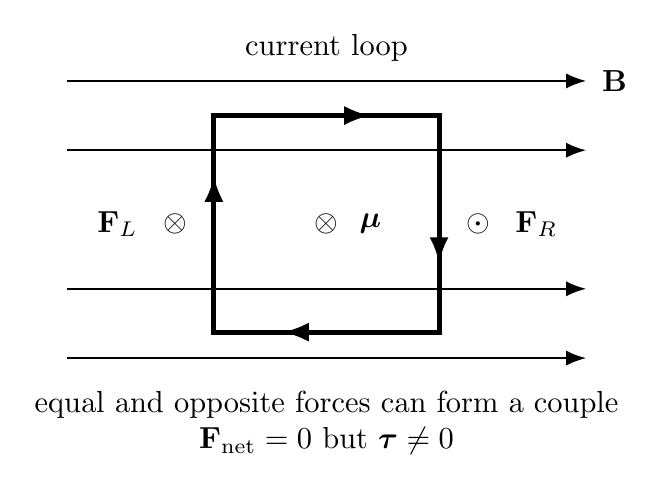
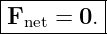
A loop may have zero net force while still having nonzero torque.
Part I: Exercises
Exercise 1: magnetic force on a negative moving chargeA charge
moves with
through
Find the complete magnetic-force vector.
Exercise 2: from electron drift to force on a wireA metal wire has mobile-electron number density
The electron charge is
and the drift velocity is
The wire cross-sectional area is
A length L = 0.20 m of the wire lies in
Find:
Figure. The current-element force follows from I dℓ× B. The wire direction is the direction of conventional current.
Exercise 3: vector force on a straight conductorA straight wire carries
along a vector length
The magnetic field is
Find the complete force vector.
Exercise 4: force magnitude for an oblique wireA straight Conductor has
The angle between the current direction and the magnetic field is 60∘. Find the magnetic-force magnitude.
Exercise 5: magnetic force densityA conductor carries uniform current density
in a magnetic field
Find the magnetic force density
Figure. A distributed current density in a magnetic field produces a distributed magnetic force density J × B.
Exercise 6: total force from a uniform force densityInside a small conductor volume,
and
are uniform. The conductor volume is
Find the total magnetic force.
Exercise 7: curved wire in a uniform fieldA wire carries current
from
to
along an arbitrary curved path. The magnetic field is uniform:
Use
to find the net force.
Exercise 8: closed loop in a uniform magnetic fieldStarting from
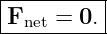
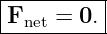
show that a closed current loop in a uniform magnetic field has
Explain why this result does not imply zero torque.
Exercise 9: torque on a multiturn rectangular loopA 20-turn loop carries
and encloses area
Its Normal makes an angle 40∘ with a uniform field
Find the torque magnitude.
Figure. Opposite magnetic forces on a current loop can form a couple: zero net force but nonzero torque.
Exercise 10: magnetic dipole momentA circular 50-turn coil carries
and each turn encloses area
When viewed from the +z side, the current is counterclockwise. Find:
Exercise 11: vector torque from a dipole momentA magnetic dipole has
in a field
Find the complete torque vector.
Exercise 12: magnetic potential-energy changeA dipole with
is in a uniform field
It rotates from
to the aligned state
Find Ui, Uf, and ΔU = Uf − Ui.
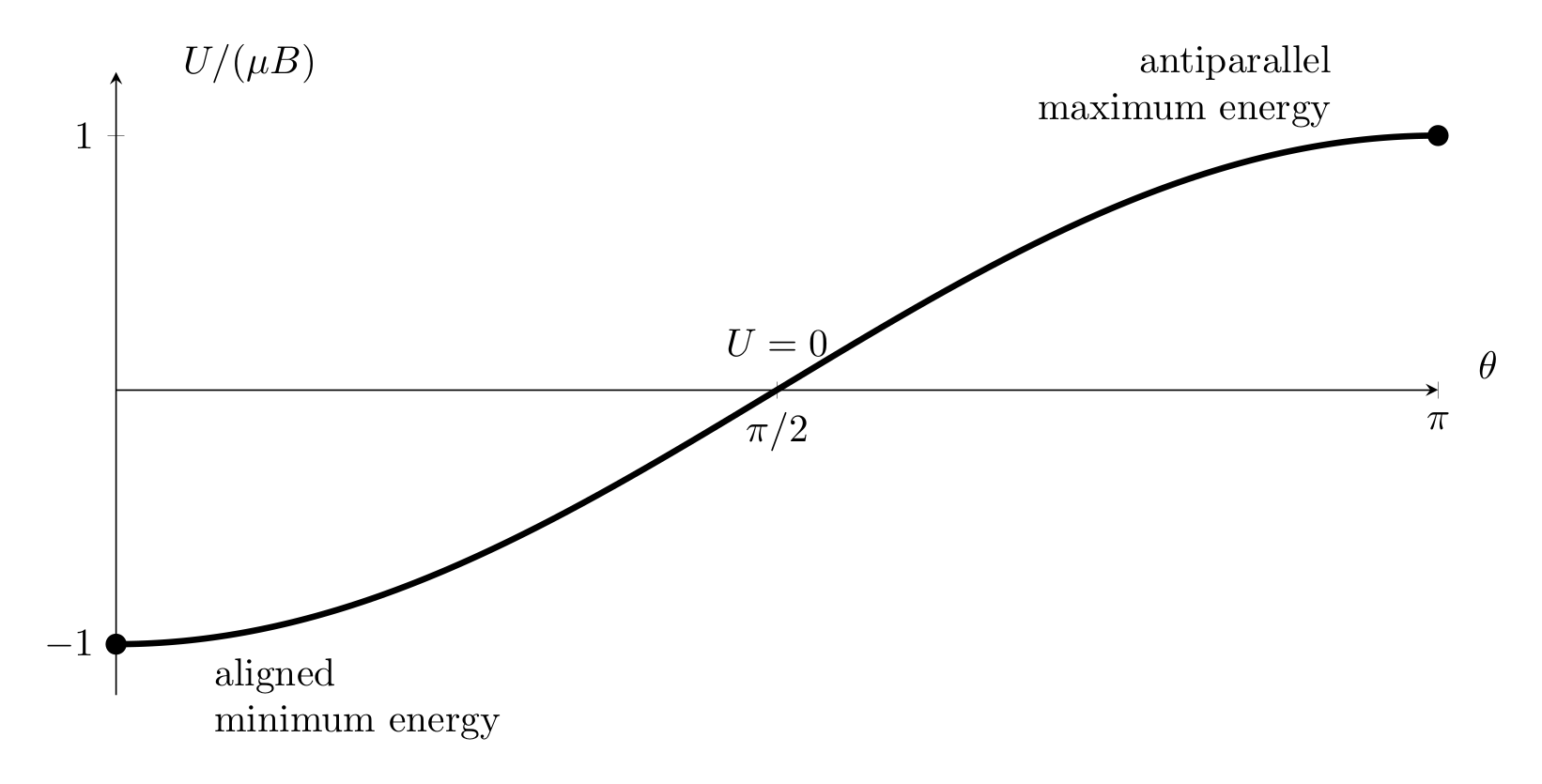
Figure. Normalized magnetic dipole energy U∕(μB) = − cos 𝜃. Alignment is the minimum-energy orientation.
Exercise 13: when zero net force no longer followsA closed current loop is placed first in a uniform magnetic field and then in a strongly nonuniform magnetic field. For each case, discuss whether the following must be zero:
Explain which step in the uniform-field proof fails when B varies along the loop.
Exercise 14: synthesis - coil force, torque, and energyA 100-turn planar coil carries
and each turn has area
The coil is placed in a uniform field
with the coil normal at
to the field. Find:
Part II: Complete Worked Solutions
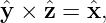
Solution 1: magnetic force on a negative moving chargeFirst evaluate the cross product for a positive charge:
The magnitude is
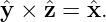
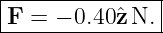
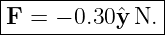
Because the charge is negative, the force direction is opposite to v × B. Therefore,
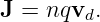
Solution 2: from electron drift to force on a wireThe current density is
Both q and the x component of vd are negative, so the current density points in +x:
Thus
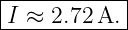
The conventional current is
Therefore,
For the wire segment,
Hence
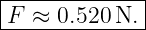
Thus
Solution 3: vector force on a straight conductorUse
The direction is
The magnitude is
Therefore,
Solution 4: force magnitude for an oblique wireThe magnitude is
Thus
Hence
Solution 5: magnetic force densityThe force density is
Since
we obtain
Therefore,
Solution 6: total force from a uniform force densityFirst,
Because
we obtain
The force is uniform, so
Thus
Solution 7: curved wire in a uniform fieldThe endpoint displacement is
Therefore,
Use
Then
Hence
Solution 8: closed loop in a uniform magnetic fieldStart from
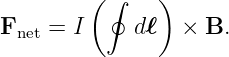
Because B is uniform, it can be moved outside the path integral:
For any closed path,
Therefore,
This does not imply zero torque. Equal and opposite forces can act at different points on the loop and form a couple, producing rotation even though their vector sum is zero.
Solution 9: torque on a multiturn rectangular loopThe magnetic moment magnitude is
The torque magnitude is
Thus
Solution 10: magnetic dipole momentThe magnitude is
Hence
Viewed from +z, the current is counterclockwise. Curling the right-hand fingers with the current makes the thumb point in +z. Therefore,
Solution 11: vector torque from a dipole momentUse
Then
Thus
Solution 12: magnetic potential-energy changeThe potential energy is
Initially,
So
At alignment,
Thus
The change is
Therefore,
The aligned state is lower in potential energy.
Solution 13: when zero net force no longer followsFor a closed loop in a uniform magnetic field,
The torque need not be zero. Unless μ is parallel or antiparallel to B, the loop can have
For a strongly nonuniform field, neither quantity must vanish. Different portions of the loop can sample different field magnitudes or directions, so the local forces need not cancel completely. The uniform-field proof fails at the step
because a spatially varying B cannot be taken outside the integral.
Solution 14: synthesis - coil force, torque, and energyThe magnetic moment magnitude is
Hence
Because the field is uniform and the coil is closed,
The torque magnitude is
Thus
At 30∘,
Therefore,
At alignment,
The potential-energy change is
Thus
The coil lowers its magnetic potential energy as it moves toward alignment.
Common mistakes
What EM10E reinforcesThe sequence from microscopic to macroscopic magnetic force is
For a continuous current distribution,
For a closed planar coil,
and
These ideas complete the force side of the current-field interaction. EM11 reverses the direction of reasoning and asks how electric currents generate magnetic fields through the Biot–Savart law.
References
[1] David J. Griffiths, Introduction to Electrodynamics, 4th ed., Cambridge University Press, 2017. [2] Samuel J. Ling, Jeff Sanny, and William Moebs, University Physics, Volume 2, OpenStax, 2016, chapters on magnetic force, current loops, and sources of magnetic fields. [3] Edward M. Purcell and David J. Morin, Electricity and Magnetism, 3rd ed., Cambridge University Press, 2013. [4] Richard P. Feynman, Robert B. Leighton, and Matthew Sands, The Feynman Lectures on Physics, Volume II, Addison-Wesley, 1964, chapters on magnetic force, currents, and magnetic moments. [5] Massachusetts Institute of Technology, 8.02 Physics II: Electricity and Magnetism, MIT OpenCourseWare, materials on Lorentz force, current-carrying conductors, torque, and magnetic dipoles. "Electromagnetic Waves: Magnetic Forces on Charges and Currents - Exercises and Complete Worked Solutions" is owned by bloftin.
This object's parent. Cross-references: electric currents, EM11, position, path integral, displacement, positive charge, cross product, potential energy, energy, Normal, current density, magnitude, Conductor, magnetic field, conventional current, drift velocity, vector, torque, volume, unit, charges, forces, EM10 This is version 1 of Electromagnetic Waves: Magnetic Forces on Charges and Currents - Exercises and Complete Worked Solutions, born on 2026-09-17. Object id is 1228, canonical name is ElectromagneticWavesMagneticForcesOnChargesAndCurrentsExercisesAndCompleteWorkedSolutions. Accessed 348 times total. Classification:
|
|
|
|
Pending Errata and AddendaNone.
|
DiscussionNo messages.
|
Interact |