Light is ubiquitous, shaping our perception of the world and driving technological advancements.
In physics, light is studied as electromagnetic radiation, exhibiting both wave-like and particle-like
properties. This article explores the nature of light, its historical development, theoretical
frameworks, and modern applications, providing a foundation for understanding its role in the
universe.
The understanding of light has evolved significantly over time, reflecting advancements in scientific
thought and experimentation.
2.1 Early Theories
Ancient philosophers like Euclid and Ptolemy described light in terms of rays, focusing on
geometric optics. In the 11th century, Ibn al-Haytham’s Book of Optics laid the groundwork for
modern optics by explaining reflection and refraction. During the 17th century, two competing
theories emerged: Isaac Newton’s corpuscular theory, which posited that light consists of particles,
and Christiaan Huygens’ wave theory, which described light as a wave propagating through a
medium called the ether.
2.2 19th Century Advancements
The 19th century saw the wave theory gain prominence. Thomas Young’s double-slit experiment
(1801) demonstrated interference, supporting the wave nature of light. Augustin-Jean Fresnel’s
work on diffraction and polarization further solidified this view. James Clerk Maxwell’s
electromagnetic theory (1860s) unified electricity and magnetism, describing light as an
electromagnetic wave, a milestone in classical physics.
3 Light as an Electromagnetic Wave
Maxwell’s Equations provide the classical framework for understanding light as an electromagnetic
wave.
3.1 Maxwell’s Equations
Maxwell’s equations describe the behavior of electric (E ) and magnetic (B ) fields:
∇⋅ E
= ,
(1)
∇⋅ B
= 0,
(2)
∇× E
= −,
(3)
∇× B
= μ0J + μ0𝜖0,
(4)
where is charge density, is current density, is the permittivity of free space, and
is the permeability of free space. In a vacuum, these equations yield a wave equation for
light:
(5)
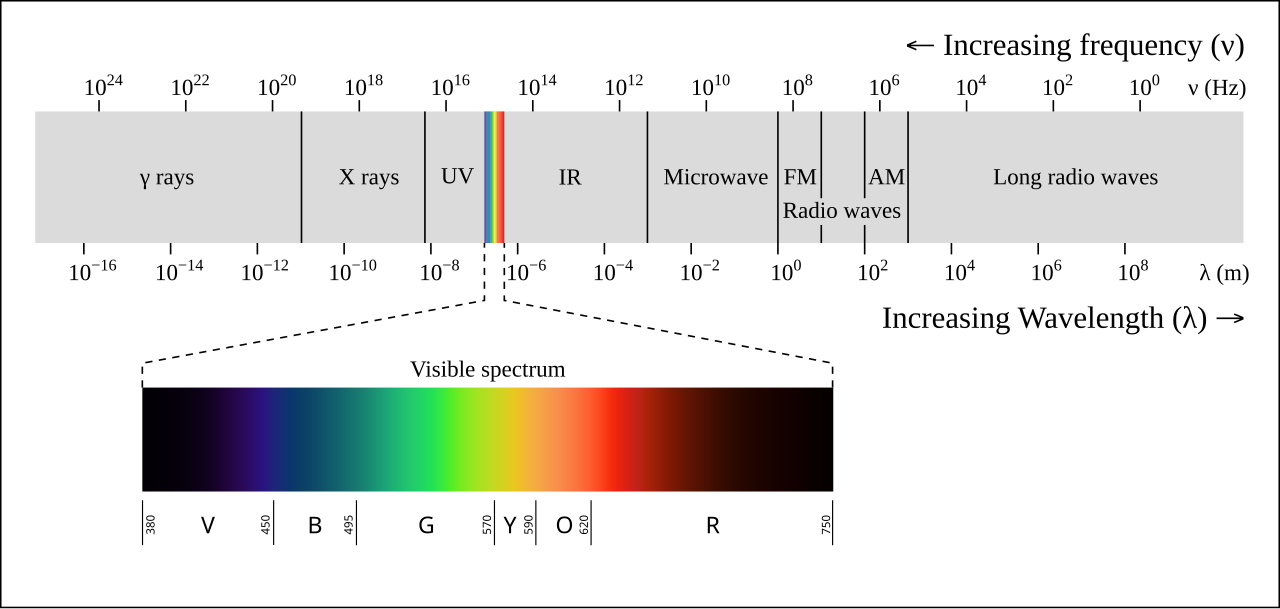
The electromagnetic spectrum spans radio waves to gamma rays, with visible light occupying
wavelengths from approximately 400 to 700 nanometers. Light is transverse, with electric and
magnetic fields oscillating perpendicular to each other and the direction of propagation.
Polarization describes the orientation of these oscillations.
4 Wave Phenomena
Light’s wave nature manifests in several phenomena critical to optics.
4.1 Interference
Interference occurs when two or more light waves superpose, producing patterns of constructive
and destructive interference. Young’s double-slit experiment illustrates this, with bright and dark
fringes given by:
(6)
where is the slit separation, is the angle of the fringe, and is the order of the
maximum.
4.2 Diffraction
Diffraction describes the bending of light around obstacles or through apertures. For a single slit of
width , minima occur at:
(7)
Diffraction limits the resolution of optical instruments, as described by the Rayleigh
criterion.
4.3 Polarization
Polarization refers to the orientation of light’s Electric Field. Unpolarized light can be polarized by
reflection, scattering, or passing through a polarizer. Malus’s law quantifies the intensity of
polarized light passing through a polarizer:
(8)
where is the initial intensity and is the angle between the light’s polarization and the
polarizer’s axis.
5 Light as a Particle
The particle nature of light emerged in the early 20th century, challenging the classical wave
model.
where is Planck’s constant and is the frequency. Electrons are emitted
only if the photon energy exceeds the material’s work function, supporting the particle
model.
5.2 Wave-Particle Duality
Light exhibits both wave and particle properties, a concept known as wave-particle duality. The
double-slit experiment, when performed with single photons, shows interference patterns,
suggesting that each photon interferes with itself. This duality is a cornerstone of quantum
mechanics.
6 Quantum Electrodynamics
quantum electrodynamics (QED) provides a quantum mechanical description of light and its
interactions with matter.
6.1 QED Framework
QED, developed by Richard Feynman and others, describes light as photons, quanta of the
electromagnetic field. Photons are massless particles with spin 1, mediating electromagnetic
interactions. The probability amplitude of photon interactions is computed using Feynman
diagrams, which account for processes like scattering and absorption.
6.2 Light-Matter Interactions
QED explains phenomena like the Compton effect, where photons scatter off electrons, transferring
energy and momentum:
(10)
where and are the incident and scattered wavelengths, is the electron mass, and
is the scattering angle.
7 Interaction of Light with Matter
Light’s interactions with matter underpin many physical phenomena and technologies.
7.1 Reflection and Refraction
Reflection follows the law of reflection: the angle of incidence equals the angle of reflection.
Refraction is governed by Snell’s law:
(11)
where are the refractive indices of the media, and are the angles of incidence and
refraction.
7.2 Absorption and Emission
Atoms absorb photons, exciting electrons to higher energy levels, and emit photons when electrons
return to lower levels. This process is described by the Bohr model and quantum mechanics, with
emission spectra characterizing atomic structure.
8 Modern Applications
The physics of light drives numerous technologies and scientific advancements.
8.1 Optics and Imaging
Lenses, mirrors, and optical instruments rely on reflection, refraction, and diffraction. Applications
include microscopes, telescopes, and cameras, with advances in adaptive optics enhancing
astronomical imaging.
8.2 Telecommunications
Fiber optics use total internal reflection to transmit light signals, enabling high-speed internet and
global communications. Lasers, which produce coherent light, are critical for precision and
efficiency.
8.3 Quantum Technologies
Quantum optics and QED underpin technologies like quantum computing and cryptography.
Single-photon sources and entangled photons enable secure communication and quantum
information processing.
9 Challenges and Future Directions
Understanding light’s quantum nature remains a challenge, particularly in reconciling QED with
general relativity. Developing efficient single-photon sources and scalable quantum optical systems
is a focus of current research. Future advancements may include photon-based quantum computers
and enhanced imaging techniques for cosmology.
10 Conclusion
The physics of light spans classical and quantum realms, from Maxwell’s electromagnetic waves to
Einstein’s photons and QED’s probabilistic framework. Wave-particle duality, interference,
diffraction, and light-matter interactions reveal light’s complexity. As we advance in optics,
telecommunications, and quantum technologies, the study of light continues to illuminate
fundamental physics and drive innovation.
This article is a derivative work initially generated by Grok, an AI developed by xAI, on May 24,
2025.
References
[1]Maxwell, J. C. (1865). A Dynamical Theory of the Electromagnetic Field.
Philosophical Transactions of the Royal Society.
[2]Einstein, A. (1905). On a Heuristic Viewpoint Concerning the Production and
Transformation of Light. Annalen der Physik.
[3]Feynman, R. P. (1985). QED: The Strange Theory of Light and Matter. Princeton
University Press.
[4]Born, M., and Wolf, E. (1999). Principles of Optics. Cambridge University Press.
[5]Wikipedia contributors. (2025, May 24, 2025). Light. Wikipedia, The Free
Encyclopedia.
"The Physics of Light: From Waves to Photons" is owned by bloftin.



 is
is  is current density,
  is the permittivity of free space, and
  is the permeability of free space. In a vacuum, these equations yield a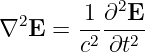

 is the slit separation,
  is the angle of the fringe, and
  is the order of the
maximum.
is the order of the
maximum.
 , minima occur at:


 is the initial intensity and
  is the angle between the light’s polarization and the
polarizer’s axis.
is the angle between the light’s polarization and the
polarizer’s axis.

 is Planck’s constant and
  is the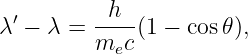
 and
and  are the incident and scattered wavelengths,
  is the electron
  is the
 are the refractive indices of the media, and
  are the angles of incidence and
refraction.
are the angles of incidence and
refraction.