Conservation of Linear Momentum
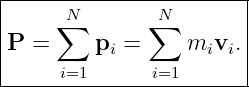
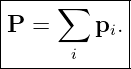
For a system of particles, define the total linear momentum
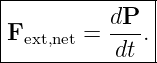
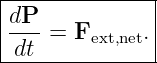
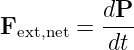
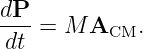
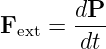
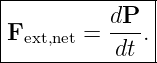
The motion of the entire system is governed by the net external force:
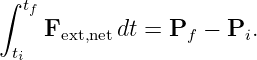
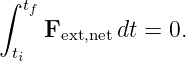
Integrating over a finite time interval gives
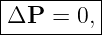
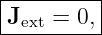
Therefore, if the net external impulse is zero,
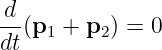
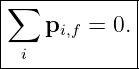
and the total momentum is conserved:
This principle is one of the most powerful tools in mechanics because internal forces can be
complicated, large, and rapidly varying while the total momentum remains simple.
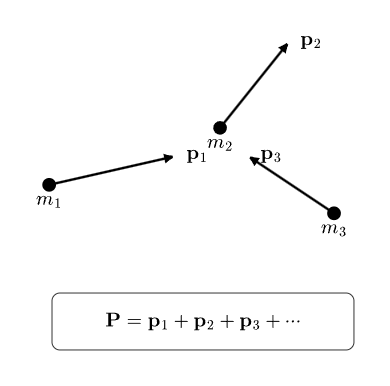
Figure 1. The total linear momentum of a particle system is the vector sum of the individual
particle momenta.
1 Total momentum of a particle system
For particles indexed by i = 1,…,N,
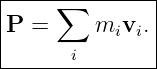
The total momentum is
In Cartesian components,
| Px | = ∑
imivix, | (8)
|
| Py | = ∑
imiviy, | (9)
|
| Pz | = ∑
imiviz. | (10) |
Momentum conservation is therefore a vector statement. If total momentum is conserved, each
Cartesian component is conserved separately:
| Px,i | = Px,f, | (11)
|
| Py,i | = Py,f, | (12)
|
| Pz,i | = Pz,f. | (13) |
2 Derivation from Newton’s second and third laws
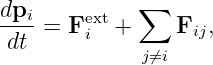
For particle i,
where Fij is the internal force on particle i due to particle j.
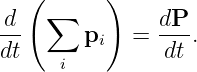
Sum over all particles:
The left side is
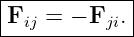
For ordinary Newtonian pair forces satisfying Newton’s third law,
Thus every internal pair cancels from the total force sum:
Therefore
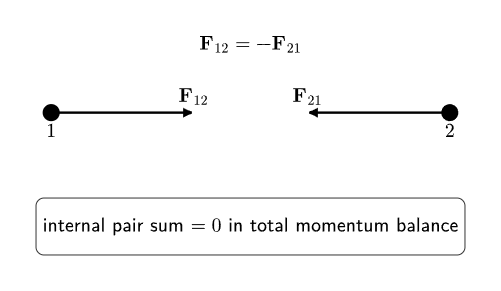
Figure 2. Internal force pairs are equal and opposite, so they cancel from the total momentum
balance. Only the net external force changes total momentum.
3 Internal forces can change individual momenta
Internal-force cancellation does not mean the internal forces vanish.
Two interacting particles can exert large forces on each other:
Then
 | = F12, | (21)
|
 | = F21. | (22) |
Their individual momenta change, but
if no external force acts.
Thus momentum can be transferred internally from one part of a system to another without
changing the total.
4 External impulse form
Integrate
from ti to tf:
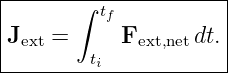
Define the external impulse:
Then
This is the most general finite-time statement for a fixed set of particles.
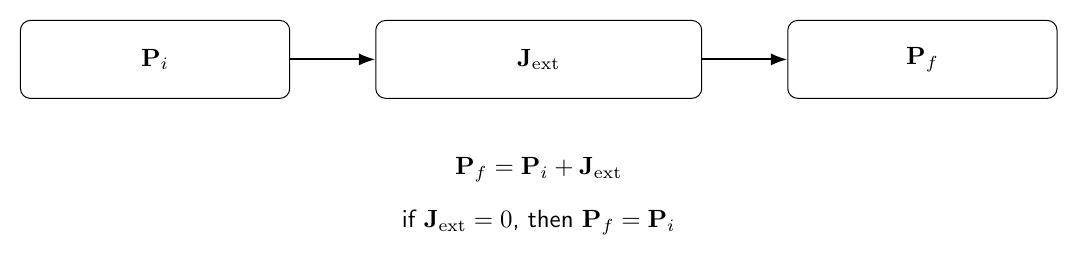
Figure 3. External impulse changes total system momentum. When the net external impulse is
zero, initial and final total momentum are equal.
5 Conservation condition
If
then
A sufficient condition is
throughout the interval.
However, this is not strictly necessary.
The net external force may be nonzero at some times while the total external impulse still
vanishes:
Thus the impulse condition is more general than the instantaneous-force condition.
6 What is an isolated system?
In elementary mechanics, an isolated system is a system for which external interactions are absent
or negligible over the interval being studied.
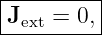
For momentum analysis, the practically important condition is
The word “isolated” therefore depends on
- the chosen system boundary,
- the forces acting across that boundary,
- the time interval under consideration,
- the accuracy required.
A system can be approximately isolated for a short collision even if gravity acts continuously.
7 System boundary
Before applying momentum conservation, define what belongs to the system.
Suppose two carts collide.
If the system includes both carts, the contact forces between them are internal and cancel from the
total momentum balance.
If the system includes only one cart, the contact force from the other cart is external and changes
that cart’s momentum.
Thus the same physical force can be internal or external depending on the chosen system.
A useful rule is:
8 Center of mass and total momentum
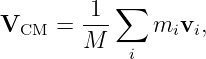
The center-of-mass velocity is
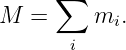
where
Therefore
For a fixed-mass system,
Hence
If
then
Internal motion can be violent while the center of mass continues uniformly.
9 Example 1: recoil from rest
Two skaters initially stand at rest on nearly frictionless ice.
Let their masses be
| m1 | = 60 kg, | (41)
|
| m2 | = 90 kg. | (42) |
They push apart.
Initially,
After the push,
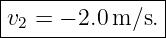
Suppose skater 1 moves at
Then
| v2 | = − v1 v1 | (46)
|
| = − (3.0) (3.0) | (47)
|
| = −2.0 m∕s. | (48) |
Thus
The heavier skater moves more slowly so that the momenta are equal in magnitude and opposite in
direction.
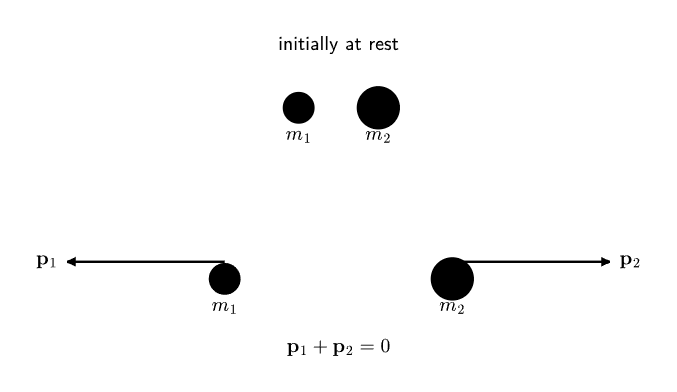
Figure 4. Recoil from rest produces equal-and-opposite total momenta when the external impulse
is negligible.
10 Recoil does not require equal speeds
For a two-body system initially at rest,
Therefore
The momentum magnitudes are equal:
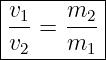
The speed magnitudes satisfy
in magnitude.
The lighter object has the larger speed.
11 Example 2: projectile recoil
A launcher of mass
fires a projectile of mass
at
relative to the ground immediately after firing.
Assume the launcher-projectile system is initially at rest and horizontal external impulse is
negligible.
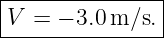
Momentum conservation gives
Thus
| V | = − v v | (58)
|
| = − (300) (300) | (59)
|
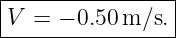
| = −3.0 m∕s. | (60) |
Therefore
12 Explosion of a system initially at rest
Suppose an object initially at rest separates into fragments due to an internal energy
release.
If external impulse is negligible,
and therefore
The fragments can have substantial individual momenta and kinetic energies, but their vector
momentum sum remains zero.
The center of mass remains at rest:
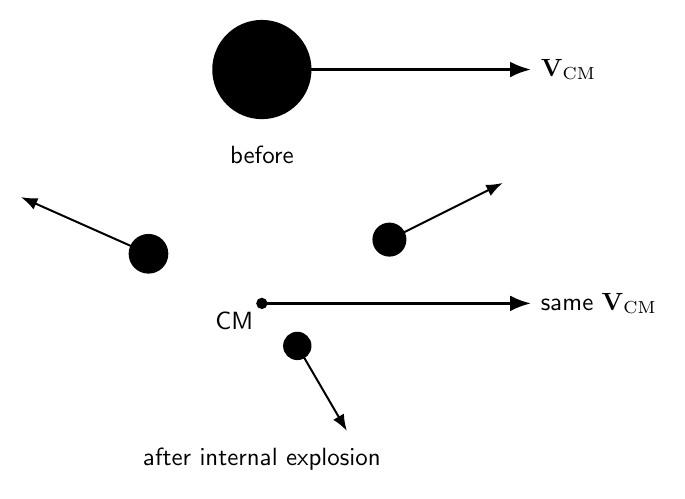
Figure 5. Internal energy release can send fragments in different directions while the center of
mass retains its original constant velocity.
13 Example 3: two-fragment explosion
A body initially at rest explodes into two fragments.
Let
| m1 | = 2.0 kg, | (65)
|
| m2 | = 3.0 kg. | (66) |
Fragment 1 moves at
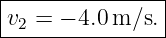
Momentum conservation gives
Therefore
| v2 | = − | (69)
|
| = − | (70)
|
| = −4.0 m∕s. | (71) |
Thus
The momentum is conserved even though the final kinetic energy is larger than the initial kinetic
energy. The extra kinetic energy came from internal stored energy.
14 Momentum conservation does not imply kinetic-energy conservation
Momentum and kinetic energy are different quantities.
For a two-object isolated system,
can hold while
Examples include:
- explosions, where kinetic energy can increase,
- inelastic collisions, where kinetic energy can decrease,
- elastic collisions, where kinetic energy remains constant.
Thus
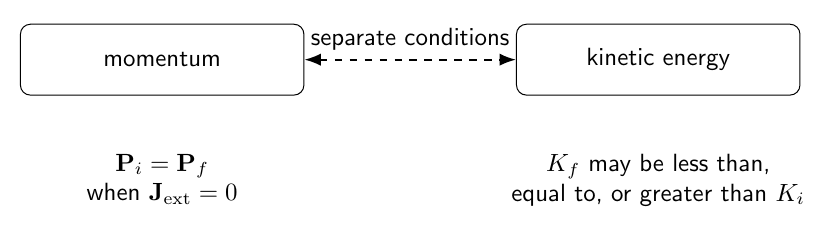
Figure 7. Momentum conservation and kinetic-energy conservation are separate statements.
Momentum can be conserved while kinetic energy increases, decreases, or remains constant.
15 Componentwise conservation
Because momentum is a vector, conservation applies independently along each coordinate
direction.
In two dimensions,
| ∑
px,i = ∑
px,f, | | (76)
|
| ∑
py,i = ∑
py,f. | | (77) |
This is especially useful when external impulse is negligible in one direction but not
another.
For example, a puck may experience a large vertical Normal force from a table while horizontal
external impulse remains negligible. Horizontal momentum can then be conserved even
though the full three-dimensional momentum of the puck-Earth system requires a broader
analysis.
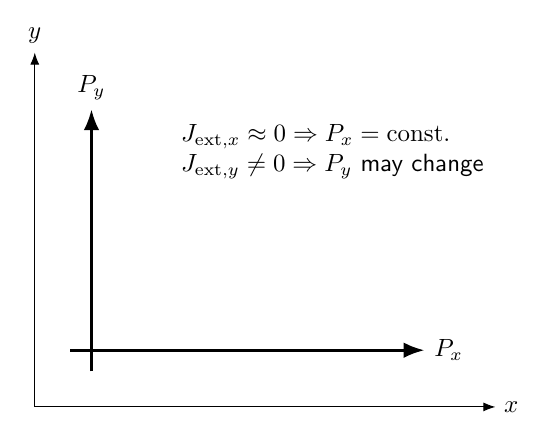
Figure 6. Momentum conservation is applied component by component. A direction can have
conserved momentum even when another direction has substantial external impulse.
16 Example 4: two-dimensional recoil
A system initially at rest separates into three fragments.
Two fragment momenta are
| p1 | = (4ex) kg m∕s, | (78)
|
| p2 | = (3ey) kg m∕s. | (79) |
Since
the third momentum is
| p3 | = −(p1 + p2) | (81)
|
| = −4ex − 3ey. | (82) |
Thus
Its magnitude is
17 Short collisions and negligible external impulse
During a collision, internal contact forces can be extremely large but act for a very short
time.
Suppose the collision lasts
A slowly varying external force such as gravity contributes an impulse of order
If
associated with the collision, then gravitational impulse can be neglected during the collision
interval.
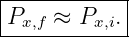
Thus the system momentum is approximately conserved during impact:
This approximation is often the reason momentum conservation works so well for short collisions
on Earth.
18 Approximate conservation in one direction
Sometimes an external force is large but its impulse is mainly along one direction.
For example, two carts collide on a horizontal track.
The track exerts vertical normal forces, so vertical external forces are not negligible.
However, if horizontal Friction is small,
Therefore
Momentum conservation need not be all-or-nothing. It can apply to selected components.
19 Example 5: person throwing an object from a cart
A person and cart have combined mass
They are initially at rest on a frictionless horizontal track.
The person throws a
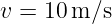
object to the right at
relative to the ground after release.
Let V be the recoil velocity of the person-cart system.
Initial momentum is zero:
Final momentum is
Thus
Therefore
The person and cart move left.
20 Relative velocity caution
Momentum conservation uses velocities measured in one common inertial frame.
If a problem gives a projectile velocity relative to a launcher,
that relative velocity cannot be inserted directly into
unless the other velocity is expressed in the same frame.
For one-dimensional Galilean motion,
Always convert to a common inertial frame before summing momenta.
21 Momentum conservation in different inertial frames
Suppose total momentum is conserved in inertial frame S:
Let frame S′ move at constant velocity V relative to S.
For a fixed-mass system,
Therefore
| Pf′ | = Pf − MV, | (103)
|
| Pi′ | = Pi − MV. | (104) |
Since
it follows that
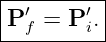
Thus momentum conservation is valid in every inertial frame, even though the numerical value of
total momentum changes between frames.
22 Closed versus isolated systems
The words closed and isolated are sometimes used differently across textbooks.
For this mechanics sequence, the safest statement is the equation itself:
Then:
- if Jext = 0, total momentum is conserved;
- if Jext≠0, total momentum changes by exactly that external impulse.
The equations are less ambiguous than terminology.
23 Variable-mass caution
For a fixed set of particles,
is straightforward.
For an open system where mass crosses the system boundary, momentum is carried with that
mass.
A rocket is therefore not analyzed by simply declaring the rocket body alone to have conserved
momentum.
One must include momentum flux across the chosen boundary or enlarge the system to include the
expelled material.
Variable-mass momentum balance will be developed separately.
24 Common mistakes
- Conserving the momentum of one object instead of the total system.
- Forgetting to define the system boundary.
- Treating internal forces as external forces after both interacting bodies are already
included in the system.
- Assuming zero external force is the only way momentum can be conserved over an
interval.
- Forgetting that zero external impulse, not zero external force at every instant, is the
fundamental finite-time condition.
- Conserving momentum as a scalar when the problem is two- or three-dimensional.
- Assuming individual momentum components are conserved when external impulse acts
along that component.
- Assuming momentum conservation implies kinetic-energy conservation.
- Using relative velocities and ground-frame velocities in the same momentum sum.
- Assuming equal-and-opposite momenta imply equal speeds.
- Neglecting external impulse during a collision without checking its scale.
- Applying fixed-mass system equations directly to an open variable-mass system.
25 Practice exercises
- Two particles have momenta 3ex and −5ex in kg m∕s. Find the total momentum.
- Derive Fext,net = dP∕dt from Newton’s second and third laws for a two-particle system.
- Two skaters of masses 50 kg and 75 kg push apart from rest. If the lighter skater moves
at 4.0 m∕s, find the heavier skater’s velocity.
- A 6.0 kg launcher fires a 0.030 kg projectile at 400 m∕s relative to the ground. Find the
launcher’s recoil velocity.
- An object initially at rest explodes into two fragments of masses 1.0 and 4.0 kg. If the
lighter fragment moves at 20 m∕s, find the heavier fragment velocity.
- A three-fragment explosion produces momenta (6, 0) and (0,−8) in kg m∕s for two
fragments. Find the third momentum vector and magnitude.
- Prove that P = MVCM.
- Show that if Jext = 0, then VCM is constant for a fixed-mass system.
- Explain why strong internal collision forces do not prevent total momentum
conservation.
- A collision lasts 2.0 ms for a 10 kg two-body system. Estimate the gravitational impulse
magnitude and compare it with a collision momentum change of 40 kg m∕s.
- Give an example in which total momentum is conserved while kinetic energy decreases.
- Give an example in which total momentum is conserved while kinetic energy increases.
- Explain why horizontal momentum can be conserved for carts on a track even though
vertical external forces are large.
- A person on a frictionless cart throws an object. Explain why the cart-person system
alone does not conserve momentum after the object leaves if the object is excluded
from the system.
- Show that if momentum is conserved in one inertial frame, it is conserved in every
Galilean inertial frame for a fixed-mass system.
26 Summary
The total momentum of a particle system is
Internal Newton’s-third-law force pairs cancel from the total momentum balance, giving
Integrating,
If
then
The total momentum is related to center-of-mass motion by
Momentum conservation is vectorial and can be applied separately to individual coordinate
directions.
It does not imply conservation of kinetic energy.
These results provide the foundation for recoil, explosions, and collisions. M04-03 applies them
directly to one-dimensional collision problems.
References
References
[1] J. R. Taylor, Classical Mechanics, University Science Books, 2005.
[2] D. Kleppner and R. Kolenkow, An Introduction to Mechanics, 2nd ed., Cambridge
University Press, 2014.
[3] K. R. Symon, Mechanics, 3rd ed., Addison-Wesley, 1971.
[4] H. D. Young and R. A. Freedman, University Physics with Modern Physics, 15th ed.,
Pearson, 2020.
[5] OpenStax, University Physics, Volume 1, Rice University, 2016.