Linear Momentum and Impulse
A moving object carries a quantity of motion that depends on both its mass and its velocity. In
Newtonian mechanics this quantity is the linear momentum
Momentum is a vector. Its direction is the direction of the velocity.
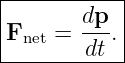
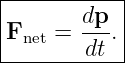
Newton’s second law can be written in momentum form as
This form makes clear that a force changes momentum.
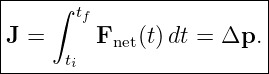
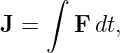
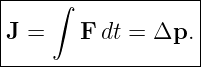
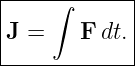
Integrating through a finite time interval leads to the impulse momentum theorem:
Impulse is therefore the accumulated effect of force over time.
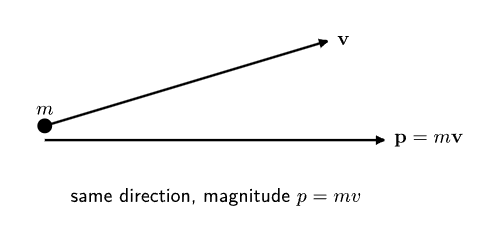
Figure 1. Linear momentum has magnitude p = mv and points in the same direction as the
particle velocity.
1 Definition of linear momentum
For a particle of constant mass m,
In Cartesian components,
with
| px | = mvx, | (6)
|
| py | = mvy, | (7)
|
| pz | = mvz. | (8) |
The magnitude is
The SI unit is
2 Momentum is a vector
Momentum must be added vectorially.
If one particle moves in the positive x direction,
If it moves in the negative x direction,
In one-dimensional motion, the sign of momentum contains the direction information.
For example, if
and
then
3 Newton’s second law in momentum form
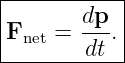
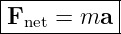
Newton’s second law is most generally expressed for a particle of fixed identity as
For constant mass,
Differentiate:
 | = m | (18)
|
| = ma. | (19) |
Thus
is recovered.
The momentum form emphasizes that force is the rate of change of momentum.

Figure 2. Newton’s second law connects force to the time rate of change of momentum.
Integrating in time produces the impulse momentum theorem.
4 Impulse
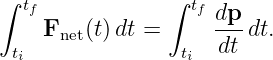
Integrate Newton’s second law from ti to tf:
The right side is
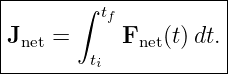
Define the net impulse
Therefore
For constant mass,
5 Units of impulse
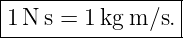
Impulse has units
Since
we have
Thus impulse and momentum have the same physical dimensions:
They are not the same type of quantity conceptually. Momentum is a state quantity of the particle,
while impulse describes momentum transferred during a time interval.
6 Force time graphs
Because
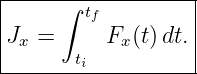
the signed area under a force-versus-time graph equals impulse.
In one dimension,
Area above the time axis contributes positive impulse.
Area below the time axis contributes negative impulse.
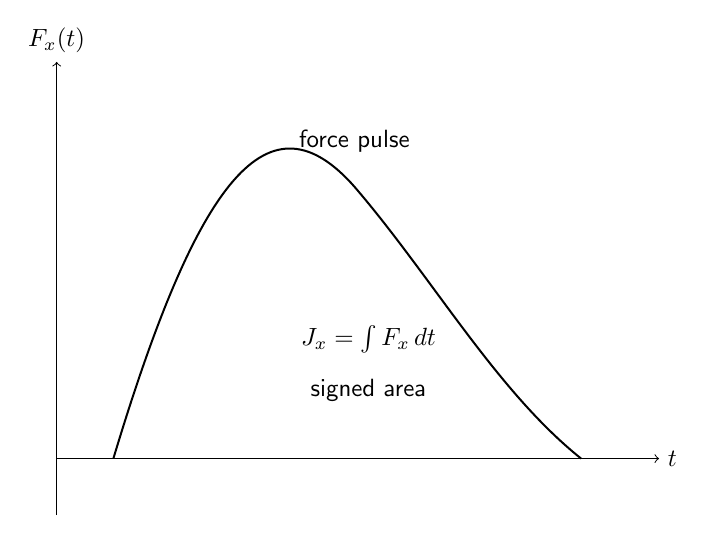
Figure 3. The signed area under a force-versus-time curve is impulse. The impulse equals the
resulting change in momentum.
7 Average force
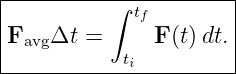
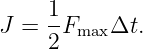
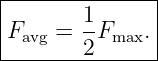
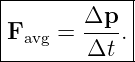
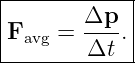
Define the average force over the interval Δt by requiring it to produce the same impulse:
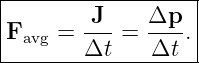
Therefore
This does not mean the actual force is constant.
The average force is the constant force that would produce the same impulse over the same time
interval.
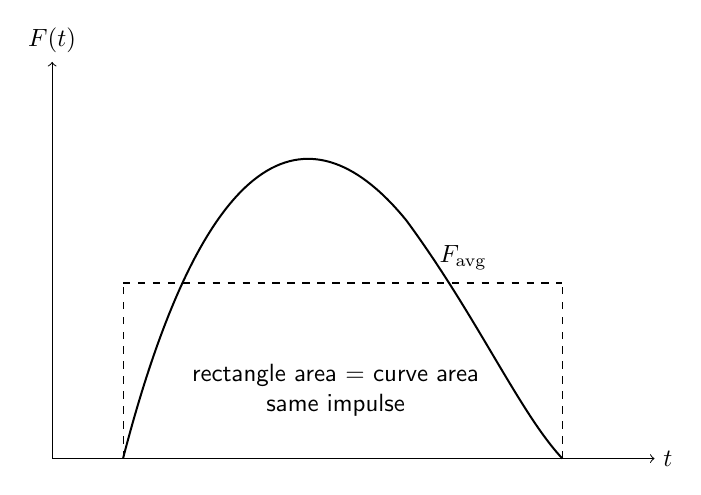
Figure 4. A varying force and its average-force rectangle have the same area and therefore the
same impulse.
8 Example 1: constant-force impulse
A 0.50 kg cart initially moves at
A constant force
acts in the direction of motion for
The impulse is
Initial momentum:
Thus
The final velocity is
9 Example 2: triangular force pulse
A force pulse rises linearly from zero to
and falls linearly back to zero over a total duration
The impulse is the area of the triangle:
Thus
| J | =  (800)(0.020) (800)(0.020) | (44)
|
| = 8.0 N s. | (45) |
The average force is
For this symmetric triangular pulse,
10 Changing direction produces a large impulse
Momentum depends on velocity, including its direction.
Suppose a ball approaches a wall with velocity
and rebounds with the same speed:
Then
| Δp | = m(−v) − m(+v) | (50)
|
| = −2mv. | (51) |
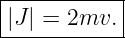
Therefore the impulse magnitude is
A rebound can require twice the momentum change of simply bringing the object to
rest.
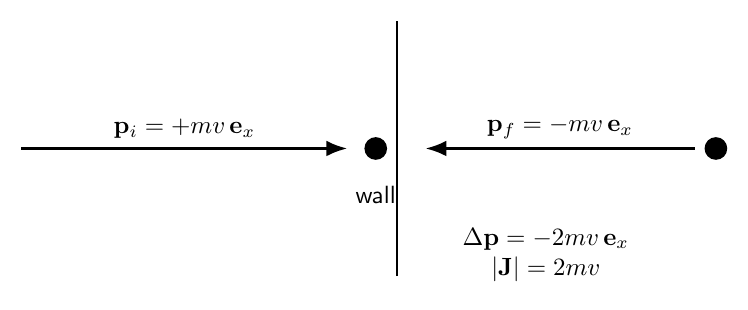
Figure 5. Reversing the velocity changes momentum by more than merely stopping the object.
For equal incoming and outgoing speeds, |Δp| = 2mv.
11 Example 3: bouncing ball
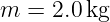
A ball has
Take upward as positive.
Just before striking the floor,
Just after leaving the floor,
The momentum change is
| Δp | = m(vf − vi) | (56)
|
| = 0.20[4.0 − (−6.0)] | (57)
|
| = 2.0 kg m∕s. | (58) |
Therefore the net impulse is
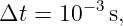
If the contact lasts
then the average net force is
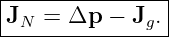
If one wants the average contact force from the floor rather than the average net force, gravity
must also be included in the force balance.
12 Contact force versus net force during impact
During a collision with the floor,
Therefore
The impulse momentum theorem gives
Hence the contact impulse is
For a very short impact,
may be much smaller than the contact impulse, but it should be neglected only after checking the
scale.
13 Why increasing collision time reduces average force
For a specified momentum change,
Thus
If the same momentum change occurs over a longer time, the required average force magnitude is
smaller.
This is the physics behind
- airbags,
- crumple zones,
- padded landing surfaces,
- bending the knees when landing,
- padded gloves and helmets.
These devices do not necessarily reduce the required momentum change. They increase the time
over which the change occurs.
14 Impulsive forces
An impulsive force is a force that becomes very large over a short time interval and produces a
finite impulse.
During a sufficiently short collision, one often approximates
for forces such as gravity, because their impulse over the short collision time is small compared
with the collision impulse.
For example,
If
the gravitational impulse can be tiny relative to an impact impulse of several newton-seconds.
This approximation becomes central in collision analysis.
15 Two-dimensional impulse
Impulse is a vector and can change different momentum components independently.
In two dimensions,
The component equations are
| Jx | = m(vfx − vix), | (73)
|
| Jy | = m(vfy − viy). | (74) |
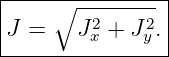
The impulse magnitude is
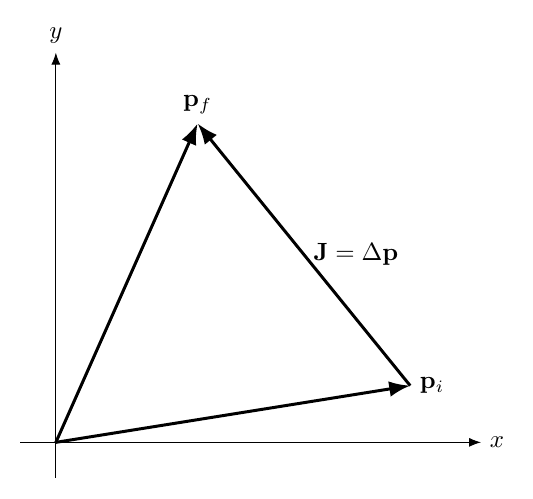
Figure 7. In two dimensions, impulse is the vector difference pf − pi. The change can alter both
the magnitude and direction of momentum.
16 Example 4: two-dimensional impulse
A 0.25 kg puck has
After being struck,
Then
| J | = m(vf − vi) | (78)
|
| = 0.25[(−3.0)ex + 3.0ey]. | (79) |
Thus
Its magnitude is
17 Impulse versus work
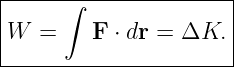
Impulse and work describe different effects of force.
Impulse is
Work is
Impulse is a vector and changes momentum.
Work is a scalar and changes kinetic energy.
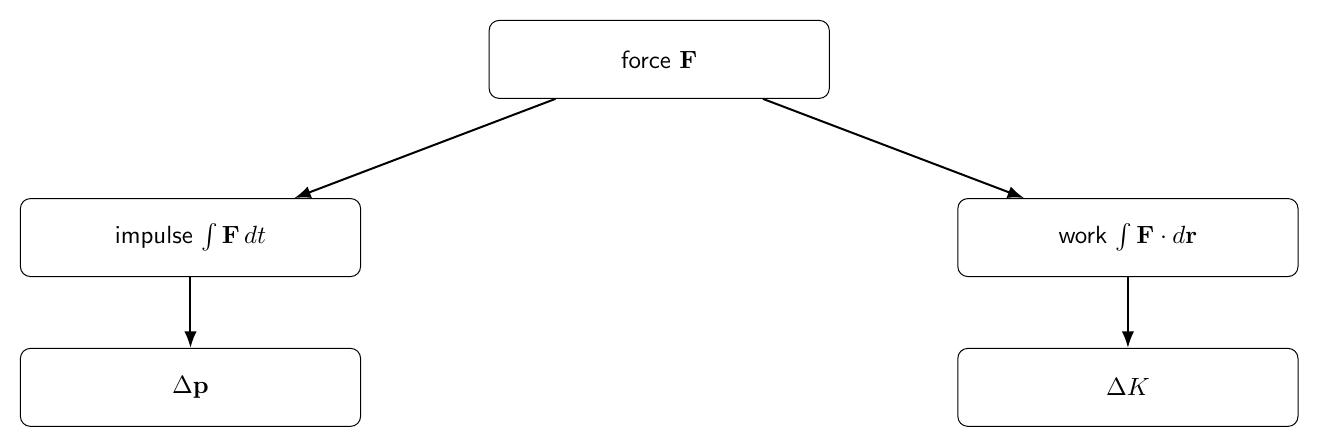
Figure 6. The same force can be integrated over time to obtain impulse or over displacement to
obtain work. Impulse changes momentum; work changes kinetic energy.
18 Momentum and kinetic energy
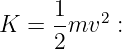
For a particle of mass m,
Therefore
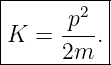
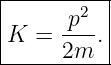
Substitute into
Thus momentum and kinetic energy are related but not interchangeable.
For fixed momentum magnitude, a larger mass corresponds to smaller kinetic energy.
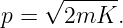
For fixed kinetic energy, momentum magnitude depends on mass:
19 Same impulse does not mean same energy change
Suppose the same impulse J is applied in one dimension to two identical particles with different
initial momenta.
Since
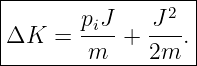
the kinetic-energy change is
| ΔK | = 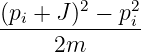 | (90)
|
| =  . . | (91) |
Therefore
The same impulse can produce different changes in kinetic energy depending on the initial
momentum.
This is another reason impulse and work must not be confused.
20 Momentum is frame dependent
Velocity depends on the inertial reference frame, so momentum does also.
If frame S′ moves with constant velocity V relative to frame S, then
Therefore
Momentum is not an absolute quantity independent of inertial frame.
The impulse momentum theorem remains valid when all quantities are evaluated consistently in
the same inertial frame.
21 External impulse on a system of particles
For a system of particles, internal forces cancel in the total momentum balance under the usual
Newton’s-third-law assumptions.
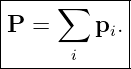
The total momentum is
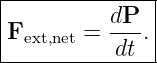
The net external force satisfies
Integrating,
This result is the bridge to conservation of linear momentum.
If
then
The next article develops this result in detail.
22 Variable-mass caution
The relation
is always the Newtonian definition of particle momentum.
However, applying
to an open system whose mass changes by material flowing across the system boundary requires
care.
Rockets are the classic example.
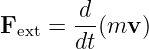
The simple constant-mass result
cannot be obtained by differentiating mv and treating ṁv as an ordinary external force
term.
Variable-mass mechanics requires an explicit momentum-flux analysis and will be treated
separately.
23 Common mistakes
- Treating momentum as a scalar instead of a vector.
- Dropping the sign of velocity in one-dimensional momentum problems.
- Using speed instead of velocity when computing momentum change.
- Forgetting that rebound momentum change can be larger than stopping momentum
change.
- Confusing impulse with force.
- Confusing impulse with work.
- Using peak force instead of average force in J = FavgΔt.
- Forgetting that the area under a force time graph is impulse.
- Forgetting other forces when converting net impulse into a particular contact impulse.
- Neglecting gravity during impact without first checking whether its impulse is small.
- Treating N s as a unit of energy.
- Assuming equal impulses imply equal kinetic-energy changes.
24 Practice exercises
- A 4.0 kg object moves at 3.0 m∕s in the positive x direction. Find its momentum.
- A 0.50 kg ball moves at −8.0 m∕s. Find its one-dimensional momentum.
- A constant 12 N force acts for 0.25 s. Find the impulse.
- A 2.0 kg particle changes velocity from 3.0 to −5.0 m∕s. Find the net impulse.
- A force time graph is triangular with base 0.040 s and peak 600 N. Find the impulse
and average force.
- A 0.15 kg baseball approaches a bat at 40 m∕s and leaves in the opposite direction at
50 m∕s. Find the magnitude of the impulse.
- If the contact time in the previous problem is 1.5 ms, find the average force magnitude.
- Derive the impulse momentum theorem from F = dp∕dt.
- Show that K = p2∕(2m) for a Newtonian particle.
- Explain why doubling the collision time halves the average force for a fixed momentum
change.
- A 1.0 kg puck has initial velocity (3ex + 2ey) m∕s and final velocity (−1ex + 5ey) m∕s.
Find the impulse vector.
- A force F(t) = F0t∕T acts from 0 to T. Find the impulse.
- A ball bounces vertically from a floor. Write an equation separating the floor-contact
impulse from the gravitational impulse.
- Give an example where a force does zero work but produces a nonzero impulse.
- Give an example where a force produces both nonzero work and nonzero impulse.
25 Summary
Linear momentum is
Newton’s second law in momentum form is
Impulse is
The impulse momentum theorem is
Average force satisfies
Momentum and kinetic energy are related by
Impulse changes momentum, while work changes kinetic energy.
For a particle system,
This system form leads directly to conservation of linear momentum, the subject of
M04-02.
References
References
[1] J. R. Taylor, Classical Mechanics, University Science Books, 2005.
[2] D. Kleppner and R. Kolenkow, An Introduction to Mechanics, 2nd ed., Cambridge
University Press, 2014.
[3] K. R. Symon, Mechanics, 3rd ed., Addison-Wesley, 1971.
[4] H. D. Young and R. A. Freedman, University Physics with Modern Physics, 15th ed.,
Pearson, 2020.
[5] OpenStax, University Physics, Volume 1, Rice University, 2016.