|
|
|
|||||||
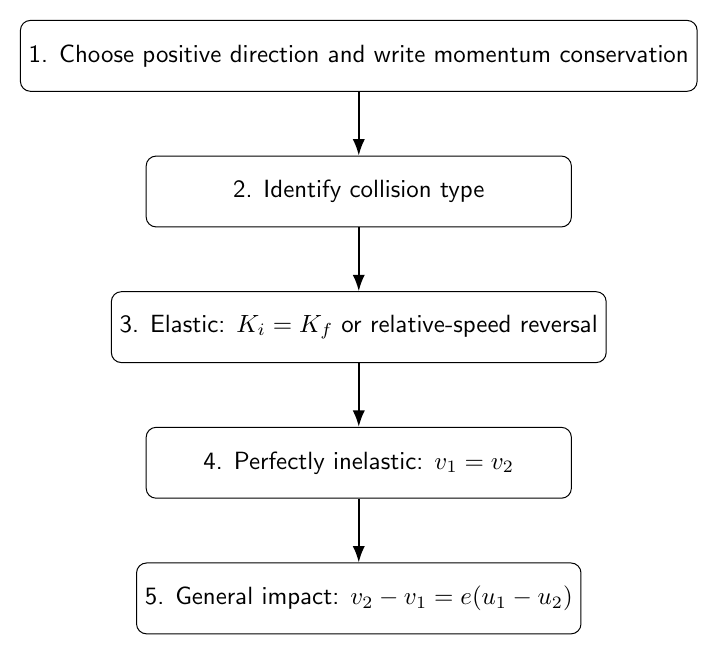
The second equation depends on collision type:
Figure 1. A compact strategy for one-dimensional collision problems. Momentum conservation is the first equation; collision type supplies the second.
1 High-value GRE facts
Part I: Original GRE-style problems
Problem 1: perfectly inelastic velocityA mass m moving at speed v sticks to an identical stationary mass. Their final speed is
Problem 2: perfectly inelastic kinetic energyFor the collision in Problem 1, the final translational kinetic energy is what fraction of the initial kinetic energy?
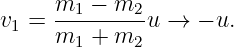
Problem 3: equal-mass elastic collisionA mass m moving at +v collides elastically with an identical stationary mass. The first mass leaves with velocity
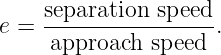
Problem 4: elastic relative speedFor a one-dimensional elastic collision,
Problem 5: restitutionA collision has coefficient of restitution e = 0.40 and approach relative speed 10 m∕s. The separation relative speed is
Problem 6: heavy wall limitA Light ball collides elastically with a stationary wall of effectively infinite mass. The ball’s final velocity is approximately
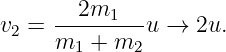
Problem 7: heavy projectile limitA very heavy object moving at speed u strikes a very light stationary object elastically. The light object’s final speed approaches
Problem 8: kinetic energy and restitutionFor fixed masses and initial relative speed, the fraction of relative kinetic energy remaining after impact is
Problem 9: collision impulseDuring a collision, object 1 receives impulse −7 N s. External impulse is negligible. Object 2 receives
Problem 10: perfectly inelastic center of massTwo objects stick together in an isolated collision. Their common final velocity equals
Problem 11: target at rest, elasticA mass m moving at speed u elastically strikes a stationary mass 3m. The first mass’s final velocity is
Problem 12: identifying collision typeAn isolated collision conserves momentum and leaves the two bodies moving together afterward. The collision is
Part II: Complete worked solutions
Solution 1Momentum conservation gives
Thus
Answer: (C).
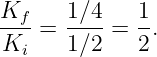
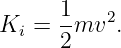
Solution 2Initially,
Finally,
Therefore
Answer: (B).
Solution 3Equal masses exchange velocities in a one-dimensional elastic collision. The moving mass stops:
Answer: (C).
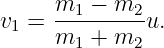
Solution 4For elastic one-dimensional impact,
Answer: (B).
Solution 5By definition,
Thus
Answer: (B).
Solution 6For m2 ≫ m1 and u2 = 0,
Answer: (E).
Solution 7For m1 ≫ m2,
Answer: (D).
Solution 8Because relative speed is multiplied by e and kinetic energy depends on speed squared,
Answer: (B).
Solution 9Internal collision impulses are equal and opposite:
Thus
Answer: (D).
Solution 10When the objects stick, their common final velocity is
Answer: (C).
Solution 11For an elastic collision with the target at rest,
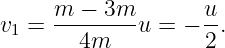
With m1 = m and m2 = 3m,
Answer: (B).
Solution 12If two bodies stick together after impact, the collision is perfectly inelastic. Answer: (B).
2 GRE checklist
References
References
"GRE Physics Companion: Collisions in One Dimension" is owned by bloftin.
This object's parent. Cross-references: center of mass velocity, relative kinetic energy, Light, translational kinetic energy, impulses, center of mass, formulas, speed, velocities, masses, kinetic energy, external impulse, momentum, type, collision There are 3 references to this object. This is version 1 of GRE Physics Companion: Collisions in One Dimension, born on 2026-10-04. Object id is 1393, canonical name is GREPhysicsCompanionCollisionsInOneDimension. Accessed 8 times total. Classification:
|
|
|
|
Pending Errata and AddendaNone.
|
DiscussionNo messages.
|
Interact |
![[parent]](https://images.physicslibrary.org/images/uparrow.png)



 (2
(2