
|
|
|
|||||||
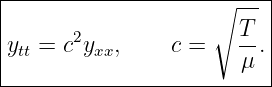
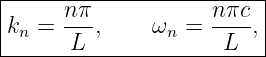
For a string fixed at both ends,
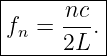
and
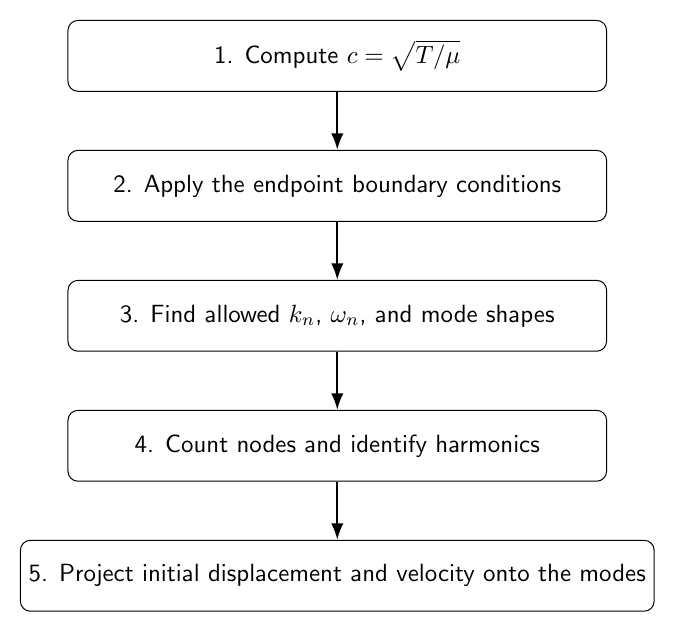
Figure 1. A compact string-mode strategy: determine the wave speed, apply the correct endpoint conditions, solve the spatial eigenvalue problem, then project any initial displacement and velocity onto the allowed normal modes.
1 High-value GRE facts
Part I: Original GRE-style problems
Problem 1: string wave speedFor tension
and linear density
the wave speed is
Problem 2: fixed-fixed fundamentalThe fundamental frequency of a fixed-fixed string is
Problem 3: third-mode wavelengthFor a fixed-fixed string, the wavelength of the third normal mode is
Problem 4: internal nodesThe fourth fixed-fixed normal mode has how many internal nodes?
Problem 5: dispersionFor an ideal uniform string,
Problem 6: orthogonalityFor
equals
Problem 7: midpoint pluckA perfectly symmetric triangular midpoint pluck excites
Problem 8: fixed-free fundamentalA string fixed at one end and free at the other has fundamental frequency
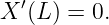
Problem 9: free-end boundary conditionThe ideal transverse free-end condition is
Problem 10: numerical fundamentalFor
the fundamental frequency is closest to
Problem 11: modal coefficientFor initial displacement
and zero initial velocity, the fixed-fixed coefficient is
Problem 12: modal dynamicsEach fixed-string modal coordinate obeys
Part II: Complete worked solutions
Solution 1The string equation gives
Therefore
Answer: (B).
Solution 2For
Answer: (B).
Solution 3
Thus
Answer: (B).
Solution 4Mode
has
internal nodes. Therefore mode 4 has 3. Answer: (C).
Solution 5For the ideal string,
Both phase and group velocity equal
Answer: (B).
Solution 6Distinct sine modes are orthogonal:
Answer: (A).
Solution 7For a midpoint triangular pluck,
This vanishes for every even
Answer: (B).
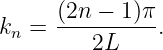
Solution 8The fixed-free allowed wave numbers are
For
Answer: (C).
Solution 9Zero transverse force at an ideal free end requires zero slope:
Answer: (B).
Solution 10
Then
Answer: (B).
Solution 11Orthogonality gives
Answer: (B).
Solution 12Each normal coordinate is an independent harmonic oscillator:
Answer: (B).
2 GRE checklist
References
References
"GRE Physics Companion: Continuous Strings, Standing Waves, and Normal Modes" is owned by bloftin.
This object's parent. Cross-references: mass, oscillator, normal coordinate, force, group velocity, phase, nonlinear equation, modal coordinate, amplitude, tension, nodes, frequencies, normal modes, velocity, displacement, speed This is version 1 of GRE Physics Companion: Continuous Strings, Standing Waves, and Normal Modes, born on 2026-10-18. Object id is 1503, canonical name is GREPhysicsCompanionContinuousStringsStandingWavesAndNormalModes. Accessed 10 times total. Classification:
|
|
|
|
Pending Errata and AddendaNone.
|
DiscussionNo messages.
|
Interact |
![[parent]](https://images.physicslibrary.org/images/uparrow.png)
 .
.















 before applying endpoint conditions.