GRE Physics Companion: Acceleration
This entry is the GRE-oriented companion to M01-03. The core article develops average and
instantaneous acceleration, graph interpretation, sign conventions, vector acceleration, circular
motion, and reference-frame behavior. Here the emphasis is rapid classification and test-day
efficiency.
1 Fast test-day strategy
When an acceleration problem appears, identify the structure first:
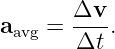
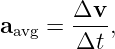
- Average acceleration:
Use the change in velocity, including direction.
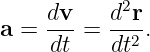
- Instantaneous acceleration:
Differentiate velocity once or position twice.
- Velocity-time graph:
- One-dimensional speeding/slowing: compare the signs of
 and
and  .
.
- Circular motion at constant speed:
and the direction is inward.
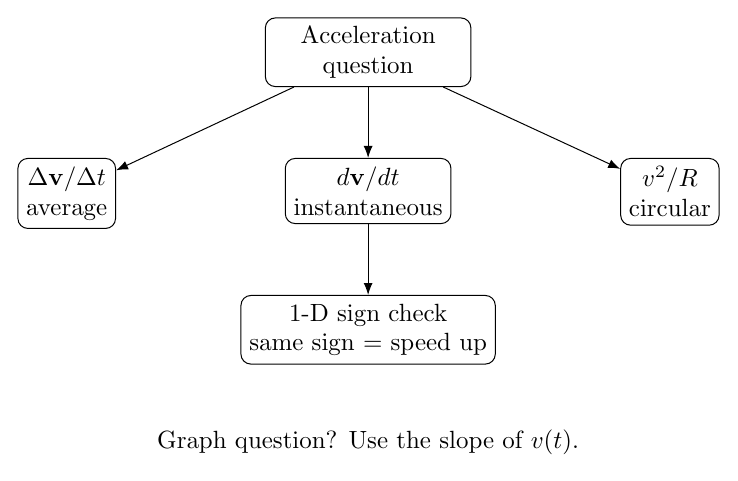
Figure 1. GRE-speed acceleration triage: velocity change, derivatives, graph slope, sign
comparison, and inward centripetal acceleration.
2 High-frequency traps
- Negative acceleration does not automatically mean slowing down.
- At the top of a vertical toss, velocity is zero but acceleration is not.
- Constant speed does not imply zero acceleration if direction changes.
- On a velocity-time graph, acceleration is slope, not height.
- In a Galilean inertial-frame change, acceleration is unchanged.
- In free fall without air resistance, different masses have the same gravitational
acceleration at the same location.
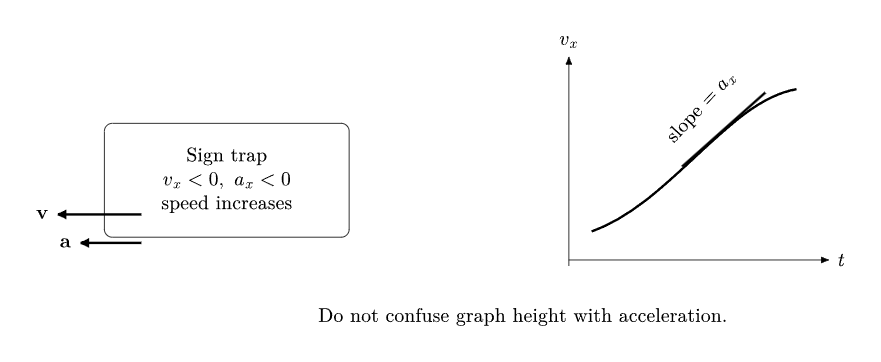
Figure 2. Two frequent GRE traps: sign of acceleration versus change of speed, and tangent slope
on a velocity-time graph.
3 Worked GRE example 1: differentiate efficiently
A particle has position
Find the acceleration at  .
.
Differentiate twice:
Therefore
GRE shortcut: if position is given and acceleration is requested, go directly to the second
derivative; intermediate numerical position values are irrelevant.
4 Worked GRE example 2: velocity reversal
A CAR changes velocity from  to
to  in
in  . Find the average
acceleration.
. Find the average
acceleration.
GRE shortcut: velocity is signed in one dimension. A reversal makes the velocity change larger
than the change in speed alone.
5 GRE-speed questions
M01-03G-Q01
A ball is thrown vertically upward. At its highest point, neglecting air resistance,
(A)  and
and  (B)
(B)  and
and  (C)
(C)  and
and  (D)
(D)
 and
and 
M01-03G-Q02
A particle moves left with  and
and  . The particle is
(A) speeding up (B) slowing down (C) at rest (D) moving with constant
speed
M01-03G-Q03
A car moves at constant speed  around a circle of radius
  . Its acceleration
magnitude is
. Its acceleration
magnitude is
(A)  (B)
(B)  (C)
(C)  (D)
(D) 
M01-03G-Q04
On a velocity-time graph, the tangent at one instant is horizontal. The instantaneous acceleration
is
(A) positive (B) negative (C) zero (D) impossible to determine
M01-03G-Q05
Frames  and
and  move with constant relative velocity. A particle has acceleration
  in
in  . Its acceleration in
  is
is
(A)  (B)
(B)  (C) dependent on frame speed (D) opposite in
direction
(C) dependent on frame speed (D) opposite in
direction
6 Answers and brief rationales
- Q01: B. Velocity is instantaneously zero at the top, but gravitational acceleration
remains downward.
- Q02: A. Velocity and acceleration have the same sign, so the speed increases.
- Q03: C.
 .
.
- Q04: C. Acceleration is the slope of the velocity-time graph.
- Q05: B. Galilean inertial frames related by constant velocity measure the same
acceleration.
7 Test-day summary
The fastest reliable relations are
and, for circular motion,
For one-dimensional questions, compare the signs of velocity and acceleration before deciding
whether the object speeds up or slows down.
References
[1] PhysicsLibrary, M01-03: Acceleration in Mechanics, core companion article.
[2] PhysicsLibrary, Acceleration, object id 73.
[3] OpenStax / cnxuniphysics, University Physics Volume 1, archived 2016 BCcampus
clone, CC BY 4.0.
[4] University of California, Davis, Physics 9A: Classical Mechanics, Physics LibreTexts,
CC BY-SA 4.0.

![[parent]](https://images.physicslibrary.org/images/uparrow.png)