|
|
|
|||||||
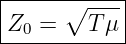
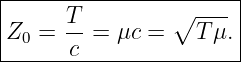
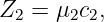
the characteristic mechanical wave impedance is
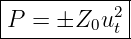
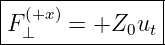
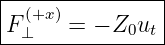
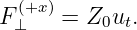
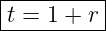
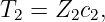
For a pure one-way traveling wave, using the positive-x force convention of WM22,
for right-moving propagation and
for left-moving propagation. Correspondingly,
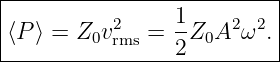
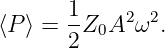
For a sinusoidal one-way wave,
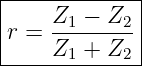
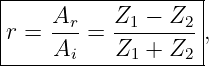
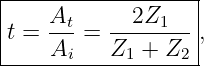
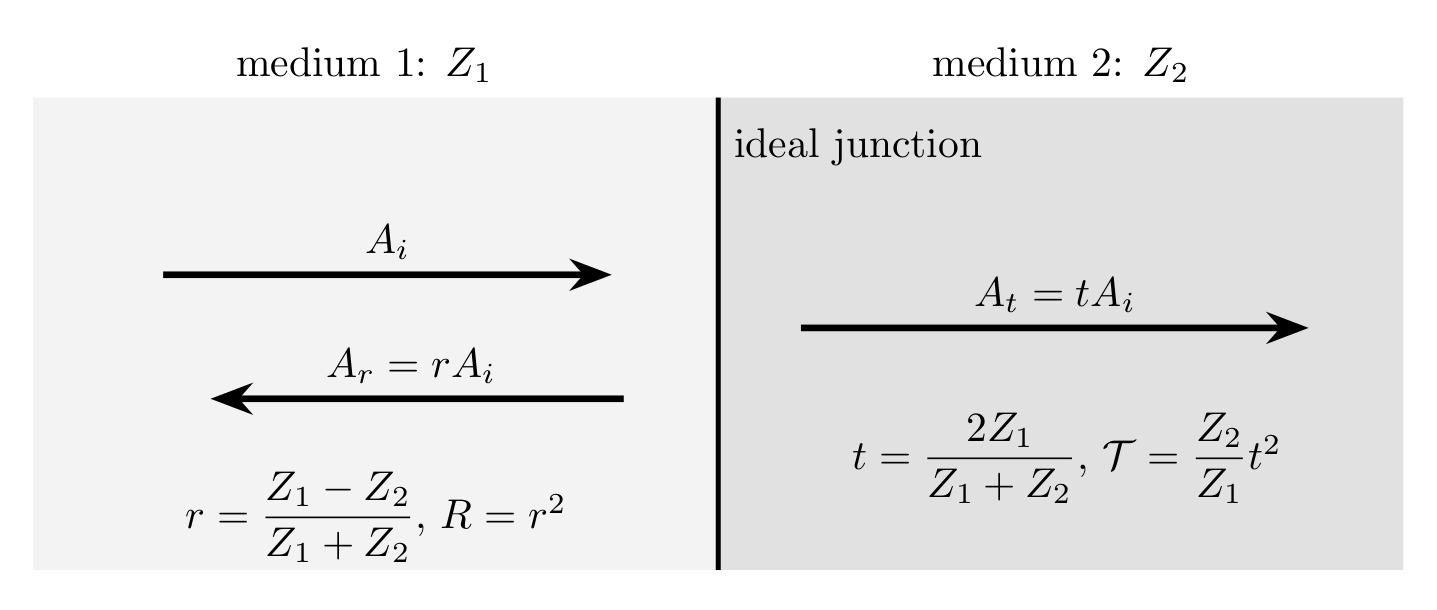
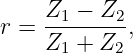
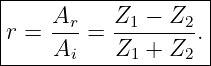
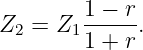
At an ideal junction between strings with impedances Z1 and Z2, the displacement-amplitude coefficients used in WM22 are
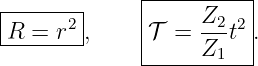
with power fractions
For a lossless ideal junction,
These relations are standard consequences of continuity of displacement and transverse force at an ideal junction [1, 2, 3, 6].
How to use this problem setAttempt all problems in Part I before reading Part II. In interface problems, keep four quantities distinct:
In particular, t is not generally the transmitted power fraction.
Part I: Exercises
Exercise 1: Compute wave speed and characteristic impedanceAn ideal string has
Find:
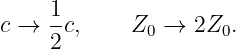
Exercise 2: Parameter scalingStart with a string having tension T, linear density μ, speed c, and impedance Z0. For each change below, determine the multiplicative factor by which c and Z0 change.
Explain why speed and impedance respond differently to the same parameter changes.
Exercise 3: Force, velocity, and signed powerThe following figure summarizes the WM22 sign convention.
Figure. For the same positive local transverse velocity, the transmitted transverse force reverses sign when the propagation direction reverses. A string has
At one point and instant,
Find the transverse force F⊥(+x) and signed instantaneous power for:
Explain what the sign of the power means.
Exercise 4: Sinusoidal average power from impedanceA string has
A right-moving sinusoidal wave has amplitude
and frequency
Find:
Exercise 5: Required amplitude for a target average powerA sinusoidal right-moving wave travels on a string with
at frequency
What displacement amplitude A is required to carry average power
Exercise 6: Reflection and transmission at an impedance stepA harmonic wave travels from a string with
into a second string with
The interface is ideal and lossless.
Figure. The displacement-amplitude coefficients and power fractions are related but are not the same quantities. Find:
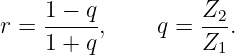
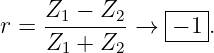
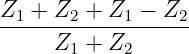
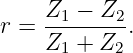
Exercise 7: Read the reflection coefficient from impedance ratioThe reflection coefficient can be written
Figure. The sign of r changes as the second-medium impedance passes through the matched value q = 1. For each impedance ratio below, compute r, R, and 𝒯 and state whether the reflected displacement is inverted:
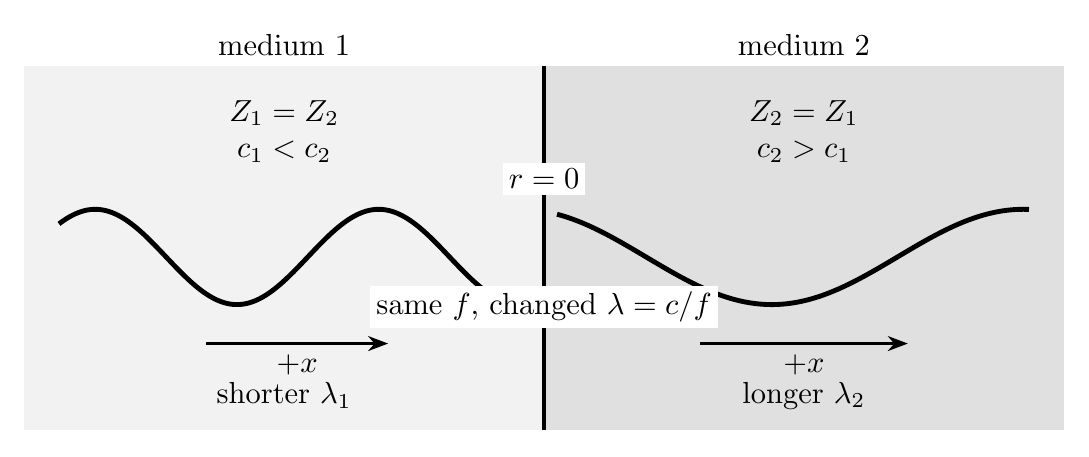
Exercise 8: Matched impedance but different speedTwo strings have parameters
and
Figure. Equal impedance does not require equal propagation speed. At fixed source frequency, the wavelength changes when the wave speed changes. Find:
Exercise 9: Fixed-like and free-like limitsUsing
answer the following.
Exercise 10: Derive the amplitude coefficientsAt an ideal interface, suppose the displacement amplitudes satisfy
and the force condition is
Starting from these two equations, derive
and
Then verify directly that
Exercise 11: Transmission amplitude greater than oneA wave travels from
into
Find r, t, R, and 𝒯 . Then explain why t > 1 does not violate conservation of energy.
Exercise 12: Infer an unknown impedance from a measured reflectionA displacement-amplitude reflection coefficient is measured to be
for a wave incident from a string with
Find:
Exercise 13: Same speed, different impedanceString 1 has
Design string 2 so that it has the same wave speed
but twice the characteristic impedance of string 1. Find suitable values of T2 and μ2, and then find the displacement reflection coefficient for a wave traveling from string 1 into string 2. Explain why equal wave speed does not guarantee zero reflection.
Exercise 14: Full impedance-interface synthesisA sinusoidal wave travels from string 1 into string 2. The string parameters are
and
The incident wave has displacement amplitude
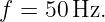
and frequency
Find:
Part II: Complete Worked Solutions
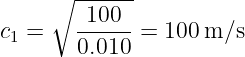
Solution 1: Compute wave speed and characteristic impedanceThe wave speed is
Using Z0 = μc,
Using the equivalent formula,
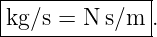
The units may also be written
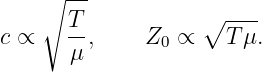
Solution 2: Parameter scalingThe governing relations are
The difference occurs because speed depends on the ratio T∕μ, whereas impedance depends on the product Tμ.
Solution 3: Force, velocity, and signed powerFor the right-moving wave,
Hence
The power is
For the left-moving wave,
and
Positive signed power means energy flows toward increasing x; negative signed power means energy flows toward decreasing x.
Solution 4: Sinusoidal average power from impedanceFirst compute
The angular frequency is
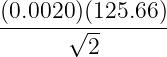
The RMS transverse velocity is
Therefore
So the average power is approximately
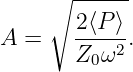
Solution 5: Required amplitude for a target average powerStart from
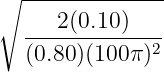
Solve for A:
Here
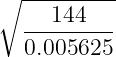
Thus
Therefore
Solution 6: Reflection and transmission at an impedance stepWith Z1 = 1.0 kg/s and Z2 = 3.0 kg/s,
The negative sign means the reflected displacement is inverted. The displacement transmission coefficient is
The reflected power fraction is
The transmitted power fraction is
The check is
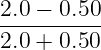
Solution 7: Read the reflection coefficient from impedance ratioUse
Solution 8: Matched impedance but different speedFor string 1,
and
For string 2,
while
Thus
and therefore
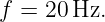
At f = 20 Hz,
The interface is matched even though the wavelength changes.
Solution 9: Fixed-like and free-like limitsIf
then
This is the fixed-like limit: the reflected displacement is inverted. If
then
This is the free-like limit: the reflected displacement is not inverted.
Solution 10: Derive the amplitude coefficientsStart with
Substitute this into the force condition:
Expand:
Collect the incident terms on one side and reflected terms on the other:
Hence
Since
divide by Ai:
Substitute the expression for r:
Thus
is simply displacement continuity written in coefficient form.
Solution 11: Transmission amplitude greater than oneWith
we obtain
The displacement transmission coefficient is
The power fractions are
and
Thus
The fact that t = 1.60 > 1 does not violate energy conservation because t is a displacement-amplitude ratio. Power contains the impedance factor as well as the square of the amplitude.
Solution 12: Infer an unknown impedance from a measured reflectionStart with
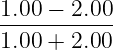
Solve for Z2:
so
Therefore
With r = −0.25 and Z1 = 1.20 kg/s,
The reflected power fraction is
For a lossless junction,
Finally,
Solution 13: Same speed, different impedanceFor string 1,
and
We want
and
Using
we find
Using
we obtain
The reflection coefficient is
Thus equal wave speed does not imply zero reflection. The interface reflects because the characteristic impedances are different.
Solution 14: Full impedance-interface synthesisFor string 1,
and
For string 2,
and
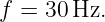
At f = 30 Hz,
The amplitude coefficients are
and
Therefore
The reflected wave is inverted because Ar is negative. The power fractions are
and
The angular frequency is
The incident average power is
More precisely,
The reflected power magnitude is
The transmitted power is
Finally,
Thus the numerical calculation confirms power conservation.
Common mistakes
What WM22E1 reinforcesThe exercises connect three parts of the wave-mechanics sequence:
connects medium parameters to the force-velocity relation,
connects impedance to directional energy transport, and
connects impedance mismatch to reflection. The distinction between amplitude coefficients and power fractions is especially important:
These ideas transfer directly to later treatments of acoustic impedance, electromagnetic wave impedance, and transmission-line characteristic impedance.
References
[1] A. P. French, Vibrations and Waves, M.I.T. Introductory Physics Series, W. W. Norton & Company, 1971. [2] Frank S. Crawford, Jr., Waves, Berkeley Physics Course, Volume 3, McGraw-Hill, 1968. [3] Howard Georgi, The Physics of Waves, Prentice Hall, 1993. [4] William Moebs, Samuel J. Ling, and Jeff Sanny, University Physics, Volume 1, OpenStax, 2016, Section 16.4, “Energy and Power of a Wave.” [5] William Moebs, Samuel J. Ling, and Jeff Sanny, University Physics, Volume 1, OpenStax, 2016, Section 16.5, “Interference of Waves,” including reflection at boundaries. [6] Massachusetts Institute of Technology, 8.03SC Physics III: Vibrations and Waves, MIT OpenCourseWare, Fall 2016. "example of Wave Mechanics: Mechanical Wave Impedance" is owned by bloftin.
This object's parent. Cross-references: electromagnetic wave, acoustic impedance, phase, square, energy conservation, impedance matching, angular frequency, formula, magnitudes, energy, boundary, source frequency, displacement transmission coefficient, displacement reflection coefficient, harmonic, average power, frequency, amplitude, instantaneous power, velocity, parameter, units, characteristic impedance, displacement, relations, power, impedances, force, speed, linear mass density, tension, WM22 This is version 1 of example of Wave Mechanics: Mechanical Wave Impedance, born on 2026-09-12. Object id is 1192, canonical name is ExampleOfWaveMechanicsMechanicalWaveImpedance. Accessed 236 times total. Classification:
|
|
|
|
Pending Errata and AddendaNone.
|
DiscussionNo messages.
|
Interact |
![[parent]](https://images.physicslibrary.org/images/uparrow.png)





 ,
,













































 =
=  = 0
= 0
 =
= 






 =
=  = 4
= 4 =
=  = 8
= 8













 (1
(1
















 = 2
= 2 = 4
= 4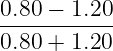





 (0
(0