Physics Library
 An open source physics library
Encyclopedia | Forums | Docs | Random  

[parent] GRE Physics Companion: Acoustic Waves, Sound Intensity, and Acoustic Impedance

(Example)

GRE Physics Companion: Acoustic Waves, Sound Intensity, and Acoustic Impedance

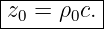
For a plane acoustic wave in a fluid,

|--------|
z0-=-ρ0c.-
(1)

The pressure and particle-velocity amplitudes satisfy

|--------|
-^p-=-z0^u-|
(2)

for positive-direction propagation.

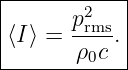
The average intensity is

|-----------|
|      2    |
⟨I⟩ = prms. |
-------ρ0c---
(3)

PIC

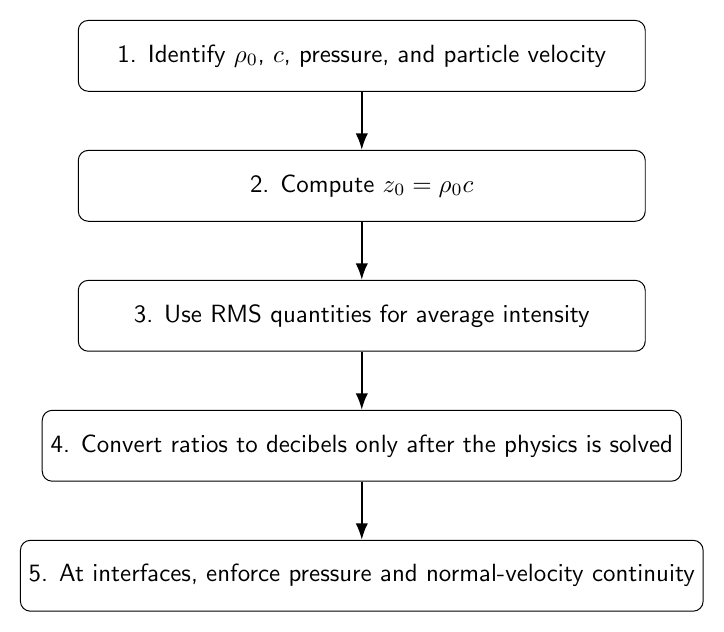
Figure 1. A compact acoustics strategy: identify the medium properties, compute c and ρ0c, connect pressure to particle velocity, use RMS quantities for intensity, and apply pressure and velocity continuity at an interface.

1 High-value GRE facts

  1. c2 = (∂p∕∂ρ) s.
  2. For an ideal gas, c = ∘ γp-∕ρ--
    0   0.
  3. z0 = ρ0c.
  4. For a right-moving plane wave, p′ = z0u.
  5. ⟨I⟩ = prms2∕z 0 = z0urms2.
  6. LI = 10 log 10(I∕Iref).
  7. Lp = 20 log 10(prms∕pref).
  8. Doubling ideal free-field distance lowers level by about 6 dB.
  9. Pressure reflection at a fluid interface is (z2 − z1)∕(z1 + z2).
  10. A rigid wall is a pressure antinode and particle-velocity node.

Part I: Original GRE-style problems

Problem 1: characteristic impedance

For a progressive plane wave in a fluid, the characteristic specific acoustic impedance is

  1. ρ0∕c
  2. ρ0c
  3. c∕ρ0
  4. ρ0c2
  5. 1∕(ρ0c)

Problem 2: intensity

The average intensity of a harmonic plane wave is

  1. prmsρ0c
  2. prms2∕(ρ 0c)
  3. prms∕(ρ0c)
  4. ρ0c∕prms2
  5. independent of pressure

Problem 3: right-moving pressure and velocity

For a right-moving progressive plane wave,

  1. pressure and particle velocity differ by 90∘
  2. pressure and particle velocity are in phase
  3. particle velocity is always zero
  4. pressure is always zero
  5. pressure and particle velocity have unrelated frequencies

Problem 4: intensity level

Increasing intensity by a factor of

100
(4)

changes the sound intensity level by

  1. 2 dB
  2. 10 dB
  3. 20 dB
  4. 40 dB
  5. 100 dB

Problem 5: pressure level

Increasing RMS pressure by a factor of

10
(5)

at fixed impedance changes sound pressure level by

  1. 3 dB
  2. 6 dB
  3. 10 dB
  4. 20 dB
  5. 100 dB

Problem 6: distance doubling

For an ideal isotropic point source in a lossless free field, doubling distance changes the intensity level by approximately

  1. +6 dB
  2. −6 dB
  3. +3 dB
  4. −3 dB
  5. 0 dB

Problem 7: pressure reflection

At Normal incidence from medium 1 to medium 2, the pressure reflection coefficient is

  1. (z1 − z2)∕(z1 + z2)
  2. (z2 − z1)∕(z1 + z2)
  3. 2z1∕(z1 + z2)
  4. 2z2∕(z1 + z2)
  5. z1z2

Problem 8: matched interface

If

z1 = z2,
(6)

then the pressure reflection coefficient is

  1. −1
  2. +1
  3. 0
  4. 1∕2
  5. infinite

Problem 9: rigid wall

At an ideal rigid wall,

  1. pressure is a node and particle velocity an antinode
  2. pressure is an antinode and particle velocity a node
  3. both pressure and particle velocity are nodes
  4. both are antinodes
  5. no reflection occurs

Problem 10: air intensity

Take

               3
ρ0 = 1.204 kg∕m  ,   c = 343 m ∕s,
(7)

and

prms = 0.200 Pa.
(8)

The intensity is closest to

  1. 9.7 × 10⁻⁷ W∕m2
  2. 9.7 × 10⁻⁵ W∕m2
  3. 4.1 × 10⁻² W∕m2
  4. 0.200 W∕m2
  5. 413 W∕m2

Problem 11: pressure level

For

p    = 0.200Pa
 rms
(9)

and

pref = 20 μPa,
(10)

the sound pressure level is

  1. 20 dB
  2. 40 dB
  3. 60 dB
  4. 80 dB
  5. 100 dB

Problem 12: two equal incoherent sources

Two independent incoherent sources each produce intensity

I.
(11)

Together they increase the level by approximately

  1. 1 dB
  2. 3 dB
  3. 6 dB
  4. 10 dB
  5. 20 dB

Part II: Complete worked solutions

Solution 1

For a progressive plane wave,

z0 = ρ0c.
(12)

Answer: (B).

Solution 2

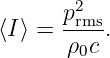
Using RMS pressure,

      p2
⟨I⟩ = -rms.
       ρ0c
(13)

Answer: (B).

Solution 3

For positive-direction propagation,

 ′
p = ρ0cu.
(14)

Thus pressure and particle velocity are in phase. Answer: (B).

Solution 4

10 log10(100) = 20 dB.
(15)

Answer: (C).

Solution 5

20 log10(10) = 20dB.
(16)

Answer: (D).

Solution 6

Ideal spherical spreading gives

I ∝ r−2.
(17)

Doubling distance gives

10 log10(1∕4 ) ≈ − 6.02 dB.
(18)

Answer: (B).

Solution 7

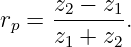
Pressure and normal particle-velocity continuity give

     z  − z
rp = -2----1.
     z1 + z2
(19)

Answer: (B).

Solution 8

If

z =  z ,
 1    2
(20)

then

rp = 0.
(21)

Answer: (C).

Solution 9

A rigid wall requires

u = 0.
(22)

Thus particle velocity is a node and pressure is an antinode. Answer: (B).

Solution 10

First,

z0 = (1.204)(343) ≈ 413 Pa s∕m.
(23)

Then

⟨I⟩ = (0.200 )2
--------
  413 (24)
≈ 9.7 × 10⁻⁵ W∕m2. (25)

Answer: (B).

Solution 11

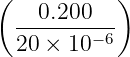
Lp = 20 log 10(          )
  --0.200---
  20 × 10−6 (26)
= 20 log 10(104) (27)
= 80 dB. (28)

Answer: (D).

Solution 12

The total intensity is

2I.
(29)

Thus

10 log  (2) ≈ 3.01 dB.
      10
(30)

Answer: (B).

2 GRE checklist

  1. Distinguish wave speed from particle velocity.
  2. Use ρ0c as the plane-wave specific acoustic impedance.
  3. Use RMS pressure in the standard intensity formula.
  4. Remember the different logarithmic factors: 10 for intensity, 20 for pressure amplitude.
  5. Apply pressure and normal particle-velocity continuity at a fluid interface.
  6. Use the acoustic pressure reflection sign, not the string displacement sign.
  7. A rigid wall is a pressure antinode and velocity node.
  8. Add physical intensities before converting independent-source results back to decibels.

References

References

[1]   PhysicsLibrary, M06-10, Fourier Analysis, Wave Packets, and Dispersion.

[2]   PhysicsLibrary, M06-09, Waves on Strings: Reflection, Transmission, and Mechanical Impedance.

[3]   A. P. French, Vibrations and Waves, W. W. Norton, 1971.

[4]   L. E. Kinsler, A. R. Frey, A. B. Coppens, and J. V. Sanders, Fundamentals of Acoustics, 4th ed., Wiley, 2000.


"GRE Physics Companion: Acoustic Waves, Sound Intensity, and Acoustic Impedance" is owned by bloftin.
(view preamble)
View style:
Other names:  M06-11G
Keywords:  GRE physics, acoustics, sound intensity, sound pressure, acoustic impedance, decibel, plane wave, acoustic reflection, acoustic transmission

This object's parent.

Cross-references: displacement, acoustic pressure, formula, speed, Normal, sound pressure level, impedance, sound intensity level, frequencies, phase, harmonic, specific acoustic impedance, node, antinode, plane wave, velocity, particle velocity, amplitudes, acoustic wave

This is version 1 of GRE Physics Companion: Acoustic Waves, Sound Intensity, and Acoustic Impedance, born on 2026-10-23.
Object id is 1524, canonical name is GREPhysicsCompanionAcousticWavesSoundIntensityAndAcousticImpedance.
Accessed 31 times total.

Classification:
Physics Classification: 45.50.-j (Dynamics and kinematics of a particle and a system of particles)
 45.05.+x (General theory of classical mechanics of discrete systems)

Pending Errata and Addenda

None.

Discussion

No messages.

Interact