|
|
|
|||||||
The goal is not merely to obtain correct numbers. Each solution emphasizes which geometric object is being computed and why that object will matter later in electrostatics, magnetostatics, or field integration.
1 Problems
Problem 1: components, magnitude, and unit directionLet
Find:
Problem 2: dot product, angle, and projectionLet
Find:
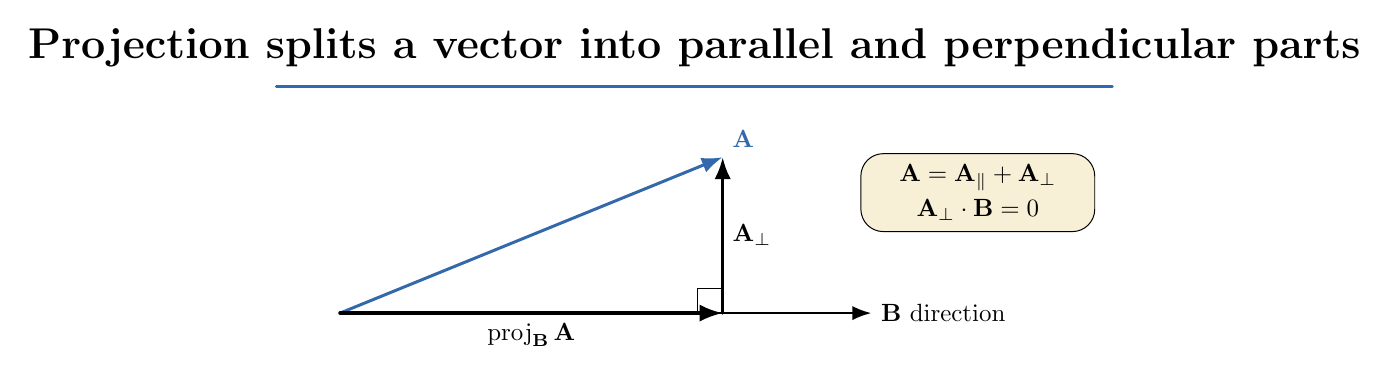
Figure 1. Projection geometry for Problem 2. The vector A is decomposed into a part parallel to B and a residual perpendicular to B.
Problem 3: cross product, direction, and areaLet
Compute A × B. Find the area of the parallelogram and triangle formed by the two vectors.
Problem 4: scalar triple product and oriented volumeLet
Compute
What is the physical volume of the parallelepiped? What information is contained in the sign?
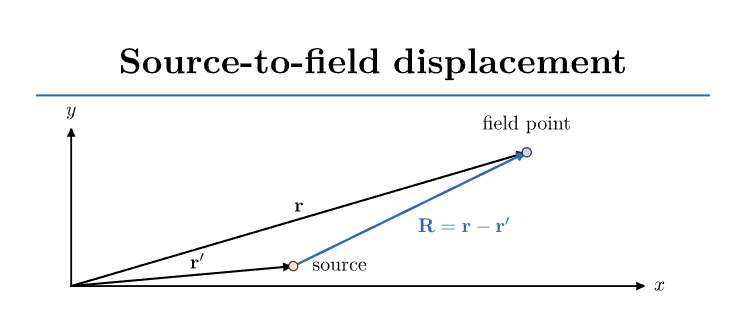
Problem 5: source point to field pointA source element is at
and the field is required at
Find
Explain why this geometry appears repeatedly in Coulomb-law and Biot-Savart integrals.
Problem 6: evaluating a vector fieldConsider
Evaluate F at (2,−1, 3) and find its magnitude there.
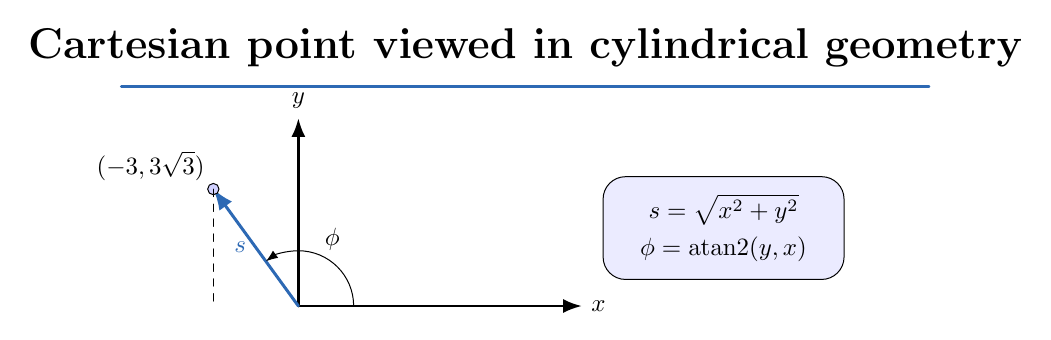
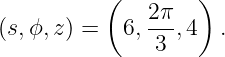
Problem 7: Cartesian to cylindrical coordinatesConvert the Cartesian point
to cylindrical coordinates (s,ϕ,z), using
Then convert back to Cartesian coordinates as a check.
Figure 3. Cylindrical coordinates separate the distance s from the axis, azimuth ϕ, and height z. The quadrant of the Cartesian point matters when determining ϕ.
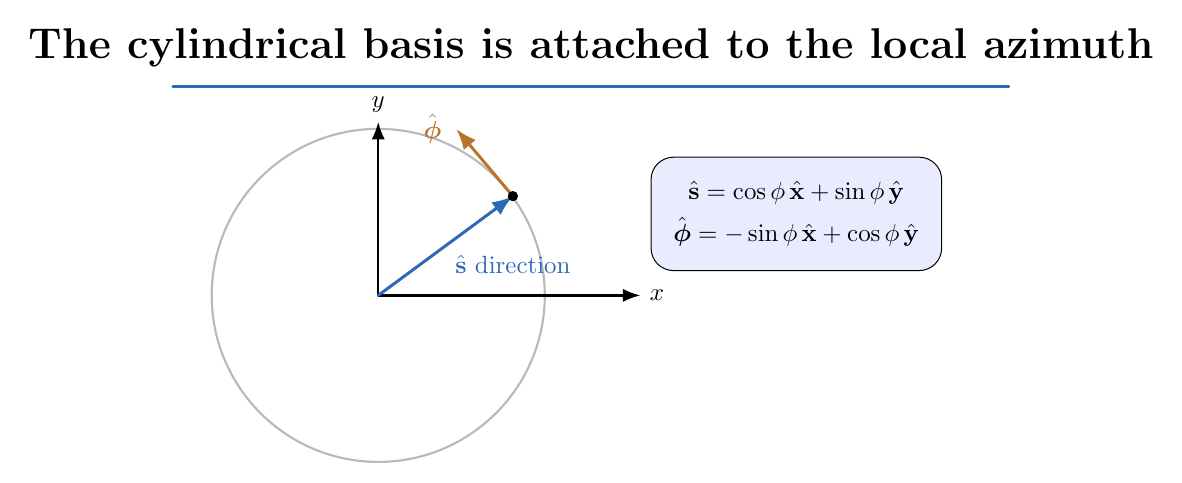
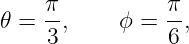
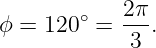
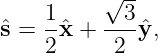
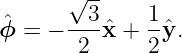
Problem 8: cylindrical basis componentsAt azimuth
write s and ϕ in the Cartesian basis. Then express
in the local cylindrical basis.
Figure 4. The cylindrical basis is local. The directions s and ϕ rotate as the azimuth changes.
Problem 9: a physical differential displacement in cylindrical coordinatesAt
a coordinate increment is
Find the three physical components of dr and estimate |dr|.
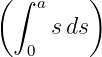
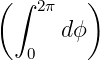
Problem 10: recover the volume of a cylinder from the cylindrical volume elementUsing
derive the volume of a cylinder of radius a and height h. Then evaluate the result for
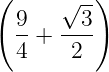
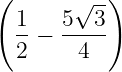
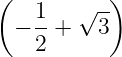
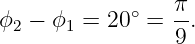
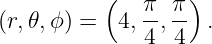
Problem 11: Cartesian to spherical coordinatesConvert
to spherical coordinates (r,𝜃,ϕ) using the convention in ED02:
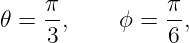
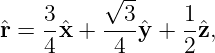
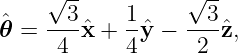
Problem 12: components of a vector in the spherical basisAt
express
in the local spherical basis
Problem 13: area of a spherical patchOn a sphere of radius
find the area of the patch bounded by
Use the exact spherical surface element rather than a flat-area approximation.
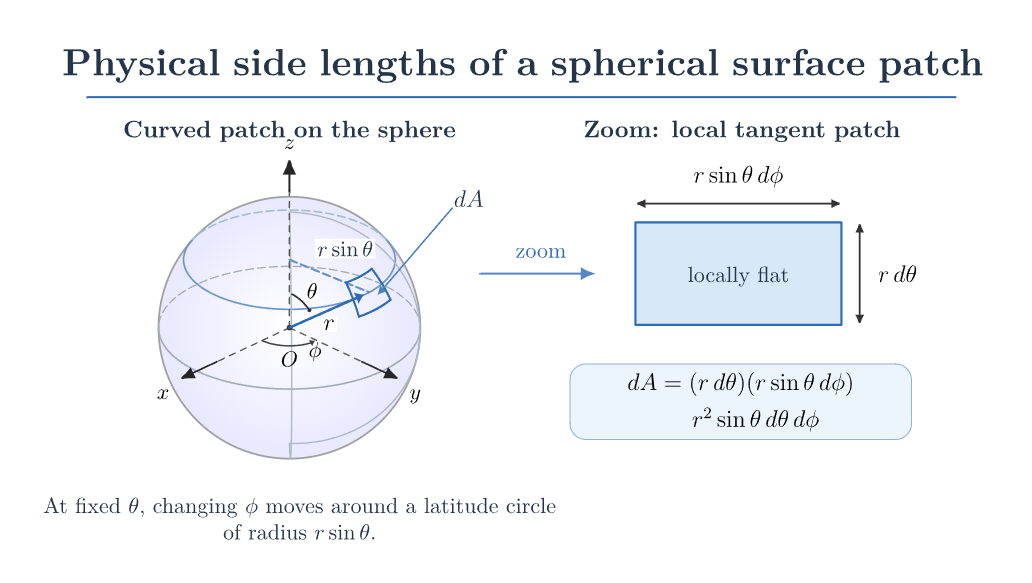
Figure 5. A spherical patch has physical side lengths rd𝜃 and r sin𝜃dϕ, so its area element is r2 sin𝜃d𝜃dϕ.
Problem 14: volume of a spherical wedgeFind the volume in the region
Use
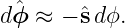
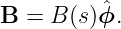
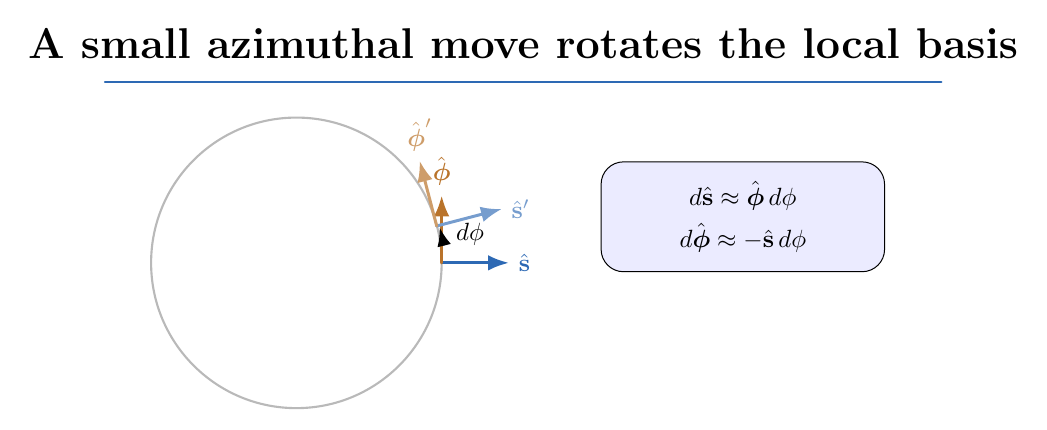
Problem 15: basis variation under a small azimuthal changeThe cylindrical basis is
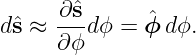
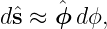
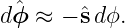
Show that for a small change dϕ,
and
Why is this important for later differentiation of vector fields?
Figure 6. A small azimuthal displacement rotates the cylindrical basis. Even if vector components remain numerically unchanged, the physical vector can change because its basis vectors have changed.
Problem 16: choose coordinates from symmetryFor each source configuration, state the most natural coordinate system, the coordinate on which the field magnitude can depend, and the most likely field direction before any detailed calculation:
Explain the symmetry argument in each case.
2 Complete solutions
Solution 1: components, magnitude, and unit directionThe magnitude follows from the orthonormal Cartesian basis:
Therefore
Its magnitude is
Hence
Solution 2: dot product, angle, and projectionFirst compute the dot product:
The magnitudes are
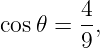
Using
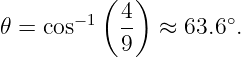
we obtain
so
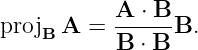
The vector projection of A onto B is
Since B ⋅ B = 9,
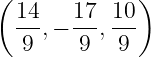
The perpendicular remainder is
Check orthogonality:
That zero is the defining geometric property of the residual.
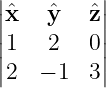
Solution 3: cross product, direction, and areaUsing the determinant form,
Its magnitude is
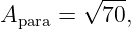
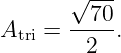
Therefore the parallelogram area is
while the triangle area is
The direction of the cross product is Normal to the plane containing A and B, with its sign fixed by the right-hand rule.
Solution 4: scalar triple product and oriented volumeFirst calculate
Then
The physical volume is the absolute value:
The negative sign indicates that the ordered set (A,B,C) has the opposite orientation from a right-handed ordered basis. The sign is orientation information; the geometric volume itself is positive.
Solution 5: source point to field pointSubtract the source position from the field position:
Its magnitude is
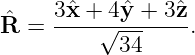
Therefore
In source integrals, each source element at r′ contributes to the field at r. The separation magnitude controls how strongly the contribution is weighted, while R supplies the relevant source-to-field direction.
Solution 6: evaluating a vector fieldSubstitute
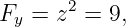
The components become
and
Thus
Its magnitude is
A vector field assigns a different vector to each point. Evaluating the field at one point produces one ordinary vector.
Solution 7: Cartesian to cylindrical coordinatesThe cylindrical radius is
The point lies in Cartesian quadrant II because
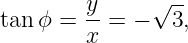
Since
the correct quadrant-II angle is
The vertical coordinate is unchanged:
Therefore
Check by converting back:
The original point is recovered.
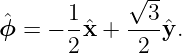
Solution 8: cylindrical basis componentsThe local cylindrical basis vectors are
and
At ϕ = 60∘,
Because the basis is orthonormal, the local components are obtained by projection:
and
Therefore
The physical vector did not change. Only its basis and component values changed.
Solution 9: a physical differential displacement in cylindrical coordinatesThe cylindrical differential displacement is
Convert the angle to radians:
The three physical edge lengths are therefore
and
Since the local basis is orthonormal,
The important point is that dϕ itself is not a length. The corresponding physical tangential distance is sdϕ.
Solution 10: recover the cylinder volumeIntegrate over the full cylinder:
Then
For
we obtain
Equivalently,
The factor s in the cylindrical volume element is exactly what makes the integration reproduce the familiar geometric result.
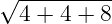
Solution 11: Cartesian to spherical coordinatesThe radial distance is
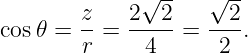
The polar angle satisfies
Thus
Since x = y > 0,
Therefore
Solution 12: components in the spherical basisThe spherical basis in Cartesian components is
and
At
these become
Project A onto each basis direction:
and
Hence
Solution 13: area of a spherical patchFor a surface of constant radius,
Therefore
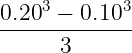
Using radians,
Thus
The factor sin 𝜃 accounts for the shrinking physical circumference of circles of latitude as the pole is approached.
Solution 14: volume of a spherical wedgeIntegrate over the stated bounds:
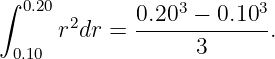
The radial integral is
The polar integral is
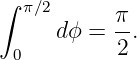
The azimuthal integral is
Therefore
Solution 15: basis variation under a small azimuthal changeDifferentiate the radial basis vector with respect to ϕ:
Therefore, to first order in dϕ,
Similarly,
so
This matters because differentiating a vector field in cylindrical or spherical coordinates requires differentiating not only its numerical components but also the basis vectors themselves. ED03 will build the differential operators from precisely this geometry.
Solution 16: choose coordinates from symmetry
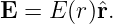
Isolated point chargeThe source is unchanged by any rotation about the charge. Distance from the source is the only scalar coordinate that can affect the field magnitude. Therefore spherical coordinates are natural:
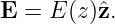
Infinite line charge on the z axisThe source is unchanged by translation along z and rotation about the z axis. The field magnitude can therefore depend only on distance s from the axis. Cylindrical coordinates are natural:
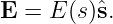
Very large uniformly charged plane in the xy planeThe source is unchanged by translations in x and y and by rotations in the plane. The field cannot prefer any in-plane direction. It must point normal to the plane and can depend only on z. Cartesian coordinates are natural:
For an ideal infinite uniform plane, later symmetry arguments will show that the magnitude is actually constant on either side, but that result is not needed here.
Long straight current on the z axisThe source is unchanged by translation along z and rotation about the axis. The magnetic field magnitude can depend only on s. The right-hand rule and rotational symmetry indicate the azimuthal direction:
This final example is especially useful: symmetry determines not only which coordinate the magnitude can depend on, but also which basis direction is physically allowed.
3 What these problems are preparing us to doED02E1 is deliberately geometric. We have not yet differentiated fields with gradient, divergence, or curl. Nevertheless, the main ingredients for those operators are now in place:
ED03 will turn these geometric ingredients into differential operators.
4 SummaryThe most important habits from these problems are:
References
[1] D. J. Griffiths, Introduction to Electrodynamics, 5th ed., Cambridge University Press, 2023. [2] E. M. Purcell and D. J. Morin, Electricity and Magnetism, 3rd ed., Cambridge University Press. [3] H. M. Schey, Div, Grad, Curl, and All That, W. W. Norton. [4] G. B. Arfken, H. J. Weber, and F. E. Harris, Mathematical Methods for Physicists, Academic Press. "Vector and Coordinate Geometry Problems" is owned by bloftin.
This object's parent. Cross-references: volume elements, scale factors, curl, divergence, gradient, magnetic field, scalar, operators, ED03, latitude, cylindrical volume element, position, Normal, cross product, determinant, dot product, charge, coordinate system, vector fields, spherical coordinates, Cartesian coordinates, cylindrical coordinates, displacement, volume, vector projection, vectors, unit vector, magnitude, magnetostatics, ED02 This is version 1 of Vector and Coordinate Geometry Problems, born on 2026-11-20. Object id is 1585, canonical name is VectorAndCoordinateGeometryProblems. Accessed 9 times total. Classification:
|
|
|
|
Pending Errata and AddendaNone.
|
DiscussionNo messages.
|
Interact |



































 = 1







 +


















 + 2


 + 2











 (2








 +
 +

 +

 +


 +