|
|
|
|||||||
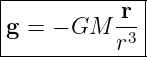
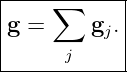
when the source is at the origin. For several masses,
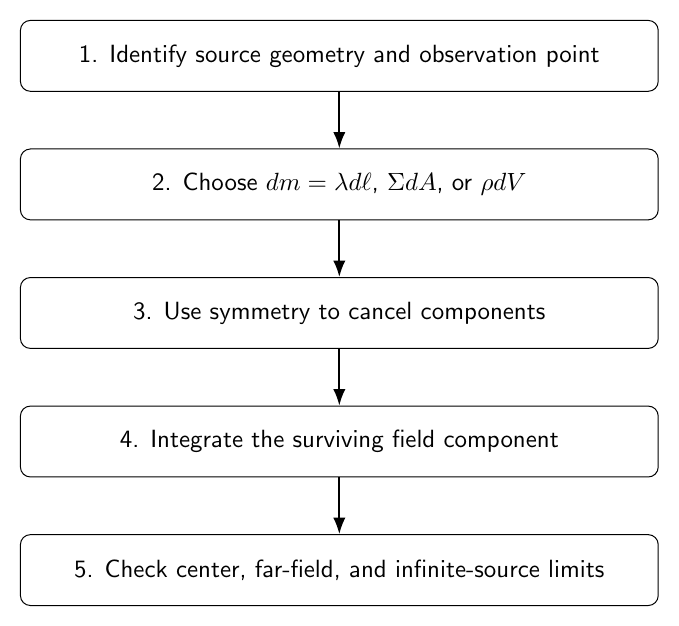
Figure 1. A compact field strategy: identify the source geometry, choose the correct density, exploit symmetry, integrate only surviving components, and check limiting behavior.
1 High-value GRE facts
Part I: Original GRE-style problems
Problem 1: field unitsThe SI units of gravitational field are
Problem 2: field and forceAt a fixed point in a gravitational field, the test mass is doubled. The gravitational field at that point
Problem 3: midpoint fieldTwo equal masses are placed symmetrically on opposite sides of the origin. The field at the origin is
Problem 4: line densityFor a thin rod with line density λ, the correct mass element is
Problem 5: ring centerThe gravitational field at the exact center of a uniform ring is
Problem 6: ring far fieldFar along the axis of a ring of total mass M, its field approaches
Problem 7: infinite-line scalingThe field magnitude of an infinite uniform line mass scales with perpendicular distance r as
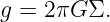
Problem 8: infinite-sheet fieldThe magnitude of the field of an infinite uniform sheet with surface density Σ is
Problem 9: disk far fieldA finite uniform disk observed at distances much larger than its radius behaves to leading order like
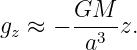
Problem 10: ring near centerFor small axial displacement z from the center of a uniform ring,
is approximately proportional to
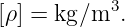
Problem 11: density dimensionsVolume mass density has units
Problem 12: symmetryFor a point on the symmetry axis of a uniform ring, transverse field components
Part II: Complete worked solutions
Solution 1By definition,
so the units are
Answer: (C).
Solution 2The field is created by the source masses and is independent of the test mass. Answer: (C).
Solution 3The two equal field vectors have equal magnitude and opposite direction. Answer: (C).
Solution 4A one-dimensional mass model uses
Answer: (C).
Solution 5Every ring element has a partner producing an equal and opposite field at the center. Answer: (C).
Solution 6At z ≫ a,
Answer: (B).
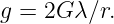
Solution 7The infinite-line limit gives
Answer: (C).
Solution 8The infinite-sheet limit of the disk result is
Answer: (B).
Solution 9Any localized source looks like its total point mass at sufficiently large distance to leading order. Answer: (C).
Solution 10For |z|≪ a,
Answer: (D).
Solution 11volume density is mass per volume:
Answer: (C).
Solution 12Rotational symmetry pairs transverse components with equal and opposite partners. Answer: (B).
2 GRE checklist
References
References
"GRE Physics Companion: Gravitational Fields, Superposition, and Continuous Mass Distributions" is owned by bloftin.
This object's parent. Cross-references: dimension, superposition, volume density, torque, displacement, volume, vectors, magnitude, force, units, mass, The Gravitational Field There are 6 references to this object. This is version 1 of GRE Physics Companion: Gravitational Fields, Superposition, and Continuous Mass Distributions, born on 2026-10-31. Object id is 1552, canonical name is GREPhysicsCompanionGravitationalFieldsSuperpositionAndContinuousMassDistributions. Accessed 6 times total. Classification:
|
|
|
|
Pending Errata and AddendaNone.
|
DiscussionNo messages.
|
Interact |