|
|
|
|||||||
and
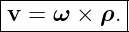
For rotation about a fixed point,
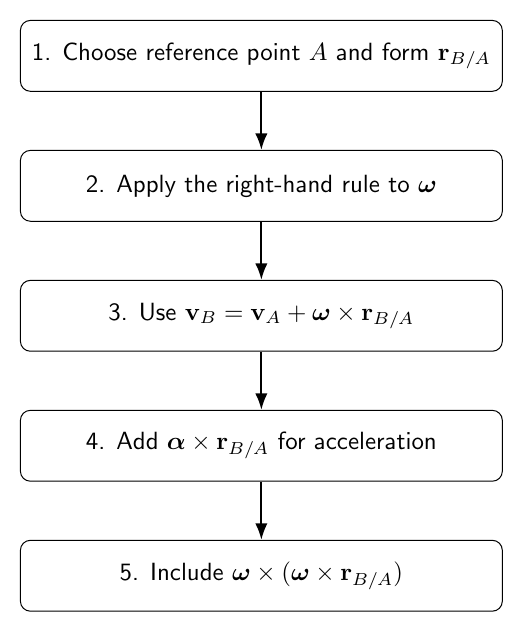
Figure 1. A compact strategy for vector rotational kinematics. Choose a reference point, form the separation vector, apply the angular-velocity cross product, and include both angular-acceleration and Normal terms for acceleration.
1 High-value GRE facts
Part I: Original GRE-style problems
Problem 1: right-hand ruleA disk rotates counterclockwise when viewed from the +z side. Its angular velocity vector points
Problem 2: point velocityLet
and
Then the point velocity is
Problem 3: point on the axisIf ρ is parallel to ω, then the rotational velocity ω ×ρ is
Problem 4: changing directionA body has constant angular speed but the direction of ω changes. Which statement is correct?
Problem 5: normal accelerationFor fixed angular velocity and position ρ perpendicular to the axis,
points
Problem 6: relative velocityPoints A and B on a rigid body satisfy
Then
is
Problem 7: rigidity conditionFor two points on a rigid body, the relative velocity vB − vA is always
Problem 8: skew matrixThe matrix representing cross product with ω satisfies
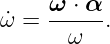
Problem 9: angular-speed derivativeIf α ⊥ ω at an instant, then at that instant
Problem 10: finite rotationsTwo finite rotations about different axes are generally
Problem 11: acceleration with zero angular accelerationIf α = 0 but ω≠0, a point away from the axis has
Problem 12: translating reference pointFor a translating and rotating rigid body, the velocity of point B is
Part II: Complete worked solutions
Solution 1Counterclockwise rotation viewed from +z corresponds to the right-hand thumb pointing along +z. Answer: (D).
Solution 2
Answer: (C).
Solution 3Parallel vectors have zero cross product:
Answer: (C).
Solution 4angular acceleration is the vector derivative
A changing direction produces a nonzero derivative even if the magnitude remains fixed. Answer: (C).
Solution 5For ρ ⊥ ω,
Answer: (B).
Solution 6
Answer: (C).
Solution 7The rigid distance constraint gives
Thus the relative velocity is perpendicular to the separation vector. Answer: (B).
Solution 8The cross-product matrix is skew-symmetric:
Answer: (B).
Solution 9
If the vectors are perpendicular, their dot product is zero. Answer: (C).
Solution 10Finite rotations about different axes generally depend on order. Answer: (B).
Solution 11With α = 0,
Answer: (B).
Solution 12For two points on the same rigid body,
Answer: (B).
2 GRE checklist
References
References
"GRE Physics Companion: Angular Velocity and Angular Acceleration as Vectors" is owned by bloftin.
This object's parent. Cross-references: skew-symmetric matrix, dot product, angular acceleration, scalar, noncommutative, determinant, matrix, position, angular velocity, magnitude, velocity, angular velocity vector, speed, commute, acceleration, Normal, cross product, vector, relations, kinematics, rigid body This is version 1 of GRE Physics Companion: Angular Velocity and Angular Acceleration as Vectors, born on 2026-10-05. Object id is 1421, canonical name is GREPhysicsCompanionAngularVelocityAndAngularAccelerationAsVectors. Accessed 4 times total. Classification:
|
|
|
|
Pending Errata and AddendaNone.
|
DiscussionNo messages.
|
Interact |
![[parent]](https://images.physicslibrary.org/images/uparrow.png)











![[ω × ]T = − [ω ×].](https://images.physicslibrary.org/cache/objects/1421/make4ht/GREPhysicsCompanionAngularVelocityAndAngularAccelerationAsVectors12x.png)