
|
|
|
|||||||
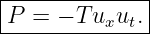
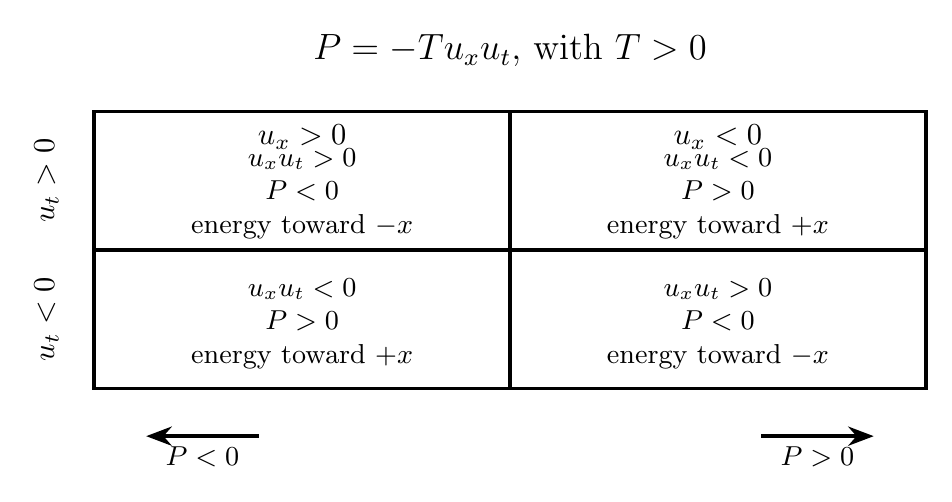
Positive power denotes net mechanical-energy transport toward increasing x, while negative power denotes net transport toward decreasing x. For a pure right-moving wave,
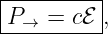
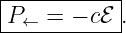
and for a pure left-moving wave,
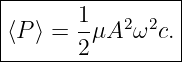
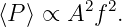
For a right-moving sinusoidal wave,
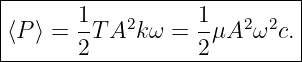
the instantaneous and average powers are
and
For a general two-direction solution,
WM19 found
These are the standard ideal-string power relations developed in WM19 and in standard wave-mechanics treatments [1, 2, 3, 5].
Figure. The sign of P = −Tuxut depends on the product of local slope and local transverse velocity. The sign of power records the direction of net energy flow.
How to use this problem setAttempt all exercises in Part I before consulting Part II. Throughout the set, keep three distinctions explicit:
Part I: Exercises
Exercise 1: Instantaneous power from local measurementsA string has tension
At one event,
Find:
Exercise 2: Sign diagnosticsWithout doing any arithmetic beyond signs, determine the sign of P and the corresponding direction of energy flow for each case:
Use the sign diagram above to check your reasoning.
Exercise 3: Dimensional consistencyShow that
has units of watts. Explicitly identify the units of T, ux, and ut.
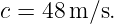
Exercise 4: Pure traveling wave and the relation P = ±cℰAt one event, a pure traveling wave has energy density
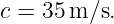
and wave speed
Find the signed power if the wave is:
Explain why the magnitudes are equal.
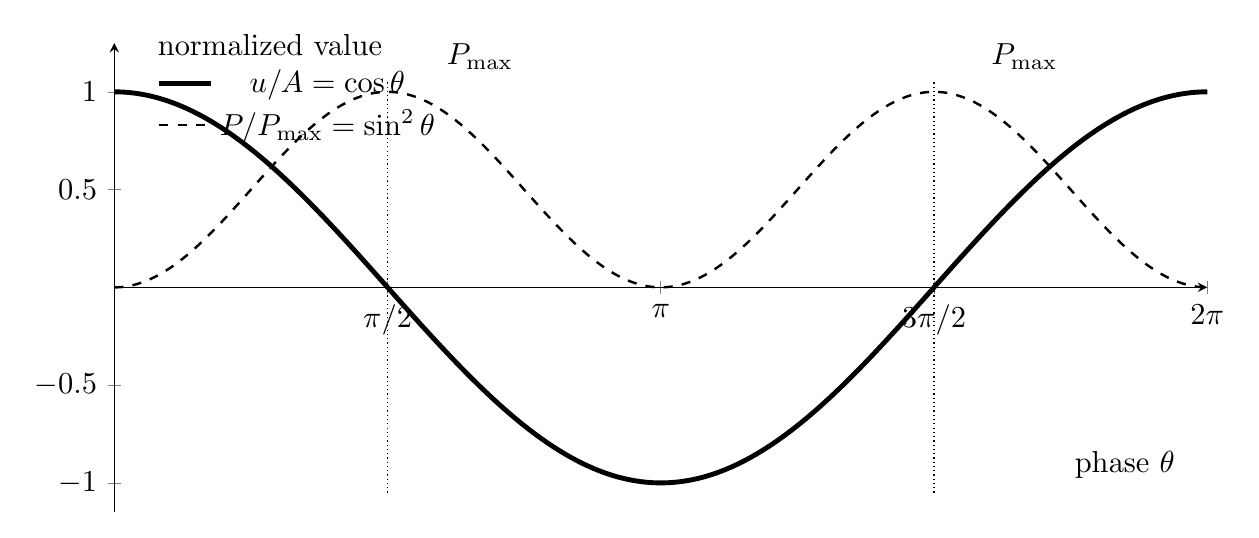
Exercise 5: Instantaneous sinusoidal powerA right-moving sinusoidal wave is
Figure. For a right-moving sinusoidal wave, displacement varies as cos 𝜃 while normalized instantaneous power varies as sin 2𝜃.
Exercise 6: Average power of a sinusoidal waveA string has
A right-moving sinusoidal wave on the string has amplitude
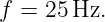
and frequency
Find:
Exercise 7: Required amplitude for a target powerThe same string as in Exercise 6 must carry an average power of
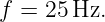
at frequency
What sinusoidal amplitude is required?
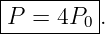
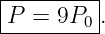
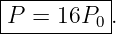
Exercise 8: Square-law scalingFor a fixed string, a sinusoidal traveling wave initially has average power P0. Find the new average power in terms of P0 if:
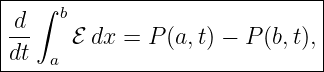
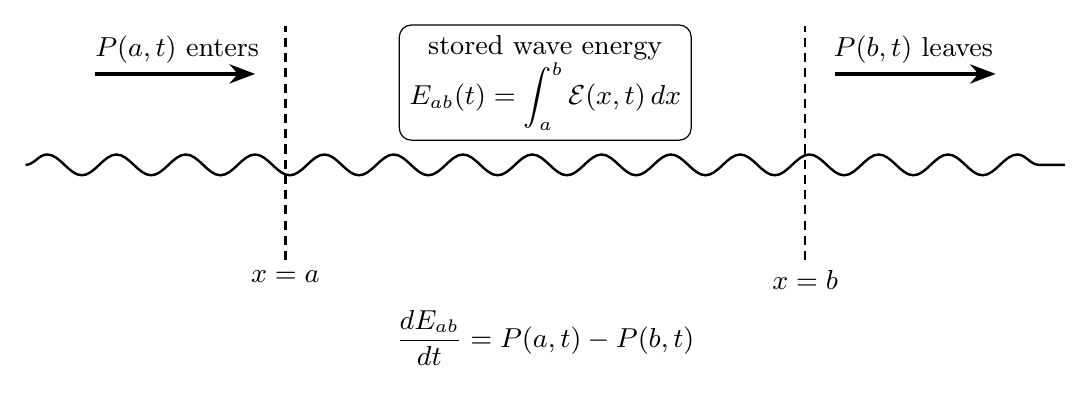
Exercise 9: Energy balance on a finite intervalThe power entering a fixed interval [a,b] at one instant is
while the power leaving at the right boundary is
Figure. For a fixed interval, the rate of change of stored energy equals incoming power minus outgoing power.
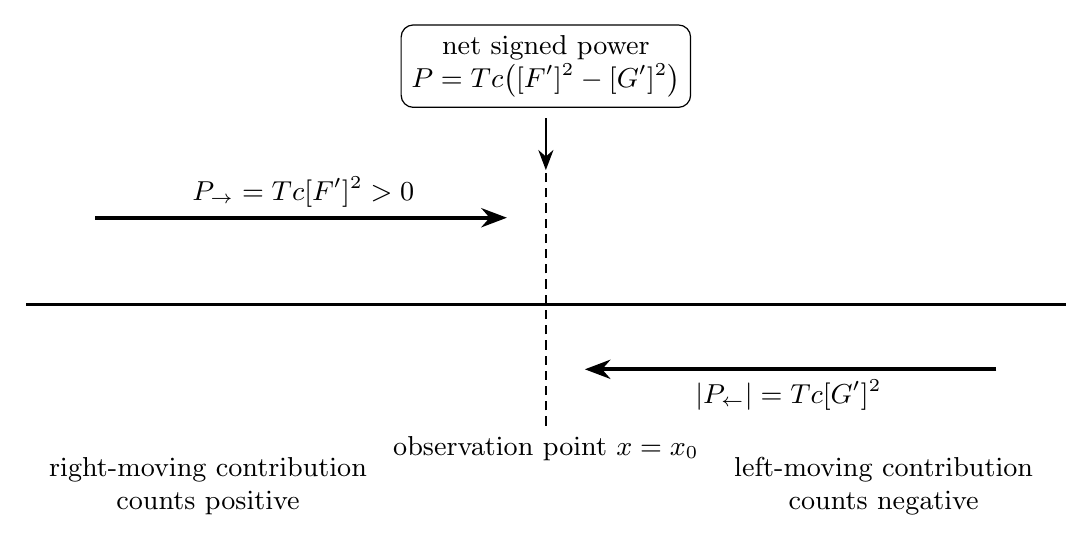
Exercise 10: Competing right- and left-moving wavesAt one event in a two-direction field,
and the local profile derivatives are
Use
to find:
Figure. Right-moving and left-moving energy contributions enter the signed power with opposite signs.
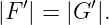
Exercise 11: Equal counter-propagating componentsSuppose at one event the two directional derivatives satisfy
Exercise 12: Instantaneous power in a standing waveA standing wave is
Exercise 13: Power carried by a localized pulseAt one point in a purely right-moving pulse, the local energy density is
and the propagation speed is
Exercise 14: Synthesis from string properties to transported powerA stretched string has
It carries a right-moving sinusoidal wave with
Find:
Part II: Complete Worked Solutions
Solution 1: Instantaneous power from local measurementsUse
With
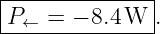
we obtain
Because P > 0, energy flows toward increasing x. If ut changes sign while the slope does not, then
and
The magnitude is unchanged, but the energy-flow direction reverses.
Solution 2: Sign diagnosticsSince T > 0, the sign of P is the opposite of the sign of uxut.
Solution 3: Dimensional consistencyThe units are
The slope ux is dimensionless because it is displacement per horizontal distance, meter per meter. Therefore
Solution 4: Pure traveling wave and the relation P = ±cℰFor a pure right-moving wave,
Hence
For a pure left-moving wave,
so
The magnitudes are equal because the energy density and propagation-speed magnitude are the same; only the direction of transport differs.
Solution 5: Instantaneous sinusoidal powerLet
Then
and
Therefore
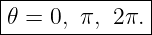
The power is zero when
so in one cycle
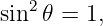
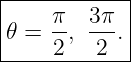
It is maximum when
which occurs at
At these phases the displacement is zero because cos 𝜃 = 0, but both the local slope magnitude and transverse-speed magnitude are maximal. Since power depends on their product rather than on displacement itself, the power is largest there.
Solution 6: Average power of a sinusoidal waveFirst find the wave speed:
The angular frequency is
Convert the amplitude:
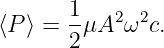
Now use
Thus
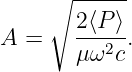
Solution 7: Required amplitude for a target powerSolve
for A:
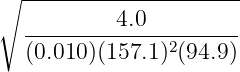
Using
we obtain
Therefore
Solution 8: Square-law scalingFor a fixed string,
Therefore:
Solution 9: Energy balance on a finite intervalUse
Therefore
The stored energy is increasing because more power enters than leaves. If the powers are interchanged,
so the same magnitude of energy is being lost from the interval.
Solution 10: Competing right- and left-moving wavesThe right-moving contribution is
The signed left-moving contribution is
Hence the net power is
Because the net power is positive, the net energy transport is toward increasing x.
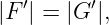
Solution 11: Equal counter-propagating componentsIf
then
Therefore
This does not imply that the local energy density is zero. Each component can carry nonzero energy, but their signed directional power contributions cancel. A perfect standing wave is produced by equal-amplitude counter-propagating components, but the two local derivative magnitudes need not be equal at every event because the two components are sampled at different phases. Thus a standing wave can have nonzero instantaneous local power. The equality considered here is a special event at which the opposing directional contributions cancel exactly; over a full cycle, a perfect standing wave has zero time-averaged transport.
Solution 12: Instantaneous power in a standing waveFor
we have
and
Thus
Use
twice to obtain
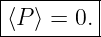
At fixed x, the time average of sin(2ωt) over a full cycle is zero, so
Instantaneous power can vanish because the spatial factor is zero,
or because the temporal factor is zero,
Zero average transport means that there is no net energy carried permanently in one direction over a cycle. It does not mean that energy is locally stationary; energy moves back and forth within the standing-wave pattern.
Solution 13: Power carried by a localized pulseFor a pure right-moving wave,
Hence
For a pure left-moving wave with the same local energy density,
The detailed pulse shape is unnecessary because the pure-traveling-wave identity P = ±cℰ already contains the local energy-flow rate.
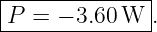
Solution 14: Synthesis from string properties to transported powerThe string properties are
The wave amplitude and frequency are
(a) Wave speed
(b) Angular frequency
(c) Wavelength
(d) Wavenumber
(e) Average energy density
(f) Average power from c⟨ℰ⟩
(g) Check using
|
| ⟨P⟩ | =  TA2kω TA2kω | (140) |
=  (120)(0.0030)2(2.81)(251.3) (120)(0.0030)2(2.81)(251.3) | (141) | |
| ≈ 0.381 W . | (142) |
The two independent forms agree, as they must.
The main result is
 | (143) |
For a pure traveling wave,
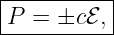 | (144) |
where the sign gives the propagation direction. For a sinusoidal traveling wave,
 | (145) |
For a fixed interval,
 | (146) |
and for equal counter-propagating components the signed directional power can cancel even though substantial wave energy remains in the system.
These ideas prepare the next stage of the course, where average power, intensity, flux, and impedance are developed more systematically.
[1] A. P. French, Vibrations and Waves, M.I.T. Introductory Physics Series, W. W. Norton & Company, 1971.
[2] Frank S. Crawford, Jr., Waves, Berkeley Physics Course, Volume 3, McGraw-Hill, 1968.
[3] William Moebs, Samuel J. Ling, and Jeff Sanny, University Physics, Volume 1, OpenStax, 2016, Section 16.4, “Energy and Power of a Wave.”
[4] Howard Georgi, The Physics of Waves, Prentice Hall, 1993, chapters on the classical wave equation, energy, and energy flow.
[5] Massachusetts Institute of Technology, 8.03SC Physics III: Vibrations and Waves, MIT OpenCourseWare, wave-equation and mechanical-wave materials.
[6] Richard P. Feynman, Robert B. Leighton, and Matthew Sands, The Feynman Lectures on Physics, Volume I, chapters on waves and the wave equation.
| Other names: | WM19E1 |
| Keywords: | wave mechanics, wave power, energy flux, energy conservation, stretched string, traveling wave, standing wave, sinusoidal wave, average power, exercises, worked solutions |
| Physics Classification: | 46.40.Cd (Mechanical wave propagation (including diffraction, scattering, and) |
| 46.40.-f (Vibrations and mechanical waves ) |
None.
No messages.
![[parent]](https://images.physicslibrary.org/images/uparrow.png)




![|--------------------------------------|
|P = Tc ([F ′(x − ct)]2 − [G ′(x + ct)]2) .|
---------------------------------------](https://images.physicslibrary.org/cache/objects/1186/make4ht/ExampleOfWaveMechanicsPowerCarriedByA1DWave7x.png)












![( ′2 ′2)
P = Tc [F ] − [G ]](https://images.physicslibrary.org/cache/objects/1186/make4ht/ExampleOfWaveMechanicsPowerCarriedByA1DWave23x.png)











![[T] = N, [ux] = 1, [ut] = m/s.](https://images.physicslibrary.org/cache/objects/1186/make4ht/ExampleOfWaveMechanicsPowerCarriedByA1DWave40x.png)










 (0
(0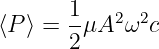







![[F ′]2 = [G ′]2.](https://images.physicslibrary.org/cache/objects/1186/make4ht/ExampleOfWaveMechanicsPowerCarriedByA1DWave77x.png)













 (0
(0