|
|
|
|||||||
and
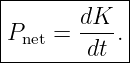
For the net force,
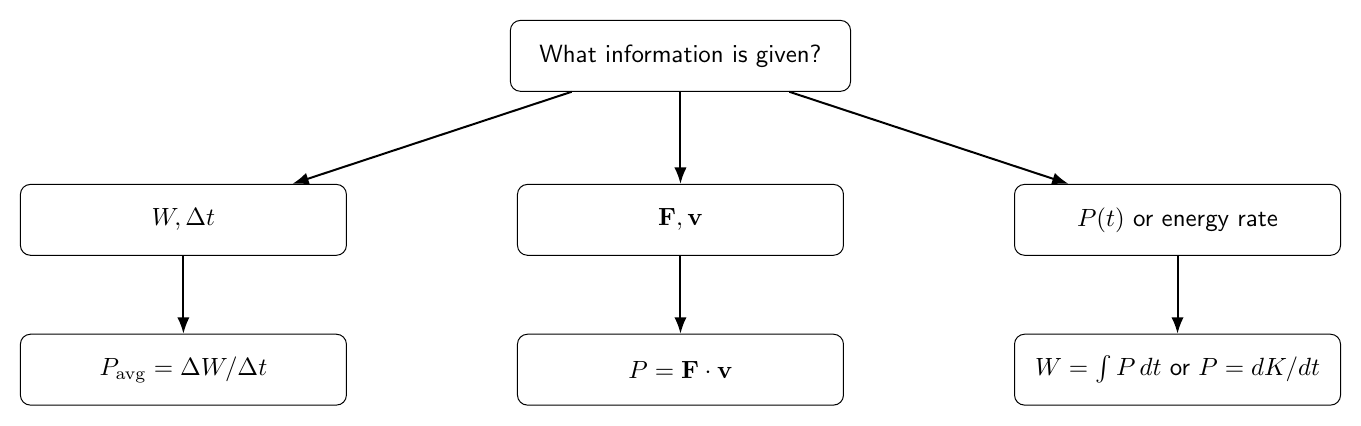
Figure 1. A compact strategy for GRE power problems. First decide whether the question concerns average power, instantaneous force-velocity power, energy rate, or efficiency.
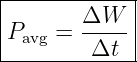
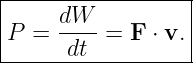
1 High-value GRE facts
Part I: Original GRE-style problems
Problem 1: average powerA machine does 18 kJ of work in 6.0 s. Its average power is
Problem 2: force and velocityA 100 N force acts on a particle moving at 5.0 m∕s. The angle between force and velocity is 60∘. The power delivered by the force is
Problem 3: perpendicular forceA particle moves in uniform circular motion under a central force. The instantaneous power delivered by the central force is
Problem 4: braking powerA braking force of magnitude 4000 N acts opposite a CAR moving at 15 m∕s. The instantaneous power of the braking force is
Problem 5: liftingA 60 kg person climbs a vertical height of 5.0 m in 4.0 s. Taking g = 9.8 m∕s2, the average mechanical power against gravity is closest to
Problem 6: kilowatt-hourOne kilowatt-hour is equal to
Problem 7: constant powerA motor delivers constant mechanical power P to a vehicle moving in a straight line. Neglecting all resistive forces, the drive force at speed v is
Problem 8: quadratic dragA vehicle moves at steady speed through a regime in which the drag force is proportional to v2. If its speed is doubled, the mechanical power required to overcome drag is multiplied by
Problem 9: efficiencyA motor has efficiency η = 0.80 and must deliver 4.0 kW of useful mechanical output. The required input power is
Problem 10: power-time graphThe power delivered to a system increases linearly from 0 to 100 W during a 4.0 s interval. The work done during the interval is
Problem 11: kinetic energy rateA 2.0 kg particle moves in one dimension at 6.0 m∕s and has acceleration 3.0 m∕s2 in the same direction. The net instantaneous power is
Problem 12: constant net power from restA 4.0 kg particle starts from rest and receives constant net power 200 W for 5.0 s. Its final speed is closest to
Part II: Complete worked solutions
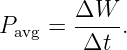
Solution 1Average power is
Thus
Answer: (B).
Solution 2Use
Therefore
Answer: (C).
Solution 3In uniform circular motion, the central force is perpendicular to the velocity:
Therefore
Answer: (B).
Solution 4The force is opposite the velocity, so
Thus
Answer: (A).
Solution 5The work done against gravity is
Average power is
Answer: (B).
Solution 6Use
Answer: (D).
Solution 7For force parallel to velocity,
Therefore
Answer: (B).
Solution 8If
then
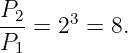
Doubling speed gives
Answer: (D).
Solution 9Efficiency is
Thus
Answer: (D).
Solution 10Work is the area under the power-time graph. The graph is a triangle:
Answer: (C).
Solution 11Net power can be written as
The acceleration and velocity are parallel, so
Answer: (D).
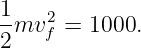
Solution 12Constant net power changes kinetic energy according to
Starting from rest,
Then
For m = 4.0 kg,
Answer: (D).
2 GRE checklistBefore calculating, identify what kind of power is being asked for.
References
References
"GRE Physics Companion: Power" is owned by bloftin.
This object's parent. Cross-references: resistance, kinetic energy, acceleration, dimension, system, drag force, speed, mechanical power, CAR, magnitude, uniform circular motion, drag, motion, graph, velocity, particle, instantaneous power, work, energy, average power, force, relations, Power This is version 1 of GRE Physics Companion: Power, born on 2026-10-03. Object id is 1378, canonical name is GREPhysicsCompanionPower. Accessed 8 times total. Classification:
|
|
|
|
|
|
|
![[parent]](https://images.physicslibrary.org/images/uparrow.png)