|
|
|
|||||||
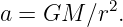
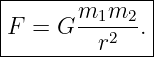
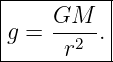
For a test mass outside a spherical source mass,
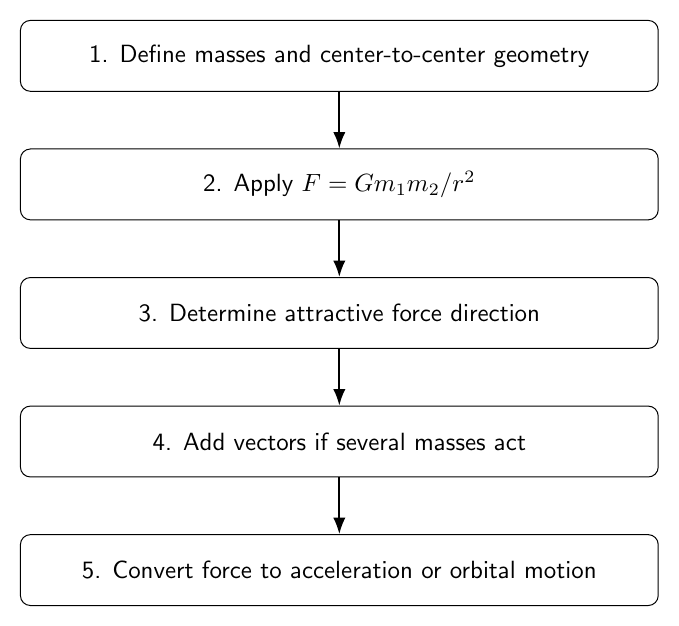
Figure 1. A compact gravitation strategy: define the geometry, apply inverse-square scaling, determine the force direction, use vector superposition when needed, and convert force to acceleration or orbital motion.
1 High-value GRE facts
Part I: Original GRE-style problems
Problem 1: inverse-square scalingIf the separation between two masses doubles while the masses remain fixed, the gravitational force becomes
Problem 2: changing mass and distanceIf m1 is doubled and the separation is tripled, the new force relative to the original is
Problem 3: action and reactionTwo unequal masses attract gravitationally. The force magnitude on mass 1 due to mass 2 is
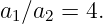
Problem 4: acceleration ratioIf m2 = 4m1, the ratio of acceleration magnitudes is
equal to
Problem 5: free fallIgnoring air resistance, two test objects of different mass at the same location near a source body have gravitational accelerations that are
Problem 6: altitudeAt altitude h = RE above Earth’s surface, the spherical-Earth gravitational acceleration is
Problem 7: symmetric superpositionTwo equal source masses are placed symmetrically on opposite sides of a test mass. At the exact midpoint the net gravitational force is
Problem 8: gravitational parameterThe gravitational parameter of a body is
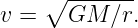
Problem 9: circular orbitThe circular orbital speed around a much larger central mass is
Problem 10: circular period scalingFor circular orbits around the same central mass,
scales with radius as
Problem 11: vector directionIf
the force on mass 1 due to mass 2 points
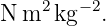
Problem 12: dimensions of GThe dimensions of G are
Part II: Complete worked solutions
Solution 1Because
doubling distance gives
Answer: (D).
Solution 2The mass change contributes a factor 2, while tripling distance contributes 1∕9:
Answer: (B).
Solution 3Newton’s third law requires the interaction forces to have equal magnitude and opposite direction. Answer: (C).
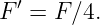
Solution 4Equal force magnitudes give
Thus
Answer: (E).
Solution 5The test mass cancels:
so
Answer: (C).
Solution 6At h = RE, the center-to-center distance is 2RE, so
Answer: (D).
Solution 7The equal force vectors point in opposite directions and cancel. Answer: (C).
Solution 8By definition,
Answer: (B).
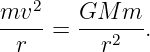
Solution 9Equate gravitational force to centripetal force:
Therefore
Answer: (C).
Solution 10Kepler’s circular-orbit result is
so
Answer: (D).
Solution 11The vector r12 points from mass 1 toward mass 2, exactly the direction of the attractive force on mass 1. Answer: (A).
Solution 12From
the units are
Answer: (B).
2 GRE checklist
References
References
"GRE Physics Companion: Newton's Law of Universal Gravitation" is owned by bloftin.
This object's parent. Cross-references: formulas, units, centripetal force, dimensions, positions, volumes, resistance, period, speed, parameter, acceleration, superposition, vector, force, mass, magnitude This is version 1 of GRE Physics Companion: Newton's Law of Universal Gravitation, born on 2026-10-31. Object id is 1550, canonical name is GREPhysicsCompanionNewtonsLawOfUniversalGravitation. Accessed 16 times total. Classification:
|
|
|
|
Pending Errata and AddendaNone.
|
DiscussionNo messages.
|
Interact |

 .