
|
|
|
|||||||
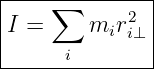
for discrete masses and
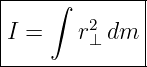
for a continuous body.
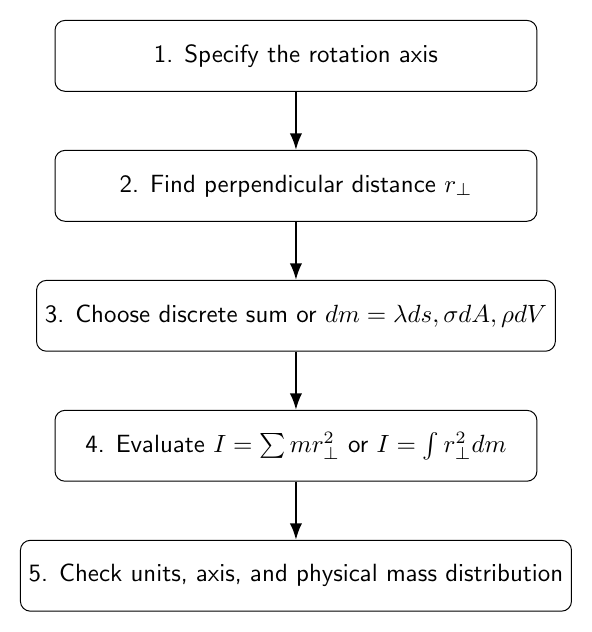
Figure 1. A compact strategy for moment-of-inertia problems: identify the axis, determine perpendicular distance, choose the correct mass model, and integrate or sum.
1 High-value GRE facts
Part I: Original GRE-style problems
Problem 1: two point massesTwo point masses m lie at distances R and 2R from an axis. Their total moment of inertia is
Problem 2: moving a point massA point mass initially at radius R is moved to radius 3R. Its contribution to moment of inertia changes by a factor of
Problem 3: ring versus diskA thin ring and a uniform disk have the same mass M and radius R. About their symmetry axes,
Problem 4: rod about centerA uniform thin rod of mass M and length L rotates about a perpendicular axis through its center. Its moment of inertia is
Problem 5: disk numerical valueA uniform disk has M = 4 kg and R = 0.50 m. Its moment of inertia about the symmetry axis is
Problem 6: radius of gyrationA body has moment of inertia I = 18 kg m2 and mass M = 8 kg. Its radius of gyration is
Problem 7: solid sphereA uniform solid sphere of mass M and radius R has moment of inertia about a diameter
Problem 8: density choiceFor a thin uniform plate, the most natural mass element is
Problem 9: scaling at fixed massA geometrically similar body is enlarged so every linear dimension doubles while total mass is held fixed. Its moment of inertia about the corresponding axis changes by a factor of
Problem 10: rotational kinetic energyA body has I = 2 kg m2 and rotates at ω = 5 rad∕s. Its rotational kinetic energy is
Problem 11: composite rotorA coaxial thin ring with inertia I1 is rigidly attached to a disk with inertia I2. The total inertia about the common axis is
Problem 12: same mass and center of massTwo bodies have the same total mass and the same center of mass. Their moments of inertia about the same axis
Part II: Complete worked solutions
Solution 1
Answer: (D).
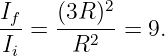
Solution 2A point-mass contribution scales as r2:
Answer: (D).
Solution 3
Therefore
Answer: (C).
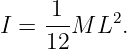
Solution 4For a uniform thin rod about its center,
Answer: (B).
Solution 5
Answer: (B).
Solution 6
Answer: (C).
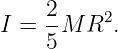
Solution 7A uniform solid sphere has
Answer: (B).
Solution 8A thin plate is modeled by surface mass density:
Answer: (B).
Solution 9For fixed mass and geometrically similar shape,
Doubling L multiplies I by four. Answer: (D).
Solution 10
Answer: (D).
Solution 11Moments of inertia about the same axis add:
Answer: (D).
Solution 12Center of mass depends on the first spatial moment of mass, while moment of inertia depends on squared perpendicular distance. Different distributions can share the same mass and center of mass but have different I. Answer: (B).
2 GRE checklist
References
References
"GRE Physics Companion: Moment of Inertia of Discrete and Continuous Bodies" is owned by bloftin.
This object's parent. Cross-references: square, formula, surface mass density, center of mass, rotational kinetic energy, dimension, speed, radius of gyration, solid, moment of inertia, masses This is version 1 of GRE Physics Companion: Moment of Inertia of Discrete and Continuous Bodies, born on 2026-10-05. Object id is 1425, canonical name is GREPhysicsCompanionMomentOfInertiaOfDiscreteAndContinuousBodies. Accessed 15 times total. Classification:
|
|
|
|
Pending Errata and AddendaNone.
|
DiscussionNo messages.
|
Interact |
![[parent]](https://images.physicslibrary.org/images/uparrow.png)





 (4)(0
(4)(0




 (2)(25)
 for radius of gyration.