Electromagnetic Waves, Antennas, and RF: Electromagnetic Momentum, Radiation Pressure, and
Photon Momentum
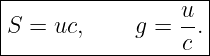
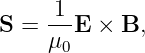
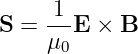
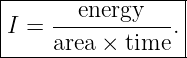
EM17 established that electromagnetic fields carry energy. In vacuum the energy flux is described
by the Poynting vector
and for a plane wave the time-averaged magnitude is the intensity
Energy transport is only part of the story. An electromagnetic wave can push on matter. Light can
exert force on a mirror, radio waves transfer momentum when absorbed by an antenna or lossy
material, and sunlight can accelerate a reflective sail in empty space. These effects require the
electromagnetic field itself to carry momentum.
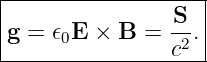
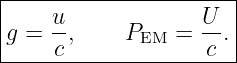
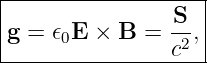
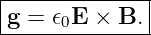
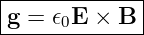
The central results of this article are
where g is electromagnetic momentum density, and for a vacuum plane wave
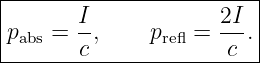
where u is total electromagnetic energy density. The resulting radiation pressure at normal
incidence is
and
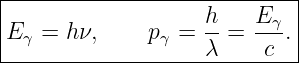
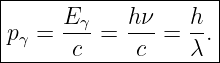
At the quantum level the same momentum transfer is described in terms of photons. A photon of
frequency ν and wavelength λ has
The classical field and photon descriptions therefore agree on the momentum delivered per unit
electromagnetic energy [1, 2, 3, 4, 5].
1 Why a wave must carry momentum
Momentum is the quantity whose transfer produces force. For ordinary matter,
If an electromagnetic wave changes the mechanical momentum of a material object, then total
momentum conservation requires an equal and opposite change somewhere else. The missing
momentum is carried by the electromagnetic field.
This is not merely a quantum effect. Classical Maxwell theory already contains a local momentum
density and a momentum-balance law. Photon momentum will appear later as the quantum
counterpart of the same physical conservation law.
2 From energy flow to electromagnetic momentum density
The Poynting vector has units
Dividing by c2 gives
Momentum per volume has units
which is the same dimension. Maxwell’s equations make this identification exact in
vacuum:
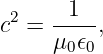
Using
and
we obtain
| g | =   E × B E × B | (16)
|
| = μ0𝜖0 E × B. E × B. | (17) |
Therefore
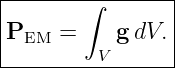
The total electromagnetic momentum inside a volume V is
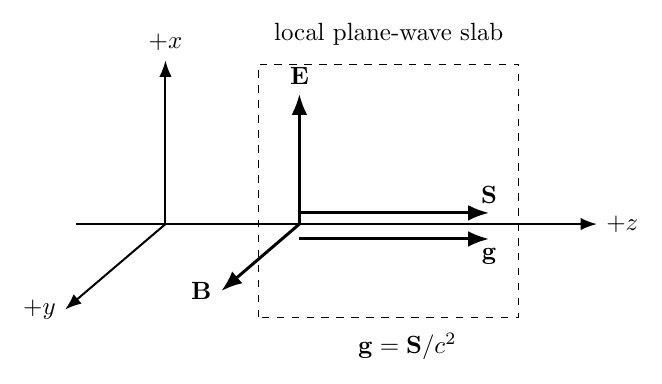
Figure. For a plane electromagnetic wave, E, B, the Poynting vector S, and momentum
density g form a right-handed propagation geometry. Both energy and momentum flow in
the direction of E × B.
3 A more rigorous Maxwell-equation origin of g
The expression for field momentum is not chosen only by dimensional analysis. It follows from
combining Maxwell’s equations with the Lorentz force density.
The electromagnetic force per unit volume on matter is
Use Gauss’s Law,
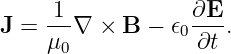
and the Ampere–Maxwell law,
Substitution gives
| f | = 𝜖0(∇⋅ E)E +  (∇× B) × B − 𝜖0 (∇× B) × B − 𝜖0 × B. × B. | (23) |
Now differentiate the cross product E × B:
Therefore
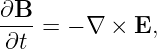
Faraday’s law gives
so
Using the Vector Identities
and
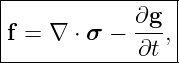
with ∇⋅ B = 0, the force density can be collected into the form
where
and σ is the Maxwell stress tensor,
This is the electromagnetic momentum-balance law. The term ∂g∕∂t represents local
change of field momentum, while the stress tensor describes momentum transfer through
surfaces. The force density f is the rate at which field momentum is transferred to matter
[1, 2].
4 Integral momentum balance
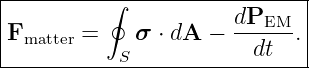
Integrate the local relation over a fixed volume V :
Applying the divergence theorem component by component gives
This equation is the momentum analogue of Poynting’s theorem. Poynting’s theorem tracks
electromagnetic energy; the Maxwell stress tensor and field momentum density track
electromagnetic momentum.
For many radiation-pressure calculations, we do not need to evaluate the full tensor. Once the wave
is locally plane and propagating at speed c, momentum flux can be obtained directly from the
energy flux.
5 Plane-wave relation between energy and momentum density
For a vacuum plane wave, EM17 showed that
where u is the instantaneous total electromagnetic energy density. Since
we immediately obtain
Vectorially,
where k points in the direction of propagation.
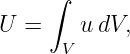
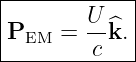
If a localized wave packet has total energy
then its field momentum is
| PEM | = ∫
V gdV | (40)
|
| =  ∫
V udV k. ∫
V udV k. | (41) |
Therefore
This is a completely classical result for a plane-wave packet in vacuum.
6 Momentum flux and radiation pressure
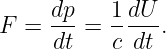
Suppose a normally incident plane wave delivers energy dU to a surface during time dt. If the wave
is completely absorbed, the corresponding incident momentum is
The force on the surface is the momentum delivered per unit time:
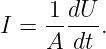
If the illuminated area is A, then
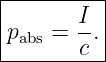
Therefore
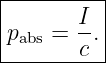
Pressure is force per area, so for complete absorption,
The pressure is extremely small for ordinary terrestrial intensities because c is so large, but it is
nonzero and directly measurable.
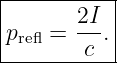
7 Why a mirror receives twice the pressure
For ideal reflection at normal incidence, the electromagnetic momentum reverses direction.
Take the incident momentum of an energy packet to be
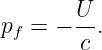
After reflection,
The change in field momentum is
| Δpfield | = pf − pi | (51)
|
| = − − − | (52)
|
| = − . . | (53) |
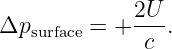
The material receives the opposite momentum,
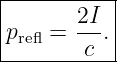
Hence
Reflection doubles the pressure because the normal component of electromagnetic momentum is
reversed rather than merely removed from the wave.
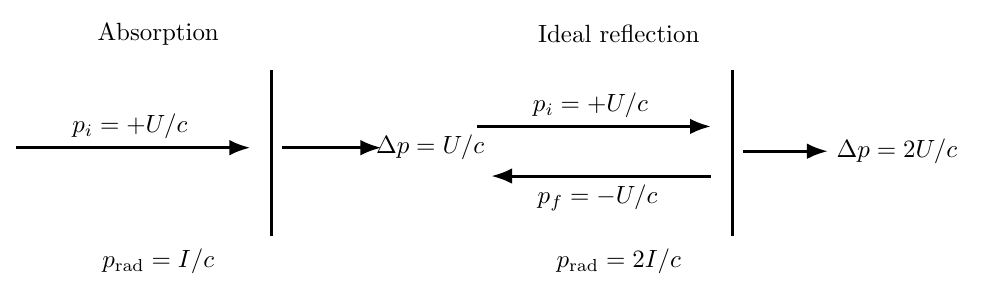
Figure. An absorbing surface receives the incident momentum U∕c. An ideal mirror
reverses the field momentum from +U∕c to −U∕c, so the mirror receives 2U∕c.
8 Example 1: pressure from a 1000 W/m2 beam
Consider normal incidence with
For complete absorption,
| pabs | = 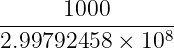 | (57)
|
| ≈ 3.34 × 10⁻⁶ Pa. | (58) |
Thus
For ideal reflection,
The small magnitude explains why radiation pressure is easy to overlook in everyday mechanics,
even though it becomes important in precision optical systems, microscopic particles, and
spacecraft propulsion.
9 Force in terms of incident optical or RF power
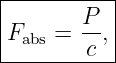
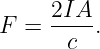
For a beam normally incident on a surface and completely intercepted by it,
Therefore an absorbing surface experiences
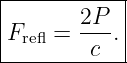
while an ideal reflecting surface experiences
Notice that the force depends on total intercepted power, not directly on beam area. Beam area
determines the pressure because pressure is force divided by area.
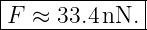
10 Example 2: force from a 5 W laser on a perfect mirror
For a perfectly reflecting mirror at normal incidence,
| F | =  | (64)
|
| = 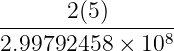 | (65)
|
| ≈ 3.34 × 10⁻⁸ N. | (66) |
Hence
The force is tiny, but modern force sensors can measure forces in this range and far below
it.
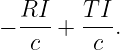
11 Partially absorbing and partially reflecting surfaces
Let fractions A, R, and T of the incident power be absorbed, reflected, and transmitted,
with
At normal incidence, assume the incident, reflected, and transmitted beams are all in vacuum and
that the transmitted radiation continues in the original propagation direction. This avoids the
additional momentum-partition issues that arise inside material media. The incoming momentum
flux is
The outgoing momentum flux is
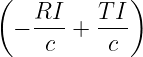
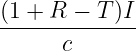
Therefore the momentum delivered to the material per unit area per unit time is
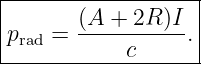
Since A = 1 − R − T,
This formula recovers both limiting cases:
and
12 Oblique incidence and the role of projected area
Suppose a plane wave strikes a flat surface at angle 𝜃 measured from the surface normal. If the
actual surface area is A, the projected area normal to the beam is
Hence the incident power is
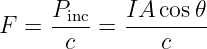
For complete absorption, the incident momentum delivered per unit time has magnitude
in the beam direction. Its normal component is
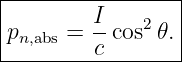
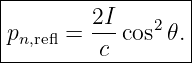
Thus the normal pressure on the actual surface area is
For ideal specular reflection, the tangential momentum component is unchanged while the normal
component reverses, so
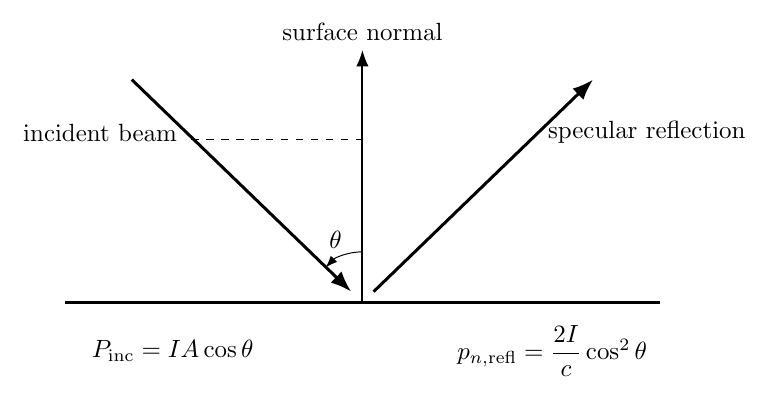
Figure. At oblique incidence, two factors of cos 𝜃 enter the normal pressure: one from the
projected collecting area and one from the normal component of momentum.
13 Electromagnetic momentum and the Maxwell stress tensor
Radiation pressure can also be read directly from the electromagnetic stress carried by the fields.
For a plane wave propagating in the +z direction with
there are no z components of either field. The zz component of the Maxwell stress tensor
is
| σzz | = 𝜖0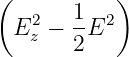 + +  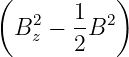 | (83)
|
| = − 𝜖0E2 − 𝜖0E2 − | (84)
|
| = −u. | (85) |
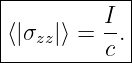
The negative sign indicates a compressive normal stress in this sign convention. Its magnitude
is
For a plane wave,
so
After time averaging,
This is the same momentum-flux scale that appeared in the absorption argument. Reflection
changes the boundary condition and doubles the momentum change of the radiation.
14 Radiation pressure as momentum flux
It is useful to compare energy flux and momentum flux side by side.
Energy flux:
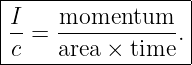
Momentum flux for a vacuum beam:
Because force is momentum per time, momentum flux has the same dimensions as pressure:
This is why radiation pressure is naturally interpreted as electromagnetic momentum
flux.
15 From classical field momentum to photon momentum
Maxwell’s equations describe electromagnetic waves classically and do not by themselves quantize
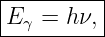
electromagnetic energy. Quantum physics adds the Planck–Einstein relation
where h is Planck’s constant.
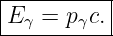
For a photon in vacuum, relativity gives the energy–momentum relation for a massless
particle,
Therefore
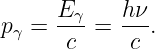
Since
we have
This result is the quantum version of the classical plane-wave relation
One photon has
and a classical beam made of many photons has the same momentum-to-energy ratio.
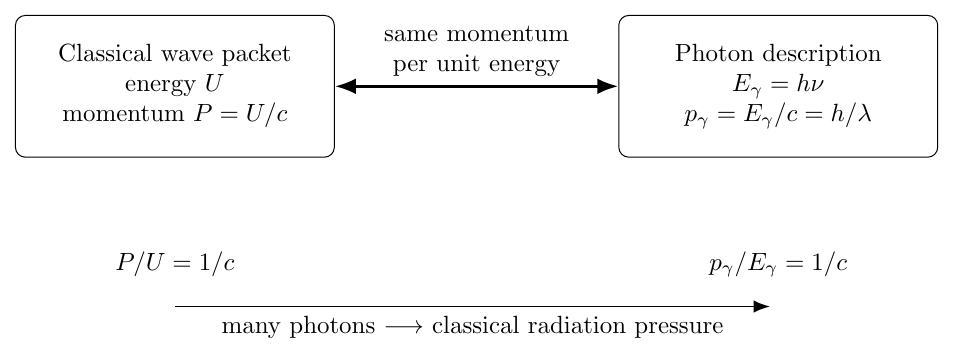
Figure. The classical and quantum pictures use different descriptions but agree on
momentum per unit energy in vacuum. A classical wave packet has P = U∕c; each photon
has pγ = Eγ∕c = h∕λ.
16 Example 3: momentum of a 532 nm photon
For
and
photon momentum is
| pγ | =  | (102)
|
| = 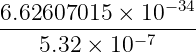 | (103)
|
| ≈ 1.25 × 10⁻²⁷ kg m/s. | (104) |
Thus
The energy of the same photon is
| Eγ | =  | (106)
|
| ≈ 3.73 × 10⁻¹⁹ J. | (107) |
As required,
17 Photon flux reproduces classical radiation pressure
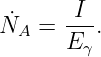
Suppose a monochromatic beam has intensity I. The number of photons crossing unit area per
unit time is the photon flux
Each absorbed photon delivers momentum
Therefore the momentum delivered per unit area per unit time is
Hence
For ideal reflection, each photon’s normal momentum changes by twice as much, giving
Thus the photon-counting and classical-field calculations give the same radiation pressure.
18 Example 4: photon rate in a 1 W, 532 nm laser
The photon energy is approximately
A 1 W beam carries 1 J each second, so the photon rate is
| Ṅ | =  | (116)
|
| = 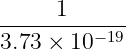 | (117)
|
| ≈ 2.68 × 10¹⁸ s−1. | (118) |
Each photon carries only about 1.25 × 10⁻²⁷ kg m/s, but the enormous photon rate produces the
macroscopic force
19 Frequency and wavelength dependence of single-photon momentum
Because
higher-frequency photons carry more momentum individually. Equivalently,
so shorter-wavelength photons carry more momentum individually.
However, for a beam of fixed total power P, the radiation force does not depend on photon
frequency:
and therefore
| Fabs | = Ṅ | (123)
|
| =  . . | (124) |
A higher-frequency beam has fewer photons per second at fixed power, but each photon carries
proportionally more momentum. The two effects cancel.
20 Solar sailing: a direct application of radiation pressure
A reflective spacecraft sail uses radiation pressure to create continuous thrust without
expelling propellant. For a normally illuminated ideal mirror of area A exposed to intensity
I,
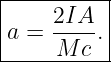
For spacecraft mass M, the acceleration is
Even when the acceleration is tiny, it acts continuously and can accumulate a substantial velocity
change over long times.
21 Example 5: idealized solar-sail acceleration
Take
For ideal normal reflection,
| F | =  | (128)
|
| = 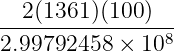 | (129)
|
| ≈ 9.08 × 10⁻⁴ N. | (130) |
Thus
The corresponding acceleration is
| a | =  | (132)
|
| ≈ 9.08 × 10⁻⁵ m/s2. | (133) |
This is only about 9.3 × 10⁻⁶ of standard terrestrial gravitational acceleration, but unlike a brief
impulse, solar radiation pressure can act for months or years.
22 Radiation pressure and antennas
The same momentum physics applies at radio frequencies. An antenna interacting with an
electromagnetic field absorbs, scatters, and reradiates energy and momentum. In many RF
engineering calculations the mechanical force is negligibly small, so the momentum aspect is
omitted. Nevertheless, the underlying field still carries momentum density
This is useful conceptually because energy flow, momentum flow, scattering, antenna force, and
radiation pressure are not separate phenomena. They are different consequences of the same
Maxwell fields.
23 A useful hierarchy of electromagnetic transport quantities
The quantities developed in EM17 and EM18 form a clean chain.
Field energy density:
Energy flux:
Time-averaged energy flux:
Momentum density:
Momentum flux and radiation-pressure scale:
For a plane wave in vacuum,
These equations make energy transport and momentum transport two parts of the same wave
description.
24 Important qualification: momentum in material media
The vacuum relation
is unambiguous for electromagnetic fields in vacuum. In material media, separating total
momentum into electromagnetic and material pieces is more subtle. Different useful momentum
forms arise depending on how field and material momentum are partitioned, leading to the
historical Abraham–Minkowski discussion.
The total momentum of the complete field-plus-matter system remains conserved. This article
therefore keeps the derivations in vacuum, where the physics needed for radiation pressure and
photon momentum is cleanest [6].
25 Common mistakes
- Confusing electromagnetic momentum density g with the Poynting vector S. They
differ by a factor c2 in vacuum.
- Writing g = u∕c2 for a plane wave. The correct relation is g = u∕c; it is g = S∕c2.
- Forgetting that radiation pressure is momentum flux, not energy density.
- Using prad = 2I∕c for an absorbing black surface. The factor of two belongs to ideal
reflection.
- Forgetting that an oblique beam illuminates projected area A cos 𝜃.
- Using only one factor of cos 𝜃 for the normal pressure at oblique incidence. The second
factor comes from taking the normal component of momentum.
- Treating the Maxwell stress tensor as a scalar pressure in arbitrary field configurations.
It is a tensor because electromagnetic stresses can be directional and include shear
components.
- Claiming that Maxwell’s classical equations derive energy quantization. The photon
energy Eγ = hν is a quantum postulate/result, not a consequence of classical Maxwell
theory alone.
- Confusing photon energy hν with photon momentum h∕λ.
- Assuming that higher photon energy means greater radiation force at fixed beam power.
At fixed power, fewer higher-energy photons arrive per second, leaving F = P∕c for
absorption.
- Applying vacuum momentum formulas inside material media without specifying how
field and material momentum are being partitioned.
26 What EM18 adds to the series
EM17 established electromagnetic energy density, energy flux, intensity, and inverse-square
spreading. EM18 adds the momentum carried by those same fields.
The vacuum electromagnetic momentum density is
For a plane wave,
Momentum flux produces radiation pressure:
At the quantum level,
These results connect Maxwell’s field theory to optical forces, radiation pressure, solar sailing,
photon momentum, and eventually the microscopic interaction of electromagnetic radiation with
matter.
References
[1] David J. Griffiths, Introduction to Electrodynamics, 4th ed., Cambridge University
Press, 2017, sections on electromagnetic momentum and the Maxwell stress tensor.
[2] John David Jackson, Classical Electrodynamics, 3rd ed., Wiley, 1999, sections on
conservation laws, electromagnetic momentum, and Maxwell stresses.
[3] Samuel J. Ling, Jeff Sanny, and William Moebs, University Physics, Volume 2,
OpenStax, 2016, sections on electromagnetic waves, momentum, and radiation pressure.
[4] Richard P. Feynman, Robert B. Leighton, and Matthew Sands, The Feynman
Lectures on Physics, Volume I, Addison-Wesley, 1963, chapters on radiation, photons,
and momentum transfer.
[5] Richard P. Feynman, Robert B. Leighton, and Matthew Sands, The Feynman Lectures
on Physics, Volume II, Addison-Wesley, 1964, chapters on electromagnetic energy and
momentum.
[6] Stephen M. Barnett, “Resolution of the Abraham–Minkowski Dilemma,” Physical
Review Letters, Vol. 104, 070401, 2010.






![2 -J---
[S ] = W/m = m2 s.](https://images.physicslibrary.org/cache/objects/1243/make4ht/ElectromagneticWavesElectromagneticMomentumRadiationPressureAndPhotonMomentum8x.png)
![[ ]
S-
c2](https://images.physicslibrary.org/cache/objects/1243/make4ht/ElectromagneticWavesElectromagneticMomentumRadiationPressureAndPhotonMomentum9x.png)


![[-p] kg-m/s- -kg--
V = m3 = m2 s,](https://images.physicslibrary.org/cache/objects/1243/make4ht/ElectromagneticWavesElectromagneticMomentumRadiationPressureAndPhotonMomentum13x.png)















































![|----------|
u [J/m3 ].|
------------](https://images.physicslibrary.org/cache/objects/1243/make4ht/ElectromagneticWavesElectromagneticMomentumRadiationPressureAndPhotonMomentum136x.png)
![|------------|
| 2 |
-S--[W/m---].-](https://images.physicslibrary.org/cache/objects/1243/make4ht/ElectromagneticWavesElectromagneticMomentumRadiationPressureAndPhotonMomentum137x.png)
![|------------------|
| 2 |
-I-=-⟨S⟩--[W/m---].-](https://images.physicslibrary.org/cache/objects/1243/make4ht/ElectromagneticWavesElectromagneticMomentumRadiationPressureAndPhotonMomentum138x.png)
![|--------------------|
|g = -S [kg/ (m2s)].|
-----c2--------------|](https://images.physicslibrary.org/cache/objects/1243/make4ht/ElectromagneticWavesElectromagneticMomentumRadiationPressureAndPhotonMomentum139x.png)
![|--------|
|I |
|-- [Pa ].|
-c--------](https://images.physicslibrary.org/cache/objects/1243/make4ht/ElectromagneticWavesElectromagneticMomentumRadiationPressureAndPhotonMomentum140x.png)