Complex Numbers as Vectors in the Complex Plane
Complex numbers become much more useful in physics when they are interpreted geometrically
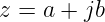
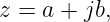
rather than treated only as algebraic symbols. A number such as
contains two real numbers, a and b. These may be displayed as Cartesian coordinates in a plane: a
along a horizontal real axis and b along a vertical imaginary axis. The same complex number
can then be viewed as a point or as a directed line segment from the origin to that
point.
This geometric viewpoint is the foundation for rotating complex vectors, phasors, sinusoidal
steady-state analysis, Fourier methods, and many wave calculations. It also prepares the key result
developed in the next topic: complex multiplication simultaneously changes magnitude and
angle.
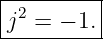
Throughout this article, j denotes the imaginary unit,
Engineering texts commonly use j because i is often reserved for electric current. Mathematics and
much of theoretical physics usually use i. The algebra is identical.
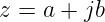
1 Cartesian form of a complex number
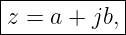
A complex number in Cartesian form is written
where a and b are real numbers.
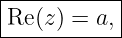
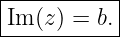
The real part of z is
and the imaginary part is
Notice that the imaginary part is the real coefficient b, not the quantity jb.
The horizontal axis of the complex plane contains purely real numbers. The vertical axis contains
purely imaginary numbers. The complex number z = a + jb is represented by the point
(a,b).
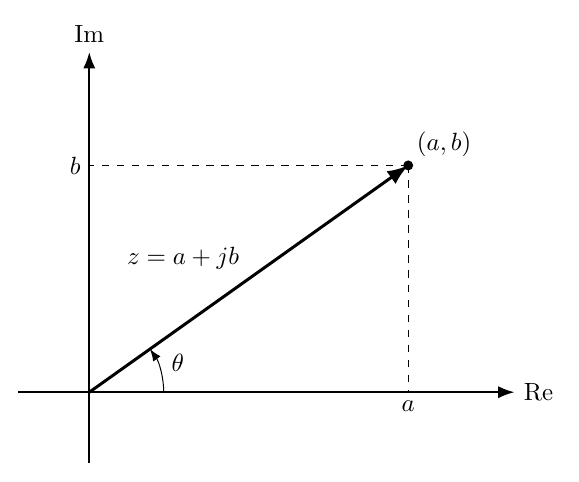
Figure 1. A complex number z = a + jb represented as a point and as a vector from the origin. Its
horizontal and vertical projections are a and b.
2 Why it is reasonable to call z a vector
As a geometric object in the complex plane,
can be associated with the real two-dimensional vector
Complex addition is exactly ordinary two-dimensional vector addition. If
and
then
| z1 + z2 | = (a + c) + j(b + d), | (10) |
which corresponds to
There is, however, an important distinction:
- complex numbers form a two-dimensional vector space over the real numbers;
- complex numbers also possess their own multiplication operation;
- that multiplication is not the ordinary dot product or cross product of two-dimensional
vectors.
The extra multiplication rule is precisely what makes complex numbers especially powerful for
oscillations and rotations.
3 Length: the modulus of a complex number
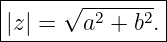
The vector from the origin to (a,b) forms a right triangle with legs a and b. By the Pythagorean
theorem, its length is
The modulus or magnitude of z is therefore defined as
Because a length is nonnegative,
Furthermore,
only for z = 0.
Example: z = 3 + 4j
For
the modulus is
| |z| | =  | (17)
|
| =  | (18)
|
| = 5. | (19) |
Thus the familiar 3-4-5 right triangle appears directly in the complex plane.
4 Direction: the argument of a complex number
Let 𝜃 denote the angle measured counterclockwise from the positive real axis to the vector z. This
angle is called an argument of the complex number.
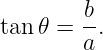
For a≠0, the right-triangle geometry gives
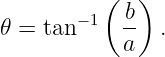
A tempting formula is therefore
That formula alone is not sufficient because the tangent function cannot distinguish opposite
quadrants. For example, (1, 1) and (−1,−1) have the same value of b∕a but their directions differ
by π.
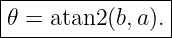
For actual calculations, the angle should be determined from both coordinates. In numerical
software this is usually the two-argument arctangent,
The argument is not unique because adding a full revolution leaves the same direction:
A commonly used principal argument chooses one representative angle, often
Other branch choices are possible, so a source should state its convention when the distinction
matters.
5 Cartesian and polar descriptions of the same number
The geometry gives
Substituting these into z = a + jb gives
| z | = r cos 𝜃 + jr sin 𝜃 | (26)
|
| = r(cos 𝜃 + j sin 𝜃). | (27) |
Thus the polar form of a nonzero complex number is
where
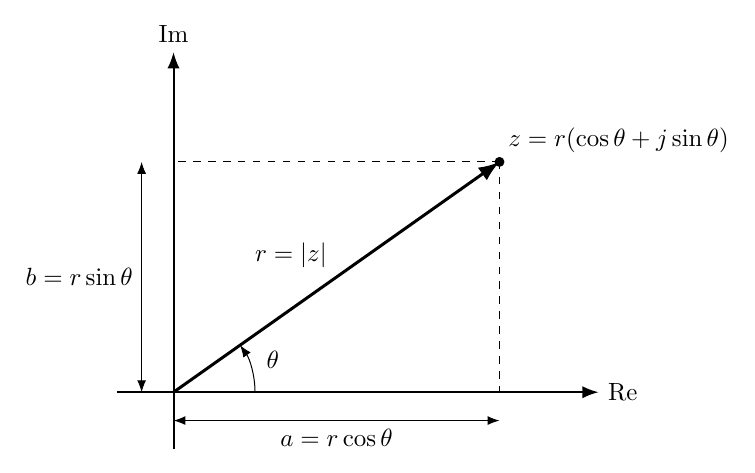
Figure 2. Cartesian and polar descriptions of the same complex number. The relations a = r cos𝜃
and b = r sin𝜃 convert between the two descriptions.
This is not a new complex number. Cartesian and polar forms are two coordinate descriptions of
the same geometric object.
Example: convert 3 + 4j to polar form
The magnitude was already found to be
Because the point lies in the first quadrant,
| 𝜃 | = tan −1 | (31)
|
| ≈ 0.9273 rad | (32)
|
| ≈ 53.13∘. | (33) |
Therefore
6 Quadrants matter
Consider
Its magnitude is still
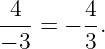
but the vector lies in quadrant II. The ratio b∕a is
A simple one-argument inverse tangent returns approximately −53.13∘, which points into quadrant
IV and is therefore the wrong geometric direction for z.
The correct principal argument is
This is why complex calculations should use quadrant-aware angle extraction.
7 The complex conjugate as a geometric reflection
For
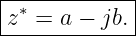
the complex conjugate is defined as
The real coordinate is unchanged while the imaginary coordinate changes sign. Geometrically,
conjugation reflects the complex vector across the real axis.
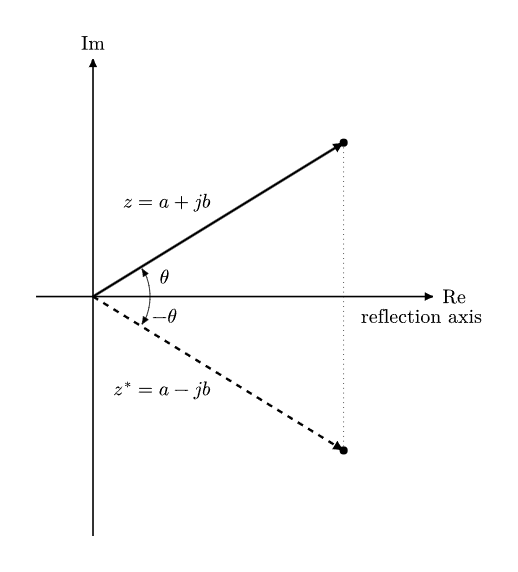
Figure 3. Complex conjugation reflects z = a + jb across the real axis to z∗ = a − jb. The two
numbers have equal modulus and opposite arguments.
Consequently,
and, away from branch-cut subtleties,
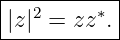
Multiplying z by its conjugate gives
| zz∗ | = (a + jb)(a − jb) | (43)
|
| = a2 + b2. | (44) |
Hence an important identity is
This identity becomes extremely useful in wave amplitudes, impedance calculations, and quantum
mechanics.
8 Euler’s formula and exponential form
Euler’s formula connects the complex exponential to ordinary trigonometric functions:
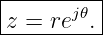
Using this in the polar form gives the complex exponential form
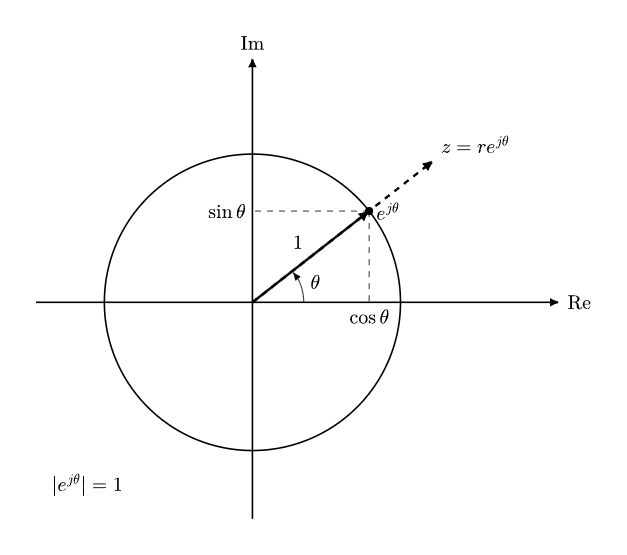
Figure 4. On the unit circle, ej𝜃 has real coordinate cos𝜃 and imaginary coordinate sin𝜃.
Multiplication by r scales the unit vector to the complex number z = rej𝜃.
For the earlier example,
The exponential notation is compact, but its meaning should remain geometric:
- r gives the vector length;
- 𝜃 gives the vector direction;
- ej𝜃 represents a unit-length complex number at angle 𝜃.
9 Special directions in the complex plane
Euler’s formula immediately identifies several important points:
| ej0 | = 1, | (49)
|
| ejπ∕2 | = j, | (50)
|
| ejπ | = −1, | (51)
|
| ej3π∕2 | = −j, | (52)
|
| ej2π | = 1. | (53) |
Thus the numbers
correspond to directions separated by 90∘ around the unit circle.
This geometry foreshadows why multiplication by j produces a quarter-turn in the complex plane.
That result is developed carefully in the follow-up article on the geometric meaning of complex
multiplication.
10 Complex numbers and physical quantities
A complex number is usually a mathematical representation rather than a directly measured
two-component physical vector. In oscillation and wave problems, one often writes a complex
quantity such as
and obtains the physical scalar displacement from its real projection,
The complex-plane vector is then a computational and geometric device. Its rotating direction
stores phase while its length stores amplitude.
It is useful to keep three different uses of the word “vector” distinct:
- a complex number may be drawn as a two-dimensional vector in the complex plane;
- a physical vector such as force or velocity has components in physical space; and
- a phasor may associate a complex amplitude with each component of a physical vector
field.
These structures can interact, but they are not automatically the same object.
11 Worked example: complete Cartesian-to-polar conversion
Let
The real and imaginary parts are
The modulus is
| |z| | =  | (59)
|
| =  | (60)
|
| = 10. | (61) |
The point lies in quadrant III. A quadrant-aware evaluation gives the principal argument
which is equivalent to
Thus
Its conjugate is
which has the same modulus and the reflected principal angle
12 What this article establishes
The geometry of the complex plane can be summarized as follows:
- z = a + jb corresponds to the point (a,b);
- Re(z) = a and Im(z) = b are Cartesian coordinates;
- |z| =
 is the length of the complex-plane vector;
- arg z gives its direction modulo 2π;
- z = r(cos 𝜃 + j sin 𝜃) = rej𝜃 is its polar/exponential representation;
- z∗ = a − jb reflects the vector across the real axis; and
- |z|2 = zz∗ connects geometric length to complex algebra.
The next natural result is deeper: when two complex numbers are multiplied, their lengths
multiply and their angles add. That is the mathematical step that turns the complex
plane from a static coordinate picture into a language for scaling, rotation, phasors, and
oscillations.
References
[1] F. S. Crawford, Jr., Waves, Berkeley Physics Course, Vol. 3, McGraw-Hill, 1968.
[2] M. L. Boas, Mathematical Methods in the Physical Sciences, 3rd ed., Wiley, 2006.
[3] J. W. Brown and R. V. Churchill, Complex Variables and Applications, 9th ed.,
McGraw-Hill Education, 2014.

![[ ]
a
b .](https://images.physicslibrary.org/cache/objects/1467/make4ht/ComplexNumbersAsVectorsInTheComplexPlane6x.png)


![[ ] [ ] [ ]
a + c = a + c .
b d b + d](https://images.physicslibrary.org/cache/objects/1467/make4ht/ComplexNumbersAsVectorsInTheComplexPlane9x.png)

























![|-----------------------------------------------------|
z = 10 [cos(− 126.87∘) + j sin(− 126.87∘)] = 10e −j2.2143.
-------------------------------------------------------](https://images.physicslibrary.org/cache/objects/1467/make4ht/ComplexNumbersAsVectorsInTheComplexPlane49x.png)

