GRE Physics Companion: Common Forces in Mechanics
This companion focuses on recognizing the correct force model quickly. The fastest reliable
sequence is
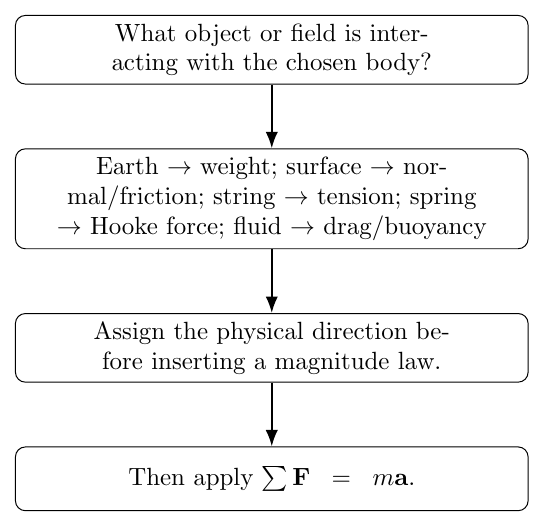
Figure 1. GRE-speed force triage. Identify the physical interaction and direction before inserting a
magnitude formula.
1 High-yield force relations
Near Earth’s surface,
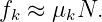
For simple dry-friction models,
and
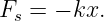
For an ideal linear spring,
For an ideal massless string, Tension acts along the string and one continuous string can be
modeled with one tension magnitude.
For drag, use velocity relative to the fluid rather than automatically using ground-relative
velocity.
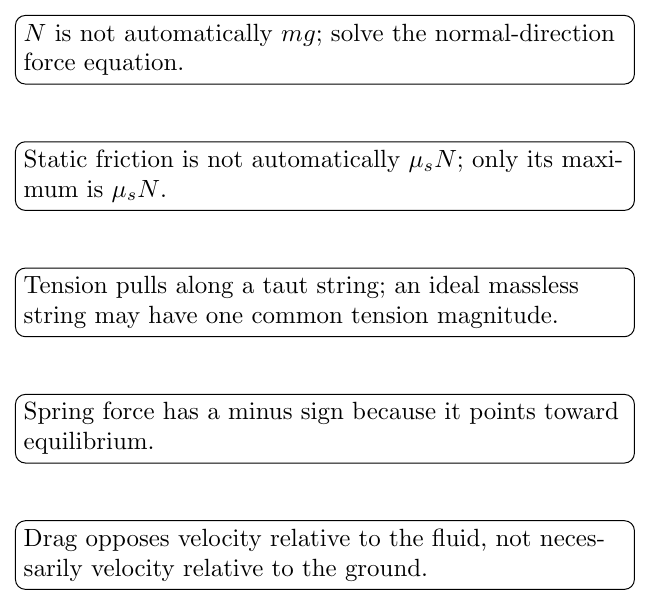
Figure 2. High-yield force-law traps: normal force is not automatically weight, static friction need
not equal its maximum, and direction matters before magnitude.
2 Worked GRE example 1: normal force with an angled pull
A crate of mass m is pulled by a force F at angle 𝜃 above a horizontal floor. There is no vertical
acceleration. Which expression gives the normal force?
The vertical force equation is
Therefore
The angled pull reduces the normal force.
3 Worked GRE example 2: static friction is self-adjusting
A horizontal 20 N push acts on a block that remains at rest. The maximum possible static friction
is 35 N. What is the actual static friction magnitude?
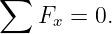
Because the block remains at rest,
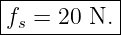
Therefore static friction supplies exactly the force required to oppose the push:
It is not 35 N. The value 35 N is only the limiting maximum.
4 GRE-speed questions
- A book rests on a level table. The normal force equals mg because (A) normal force
always equals weight (B) the vertical acceleration is zero and no other vertical forces
act (C) Newton’s third law requires it (D) friction forces it to do so.
- A block remains at rest while a 12 N horizontal push acts. The maximum static friction
is 30 N. The actual static friction magnitude is (A) 0 N (B) 12 N (C) 30 N (D)
impossible to determine.
- A spring is stretched to the right from equilibrium. The spring force on the attached
mass points (A) right (B) left (C) upward (D) in the direction of velocity regardless of
displacement.
- A mass hangs from a single vertical ideal string and accelerates upward. The tension
is (A) less than mg (B) equal to mg (C) greater than mg (D) zero.
- An object moves east through air while the air itself moves east even faster. The drag
on the object points (A) east (B) west (C) upward (D) drag must be zero because both
move east.
5 Answers and rationales
- B. Here the vertical equation is N −mg = 0. The equality is a result of this particular
dynamics problem.
- B. Static friction adjusts to 12 N, below its 30 N maximum.
- B. A linear spring force points toward equilibrium.
- C. T − mg = ma with upward a > 0 gives T > mg.
- A. The object moves west relative to the faster eastward air, so drag opposes that
relative motion and points east.
References
[1] PhysicsLibrary, M02-03, Common Forces in Mechanics.
[2] J. Moore et al., Mechanics Map, CC BY-SA 4.0.

![[parent]](https://images.physicslibrary.org/images/uparrow.png)