Inertial Reference Frames in Newtonian Physics: Examples and Complete Worked Solutions
This companion develops the ideas of inertial and non-inertial reference frames through concrete
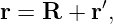
Newtonian examples. The emphasis is on the Galilean relations
and
If the moving frame has constant velocity, A = 0 and therefore
This acceleration invariance is the central reason Newton’s equations have the same form in frames
related by an ordinary Galilean transformation.
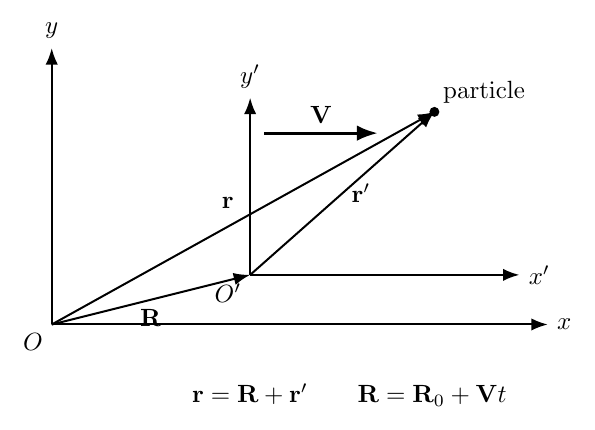
Figure 1. Two frames with parallel axes. When S′ translates at constant velocity V relative to
inertial frame S, the positions satisfy r = R + r′.
Part I: Exercises
Exercise 1: Is the observation consistent with an inertial frame?
A puck is observed to move according to
Find its velocity and acceleration. If the puck is known to be free of net real force, is this
observation consistent with the observer being in an inertial frame? Does this one trajectory prove
that the frame is inertial?
Exercise 2: Galilean position and velocity transformation
Frame S′ moves in the +x direction at a constant speed of 5 m∕s relative to inertial frame S. The
origins coincide at t = 0. A particle has
in S.
Find x′(t) and the velocity measured in S′. Find x and x′ at t = 4 s.
Exercise 3: Acceleration invariance
In inertial frame S, a particle moves along the x axis according to
Frame S′ moves at constant velocity 7 m∕s in the +x direction relative to S, with coincident
origins at t = 0.
Find x′(t), v, v′, a, and a′. If the particle has mass 3 kg, find the net force in either inertial
frame.
Exercise 4: Correct sign for an accelerating observer
A free particle moves in inertial frame S with constant velocity
The origin of frame S′ moves according to
Thus the observer velocity is u(t) = 2t.
Find the particle’s relative velocity v′ and relative acceleration a′. If the particle mass is 4 kg,
what apparent force must be introduced in S′ to write the equation in Newton-like
form?
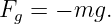
Exercise 5: Apparent force in an accelerating elevator
A 5 kg mass rests on the floor of an elevator accelerating upward at
Take g = 9.81 m∕s2.
Find the normal force using (a) an inertial ground frame and (b) the accelerating elevator frame
with an inertial force.
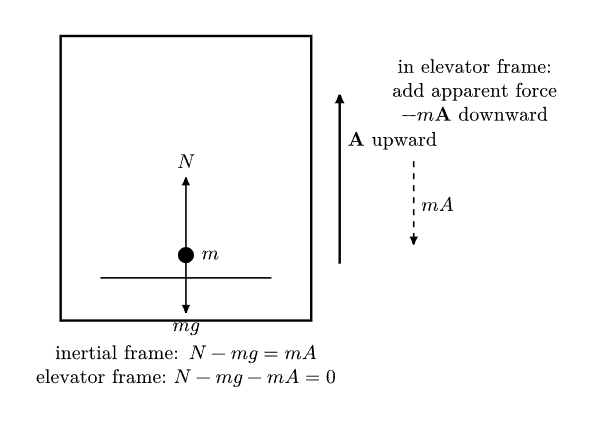
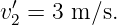
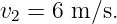
Figure 2. In the inertial frame the elevator and mass accelerate upward. In the elevator frame the
mass is at rest, but the translational inertial force −mA must be included.
Exercise 6: Projectile inside a uniformly moving train
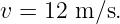
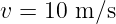
A train travels at constant velocity 20 m∕s relative to the ground. A passenger throws a ball
vertically upward at 10 m∕s relative to the train. Neglect air resistance.
Write the motion in the train frame and in the ground frame. Find the total flight time and the
horizontal distance traveled relative to the ground before the ball returns to its launch
height.
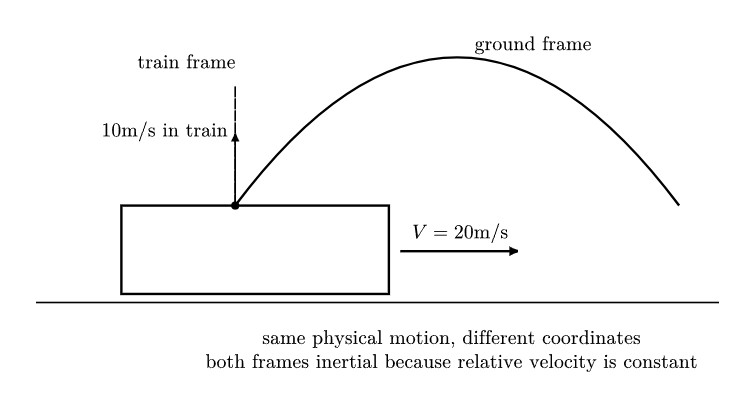
Figure 3. A vertical throw in the train frame is a parabola in the ground frame. Both frames are
inertial because their relative velocity is constant.
Exercise 7: Vector velocity addition
Frame S′ moves with velocity
relative to S. An object has velocity
in S′.
Find its velocity and speed in S.
Exercise 8: Newton’s second law in two inertial frames
A 2 kg particle experiences the uniform real force
Frame S′ moves with constant velocity relative to inertial frame S.
Find the acceleration in S and S′. Explain why no inertial force is required in S′.
Exercise 9: Prove that uniformly translating frames form a family of inertial frames
Let S be inertial. Let the origin of S′ satisfy
where V is constant, and suppose the axes of S′ do not rotate relative to S.
Starting from r = R + r′, prove that a free particle that has constant velocity in S also has
constant velocity in S′.
Exercise 10: A rotating frame is not inertial
A disk rotates at constant angular speed
A 0.50 kg mass is fixed to the disk at radius 1.0 m.
Find its acceleration and required real radial force in an inertial frame. In the rotating disk frame
the mass is stationary. What apparent force must be included to describe equilibrium
there?
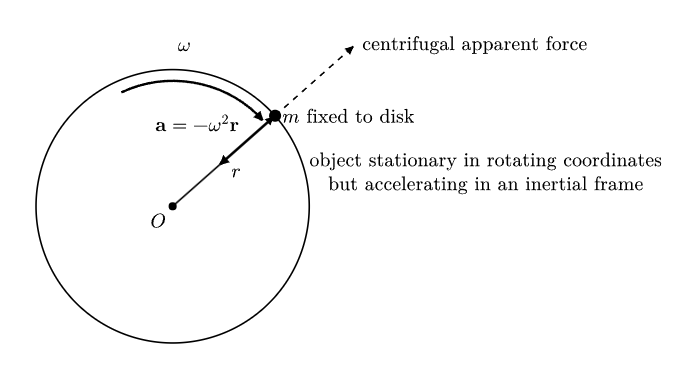
Figure 4. Constant angular speed does not make a rotating frame inertial. Points fixed in the
rotating frame have centripetal acceleration relative to an inertial observer.
Exercise 11: How non-inertial is the Earth-fixed frame?
At Earth’s equator, use
and
Calculate the rotational acceleration Ω2R. Express it as a fraction of g = 9.81 m∕s2. Explain why
the Earth-fixed frame is not exactly inertial even though it is often treated as approximately
inertial in elementary mechanics.
Exercise 12: Center-of-mass frame of an isolated system
Two particles move along one dimension. Their masses and velocities in an inertial laboratory
frame are
Find the center-of-mass velocity and the two velocities in the center-of-mass frame. Verify that the
total momentum in that frame is zero. If the system is isolated, explain why the center-of-mass
frame is itself inertial relative to the laboratory frame.
Exercise 13: Momentum conservation under a Galilean transformation
A system of total mass M = 5 kg has constant total momentum
in frame S. Frame S′ moves at the constant speed
in the same direction.
Find the total momentum p′ in S′. Show generally that if p is conserved and V is constant, then p′
is also conserved.
Exercise 14: An elastic collision in the center-of-mass frame
Two equal masses collide elastically in one dimension. In the laboratory frame the initial velocities
are
Find the center-of-mass velocity. Transform to the center-of-mass frame, solve the elastic collision
there, and transform back to the laboratory frame.
Exercise 15: A freely falling frame in a uniform gravitational field
Near Earth’s surface, approximate the ground frame as inertial and take upward as positive. A
freely falling particle has
Now choose a frame whose origin also accelerates downward with
Find the particle acceleration a′ in the falling frame. For a particle of mass m, identify
the translational inertial force and show how it combines with the real gravitational
force.
Exercise 16: What Galilean invariance does not mean
A particle moves at constant speed
in inertial frame S. Frame S′ moves in the same direction at
Over a time interval
find the displacement measured in each frame. Are the displacements equal? What quantities
relevant to Newton’s second law are invariant between the two frames?
Part II: Complete Worked Solutions
Solution 1: Is the observation consistent with an inertial frame?
Differentiate the position:
The velocity is constant, so
If the puck is known to be free of net real force, this behavior is exactly what Newton’s first law
predicts in an inertial frame. Thus the observation is consistent with the frame being
inertial.
However, one free-particle trajectory does not by itself prove that the frame is inertial. An
inertial frame is identified by the behavior of free particles generally, together with
the absence of frame acceleration or rotation relative to another established inertial
frame.
Solution 2: Galilean position and velocity transformation
For coincident origins at t = 0,
Here V = 5 m∕s, so
Therefore
Differentiating,
At t = 4 s,
and
The position coordinates are different because the two frame origins have separated by
V t = 20 m.
Solution 3: Acceleration invariance
The Galilean position transformation is
Thus
In S,
while in S′,
Differentiating again gives
For m = 3 kg,
The velocities differ by the constant relative frame velocity, but the acceleration is identical.
Solution 4: Correct sign for an accelerating observer
The observer velocity is
The relative velocity is
Therefore
This minus sign is essential: an observer accelerating in +x sees a free particle accelerate in −x
relative to the observer.
The real net force on the particle is zero. In the accelerated frame, to write
we need
With m = 4 kg and A = 2 m∕s2,
The apparent force points opposite the frame acceleration.
Solution 5: Apparent force in an accelerating elevator
In the inertial ground frame, upward is positive. Newton’s second law gives
Hence
Substitution gives
In the elevator frame the mass is at rest, so a′ = 0. The elevator frame accelerates upward, so the
translational inertial force is downward:
The elevator-frame force balance is
which again gives
Both descriptions agree when the inertial force is handled consistently.
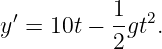
Solution 6: Projectile inside a uniformly moving train
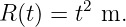
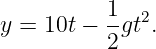
Take the launch point as the origin at t = 0. In the train frame,
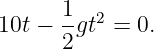
The ball returns to the launch height when
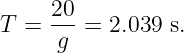
For the nonzero root,
In the ground frame, the horizontal train speed is added:
Thus the ground-frame horizontal distance is
The train frame sees a vertical path; the ground frame sees a parabola. Both are inertial because
their relative velocity is constant.
Solution 7: Vector velocity addition
The Galilean velocity relation is
Therefore
The speed is
Solution 8: Newton’s second law in two inertial frames
Newton’s second law in S gives
Thus
Because S′ moves at constant velocity relative to S,
Hence
No inertial force is needed because S′ is also inertial.
Solution 9: Prove that uniformly translating frames form a family of inertial frames
Start with
Since
we have
and
Differentiating the position relation once,
Differentiating again,
If a free particle has a = 0 in S, then it also has
in S′. Therefore a nonrotating frame translating uniformly relative to an inertial frame is also
inertial in Newtonian mechanics.
Solution 10: A rotating frame is not inertial
A point fixed at radius r on a disk rotating at constant angular speed has centripetal
acceleration
Thus
directed inward.
The real inward force is
In the rotating frame the mass is stationary, yet the real inward force remains. To write an
equilibrium equation in the rotating frame, a centrifugal apparent force of
must be introduced outward. The need for this inertial force shows directly that the rotating frame
is non-inertial.
Solution 11: How non-inertial is the Earth-fixed frame?
The equatorial rotational acceleration is
Substitution gives
Relative to standard gravity,
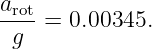
Thus the rotational acceleration is about 0.345 percent of g at the equator.
The Earth-fixed frame rotates, so it is not exactly inertial. For many short-duration introductory
problems the resulting Coriolis and centrifugal corrections are small enough to neglect, so the
ground is treated as approximately inertial.
Solution 12: Center-of-mass frame of an isolated system
The total mass is
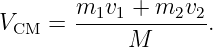
The center-of-mass velocity is
Thus
The velocities in the center-of-mass frame are
The total momentum there is
For an isolated system, total momentum is constant, so V CM is constant. Therefore the
center-of-mass frame translates at constant velocity relative to the inertial laboratory frame and is
itself inertial, provided its axes do not rotate.
Solution 13: Momentum conservation under a Galilean transformation
For a system of total mass M, the total momentum transforms as
Numerically,
The two frames assign different momentum values to the same system.
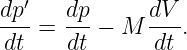
Differentiate the transformation:
For a Galilean inertial transformation, V is constant, so
If p is conserved, dp∕dt = 0, and therefore
Momentum conservation holds in both inertial frames even though the numerical momenta
differ.
Solution 14: An elastic collision in the center-of-mass frame
For equal masses,
The initial center-of-mass-frame velocities are
For a one-dimensional elastic collision of equal masses in the center-of-mass frame, the velocities
reverse:
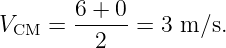
Transform back by adding V CM = 3 m∕s:
The familiar laboratory result is recovered: the moving equal mass stops and the initially
stationary mass leaves with the original speed.
Solution 15: A freely falling frame in a uniform gravitational field
The acceleration transformation for a translating frame is
Here
and
Therefore
The free particle is at rest or moves uniformly relative to the freely falling frame.
The real gravitational force is
The translational inertial force is
Hence
The falling frame is still non-inertial in Newtonian mechanics because its origin accelerates relative
to the ground-frame approximation.
Solution 16: What Galilean invariance does not mean
In frame S, the displacement over Δt = 3 s is
In S′, the particle speed is
Thus
The displacements are not equal.
What is invariant under an ordinary Galilean transformation is the time interval,
and, because V is constant, the acceleration:
Consequently Newton’s second law retains the same form in both inertial frames for
Newtonian force laws. Galilean invariance does not mean that position, displacement,
velocity, momentum, or kinetic energy have the same numerical value in every inertial
frame.
References
[1] J. R. Taylor, Classical Mechanics, University Science Books, 2005.
[2] S. T. Thornton and J. B. Marion, Classical Dynamics of Particles and Systems, 5th
ed., Brooks/Cole, 2004.
[3] D. Kleppner and R. Kolenkow, An Introduction to Mechanics, 2nd ed., Cambridge
University Press, 2014.

![[parent]](https://images.physicslibrary.org/images/uparrow.png)