Solutions to the practice exercises on tension and connected particles
This entry gives worked solutions to the practice exercises posed in the companion article
tension and connected particles. The main goals are to reinforce the use of Free-body
diagrams, to apply Newton’s second law consistently, and to use string-length constraints
correctly.
Throughout, take
unless a symbolic result is requested.
1 Problem 1
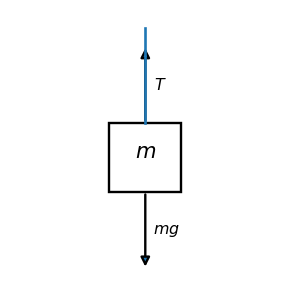
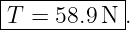
A 6 kg mass hangs at rest from a vertical rope. Find the tension.
Since the mass is at rest, a = 0. Using upward as positive,
Thus
Answer:
2 Problem 2
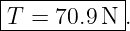
The same mass accelerates upward at 2 m∕s2. Find the tension.
Using
we obtain
Answer:
3 Problem 3
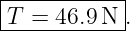
The same mass accelerates downward at 2 m∕s2. Find the tension.
If upward is positive, then a = −2 m∕s2, so
Therefore
Answer:
4 Problem 4
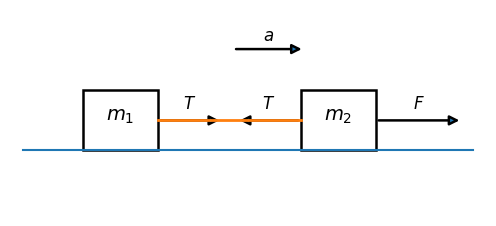
Two blocks of 2 and 3 kg are pulled on a smooth table by 20 N. Find the acceleration and the
tension.
Let m1 = 2 kg and m2 = 3 kg. Treating the two blocks as one system,
Now isolate m1:
Answer:
5 Problem 5
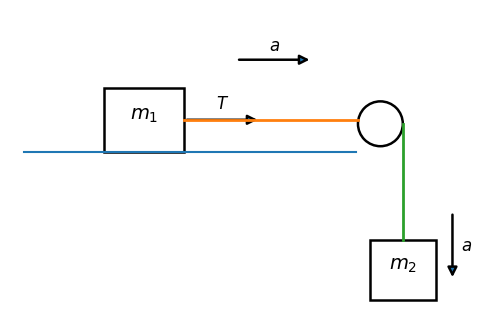
A 5 kg block on a smooth table is connected to a hanging 2 kg mass. Find a and T.
Let m1 = 5 kg on the table and m2 = 2 kg hanging. The equations are
Adding,
so
Then
Answer:
6 Problem 6
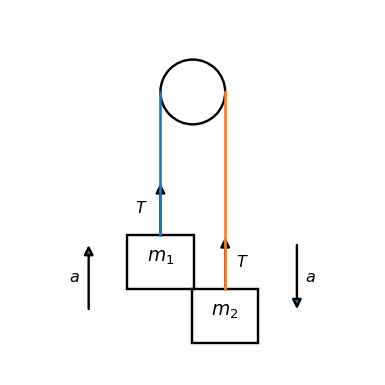
Solve the ideal Atwood Machine for m1 = 4 kg and m2 = 7 kg.
Because m2 > m1, the 7 kg mass moves downward. The acceleration magnitude is
The tension is
Answer:
7 Problem 7
Derive the general Atwood acceleration without first solving for T.
For the lighter mass m1 moving upward,
For the heavier mass m2 moving downward,
Add the equations so that T cancels:
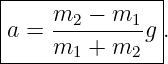
Therefore
8 Problem 8
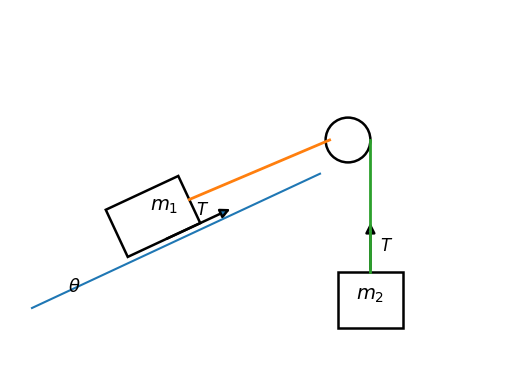
A 4 kg block lies on a smooth 25∘ incline and is connected to a 3 kg hanging mass. Determine the
direction of motion.
Compare the driving Weights along the string. For the incline block,
For the hanging block,
Since
the hanging mass pulls downward and the incline block moves upward.
Answer: the 3 kg mass moves downward and the 4 kg block moves up the incline.
9 Problem 9
Repeat the preceding problem if μk = 0.15.
If the block on the incline moves upward, the kinetic friction acts down the plane. The resisting
force on the incline side becomes
Numerically,
Total resistance on the incline side:
Since
the hanging mass still moves downward.
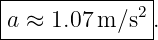
If one also wants the acceleration,
Answer: the direction is unchanged; the 3 kg mass still moves downward. The acceleration
is
10 Problem 10
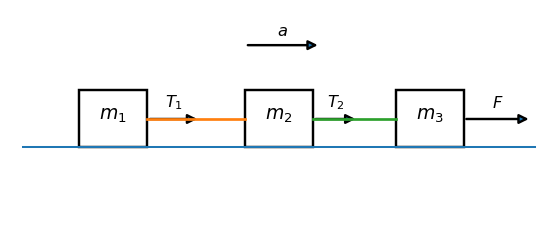
Three masses in series have masses 1, 2, 4 kg and are pulled by 28 N. Find both string
tensions.
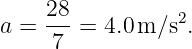
The total mass is
so
For the first string,
For the second string, treat m1 + m2 as a subsystem:
Answer:
11 Problem 11
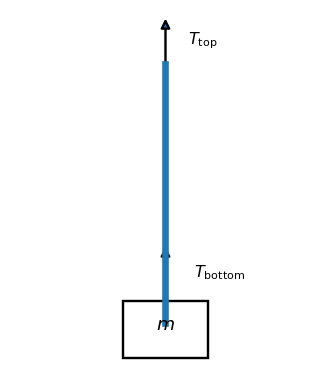
A uniform rope of length L and mass M hangs vertically supporting a mass m. Find the tension at
the bottom and top of the rope.
At the bottom of the rope, the tension supports only the attached mass:
At the top of the rope, the tension supports the attached mass plus the full rope mass:
Answer:
12 Problem 12
Show that a massless Pulley implies equal tension if bearing friction is neglected.
Let the tensions on the two sides be T1 and T2, and let the pulley radius be R. The torque
equation is
For a massless pulley, I = 0. If bearing friction is neglected, then
so
Answer:
for a massless frictionless pulley.
13 Problem 13
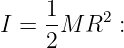
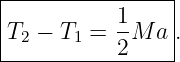
For a massive pulley with I =  MR2, derive T
2 − T1 in terms of M and a.
MR2, derive T
2 − T1 in terms of M and a.
The pulley torque equation gives
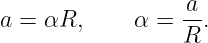
Because the string does not slip,
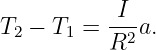
Hence
Substitute
Answer:
14 Problem 14
Explain physically what must happen if an algebraic solution gives T < 0.
A flexible string can pull but cannot push. Therefore a negative tension is not physically admissible
for the assumed taut-string configuration. The interpretation is that the string would go slack, so
the original constraint model no longer applies. One must reformulate the motion without
imposing a taut inextensible string over that interval.
Answer: a negative tension means the assumed taut-string model has failed; the string goes
slack.
15 General remarks
Several themes recur in these solutions:
- Always draw the free-body diagram before writing equations.
- Use one coordinate direction for each body that aligns with its motion.
- If the same string connects two bodies, the magnitude of their accelerations is often
fixed by the constraint.
- Equal tension requires an ideal continuous string and an ideal pulley.
- For several masses in series, different strings generally carry different tensions.
16 Source and licensing note
These solutions are original PhysicsLibrary content written as a companion to the article Tension
and connected particles. The problem statements are the same as those posed in the practice
section of that companion entry. The figures in this article were generated specifically for this
solution set.
References
[1] PhysicsLibrary, Tension and connected particles.
[2] Physics LibreTexts, connected-particle and Atwood-machine examples. Physics
LibreTexts
Unless otherwise noted, this PhysicsLibrary entry is intended for release under the Creative
Commons Attribution–ShareAlike 4.0 International license.

![[parent]](https://images.physicslibrary.org/images/uparrow.png)