1 Representations of 4-D Spaces
This is a contributed topic entry on representing four-dimensional and higher-dimensional space
structures.
1.1 2D and 3D Representations of 4-D and Higher-Dimensional Space Structures
The “representation” of 4-D and higher-dimensional space structures is a subject of interest to
mathematical physicists, mathematicians, and artists. See, for example, artistic and architectural
discussions of higher-dimensional representations.
A somewhat artistic rendering and animation of such a representation of a four-dimensional
“octacube” by a mathematical physicist, together with a static representation by a mathematician,
is presented in a related exposition.
1.2 Stereographic Projection
Intuitively, stereographic projection is a mapping that projects a sphere onto a plane. It is widely
used in complex analysis, cartography, geology, and other fields. In practice, such projections may
be produced computationally or constructed graphically using a stereonet. A famous historical
illustration is the one by Rubens for Opticorum libri sex philosophis juxta ac mathematicis utiles,
by François d’Aiguillon.
The animation link in the previous subsection uses Ocneanu’s method of windowed, radial
stereographic projection. This projection method has been proposed as a useful way to represent
four-dimensional solids because it can display two-dimensional walls of three-dimensional cells
rather than only a one-dimensional edge framework.
Other projection methods may also be used to visualize higher-dimensional Euclidean or
Riemannian structures. Such questions arise naturally when one attempts to visualize
geometric structures used in mathematical physics, including Dirac particles in Riemannian
space-times.
In four dimensions, a metric tensor may be represented in coordinates by a symmetric 4 × 4
matrix,
Because the metric tensor is symmetric, it has ten independent components in four dimensions.
The metric components determine lengths and angles locally; curvature, however, is determined by
derivatives of the metric through the connection and curvature tensors, not simply by the
magnitudes of the metric components themselves.
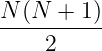
The same idea extends to an N-dimensional manifold, where a symmetric metric tensor
has
independent components.
The Riemannian exponential map, together with its local inverse, the Riemannian logarithm map,
can be used in methods for visualizing metric tensor fields. One example is a metric-sphere
glyph, in which the tensor field is interpreted through the local metric geometry of the
manifold.
William Kingdon Clifford translated and discussed Riemann’s geometrical ideas in the nineteenth
century and developed speculative physical interpretations in which matter and physical
interactions were associated with curvature of space. These ideas anticipated later geometric
approaches to gravitation and higher-dimensional theories.
For infinite-dimensional Riemannian manifolds, visualization is necessarily more indirect, since
there is no literal finite-dimensional spatial representation of the full geometry.

![( g g g g )
| 11 12 13 14|
[gij]4i,j=1 = | g12 g22 g23 g24| .
( g13 g23 g33 g34)
g14 g24 g34 g44](https://images.physicslibrary.org/cache/objects/693/make4ht/RepresentationsOf4DSpaces0x.png)