GRE Physics Companion: Inclined-Plane Dynamics
Inclined-plane questions are usually component problems disguised as force problems. The fastest
reliable strategy is to rotate the axes so that one axis lies along the plane, resolve the
forces once, and then use Newton’s second law without changing coordinate systems
mid-solution.
1 The component pair to know
For a plane inclined by angle 𝜃,
and
These are components of the Weight, not separate forces.
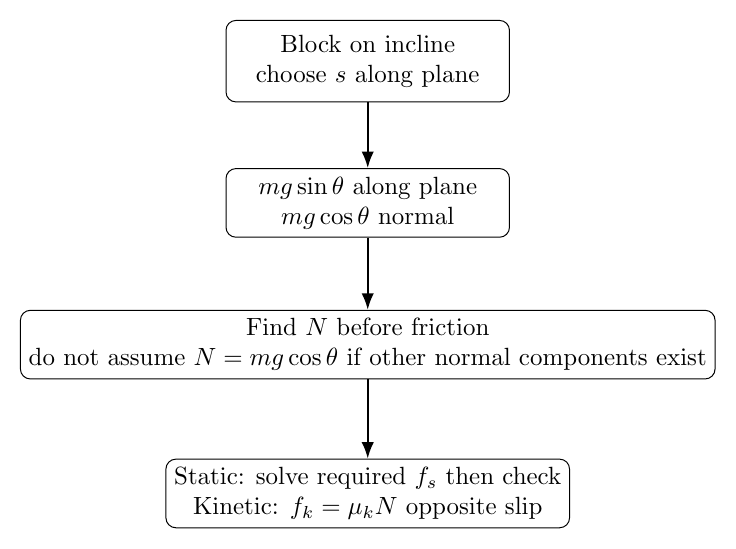
Figure 1. A compact GRE workflow for incline problems. Find the normal force before using a
friction law, and do not assume N = mg cos𝜃 when another force has a normal component.
2 High-value results
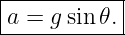
For a frictionless block sliding down the plane,
For a simple block in static equilibrium with no other forces,
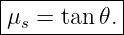
At impending slip,
For downhill kinetic sliding,
For uphill kinetic sliding, the acceleration points downhill with magnitude
3 Sign discipline
Pick a positive direction before writing equations. A negative result simply means the acceleration
is opposite the assumed direction.
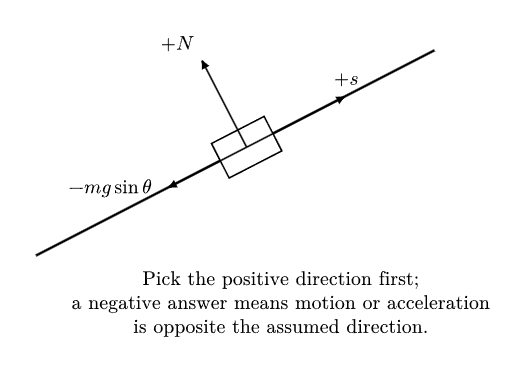
Figure 2. Sign discipline prevents many incline errors. Choose the positive along-plane direction
first and keep every projected force consistent with it.
4 Worked GRE example 1: frictionless incline
A block slides from rest on a frictionless 37.0∘ incline. Find the acceleration magnitude.
Immediately,
Therefore
The mass is irrelevant.
5 Worked GRE example 2: hanging mass versus incline block
A 4.00 kg block lies on a frictionless 30.0∘ incline and is connected over an ideal Pulley to a
hanging 3.00 kg mass. Which way does the system accelerate, and what is the acceleration
magnitude?
Compare the two driving terms:
while
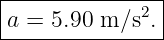
The hanging side wins. Thus
So
6 GRE speed questions
- A block slides down a frictionless incline. If the incline angle increases, the acceleration
magnitude (A) decreases (B) increases (C) remains constant (D) becomes zero.
- A block rests on a simple rough incline at the threshold of downhill slipping. The
coefficient of static friction is (A) sin 𝜃 (B) cos 𝜃 (C) tan 𝜃 (D) cot 𝜃.
- A block slides downhill on an incline with kinetic friction. Which expression gives its
acceleration magnitude? (A) g(sin 𝜃 + μk cos 𝜃) (B) g(sin 𝜃 − μk cos 𝜃) (C) g cos 𝜃 (D)
μkg.
- A horizontal force pushes a block toward the uphill direction on an incline that rises
to the right. The force’s Normal component tends to (A) increase N (B) decrease N
(C) leave N unchanged (D) eliminate gravity.
- A block is moving uphill on a rough incline after being launched. Kinetic friction points
(A) uphill (B) downhill (C) normal to the plane (D) vertically downward.
- A block on an incline is connected to a hanging mass. Your equation gives a < 0 after
you assumed the hanging mass moves downward. The correct interpretation is (A) the
algebra is invalid (B) the system is in equilibrium (C) the acceleration is opposite the
assumed direction (D) the tension is negative.
7 Answers and rationales
- B. a = g sin 𝜃, and sin 𝜃 increases from 0 to 1 as the incline steepens from 0∘ to 90∘.
- C. At impending slip, mg sin 𝜃 = μsmg cos 𝜃.
- B. Downhill gravity is opposed by uphill kinetic friction.
- A. The horizontal push has a component into the plane, so the normal force increases.
- B. Kinetic friction opposes the relative sliding, so it points downhill while the block
slides uphill.
- C. A negative result reverses the assumed acceleration direction; it is not an algebra
failure.
References
[1] PhysicsLibrary, M02-08, Inclined-Plane Dynamics.
[2] PhysicsLibrary, M02-07, Friction.
[3] J. Moore et al., Mechanics Map, CC BY-SA 4.0.

![[parent]](https://images.physicslibrary.org/images/uparrow.png)