Electromagnetic Waves, Antennas, and RF: Electric Current and Current Density - Exercises and
Complete Worked Solutions
This companion article provides self-study exercises for EM08, Electric Current and
Current Density. All exercises are stated first. Complete worked solutions follow in Part
II.
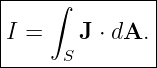
The central relations are
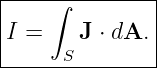
and
For uniform current density normal to a flat cross section,
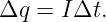
For moving continuous charge,
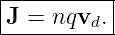
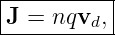
and for mobile carriers of number density n, charge q, and drift velocity vd,
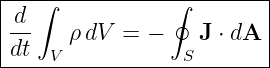
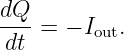
Charge conservation is expressed globally by
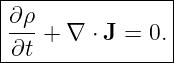
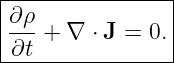
and locally by the continuity equation
These are the same definitions and sign conventions developed in EM08 [1, 2, 3, 5].
How to use this problem set
Attempt every problem in Part I before consulting Part II. For current-density problems,
identify the surface orientation before doing algebra. For continuity problems, decide
first whether you are using a global control-volume statement or the local differential
equation.
Part I: Exercises
Exercise 1: charge transported by steady current
A current of
flows for
How much charge crosses the selected surface?
Exercise 2: time-dependent charge gives time-dependent current
The net charge that has crossed a surface by time t is
where q is in coulombs and t is in seconds.
Find:
- the instantaneous current I(t);
- the current at t = 2.0 s.
Exercise 3: uniform current density in a wire
A cylindrical Conductor carries
through a circular cross section of radius
Assuming uniform current density perpendicular to the cross section, find J.
Exercise 4: current through a tilted surface
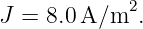
A uniform current density has magnitude
It crosses a flat surface of area
The angle between J and the chosen surface normal is
Find the signed current through the surface.
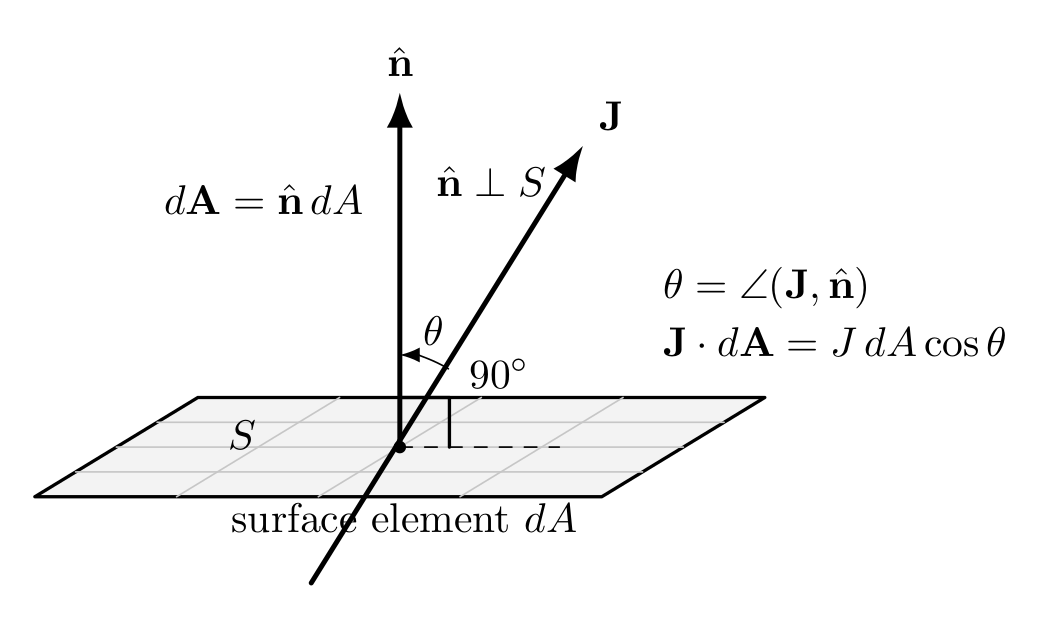
Figure. The sign and magnitude of current through a surface follow from the projection
J ⋅n.
Exercise 5: vector current density and surface orientation
Let
A flat surface has area
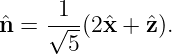
and unit normal
Assuming J is uniform, find the signed current through the surface.
Exercise 6: current density from moving volume charge
A continuous charge density
moves with velocity
Find J and explain the direction of the conventional current density relative to the charge
motion.
Exercise 7: carrier form and electron drift direction
A metal contains mobile electrons with number density
Their average drift velocity is
Using
find J.
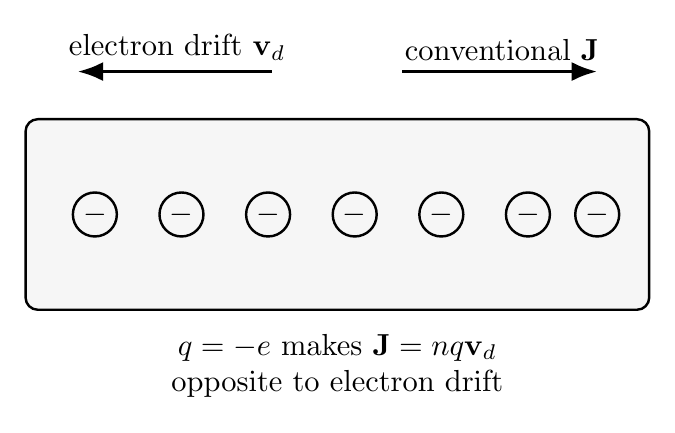
Figure. For negative mobile carriers, conventional current density points opposite the
electron drift velocity.
Exercise 8: drift speed from current
A wire carries
with
Assuming one mobile electron charge of magnitude e = 1.602 × 10⁻¹⁹ C per carrier, find the
magnitude of the electron drift velocity.
Exercise 9: nonuniform current density through a circular cross section
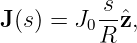
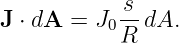
A circular conductor of radius R carries the axial current-density distribution
where s is distance from the axis.
Find the total current through the cross section.
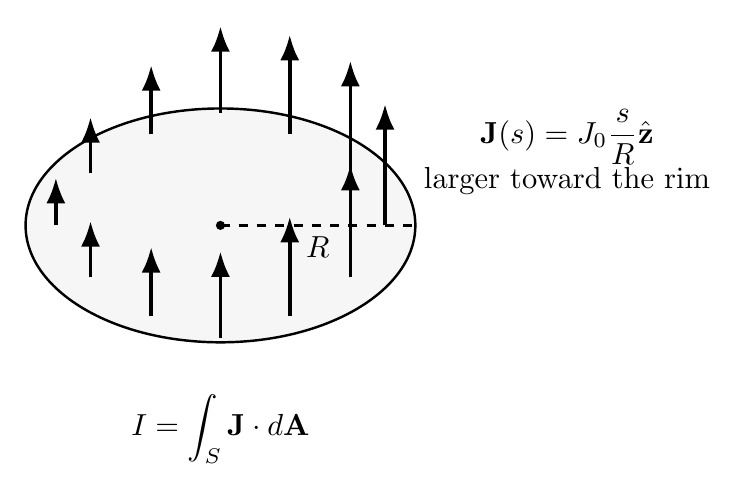
Figure. For nonuniform current density, the total current must be obtained by integrating
J ⋅ dA over the cross section.
Exercise 10: local continuity equation
A current-density field is
where α is constant.
Find:
- ∇⋅ J;
- ∂ρ∕∂t from the continuity equation;
- whether charge density locally increases or decreases when α > 0.
Exercise 11: a steady but nonuniform current density
Consider
where J0 is constant.
Compute ∇⋅ J. Is this field compatible with steady charge density according to the continuity
equation? Does zero divergence mean the current density is spatially uniform?
Exercise 12: global charge conservation in a control volume
A fixed volume initially contains
A constant net outward current of
crosses its boundary for 3.0 s, with no other current crossing the surface.
Find the charge remaining inside the volume after 3.0 s.
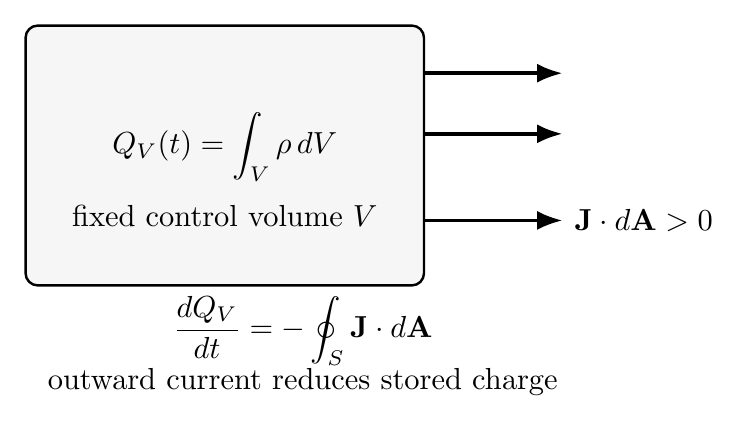
Figure. For a fixed control volume, positive net outward current reduces the charge stored
inside.
Exercise 13: identify and correct misconceptions
For each statement, decide whether it is correct. If it is incorrect, rewrite it accurately.
- “A current of 5 A means 5 C of charge are present in the wire.”
- “Current density J and current I have the same units.”
- “If electrons drift toward −x, conventional current in a metal points toward +x.”
- “If ∇⋅ J = 0, then J must be constant everywhere.”
- “Positive net outward current from a fixed volume causes its enclosed charge to
decrease.”
Exercise 14: synthesis from current distribution to charge conservation
A cylindrical conductor of radius R carries the time-dependent current-density distribution
Find:
- the total current I(t) through a cross section normal to z;
- the peak current amplitude;
- the average current over one full cycle;
- the physical reason a time-varying current distribution such as this is relevant to the
later antenna sections of the series.
Part II: Complete Worked Solutions
Solution 1: charge transported by steady current
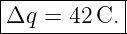
For constant current,
Therefore,
| Δq | = (3.5 A)(12 s) | (33)
|
| = 42 C. | (34) |
Thus,
The current is a rate; the accumulated charge grows with elapsed time.
Solution 2: time-dependent charge gives time-dependent current
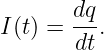
Current is
Differentiate:
| I(t) | =   | (37)
|
| = 4.0t + 1.5t2. | (38) |
Hence,
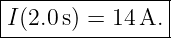
At t = 2.0 s,
| I(2) | = 4.0(2) + 1.5(2)2 | (40)
|
| = 8 + 6 | (41)
|
| = 14 A. | (42) |
Therefore,
Solution 3: uniform current density in a wire
The cross-sectional area is
| A | = πR2 | (44)
|
| = π(0.75 × 10⁻³)2 | (45)
|
| ≈ 1.767 × 10⁻⁶ m2. | (46) |
For uniform perpendicular current density,
Thus,
| J | = 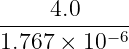 | (48)
|
| ≈ 2.26 × 10⁶ A/m2. | (49) |
Therefore,
Solution 4: current through a tilted surface
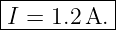
For uniform J over a flat surface,
Substituting,
| I | = (8.0)(0.30) cos 60∘ | (52)
|
| = 2.4(0.5) | (53)
|
| = 1.2 A. | (54) |
Hence,
The result is positive because the angle with the chosen normal is less than 90∘.
Solution 5: vector current density and surface orientation
For uniform current density,
The dot product is
| J ⋅n | = (3,−4, 2) ⋅ (2, 0, 1) (2, 0, 1) | (57)
|
| =  | (58)
|
| =  A/m2. A/m2. | (59) |
Therefore,
| I | = (0.50) | (60)
|
| =  A A | (61)
|
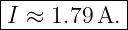
| ≈ 1.79 A. | (62) |
Thus,
Solution 6: current density from moving volume charge
Use
Then
| J | = (−3.0 × 10⁻⁶)(5.0x) | (65)
|
| = −1.5 × 10⁻⁵x A/m2. | (66) |
Therefore,
The negative charge moves toward +x, so conventional current density points toward
−x.
Solution 7: carrier form and electron drift direction
For electrons,
Substitute the data:
| J | = (8.0 × 1028)(−1.602 × 10⁻¹⁹)(−2.0 × 10⁻⁴x) | (69)
|
| ≈ 2.56 × 10⁶x A/m2. | (70) |
Hence,
The electron drift is toward −x, but conventional current density is toward +x.
Solution 8: drift speed from current
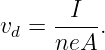
The drift-speed magnitude is
Substituting,
| vd | =  | (73)
|
| ≈ 1.22 × 10⁻⁴ m/s. | (74) |
Thus,
This very small speed reinforces the distinction between carrier drift and rapid electromagnetic
signal propagation.
Solution 9: nonuniform current density through a circular cross section
The surface is normal to z, so
In polar coordinates on the disk,
Therefore,
| I | = ∫
02π ∫
0RJ
0 sdsdϕ sdsdϕ | (78)
|
| =  ∫
0Rs2 ds ∫
0Rs2 ds | (79)
|
| =  ![[s3]
--
3](https://images.physicslibrary.org/cache/objects/1224/make4ht/ElectromagneticWavesElectricCurrentAndCurrentDensityExercisesAndCompleteWorkedSolutions62x.png) 0R 0R | (80)
|
| =  . . | (81) |
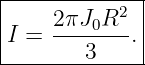
Hence,
Because J varies across the cross section, using I = JA with the edge value J0 would be
incorrect.
Solution 10: local continuity equation
The current density is
Its divergence is
| ∇⋅ J | =  + +  + +  | (84)
|
| = α + 2α − α | (85)
|
| = 2α. | (86) |
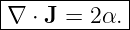
Thus,
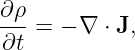
The continuity equation gives
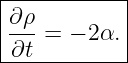
so
If α > 0, the divergence is positive, meaning net current leaves a small region. The local charge
density therefore decreases.
Solution 11: a steady but nonuniform current density
For
we have
Therefore,
| ∇⋅ J | =  + +  + 0 + 0 | (92)
|
| = 0. | (93) |
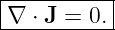
Hence,
The continuity equation then permits
So the field is compatible with steady charge density. However, J is clearly not spatially uniform:
both its magnitude and direction vary with position. Zero divergence does not mean constant
vector field.
Solution 12: global charge conservation in a control volume
Global conservation gives
For constant outward current,
Using milliamperes and seconds gives millicoulombs directly:
| Q(3.0 s) | = 10 mC − (2.0 mA)(3.0 s) | (98)
|
| = 10 mC − 6.0 mC | (99)
|
| = 4.0 mC. | (100) |
Therefore,
Solution 13: identify and correct misconceptions
- Incorrect. A current of 5 A means charge crosses the chosen surface at a rate of 5 C/s;
it does not specify how much charge is present in the wire.
- Incorrect. Current has units of amperes, while current density has units of amperes per
square meter.
- Correct. Electron drift toward −x corresponds to conventional current toward +x.
- Incorrect. Zero divergence means there is no local net source or sink of current density.
The vector field may still vary strongly with position.
- Correct. The global continuity equation contains a minus sign: positive net outward
current decreases enclosed charge.
Solution 14: synthesis from current distribution to charge conservation
The current density is
For a cross section normal to z,
Therefore,
| I(t) | = ∫
02π ∫
0RJ
m cos(ωt)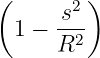 sdsdϕ sdsdϕ | (104)
|
| = 2πJm cos(ωt)![[ ]
s2 s4
2- − 4R2-](https://images.physicslibrary.org/cache/objects/1224/make4ht/ElectromagneticWavesElectricCurrentAndCurrentDensityExercisesAndCompleteWorkedSolutions84x.png) 0R 0R | (105)
|
| = 2πJm cos(ωt)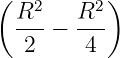 | (106)
|
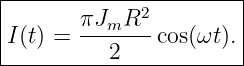
| =  cos(ωt). cos(ωt). | (107) |
Thus,
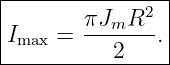
The peak current amplitude is
The average of cos(ωt) over one full cycle is zero, so
A zero cycle-average current does not mean nothing happens. Charges oscillate back and forth,
producing time-varying current density. Later in the series, time-varying antenna currents will act
as sources of time-varying electromagnetic fields and radiation.
Common mistakes
- Treating current as stored charge. Current is a rate of charge transport.
- Treating I and J as interchangeable. Current is a signed scalar through a selected
surface; current density is a vector field.
- Using I = JA when J varies over the surface. The general relation is I = ∫
SJ⋅dA.
- Ignoring surface orientation. Reversing the chosen normal reverses the sign of
current through the same surface.
- Forgetting the sign of carrier charge in J = nqvd. Electron current density points
opposite electron drift.
- Assuming ∇⋅ J = 0 means J is constant. It means only zero local net outflow.
- Dropping the minus sign in charge conservation. Positive outward current causes
enclosed charge to decrease.
What EM08E reinforces
The fundamental distinction is
Current through a surface is obtained from the local current-density field by
Microscopically,
and charge conservation requires
The next main lesson, EM09, introduces magnetic fields and the magnetic force on moving
charge.
References
[1] David J. Griffiths, Introduction to Electrodynamics, 4th ed., Cambridge University
Press, 2017.
[2] Samuel J. Ling, Jeff Sanny, and William Moebs, University Physics, Volume 2,
OpenStax, 2016, sections on electric current, current density, and charge conservation.
[3] Edward M. Purcell and David J. Morin, Electricity and Magnetism, 3rd ed.,
Cambridge University Press, 2013.
[4] Richard P. Feynman, Robert B. Leighton, and Matthew Sands, The Feynman Lectures
on Physics, Volume II, Addison-Wesley, 1964, chapters on current, charge conservation,
and electromagnetic fields.
[5] Massachusetts Institute of Technology, 8.02 Physics II: Electricity and Magnetism,
MIT OpenCourseWare, materials on current, current density, magnetic fields, and
Maxwell’s equations.
[6] John D. Jackson, Classical Electrodynamics, 3rd ed., Wiley, 1999, sections on charge
conservation and current density.

![[parent]](https://images.physicslibrary.org/images/uparrow.png)