|
|
|
|||||||
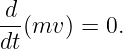
and
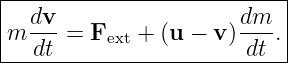
For a one-stream variable mass system,
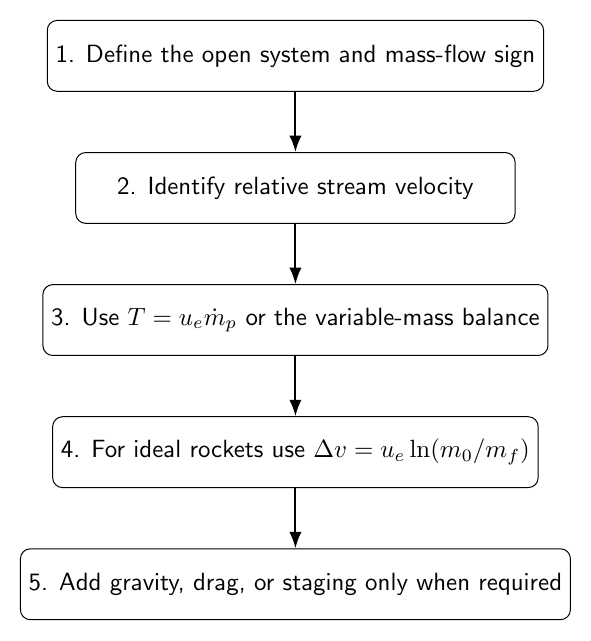
Figure 1. A compact strategy for variable mass and rocket problems. Define the mass-flow sign convention first, then use momentum flux, thrust, and the logarithmic mass-ratio relation consistently.
1 High-value GRE facts
Part I: Original GRE-style problems
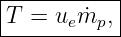
Problem 1: thrustAn engine ejects propellant at effective exhaust speed 2500 m∕s with propellant flow rate 20 kg∕s. The thrust is
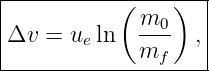
Problem 2: ideal delta-vA rocket has mass ratio m0∕mf = e and exhaust speed ue. Its ideal delta-v is
Problem 3: mass ratioA rocket requires ideal delta-v 2ue. Its required mass ratio is
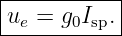
Problem 4: specific impulseAn engine has Isp = 300 s. Taking g0 ≈ 9.8 m∕s2, its effective exhaust speed is closest to
Problem 5: acceleration during burnA rocket produces constant thrust while its mass decreases. Neglecting external forces, its acceleration magnitude
Problem 6: rocket mass signDuring an ordinary rocket burn,
Problem 7: simplified gravity lossA vertical rocket burn lasts 50 s. With constant g = 9.8 m∕s2 and no drag, the simple gravity loss is
Problem 8: accreting cartA cart with no external horizontal force captures stationary material. As its mass increases, its speed
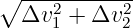
Problem 9: stagingTwo ideal rocket stages provide delta-v values Δv1 and Δv2. Neglecting losses, total delta-v is
Problem 10: propellant fractionA rocket has mass ratio R = 4. Its idealized propellant fraction is
Problem 11: why momentum flux mattersWhy is d(mv)∕dt = Fext not, by itself, a complete equation for the rocket body alone?
Problem 12: complete material systemFor rocket plus all expelled exhaust, with zero external force, the center-of-mass velocity
Part II: Complete worked solutions
Solution 1
Answer: (D).
Solution 2
Answer: (B).
Solution 3
Answer: (C).
Solution 4
Answer: (D).
Solution 5
As m decreases, a increases. Answer: (C).
Solution 6During a burn the rocket loses mass:
Answer: (C).
Solution 7
Answer: (D).
Solution 8For stationary incoming material and zero external horizontal force,
Speed decreases as mass increases. Answer: (B).
Solution 9
Answer: (C).
Solution 10
Answer: (C).
Solution 11The rocket body is an open system. Exhaust crossing the boundary carries momentum, so a momentum-flux term must be included. Answer: (B).
Solution 12Rocket plus exhaust forms a closed material system. With zero external force, total momentum and center-of-mass velocity remain constant. Answer: (C).
2 GRE checklist
References
References
"GRE Physics Companion: Variable-Mass Systems and the Rocket Equation" is owned by bloftin.
This object's parent. Cross-references: rocket equation, total momentum, system, open system, boundary, Newton's laws, force, magnitude, acceleration, external forces, speed, velocity, drag, constant acceleration, specific impulse, thrust, flux, momentum, mass, variable mass system, relations This is version 1 of GRE Physics Companion: Variable-Mass Systems and the Rocket Equation, born on 2026-10-04. Object id is 1399, canonical name is GREPhysicsCompanionVariableMassSystemsAndTheRocketEquation. Accessed 7 times total. Classification:
|
|
|
|
Pending Errata and AddendaNone.
|
DiscussionNo messages.
|
Interact |
![[parent]](https://images.physicslibrary.org/images/uparrow.png)