|
|
|
|||||||
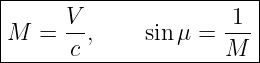
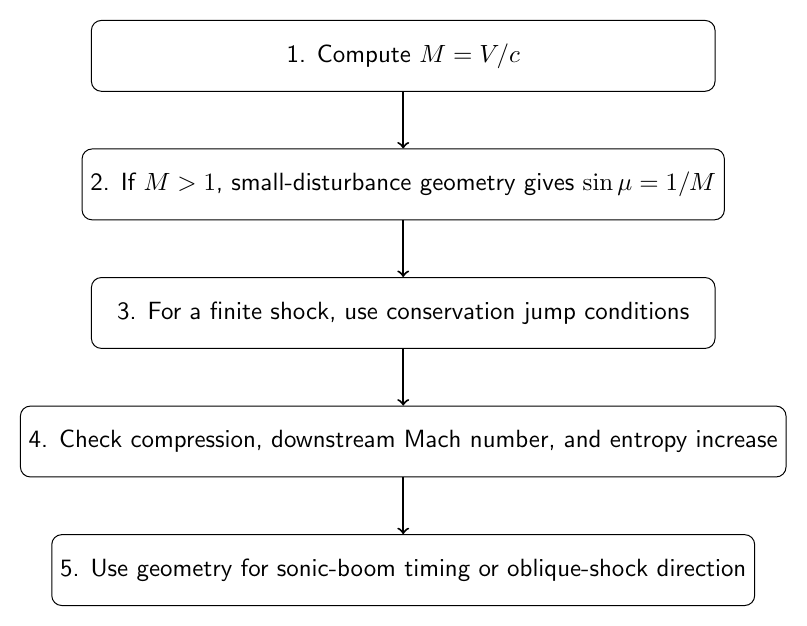
for M > 1. For a finite normal shock, conservation laws connect upstream and downstream states, while entropy increases.
Figure 1. A compact strategy: compute Mach number first, use Mach-cone geometry for small disturbances, and switch to conservation jump conditions when a finite shock is present.
1 High-value GRE facts
Part I: Original GRE-style problems
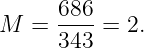
Problem 1: Mach numberAn aircraft travels at 686 m∕s where c = 343 m∕s. Its Mach number is
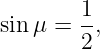
Problem 2: Mach angleFor M = 2, the Mach angle is
Problem 3: higher Mach numberAs Mach number increases well above one, the Mach angle
Problem 4: shock compressionAcross a physical compressive normal shock in an ideal gas,
Problem 5: downstream speedmass conservation across a compressive normal shock implies
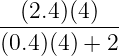
Problem 6: density ratio at Mach 2For air with γ = 1.4 and M1 = 2, the density ratio is closest to
Problem 7: pressure ratio at Mach 2For the same shock, the pressure ratio is closest to
Problem 8: downstream Mach numberFor air with γ = 1.4 and M1 = 2, the downstream Mach number is closest to
Problem 9: entropyAcross a physical adiabatic shock,
Problem 10: sonic-boom distanceAn aircraft at M = 2 flies horizontally at altitude 10.0 km. Approximately how far ahead of an observer is it when the ideal Mach cone reaches that observer?
Problem 11: sonic boomA sonic boom from a steadily supersonic aircraft occurs
Problem 12: oblique shockFor an oblique shock with angle β, the upstream normal Mach number is
Part II: Complete worked solutions
Solution 1
Answer: (C).
Solution 2
so
Answer: (B).
Solution 3Since sin μ = 1∕M, increasing M decreases μ. Answer: (D).
Solution 4A compressive normal shock raises pressure and density and increases entropy. Answer: (C).
Solution 5From
and ρ2 > ρ1, it follows that u2 < u1. Answer: (C).
Solution 6
Answer: (C).
Solution 7
Answer: (D).
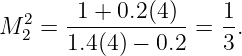
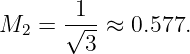
Solution 8
Therefore
Answer: (B).
Solution 9A physical shock is irreversible:
Answer: (C).
Solution 10At M = 2,
Thus
Answer: (C).
Solution 11A supersonic aircraft continuously carries a shock system. The boom is heard when that shock structure passes the observer. Answer: (D).
Solution 12The normal component is
Answer: (B).
2 GRE checklist
References
References
"GRE Physics Companion: Supersonic Motion, Mach Cones, and Shock Waves" is owned by bloftin.
This object's parent. Cross-references: shock-fixed frame, mass, Mach angle, system, sonic boom, temperature, speed, Normal, Mach wave, Mach cone, Mach number, entropy, normal shock, relations This is version 1 of GRE Physics Companion: Supersonic Motion, Mach Cones, and Shock Waves, born on 2026-10-24. Object id is 1532, canonical name is GREPhysicsCompanionSupersonicMotionMachConesAndShockWaves. Accessed 12 times total. Classification:
|
|
|
|
Pending Errata and AddendaNone.
|
DiscussionNo messages.
|
Interact |






 (4