Force: Problem Set with Solutions
This problem set is designed to accompany the PhysicsLibrary entry force. The exercises are stated
first for self-study. Complete, worked solutions follow afterward.
Exercises
Problem 1. Net force from perpendicular forces. Figure 1 shows a ring pulled by two
perpendicular forces, F1 = 6 N to the right and F2 = 8 N upward. Determine the magnitude and
direction of the net force.
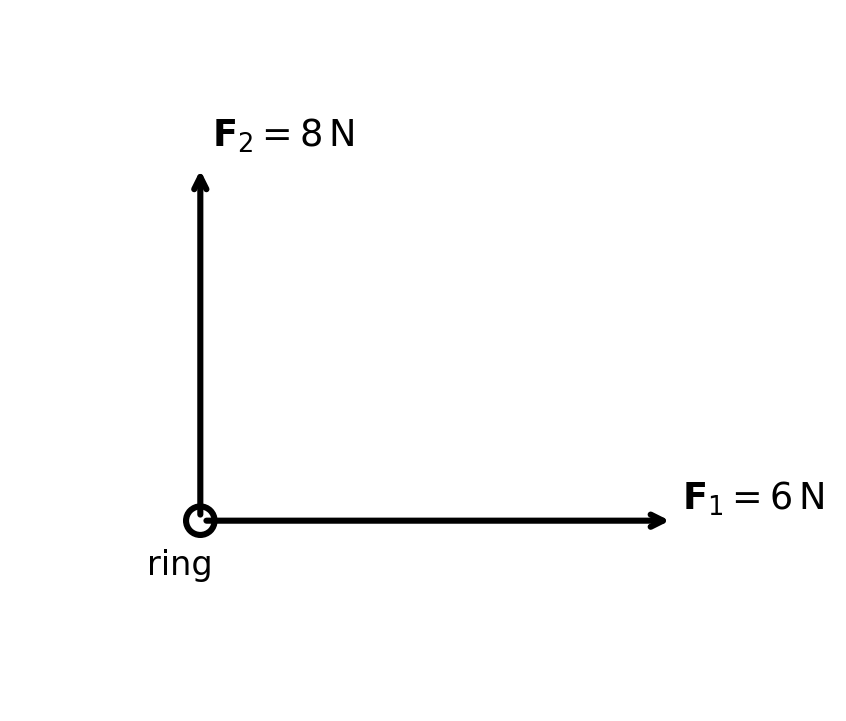
Figure 1: Two perpendicular forces acting on a ring.
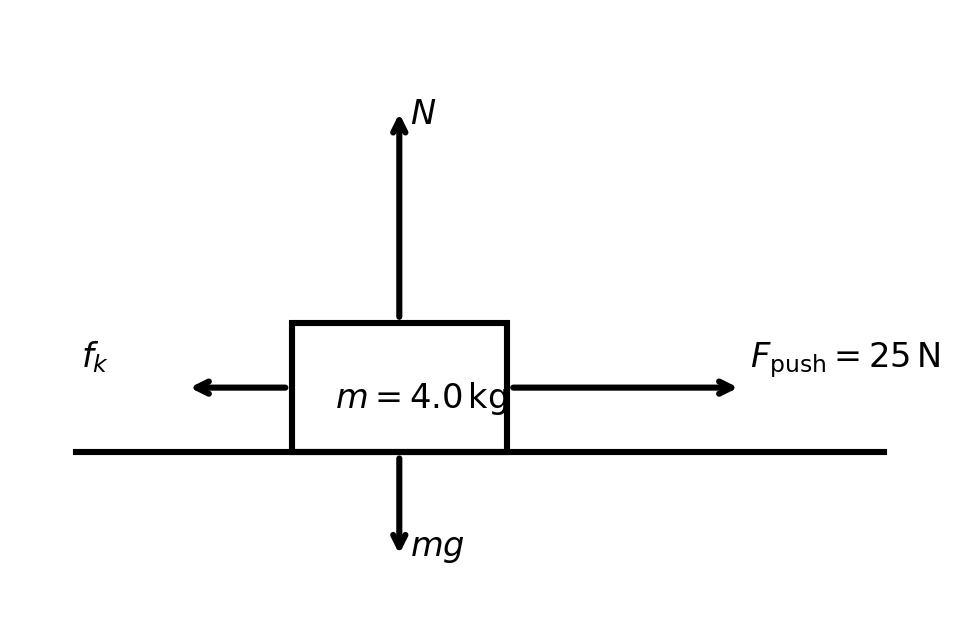
Problem 2. Horizontal motion with kinetic friction. A 4.0 kg block is pushed across a
horizontal floor by a constant horizontal force of 25 N, as shown in Figure 2. The coefficient of
kinetic friction is μk = 0.30. Find (a) the Normal force, (b) the kinetic friction force, and (c) the
horizontal acceleration of the block.
Problem 3. Static friction on an incline. A 5.0 kg block rests on a 25∘ incline, as in Figure 3.
Assume the block is just on the verge of slipping downward. Find the minimum coefficient of static
friction required to keep it at rest.
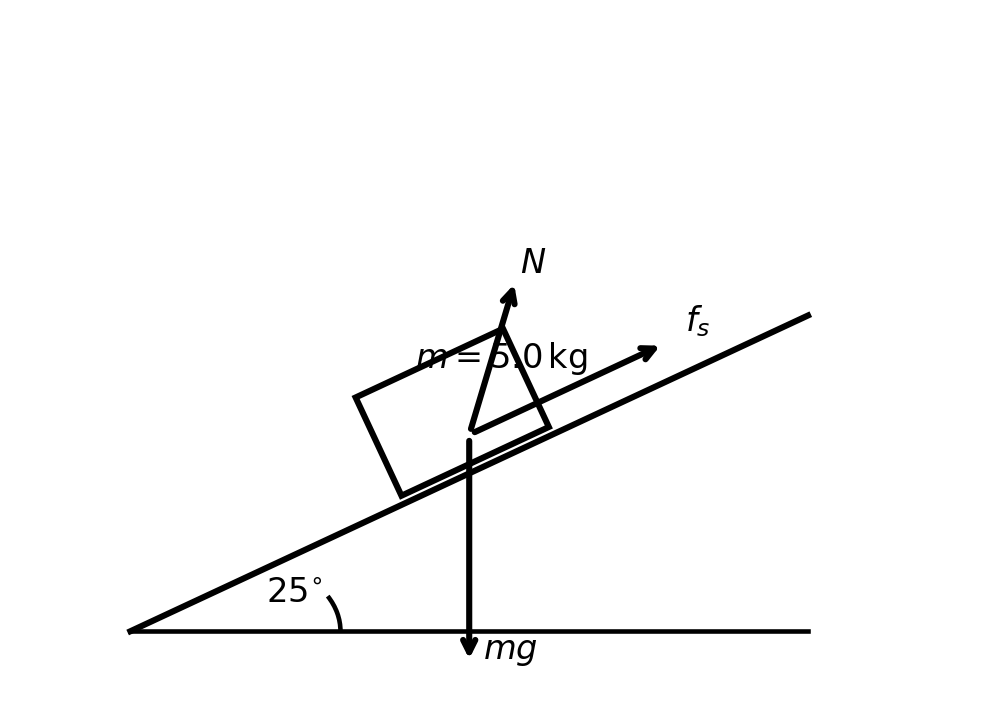
Figure 3: Block on an incline with Weight, normal force, and static friction.
Problem 4. An ideal Atwood Machine. In the system shown in Figure 4, m1 = 2.0 kg and
m2 = 3.0 kg. The string and Pulley are ideal. Find (a) the magnitude of the acceleration and (b)
the string Tension.
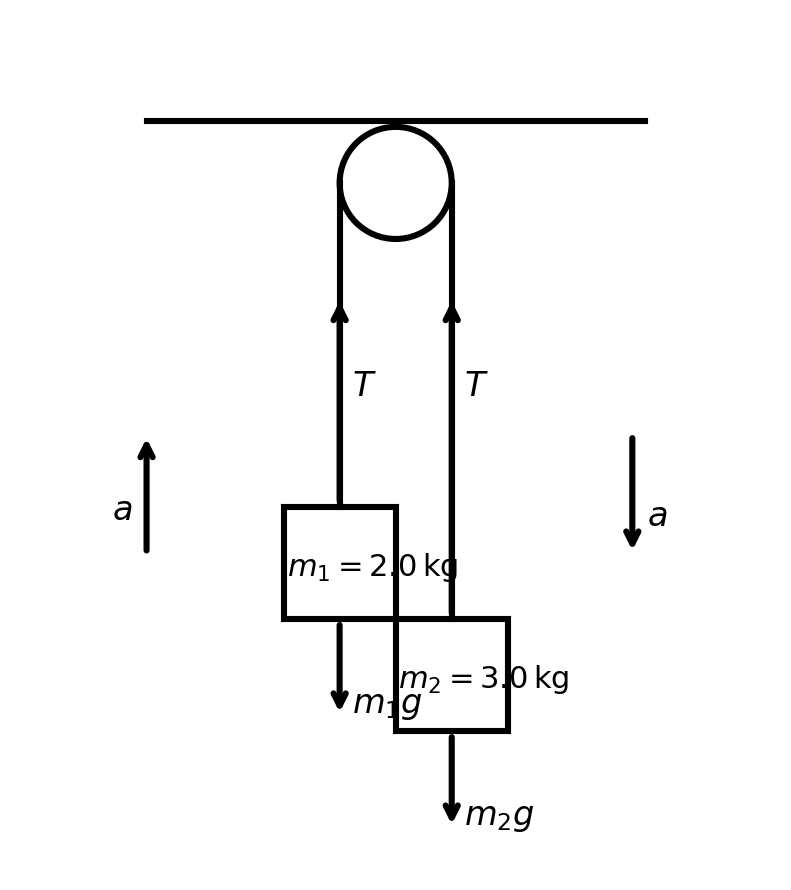
Figure 4: Free-body diagram for an ideal Atwood machine.
Problem 5. Spring force and simple horizontal motion. A 0.40 kg block is attached to a
horizontal spring with spring constant k = 80 N∕m. The spring is stretched by x = 0.15 m and
released from rest, as in Figure 5. Find (a) the magnitude of the initial spring force and (b) the
initial acceleration of the block.
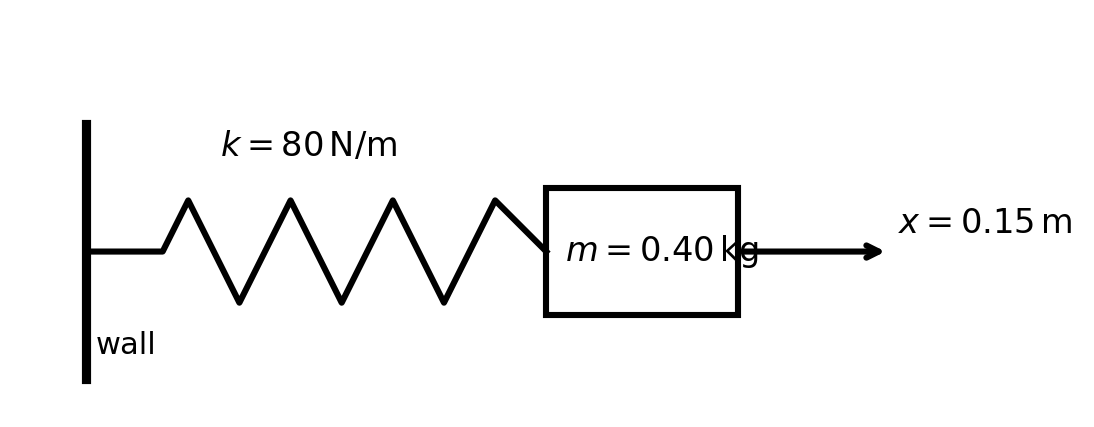
Figure 5: Block attached to a stretched horizontal spring.
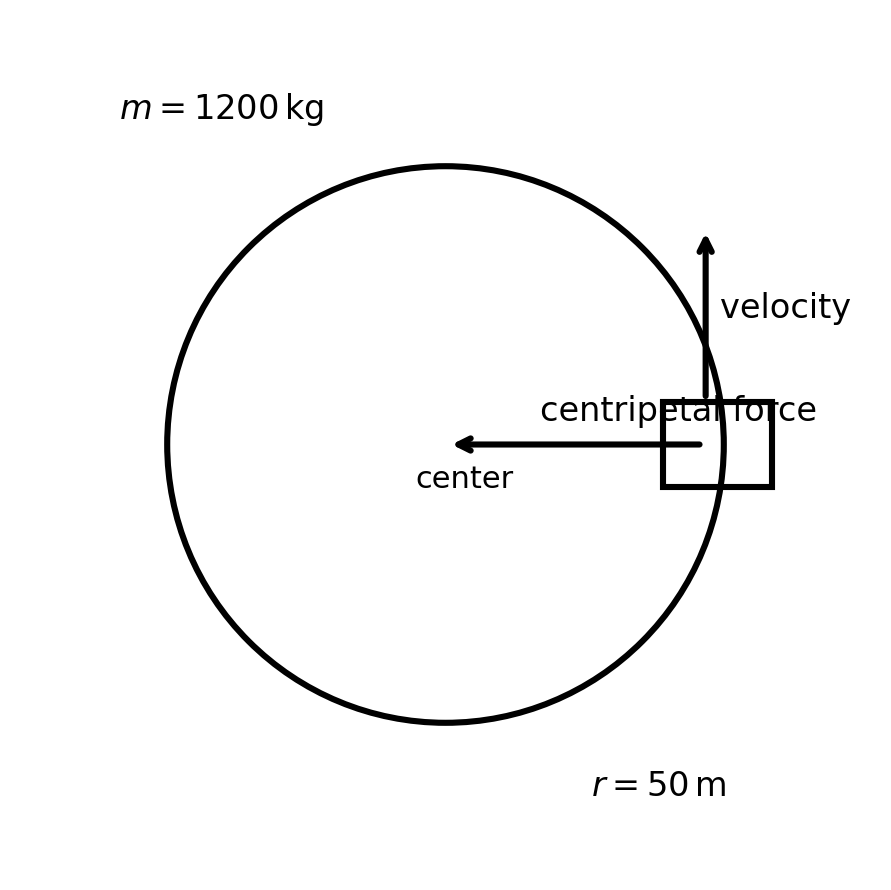
Problem 6. Centripetal force on a flat curve. A 1200 kg CAR travels at 12 m∕s around a flat
circular curve of radius 50 m, as sketched in Figure 6. Find (a) the required centripetal force and
(b) the minimum coefficient of static friction required if static friction provides the centripetal
force.
Worked solutions
Solution 1. Because the two forces are perpendicular, the magnitude of the net force is found
from the Pythagorean theorem:
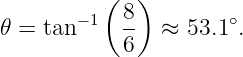
The direction above the positive horizontal axis is
Therefore the net force is
Solution 2. On a horizontal surface with no vertical acceleration,
The kinetic friction force is
The net horizontal force is
Thus the acceleration is
So the answers are
Solution 3. Resolve the weight into components parallel and perpendicular to the
incline:
At the threshold of slipping, static friction takes its maximum value,
Since the block is in equilibrium,
Therefore
Hence the minimum coefficient is
Solution 4. Because m2 > m1, mass m2 moves downward and m1 moves upward. Applying
Newton’s second law to each mass gives
Adding the equations,
so
Now solve for the tension:
Therefore
Solution 5. Hooke’s law gives the magnitude of the spring force:
Initially this is the net horizontal force on the block, so
The spring force and acceleration are directed toward equilibrium. Thus
Solution 6. The required centripetal force is
On a flat curve, the centripetal force is supplied by static friction. The normal force
is
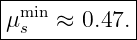
Thus the minimum coefficient of static friction is
Therefore
Study notes
These six problems illustrate several core ideas related to force:
- forces add vectorially;
- free-body diagrams help isolate all forces acting on a body;
- Friction forces must be modeled carefully, distinguishing static and kinetic friction;
- Newton’s second law connects force to acceleration;
- spring forces are modeled by Hooke’s law;
- centripetal force is not a new interaction but the inward net force needed for circular
motion.
References
[1] Daniel Kleppner and Robert J. Kolenkow, An Introduction to Mechanics, 2nd ed.,
Cambridge University Press, 2014.
[2] John R. Taylor, Classical Mechanics, University Science Books, 2005.
[3] David Halliday, Robert Resnick, and Jearl Walker, Fundamentals of Physics, 10th
ed., Wiley, 2013.

![[parent]](https://images.physicslibrary.org/images/uparrow.png)