
|
|
|
|||||||
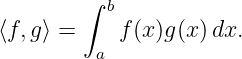
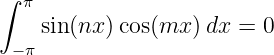
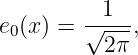
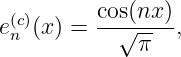
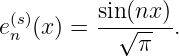
On [−π,π], the central relations are
and
for positive integers m,n. The problems below repeatedly rebuild these statements from elementary trigonometry and integration.
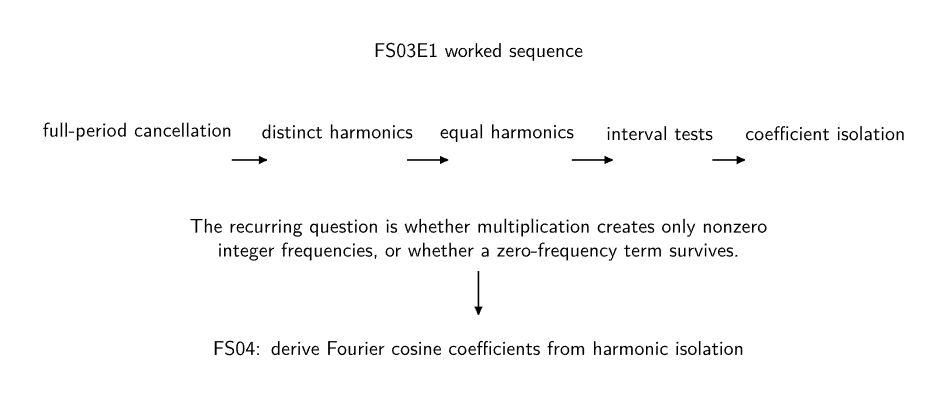
Figure 1. The exercise sequence begins with full-period cancellation, then separates distinct- and equal-harmonic cases, tests mixed sine-cosine products, generalizes to other intervals, and finishes by isolating one coefficient from a finite harmonic sum.
1 Two reusable workflowsFS03E1 will use two short procedures repeatedly.
Orthogonality integral workflowAn orthogonality integral workflow is the sequence
The zero-frequency check is what prevents the common mistake of applying the distinct-harmonic formula when m = n.
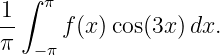
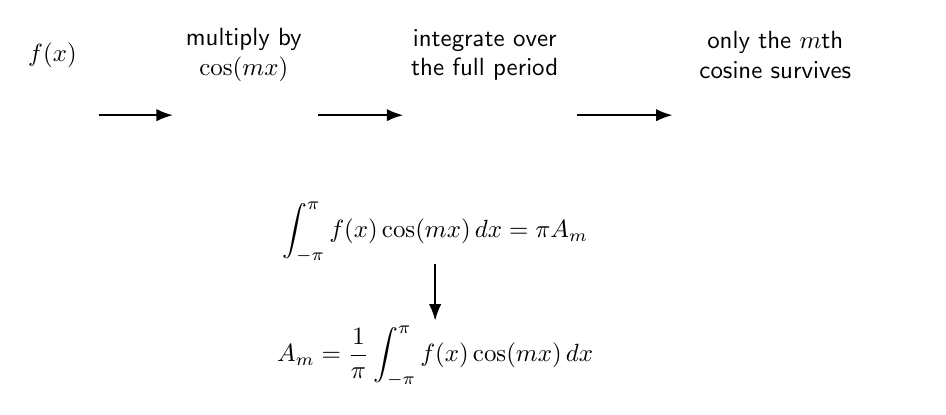
Harmonic-isolation checkA harmonic-isolation check verifies that multiplying a finite harmonic sum by one chosen basis function and integrating over a complete period removes all orthogonal terms and leaves only the chosen component multiplied by its norm squared. For example, if
then multiplication by cos(mx) followed by integration over [−π,π] should leave
This is the mechanism FS04 will turn into the general Fourier cosine-coefficient formula.
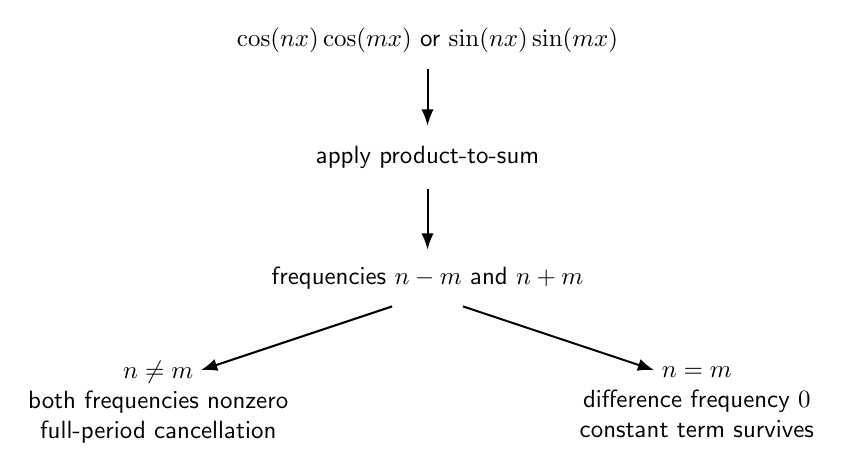
Figure 2. For same-family products, product-to-sum converts one product integral into sums of single-harmonic integrals. The key diagnostic is whether a difference frequency becomes zero.
2 ProblemsAll problems are stated before the worked solutions.
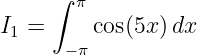
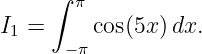
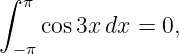
Problem 1: full-period cancellation for a cosineEvaluate
directly from the antiderivative. Explain why the result is an example of full-period cancellation.
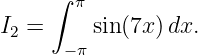
Problem 2: full-period cancellation for a sineEvaluate
Solve it in two ways:
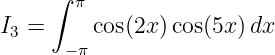
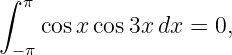
Problem 3: distinct cosine harmonicsEvaluate
using a product-to-sum identity. Do not jump directly to the orthogonality theorem.
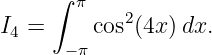
Problem 4: equal cosine harmonicsEvaluate
Show explicitly why the calculation differs from Problem 3. Then determine
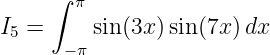
Problem 5: distinct sine harmonicsEvaluate
using the sine-sine product-to-sum identity.
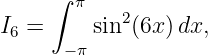
Problem 6: equal sine harmonicsEvaluate
and determine
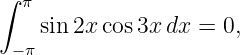
Problem 7: mixed sine-cosine harmonicsEvaluate
in two ways:
Problem 8: the constant function versus harmonicsEvaluate
and
on [−π,π]. Then calculate
Problem 9: build a Kronecker-delta tableFor
construct the 4 × 4 matrix
Write the answer both as an explicit matrix and using δmn.
Problem 10: normalized trigonometric basisOn [−π,π], define
and
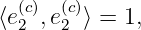
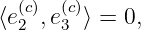
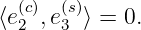
Verify explicitly that
and
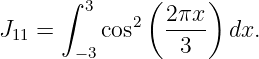
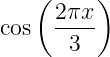
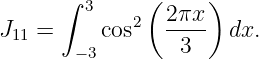
Problem 11: general interval [−L,L]Let L = 3. Evaluate
Then evaluate
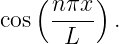
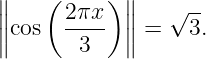
Use the results to identify the norm of
on [−3, 3].
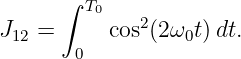
Problem 12: time-domain harmonic orthogonalityA periodic signal has fundamental period
Its fundamental angular frequency is
Evaluate
and
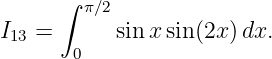
Problem 13: orthogonality can fail on a shortened intervalEvaluate
Explain why this does not contradict the orthogonality of sin x and sin 2x on [−π,π].
Problem 14: noninteger frequencies need not be orthogonalEvaluate
Explain why the result matters for the phrase integer harmonics.
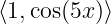
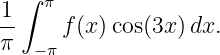
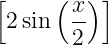
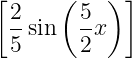
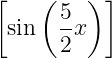
Problem 15: isolate a cosine coefficientLet
Without reading the coefficient directly from the formula, calculate
Show every term that vanishes.
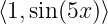
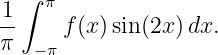
Problem 16: isolate a sine coefficientFor the same function
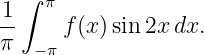
calculate
Again show every vanished term.
3 Hints
4 Worked solutions
Solution 1: full-period cosine cancellationStart from
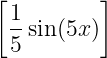
An antiderivative is
Therefore
The interval has length 2π, while cos(5x) completes five full cycles on that interval. The positive and negative signed areas cancel.
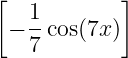
Solution 2: full-period sine cancellationBy direct integration,
There is an even quicker argument. Since
sin(7x) is odd. The integral of an odd function over [−π,π] is zero.
Solution 3: distinct cosine harmonicsUse
Set
Then
Hence
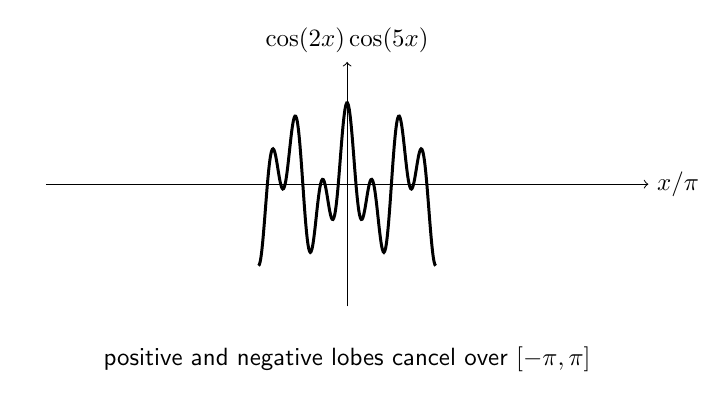
Thus cos(2x) and cos(5x) are orthogonal on [−π,π].
Figure 3. Distinct cosine harmonics do not have zero product point by point. Their product changes sign, and its positive and negative contributions cancel over the full interval.
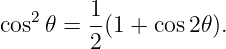
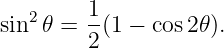
Solution 4: equal cosine harmonicsNow the two frequencies are equal. Use
Then
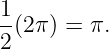
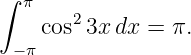
The second integral is zero. The first is
Therefore
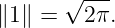
The norm satisfies
so
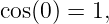
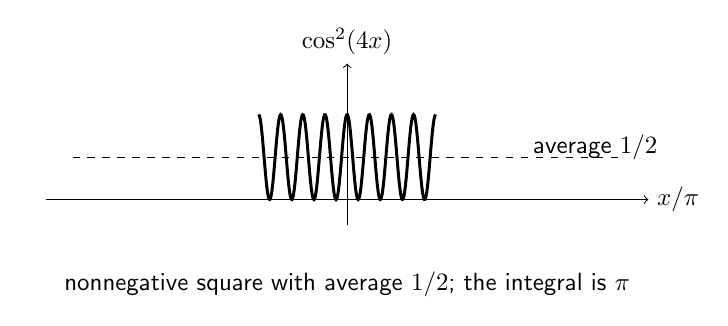
The key difference from Problem 3 is that the difference frequency is zero. In product-to-sum language,
Since
a constant term survives.
Figure 4. Squaring one harmonic produces a nonnegative function with positive average value. The surviving constant term is why an equal-harmonic inner product equals the norm squared rather than zero.
Solution 5: distinct sine harmonicsUse
Then
Therefore
So sin(3x) and sin(7x) are orthogonal on the full interval.
Solution 6: equal sine harmonicsUse
Then
Hence
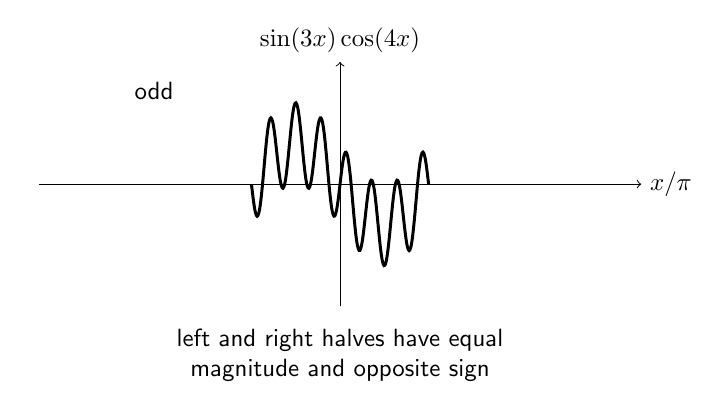
Solution 7: mixed sine-cosine harmonicsFirst use parity. sin(3x) is odd and cos(4x) is even. Their product is odd:
Therefore
Now verify with product-to-sum:
Thus
Both terms integrate to zero on [−π,π], so again
Figure 5. A sine harmonic is odd and a cosine harmonic is even. Their product is odd, so its integral over a symmetric interval vanishes immediately.
Solution 8: constant versus harmonicsFirst,
Likewise,
The norm squared of the constant function is
Therefore
This different norm is the reason the constant term later receives a different normalization from the nonzero sine and cosine harmonics.
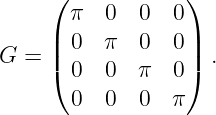
Solution 9: Kronecker-delta tableFor
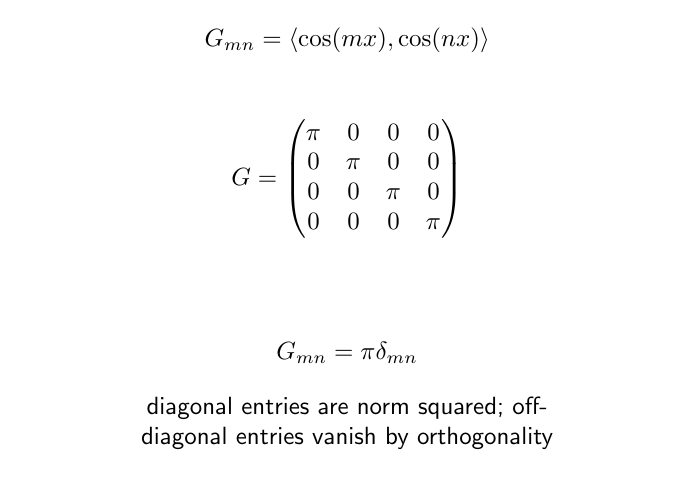
the distinct-harmonic entries vanish and each diagonal entry equals π. Thus
Equivalently,
Figure 6. The Gram matrix of the first four cosine harmonics is diagonal. Orthogonality makes every off-diagonal inner product zero, while each diagonal entry is the common norm squared π.
Solution 10: normalized trigonometric basisFor the equal cosine mode,
For two different cosine modes,
For a cosine and sine mode,
Thus the normalized functions have unit norm and remain mutually orthogonal.
Solution 11: interval [−3, 3]The general orthogonality family on [−L,L] is
Here L = 3. The first integral contains modes n = 2 and m = 5, so they are distinct integer harmonics:
For the equal-harmonic integral,
On [−L,L], the norm squared of every nonconstant sine or cosine harmonic is L. Therefore
Hence
To see the equal-mode result directly,
Solution 12: time-domain orthogonalityThe two cosine factors are the second and fifth harmonics of the same fundamental frequency. Over exactly one complete fundamental period,
For the equal-mode integral, the average value of cos 2 over a complete number of cycles is 1∕2:
The units are seconds because the integrand is dimensionless and the integration variable is time.
Solution 13: shortened intervalUse
Therefore
Thus
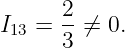
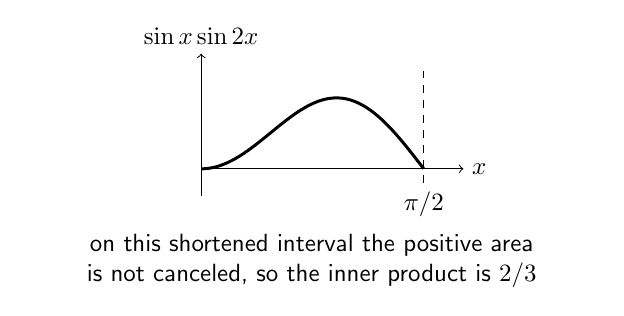
There is no contradiction. Orthogonality is a statement about both the functions and the chosen inner product interval. The interval [0,π∕2] does not provide the full cancellation enjoyed on [−π,π].
Figure 7. Orthogonality is interval dependent. The product sinxsin2x has incomplete cancellation on [0,π∕2], so the corresponding inner product is not zero there.
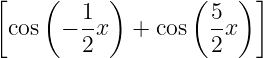
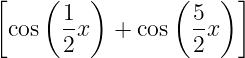
Solution 14: noninteger frequencyUse product-to-sum:
Then
For the first term,
For the second term,
Therefore
The usual Fourier orthogonality on [−π,π] relies on integer harmonics. Half-integer frequencies do not necessarily complete the cancellation required by that basis.
Solution 15: isolate the cosine coefficientWe need
Insert the full function:
Now apply orthogonality term by term:
and
Thus
The multiplication-and-integration operation has isolated the coefficient of cos 3x.
Figure 8. Harmonic isolation is projection in action. Multiplying by the target harmonic and integrating over the full interval removes every orthogonal component, leaving the target coefficient times the target basis norm squared.
Solution 16: isolate the sine coefficientNow calculate
Expand:
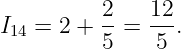
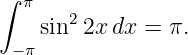
The first, second, and fourth integrals vanish. The surviving norm integral is
Therefore
Again the target coefficient is recovered exactly.
5 What these exercises establishThe calculations can now be summarized structurally.
6 Further practice
7 Bridge to FS04FS03 and FS03E1 have established the exact mechanism needed for Fourier coefficient extraction. Suppose a periodic function can be represented by
To find one cosine coefficient, FS04 will:
That derivation will produce the Fourier cosine coefficient from first principles rather than from memorization.
References
References
[1] PhysicsLibrary, FS03: Orthogonality of Sines and Cosines. [2] E. Kreyszig, Advanced Engineering Mathematics, Wiley. [3] R. V. Churchill and J. W. Brown, Fourier Series and Boundary Value Problems, McGraw-Hill. [4] G. B. Arfken, H. J. Weber, and F. E. Harris, Mathematical Methods for Physicists, Academic Press. "Sine-Cosine Orthogonality and Harmonic-Integral Exercises" is owned by bloftin.
This object's parent. Cross-references: periodic function, Fourier coefficient, Fourier basis, operation, fundamental frequency, unit, normalized functions, square, angular frequency, periodic, matrix, theorem, norm, period, formula, identity, parity, functions, full-period cancellation, relations, inner product, frequency, fundamental period, harmonics, FS03 There is 1 reference to this object. This is version 1 of Sine-Cosine Orthogonality and Harmonic-Integral Exercises, born on 2026-10-22. Object id is 1522, canonical name is SineCosineOrthogonalityAndHarmonicIntegralExercises. Accessed 5 times total. Classification:
|
|
|
|
Pending Errata and AddendaNone.
|
DiscussionNo messages.
|
Interact |


















 [cos(
 (1 + cos 2
 [cos(
 (1

































 [sin(7
 [sin(7




 (






 (6) + 0





 (1)
 (
 +










 [1


 cos 3



 (

 sin 2



 (
