GRE Physics Companion: Projectile Motion
This companion is designed for rapid review after M01-07. GRE style projectile questions are
usually solved fastest by recognizing which assumptions allow a shortcut and which require the full
component equations.
1 Fast triage
Always begin by resolving the launch velocity:
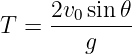
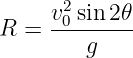
If launch and landing heights are equal, the shortcuts
and
are often fastest.
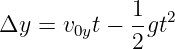
If the heights differ, solve
for the physical time, then use
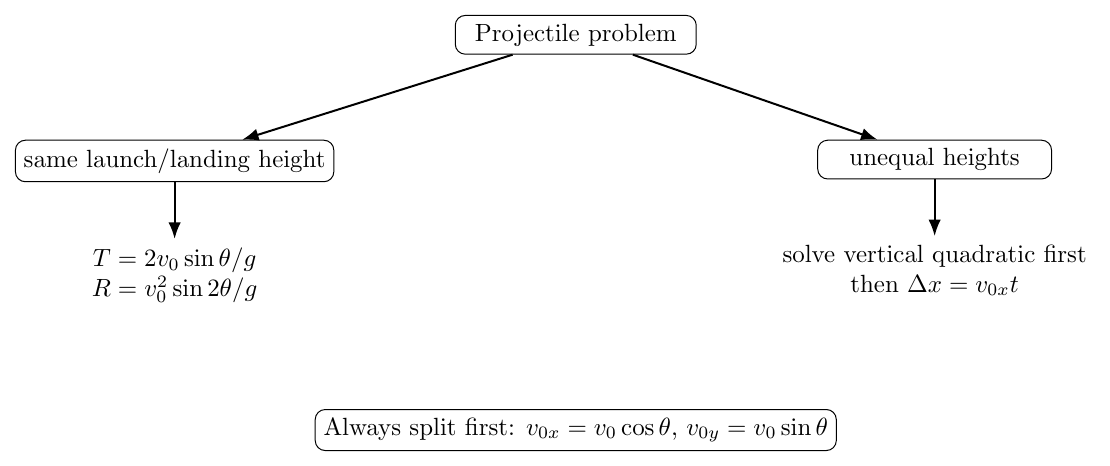
Figure 1. GRE speed triage: split the launch velocity first, then decide whether the same height
shortcuts are actually valid.
2 Common traps
At the apex,
but neither the horizontal velocity nor the acceleration is generally zero.
The maximum same height range occurs at 45∘ only in the ideal no drag model. Complementary
angles give the same same height range, but different flight times and maximum heights.
For a horizontal launch, the time to fall depends only on the vertical drop, not on the horizontal
launch speed.
If a projectile returns to the same height from which it was launched, its speed magnitude equals
the launch speed in the ideal model, but its velocity vector does not.
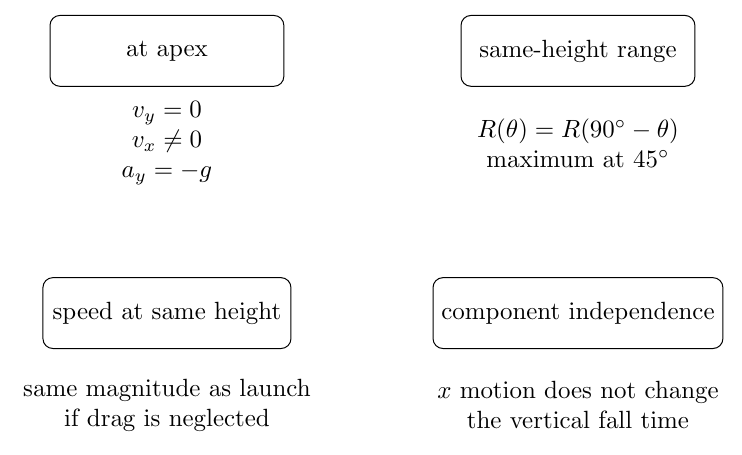
Figure 2. Common projectile motion traps: the apex, complementary angle range, equal height
speed, and independence of horizontal and vertical motion.
3 Worked GRE example 1: compare complementary angles
Two projectiles are launched with the same speed from level ground at angles 30∘ and 60∘. Neglect
drag. Compare their ranges and flight times.
The ranges are proportional to
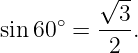
For 30∘,
For 60∘,
Therefore the ranges are equal.
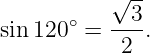
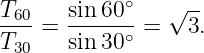
But
so
The 60∘ projectile stays in the air longer.
4 Worked GRE example 2: horizontal launch ratio
Two balls roll horizontally from the same cliff at speeds v and 2v. They leave the edge
simultaneously. Neglect air resistance. Compare their fall times and horizontal ranges.
The vertical initial velocity is zero for both, and both fall through the same height. Therefore their
fall times are equal.
Since
and the second ball has twice the horizontal speed,
The faster horizontal motion changes range but not fall time.
5 GRE speed questions
- A projectile is at the highest point of its trajectory. Which quantity must be zero? (A)
vx (B) vy (C) ax2 + a
y2 (D) speed
- A projectile is launched and lands at the same height with fixed speed v0. Which angle
gives the maximum ideal range? (A) 30∘ (B) 45∘ (C) 60∘ (D) 90∘
- Two ideal projectiles have equal launch speed and angles 25∘ and 65∘. Their same
height ranges are (A) equal (B) in ratio 25∕65 (C) larger for 25∘ (D) larger for 65∘.
- A ball is launched horizontally from a cliff. If its horizontal launch speed doubles, its
fall time is (A) halved (B) unchanged (C) doubled (D) quadrupled.
- A projectile returns to its launch height with no drag. Its speed magnitude just before
return is (A) zero (B) less than v0 (C) equal to v0 (D) greater than v0.
- For an ideal projectile, the horizontal acceleration is (A) g (B) −g (C) zero (D)
dependent on angle.
- A projectile is launched from a platform and lands well below the launch height. Which
method is safest? (A) always use R = v02 sin 2𝜃∕g (B) solve the vertical equation for
time, then use horizontal motion (C) set T = 2v0y∕g (D) assume the path is symmetric
about its apex and launch point.
- At the same height on the upward and downward parts of an ideal trajectory, which
statement is true? (A) the velocity vectors are identical (B) the speeds are equal (C)
the vertical velocities have the same sign (D) the horizontal velocities have opposite
signs.
6 Answers and rationales
- B. At the apex vy = 0; vx and ay = −g remain nonzero.
- B. Same height range is proportional to sin 2𝜃, which is maximal at 2𝜃 = 90∘.
- A. The angles are complementary, so they give the same ideal same height range.
- B. The fall time comes entirely from the vertical motion.
- C. The projectile has recovered the same kinetic energy at the same height in the ideal
model.
- C. Ideal projectile motion has ax = 0.
- B. The standard same height shortcuts do not apply to unequal heights.
- B. The speed magnitude is the same; the vertical component reverses sign.
References
[1] PhysicsLibrary, M01-07, Projectile Motion.
[2] S. J. Ling, J. Sanny, and W. Moebs, University Physics, Volume 1, OpenStax, 2016.

![[parent]](https://images.physicslibrary.org/images/uparrow.png)