The beginner often finds it difficult to distinguish between the mass of a body and its
Weight. They are apt to ask such a question as this, ”When I buy a pound of fruit
what do I get, one pount-mass or one pound-weight?” The difficulty is due to the
fact that the common methods for comparing the masses of bodies make use of their
weights.
There are two general methods by which masses may be compared, both of which are based upon
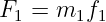
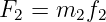
Newton’s laws of motion. Let F1 and F2 be the resultant forces acting upon two bodies having
masses m1 and m2, and f1 and f2 be the accelerations produced. Then the force equation
gives
and
(1) If the forces are of such magnitudes that the accelerations are equal then the masses are
proportional to the forces; for when f1 = f2, the last equation becomes
This gives us a method of comparing masses, of which the common method of weighing is the most
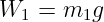
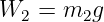
important example. If W1 and W2 denote the weights of two bodies of masses m1 and m2, then by
the equation that gives the magnitude of the force
then we obtain
and
where g is the common acceleration due to gravitational attraction.
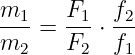
(2) If the forces acting upon the bodies are equal the masses are inversely proportional to the
accelerations:
This gives us the second method by which masses may be compared. The following are more or less
practicable applications of this method:
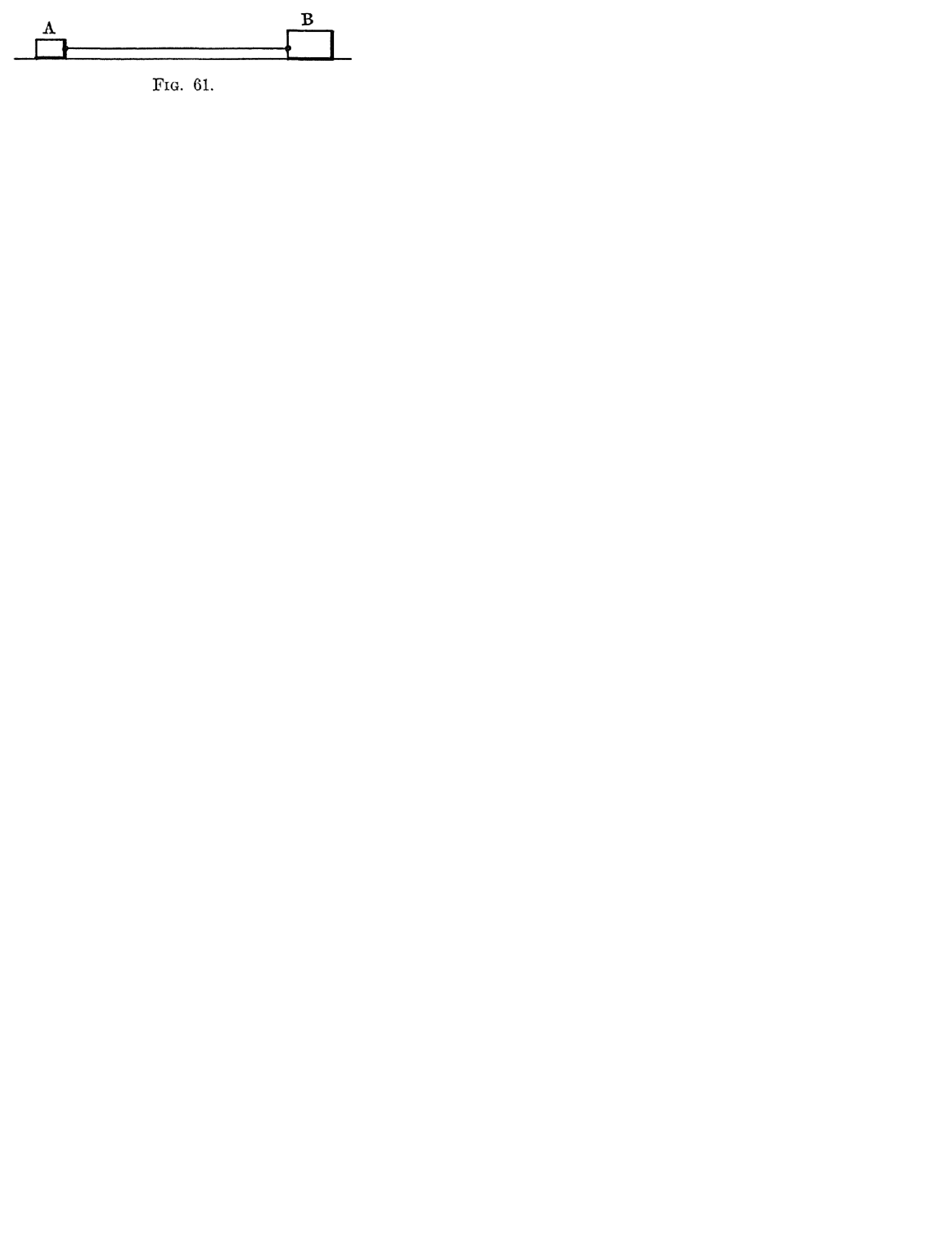
(a) Let A and B (Fig. 61) be two bodies connected with a long elastic string of negligible mass,
placed on a perfectly smooth and horizontal table.
Suppose the string to be stretched by pulling A and B away from each other. It is evident that
when the bodies are released they will be accelerated with respect to the table and that the
accelerating force, that is, the pull of the string, will be the same for both bodies. Therfore if f1
and f2 denote their accelerations at any instant of their motion, the ratio of their masses is given
by the relation
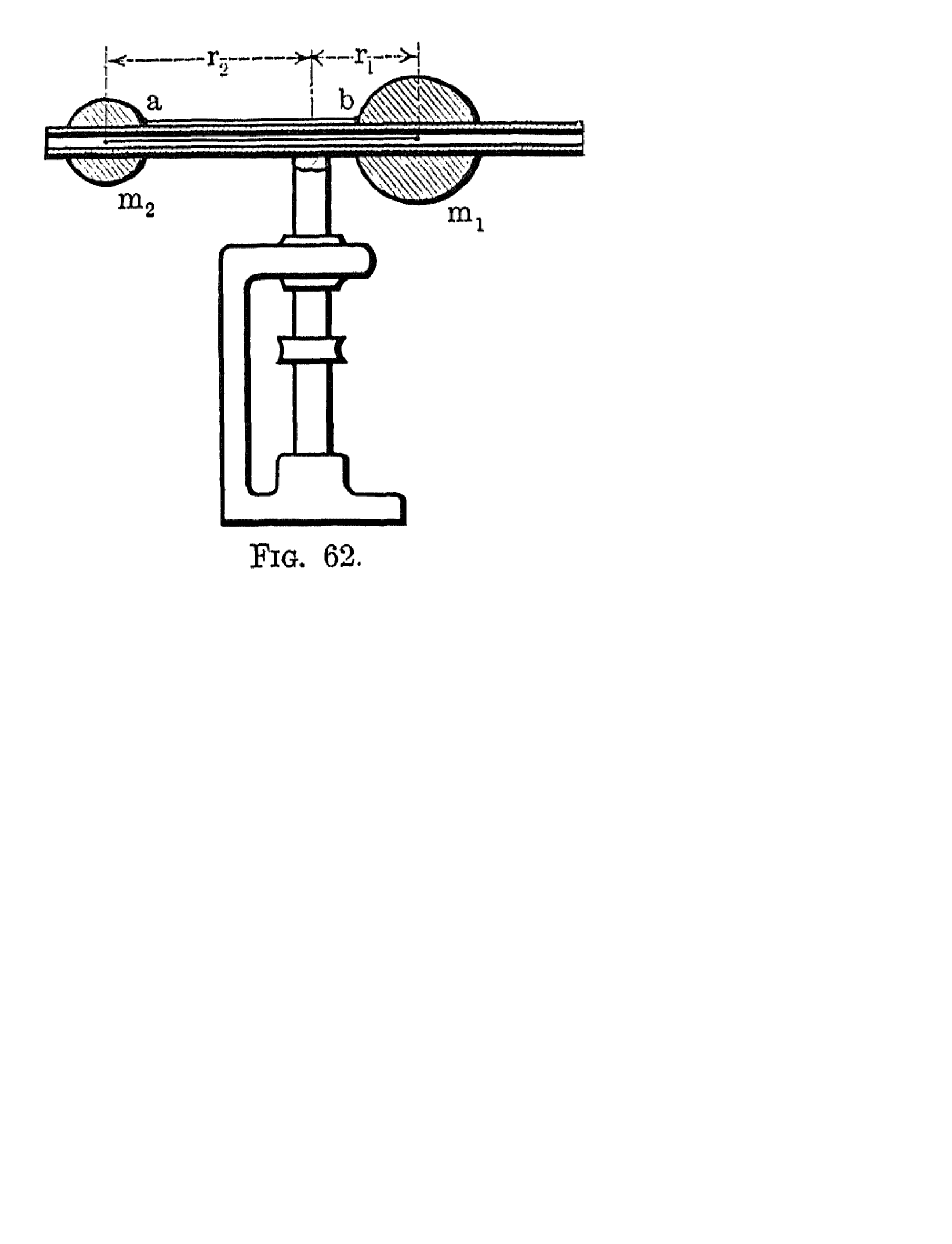
(b) Suppose the bodies whose masses are to be compared to be fitted on a smooth horizontal rod
(Fig. 62) so that they are free to slide along it.
If the rod is rotated about a vertical axis the bodies fly away from the axis of rotation. If, however,
the bodies are connected by a string of negligible mass they occupy positions on the two sides of
the axis, which depend upon the ratio of the masses. So far as the motion along the rod is
concerned, each body is equivalent to a particle of the same mass placed at the center of mass of
the body.
Suppose, as it is assumed in Fig. 62, the horizontal rod to be hollow and tohave smooth inner wall;
further suppose the centers of mass of the given bodies to lie on the axis of the rod. Then if at the
center of mass of each body a particle of equla mass is placed and the two particles connected by
means of a massles string of proper lengths, the positions of the particles will remain at the
centers of mass of the given bodies even when the rod is set rotating about the vertical
axis.
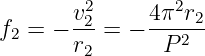
Now let m1 and m2 be the masses of the particles and f1 and f2 their accelerations due to the
rotation of the tube about the vertical axis. Then since the tensile force in the string is
the same at its two ends, the forces acting upon the particles are equal. Therefore we
have
or
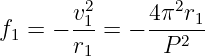
But if r1 and r2 denote the distances of the particles from the axis of rotation, and P the period of
revolution, then
and
Therefore
gives the ratio of the masses of the particles as well as those of the given bodies.
0.1 References
This article is a derivative of the public domain work, ”Analytical mechanics” by Haroutune M.
Dadourian, 1913. Made available by the internet archive