|
|
|
|||||||
Calculate B − V . State whether the source is redder or bluer than an object with B − V = 0.20.
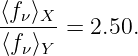
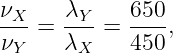
Problem 2: color to flux-density ratioTwo idealized AB bands X and Y give
Find
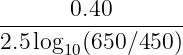
Problem 3: flux-density ratio to colorAn idealized AB observation gives
Find mX − mY .
Problem 4: intrinsic color and color excessA star has
Find E(B − V ). If an extinction law with
is assumed for this example, estimate AV and AB.
Problem 5: deredden a measured colorA source has
Find the intrinsic color (g − r)0.
Problem 6: idealized blackbody colorTreat two narrow AB-like bands as monochromatic measurements at
For a blackbody at
use the Planck function per unit frequency,
to estimate the idealized color
Problem 7: compare two blackbody temperaturesRepeat Problem 6 for
Which blackbody is bluer?
Problem 8: color as a spectral slopeA source has
in two idealized AB bands centered at 450 nm and 650 nm. Assume
Estimate α.
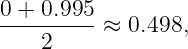
Problem 9: color uncertaintyA source has
Assuming independent errors, calculate the color and its uncertainty.
Problem 10: unresolved binary colorIn two idealized bands, star 1 has flux densities
while star 2 has
All flux densities are in the same arbitrary units. Calculate:
Show that the combined color is not the arithmetic average of the two component colors.
Problem 11: equal-component binary in a color-magnitude diagramTwo identical stars are unresolved. Each component has color
Find the unresolved system’s:
Problem 12: color change during eclipseAn unresolved binary has out-of-eclipse fluxes
During primary eclipse, the hotter component is partially hidden and the fluxes become
Assume identical AB-like zero points. Calculate the color before and during eclipse. Does the system become bluer or redder?
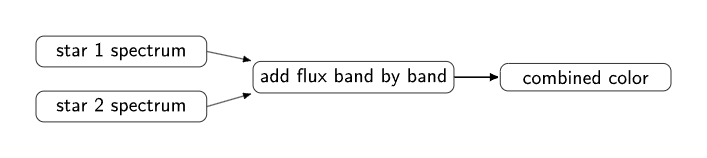
Figure 1. Binary star colors must be calculated after adding the component fluxes in each band.
Part II: Complete Solutions
Solution 1By definition,
Compared with
the source with B − V = 0.65 has the larger blue-minus-visual color and is therefore redder.
Solution 2For an idealized AB color,
Therefore
The source has only about 55 percent as much AB flux density in X as in Y .
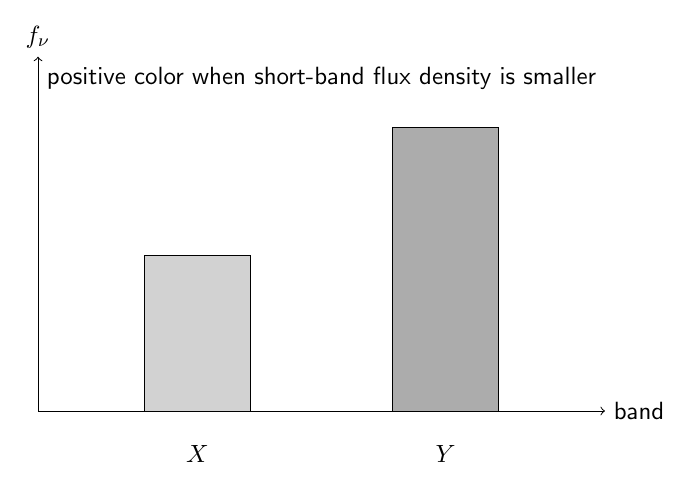
Figure 2. A positive short-minus-long wavelength AB color corresponds to a smaller flux density in the shorter-wavelength band.
Solution 3Use
The negative color indicates that the source is relatively strong in band X.
Solution 4The color excess is
With the assumed illustrative value
Since
we obtain
The larger blue-band extinction is what makes the observed color redder.
Solution 5The intrinsic color is
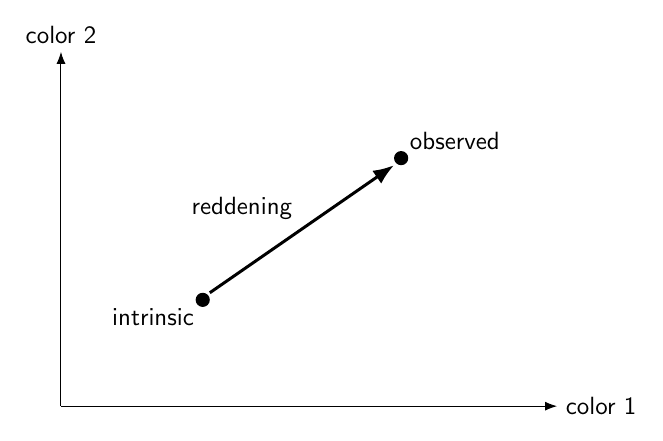
Figure 3. Dereddening subtracts the appropriate color excess and moves the observed color back toward the intrinsic spectral energy distribution.
Solution 6For
the frequencies are
Using the Planck function at
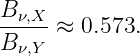
the ratio is approximately
Therefore
This is an idealized monochromatic AB-like color, not a calibrated Johnson, SDSS, or Gaia color.
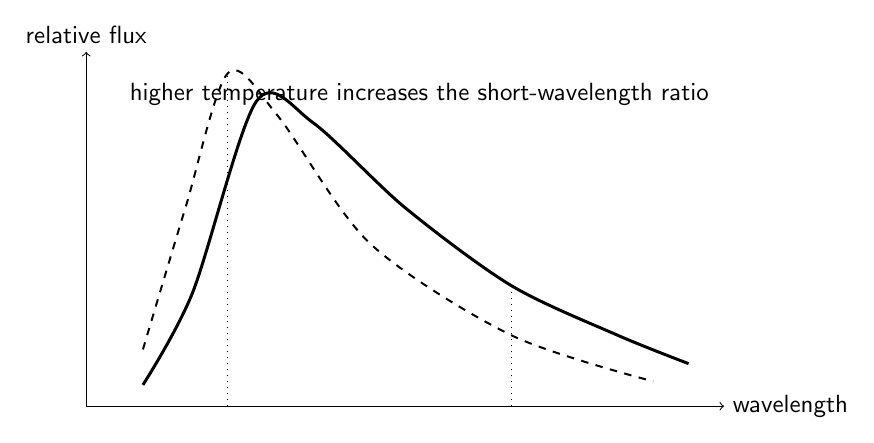
Figure 4. Increasing blackbody temperature shifts the short-to-long wavelength flux ratio and therefore changes the measured color.
Solution 7At
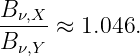
the same two wavelengths give approximately
Thus
The 10000 K blackbody has the smaller, more negative color and is therefore bluer than the 6000 K blackbody.
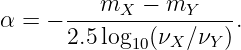
Solution 8For a power law,
Since
we obtain
Thus the flux density behaves approximately as
Solution 9The color is
For independent errors,
Therefore
to two significant figures in the uncertainty.
Solution 10For star 1,
For star 2,
The unresolved fluxes are
Therefore
The arithmetic average of the component colors would be
which is not the correct combined color. Fluxes must be added first.
Solution 11Because the two stars are identical, doubling both band fluxes leaves their ratio unchanged. Therefore
The total flux in band Y doubles, so the magnitude changes by
Thus
The unresolved equal-component binary moves vertically upward in a color-magnitude diagram while retaining the same color.
Solution 12Out of eclipse,
During eclipse,
The color becomes more positive:
Therefore the system becomes
This is consistent with preferentially removing Light from a hotter, bluer component.
Part III: Additional conceptual checks
Check 1: does distance change color?If there is no wavelength-dependent extinction and the same source is simply moved farther away, both band fluxes decrease by the same inverse-square factor. The flux ratio is unchanged. Therefore the color is unchanged.
Check 2: can two stars have the same color but different luminosities?Yes. Two stars can have similar spectral shapes and therefore similar colors while having different radii and total luminosities. Color is primarily a spectral-shape measurement, not a total-power measurement.
Check 3: can reddening mimic a cooler star?Yes. Dust can make a hot source appear redder. This creates a temperature-reddening degeneracy that often requires additional colors, spectra, or distance information to break.
Check 4: why use several colors?One color gives one coarse spectral slope. Several independent colors sample more of the spectral energy distribution and can help separate temperature, extinction, metallicity, and unusual spectral features.
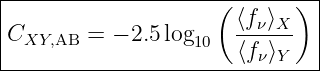
Summary of useful formulas
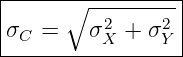
for independent magnitude errors, and
before calculating the color of an unresolved multiple system.
References
References
[1] B. W. Carroll and D. A. Ostlie, An Introduction to Modern Astrophysics, 2nd ed., Cambridge University Press, 2017. [2] M. S. Bessell, Standard Photometric Systems, Annual Review of Astronomy and Astrophysics, 43, 293–336, 2005. [3] M. S. Bessell, F. Castelli, and B. Plez, Model atmospheres broad-band colors, bolometric corrections and temperature calibrations for O–M stars, Astronomy and Astrophysics, 333, 231–250, 1998. "Color in Astrophysics: Worked Examples and Complete Solutions" is owned by bloftin.
This object's parent. Cross-references: temperature, energy, luminosities, Light, diagram, magnitude, power, color excess, absolute magnitude, unit, function, intrinsic color, systems, flux, colors This is version 1 of Color in Astrophysics: Worked Examples and Complete Solutions, born on 2026-10-06. Object id is 1431, canonical name is ColorInAstrophysicsWorkedExamplesAndCompleteSolutions. Accessed 3 times total. Classification:
|
|
|
|
Pending Errata and AddendaNone.
|
DiscussionNo messages.
|
Interact |
![[parent]](https://images.physicslibrary.org/images/uparrow.png)