|
|
|
|||||||
and proper motion
Star B has parallax
and proper motion
Does this prove the pair is gravitationally bound? What does it suggest?
Problem 2: projected separationA resolved pair has angular separation
at distance
Find its projected physical separation.
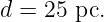
Problem 3: parallax distanceA catalog gives parallax
Find the approximate distance in parsecs.
Problem 4: total dynamical massA binary has physical relative semimajor axis
and period
Estimate
in solar masses.
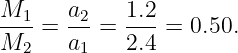
Problem 5: center of mass mass ratioThe barycentric semimajor axes are
Find
Which component is more massive?
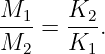
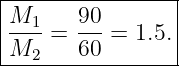
Problem 6: SB2 mass ratioA double-lined spectroscopic binary has radial-velocity semi-amplitudes
Find
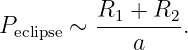
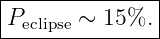
Problem 7: eclipse probabilityEstimate the geometric eclipse probability for a circular binary with
and
Problem 8: observational classificationClassify each detection signature. More than one classification may apply.
Problem 9: SIMBAD frozen extractThe file BIN01E1˙frozen˙simbad˙bright˙binaries.csv
contains a small educational extract of SIMBAD basic-data values for Sirius and Algol retrieved for this lesson. Using the frozen parallax values:
Problem 10: angular resolution at two distancesAn instrument resolves pairs wider than
What projected separation does this correspond to at:
Explain the selection effect.
Problem 11: archive choiceChoose SIMBAD or VizieR as the better starting point for each task:
Problem 12: provenance checklistA student reports:
List at least five additional pieces of information needed before the statement is fully reproducible and scientifically interpretable.
2 Part II: complete solutions
Solution 1The parallaxes agree within the uncertainties and the proper motions are very similar. This is strong evidence that the pair may be physically associated. It does not by itself prove that the pair is gravitationally bound. A complete argument could include relative orbital motion, radial velocities, a statistical chance-alignment analysis, or a dynamical solution.
Solution 2Use
Then
Therefore
This is a projected instantaneous separation, not automatically the semimajor axis.
Solution 3
Thus
Solution 4In AU, years, and solar masses,
Therefore
Solution 5From
Thus
Component 2 is more massive because it has the smaller barycentric orbit.
Solution 6For an SB2,
Therefore
Component 1 is more massive.
Solution 7Use the circular-orbit approximation
Then
Therefore
Solution 8
A real system can satisfy more than one of these at once.
Solution 9For Sirius, the frozen extract contains
Thus
For Algol, the extract contains
Thus
Therefore
and
These should not automatically be called the best modern distances because SIMBAD is a heterogeneous literature meta-compilation. The frozen values in this lesson come from the specific references displayed in the SIMBAD basic-data records. A precision distance analysis should identify the desired modern astrometric source, understand its treatment of multiplicity, and propagate the measurement uncertainties and systematics.
Solution 10At 10 pc,
At 100 pc,
The same angular-resolution limit removes progressively tighter physical binaries from the resolved sample as distance increases.
Solution 11
SIMBAD is optimized for object identity, cross-identification, linked measurements, and bibliography. VizieR is optimized for published catalogs and tabular datasets.
Solution 12Useful provenance includes:
3 Part III: public-data lab
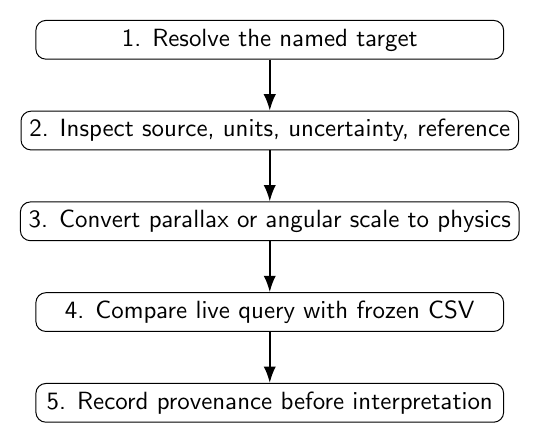
3.1 Lab A: inspect the frozen extractOpen BIN01E1˙frozen˙simbad˙bright˙binaries.csv
The extract contains the SIMBAD values used in Solution 9 plus basic object information needed to reproduce the educational calculation. The extract is intentionally tiny. Its purpose is not to form a statistical sample. Its purpose is to make the worked example reproducible if the live database changes.
3.2 Lab B: rerun the live SIMBAD queryRun BIN01E1˙simbad˙vizier˙reconnaissance.py
The script queries Sirius and Algol and prints a compact table. Compare the live values with the frozen CSV. If they differ, do not immediately treat either one as an error. Instead ask:
3.3 Lab C: use VizieR for catalog discoveryThe same script queries VizieR around Algol in the catalog
a published catalog of semi-detached eclipsing binaries available through VizieR. The purpose at this stage is not to adopt every returned parameter. Instead:
3.4 Lab D: provenance recordCreate a short text file or notebook cell recording:
This provenance record is as important as the numerical result.
4 Part IV: extension exercises
5 SummaryThe first data-analysis lesson is not to download the largest possible table. It is to establish the identity of the object, understand what a catalog value means, and preserve enough provenance to reproduce the calculation. For introductory binary-star work:
and
The numerical tools from BIN01 then convert angles, parallaxes, periods, and orbital scales into physically meaningful quantities.
References
References
[1] B. W. Carroll and D. A. Ostlie, An Introduction to Modern Astrophysics, 2nd ed., Cambridge University Press, 2017. [2] M. Wenger et al., The SIMBAD astronomical database, Astronomy and Astrophysics Supplement Series, 143, 9–22, 2000. [3] F. Ochsenbein, P. Bauer, and J. Marcout, The VizieR database of astronomical catalogues, Astronomy and Astrophysics Supplement Series, 143, 23–32, 2000. "Binary Stars Companion: Classification, Angular Scales, and Archive Reconnaissance" is owned by bloftin.
This object's parent. Cross-references: work, types, parameter, field, units, identity, physical binaries, astrometric binary, visual binary, velocities, MAS, eclipsing binaries, projected separation, systems, Algol, periodic, traces, flux, position, detection, spectroscopic binary, masses, motion, BIN01 This is version 2 of Binary Stars Companion: Classification, Angular Scales, and Archive Reconnaissance, born on 2026-10-04, modified 2026-10-04. Object id is 1411, canonical name is BinaryStarsCompanionClassificationAngularScalesAndArchiveReconnaissance. Accessed 4 times total. Classification:
|
|
|
|
Pending Errata and AddendaNone.
|
DiscussionNo messages.
|
Interact |
![[parent]](https://images.physicslibrary.org/images/uparrow.png)