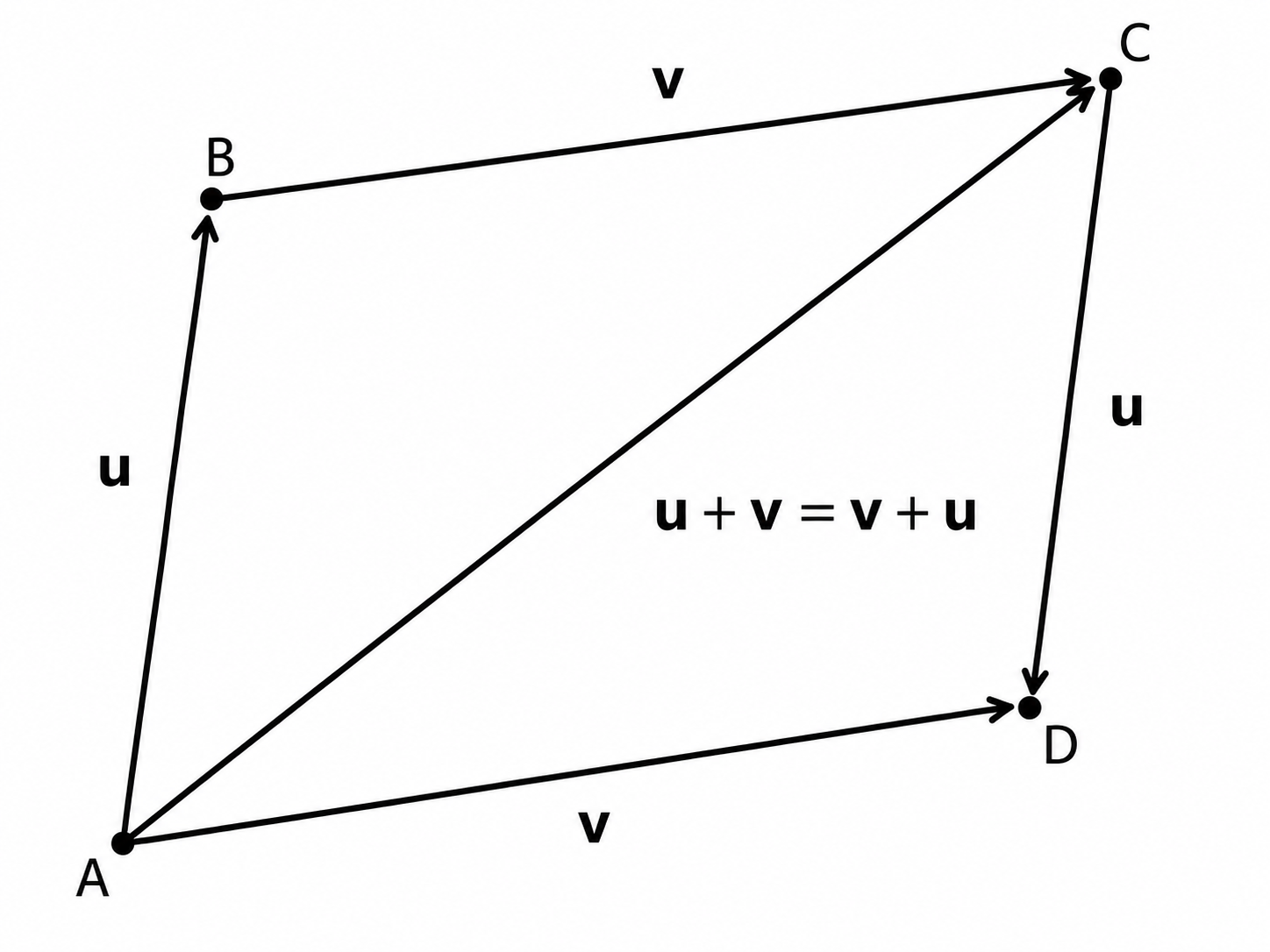
If successive displacements carry a point from A to B and then from B to C, the net displacement
is
This is the triangle rule for vector addition.
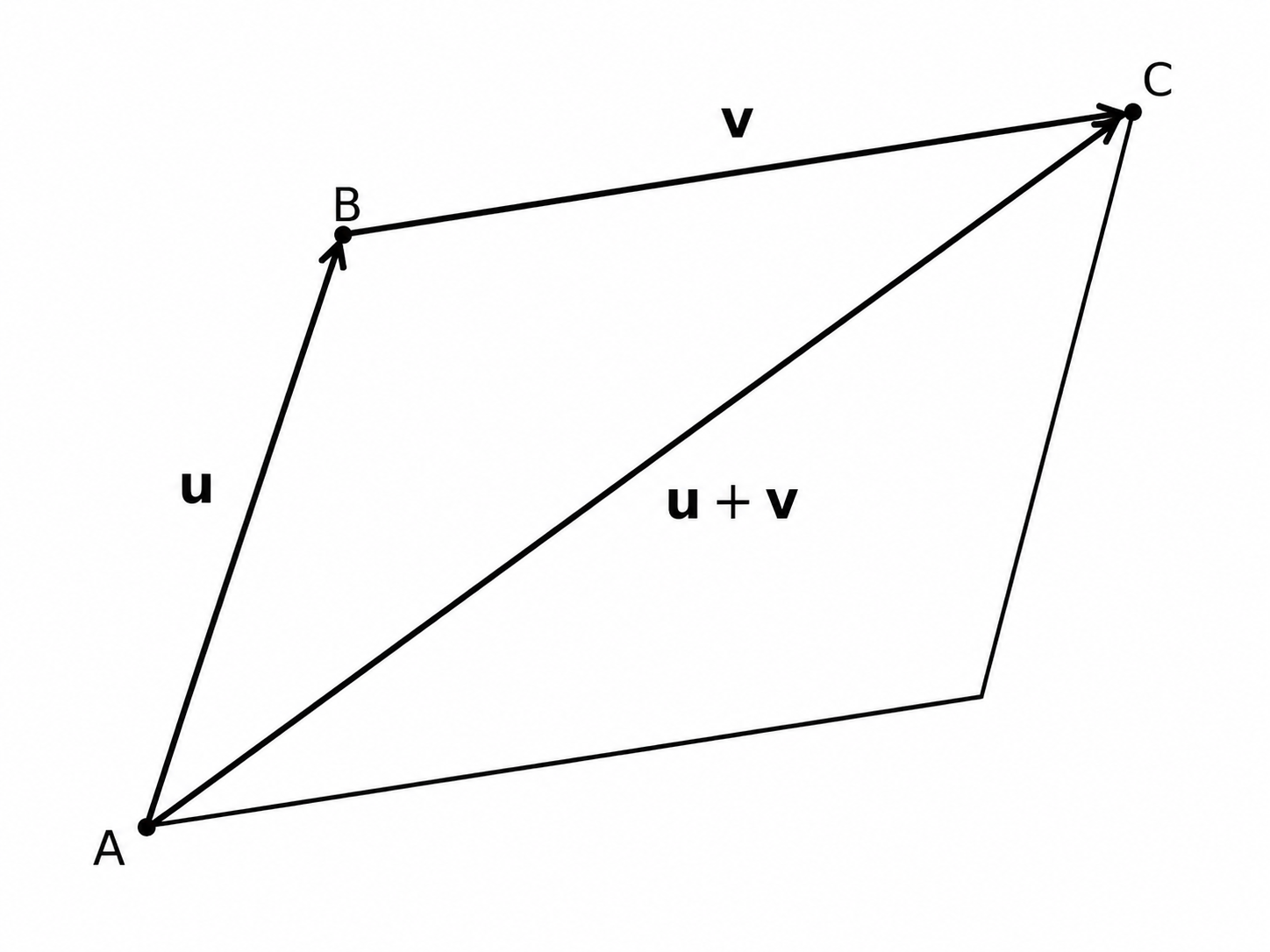
Figure 3a, modernized: triangle/parallelogram rule for vector addition.
Drawing both vectors from a common tail gives the equivalent parallelogram rule. Vector addition
satisfies
and
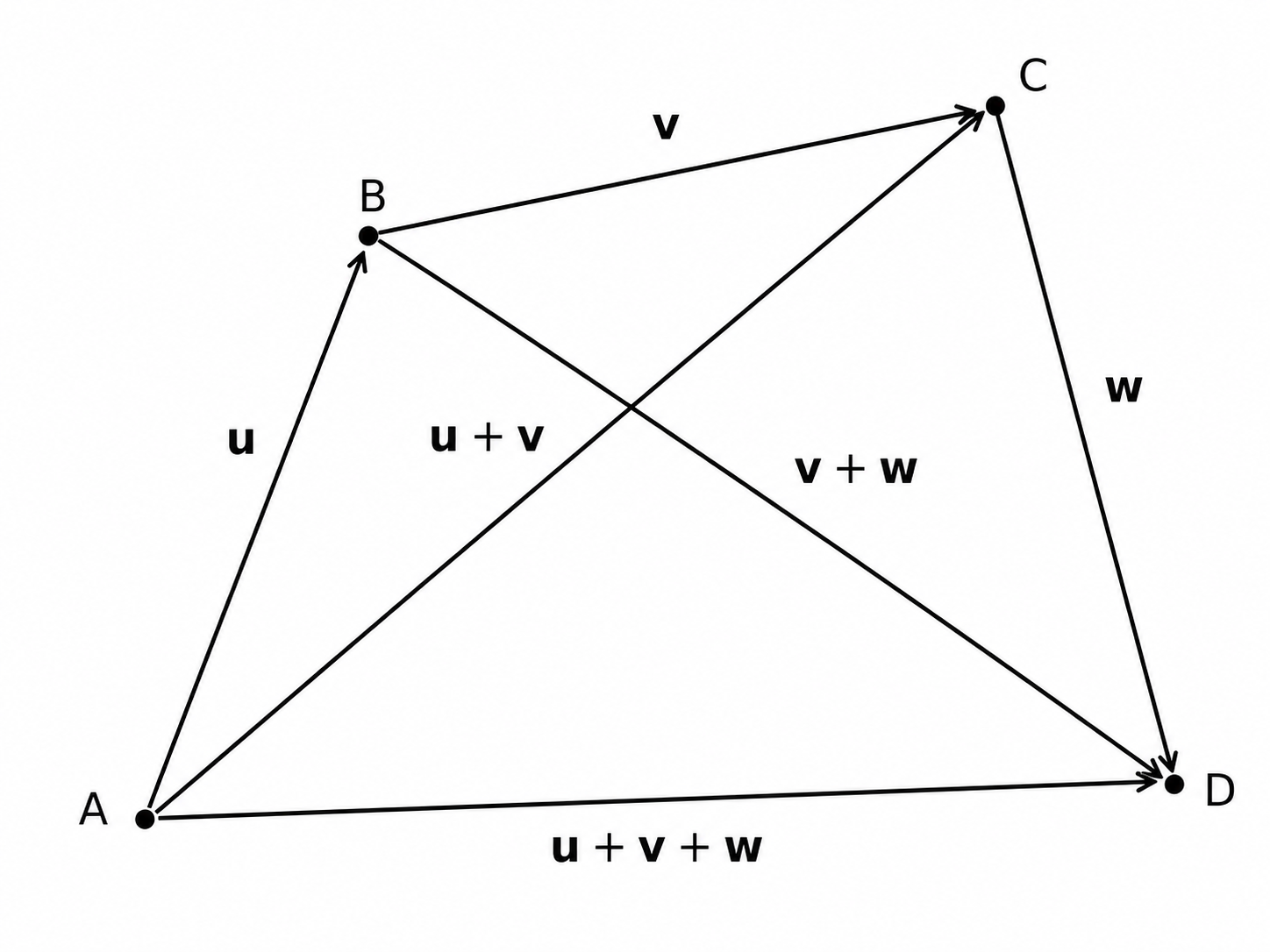
Figure 3c, modernized: associativity of vector addition.
The magnitude satisfies the triangle inequality
with equality when the nonzero vectors point in the same direction.
For many vectors, place them head-to-tail in any order. The resultant joins the initial point to the
final point. A closed vector polygon has zero sum:
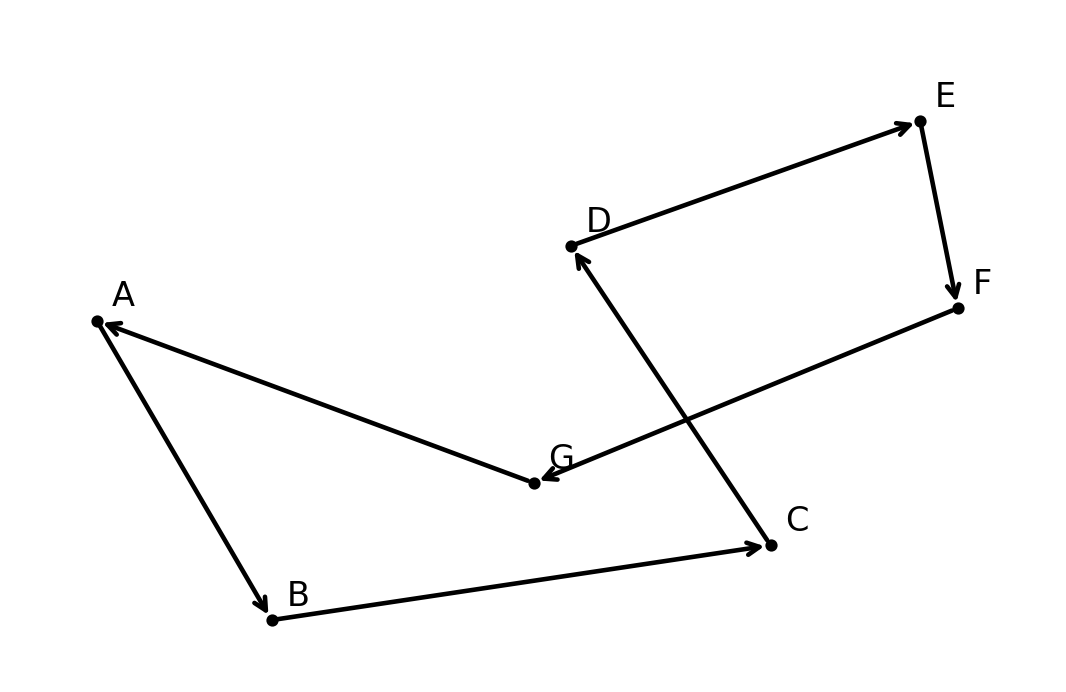
Figure 3d, modernized: vector polygon and closure.
Problems
- For a regular hexagon ABCDEF with center O, construct
 +
+ +
+ +
+ +
+ and compare it with
  .
.
- For triangle ABC, let P,Q,R be the midpoints of its sides and choose any point O in
its plane. Construct and compare
- For any quadrilateral ABCD, let P,Q be the midpoints of diagonals AC,BD, and M
the midpoint of PQ. Construct
Source
This article is a modernized restatement of the corresponding Public Domain article in Louis
Brand, Vectorial mechanics, John Wiley & Sons, New York, 1930, Chapter I, “Vector Algebra.”
The original 1930 edition is the source basis.