|
|
|
|||||||
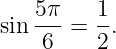
is periodic. Determine its fundamental period. Then show that twice the fundamental period is also a period.
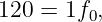
Problem 2: from frequency to period and angular frequencyA periodic electrical signal has frequency
Find:
Problem 3: from angular frequency to periodA cosine has angular frequency
Find its ordinary frequency and fundamental period. Then verify the period by checking the phase advance over one cycle.
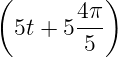
Problem 4: phase as a horizontal shiftConsider
Determine:
State whether the waveform is shifted to the right or left.
Problem 5: combine sine and cosine at one frequencyRewrite
in the form
Derive C and δ rather than quoting them.
Problem 6: identify harmonic contentFor
identify:
Problem 7: find a common fundamental from two frequenciesConsider
Find the smallest positive angular frequency ω0 for which both terms are integer harmonics. Then find the fundamental period.
Problem 8: common period by direct component periodsFor
find the period of each component separately. Then determine the smallest common positive period of the sum. Verify your answer by direct substitution into f(t + T).
Problem 9: a hidden smaller fundamental periodSuppose
The number
is certainly a period. Show that it is not the fundamental period and find the actual fundamental period.
Problem 10: commensurate frequencies written in an awkward wayConsider
Determine a fundamental angular frequency and the fundamental period. State the harmonic numbers of all three terms.
Problem 11: prove that an incommensurate pair has no common periodConsider
Assume a common period T exists. Use the individual sinusoidal periodicity conditions to show that this would force Conclude that no finite common period exists.
Problem 12: prove that a finite harmonic sum is periodicLet
Prove directly that
when
Do not simply say that every term is periodic. Carry the phase shift through the sine and cosine arguments.
Problem 13: build and sample a finite harmonic waveformConsider
Evaluate the waveform at
Explain why the first and last values must agree before doing any arithmetic.
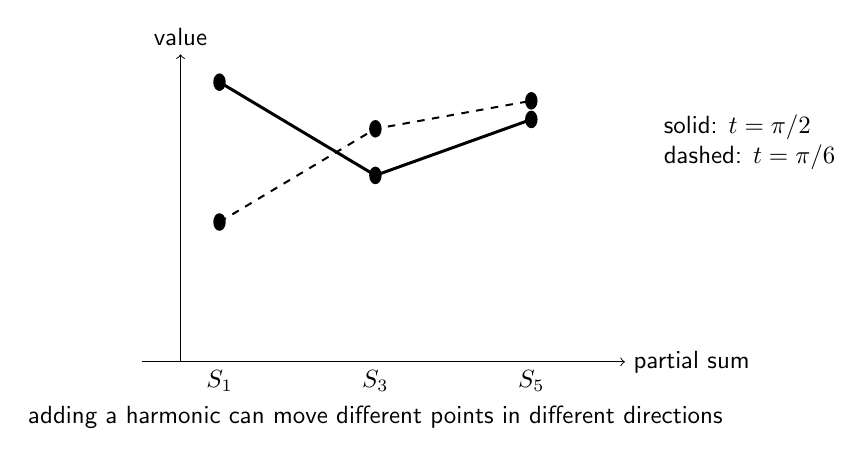
Problem 14: square-wave partial sumsUse
and
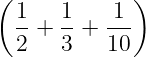
Evaluate all three at
and at
Describe how adding the third and fifth harmonics changes the result.
Problem 15: distinguish common period from fundamental periodA learner says:
Give a counterexample and explain exactly what is wrong with the statement.
Problem 16: physical harmonic interpretationA vibrating system contains frequencies
Assume these are all harmonics of one fundamental. Determine:
2 Hints
3 Complete worked solutions
Solution 1: test periodicity directlyStart with
A period T must satisfy
for every t. Substitute:
Sine repeats when its phase increases by 2πm, where m is any integer:
Therefore
The smallest positive value occurs at
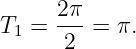
Hence the fundamental period is
Now test twice that value:
Then
Thus 2T0 is also a period, but it is not the fundamental period.
Solution 2: frequency, period, and angular frequencyGiven
use
Therefore
In milliseconds,
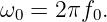
Angular frequency is
Therefore
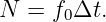
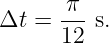
The number of cycles in a time interval Δt is
For
Solution 3: angular frequency to ordinary frequencyGiven
use
Thus
The period is
Now verify the phase advance:
A 2π phase advance is one complete cycle, so the period is correct.
Solution 4: phase as a horizontal shiftThe waveform is
Compare with
Therefore
The ordinary frequency is
The period is
To convert phase angle into time shift, factor the argument:
Hence
The waveform is shifted to the right by
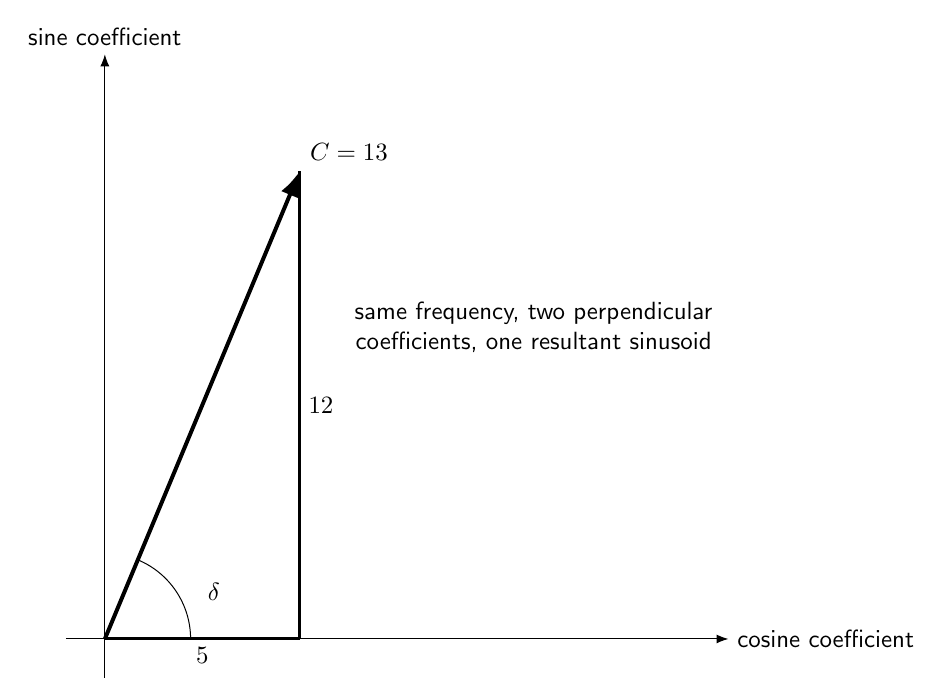
Figure 2. The same-frequency sine and cosine coefficients can be viewed as perpendicular components. Their resultant magnitude and angle give the amplitude-phase form.
Solution 5: amplitude-phase conversionStart with
Assume
Use the cosine subtraction identity:
Therefore
Match the cosine coefficient:
Match the sine coefficient:
Square both equations and add:
Thus
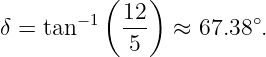
Now divide the sine equation by the cosine equation:
Hence
The result is
Solution 6: identify harmonic contentThe function is
The constant term is the DC component:
The term
is the third harmonic because its angular frequency is
Its sine coefficient is
and its cosine coefficient is zero. The term
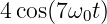
is the seventh harmonic. Its cosine coefficient is
and its sine coefficient is zero. Therefore the present harmonic numbers are
and the highest harmonic number is
Solution 7: greatest common angular frequencyThe angular frequencies are
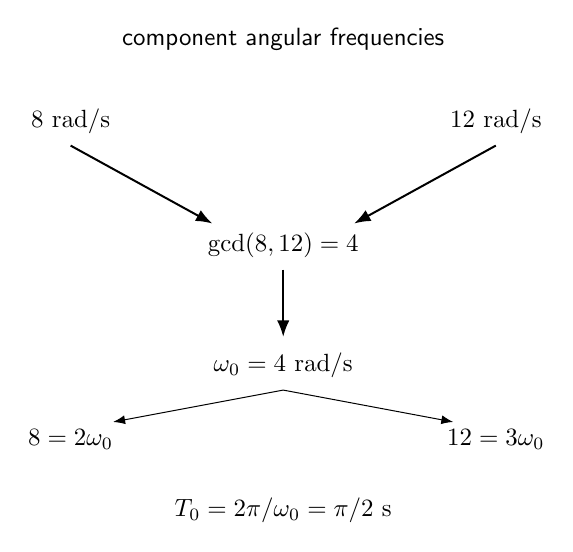
We seek the largest angular frequency that divides both into integers. The greatest common divisor is
Thus
Then
and
So the waveform contains the second and third harmonics. The fundamental period is
Figure 3. Finding a common fundamental frequency is analogous to finding a greatest common divisor when all angular frequencies are integer multiples of one underlying frequency.
Solution 8: common period from the component periodsFor
the period is
For
the period is
We need the smallest positive T satisfying
for integers m and n. Set
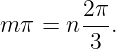
Cancel π:
The smallest positive integers are
Therefore
Now verify directly:
Thus the fundamental period is
Solution 9: hidden smaller fundamental periodThe waveform is
The first term has period
The second term has period
The smallest common positive period of T0∕4 and T0∕8 is
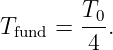
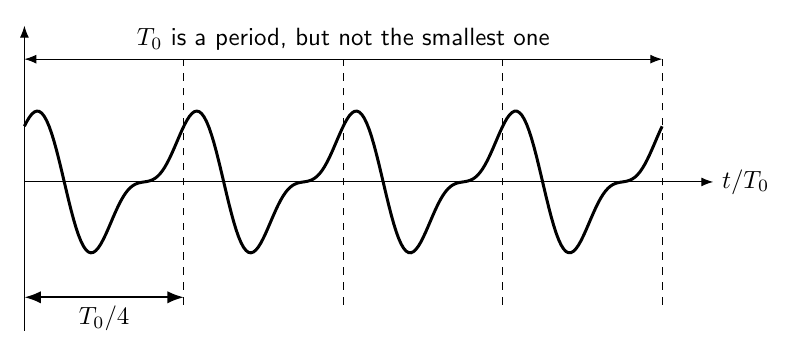
Indeed, over T0∕4, the first harmonic term completes one cycle and the second completes two cycles. Therefore the actual fundamental period is
The originally chosen T0 is a period, but it is four times larger than necessary.
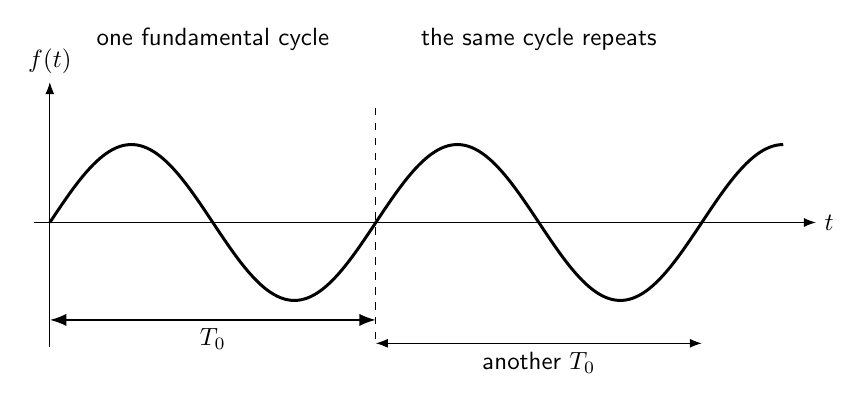
Figure 4. A chosen common period can hide a smaller fundamental period. Here both harmonics repeat after only one quarter of the original period T0.
Solution 10: commensurate frequencies in awkward formThe angular frequencies are
Find their greatest common divisor:
Therefore
The harmonic numbers are
and
Thus the fifth, seventh, and ninth harmonics are present. The fundamental period is
Solution 11: incommensurate frequenciesAssume
has a common period T. For the first sine to repeat,
for some integer m. For the second sine to repeat,
for some integer n. Substitute the first condition into the second:
Cancel 2π:
Thus
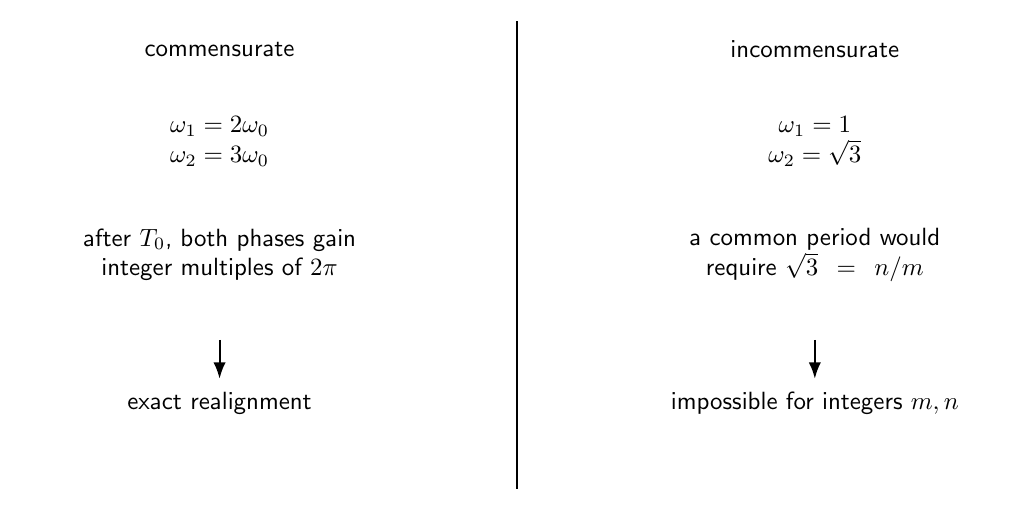
The right side is rational because n and m are integers. But This is a contradiction. Therefore no finite common period exists.
Figure 5. Integer-related frequencies repeatedly realign after a common period. Incommensurate
frequencies such as 1 and
Solution 12: prove a finite harmonic sum is periodicStart from Equation (14):
Evaluate at t + T0:
Distribute the argument:
Since
we have
Therefore
Because n is an integer,
Similarly,
Hence every term in the sum returns to its original value, and
This proves that any finite sum of integer harmonics has T0 as a common period. It does not prove that T0 is always the smallest period.
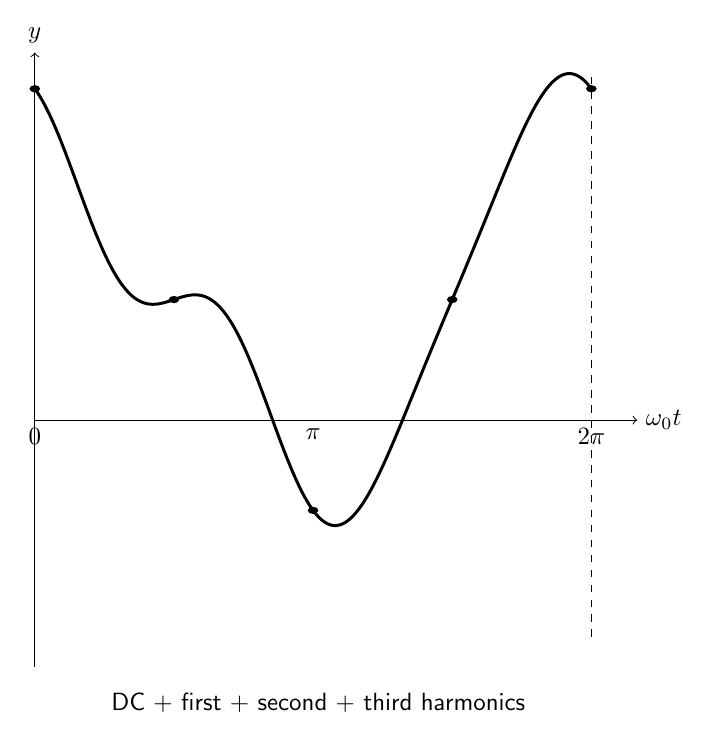
Solution 13: sample a finite harmonic waveformThe waveform is
Let
Then
At 𝜃 = 0:
At 𝜃 = π∕2:
At 𝜃 = π:
At 𝜃 = 3π∕2:
At 𝜃 = 2π:
The first and last values had to agree because 2π is one complete fundamental phase advance.
Figure 6. The sampled waveform is built from a DC offset plus first, second, and third harmonics. The separate components repeat together after one common fundamental period.
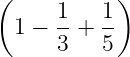
Solution 14: square-wave partial sumsAt
we use
Thus
For S3,
For S5,
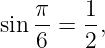
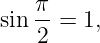
Now evaluate at
Use
and
Therefore
For S3,
For S5,
Adding harmonics does not simply increase or decrease the value everywhere. The new harmonics reshape the waveform differently at different points.
Figure 7. The first three odd-harmonic partial sums at two sample phases. Each added harmonic can raise the approximation at one point and lower it at another.
Solution 15: common period versus fundamental periodThe learner’s claim is false because a common period may be larger than necessary. Use the counterexample
Both terms repeat after
so T0 is a period. But the first term has period
and the second term has period
Both therefore repeat after
Hence the fundamental period is at most T0∕2. Indeed it is exactly T0∕2. The corrected statement is:
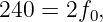
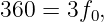
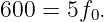
Solution 16: physical harmonic interpretationThe listed frequencies are
Their greatest common divisor is
Therefore the fundamental frequency is
The harmonic numbers are
and
Thus the first, second, third, and fifth harmonics are present. The fundamental period is
For 480 Hz,
so it would be the fourth harmonic and fits the same harmonic family.
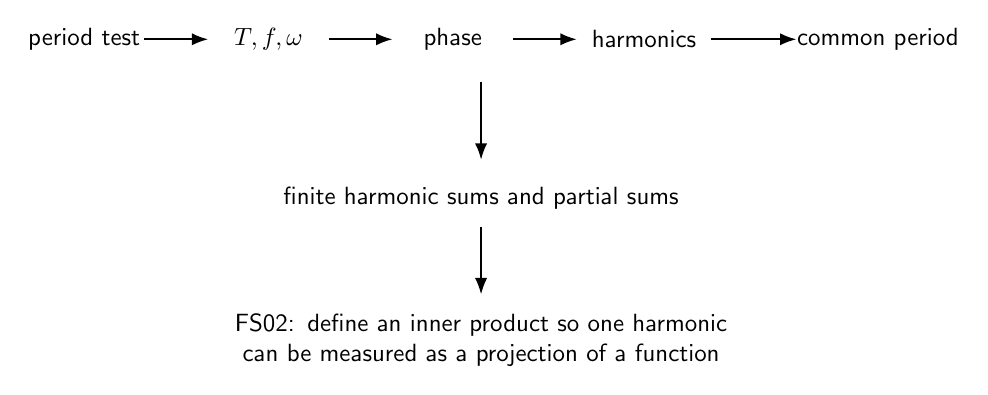
4 What should now feel automaticBefore moving to FS02, a learner should be able to do the following without guessing:
Figure 8. FS01E1 completes the arithmetic and algebra needed before function-space ideas begin. FS02 will reinterpret harmonic extraction as projection using an inner product of functions.
5 Further practice
6 SummaryPeriodic-function work begins with the definition
For one sinusoid,
Integer harmonics have frequencies
Commensurate component frequencies can share a finite common period. Incommensurate frequencies generally do not. A finite harmonic sum is periodic because every harmonic gains an integer multiple of 2π in phase after one common period. The main unresolved question is no longer which frequencies fit together. It is how to extract the amount of one harmonic from a general function. That requires a notion of projection for functions, which begins in FS02.
References
References
"Periodic-Function and Harmonic-Building Exercises" is owned by bloftin.
This object's parent. Cross-references: work, inner product, commensurate frequencies, FS02, square, magnitude, identity, system, phase shift, force, amplitude, angular frequency, function, partial sums, periodic, harmonic, fundamental frequencies, harmonic number, frequency, phase, fundamental period, period, periodicity, formula, Fourier coefficient, FS01 There is 1 reference to this object. This is version 1 of Periodic-Function and Harmonic-Building Exercises, born on 2026-10-22. Object id is 1518, canonical name is PeriodicFunctionAndHarmonicBuildingExercises. Accessed 8 times total. Classification:
|
|
|
|
Pending Errata and AddendaNone.
|
DiscussionNo messages.
|
Interact |














 to be
rational.




































































 (2
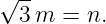

 is irrational.



![]](https://images.physicslibrary.org/cache/objects/1518/make4ht/PeriodicFunctionAndHarmonicBuildingExercises116x.png)