Sir Isaac Newton’s laws of motion were first published in his work Philosophiae Naturalis Principia
Mathematica (1687). The laws form the basis for Classical Mechanics. Newton used them to
explain many results concerning the motion of physical objects. In the third volume of the text, he
showed that the laws of motion, combined with his law of universal gravitation, explained Kepler’s
laws of planetary motion.
The following are brief modern formulations of Newton’s three laws of motion:
First law: Objects in motion tend to stay in motion, and objects at rest tend to stay at rest unless
an outside force acts upon them.
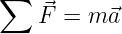
Second law: The net force on an object is equal to the product of its mass and its
acceleration.
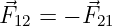
Third law: To every action (force applied) there is an equal and opposite reaction (equal force
applied in the opposite direction).
This entry is a derivative of the Newton’s laws of motion article from Wikipedia, the Free
Encyclopedia. Authors of the orginial article include: DJ Clayworth, Obli, Stevertigo, Patrick and
Michael Hardy . History page of the original is here