GRE Physics Companion: Velocity
This entry is the GRE-oriented companion to M01-02. The core article develops average velocity,
instantaneous velocity, speed, tangent geometry, graph interpretation, and vector components.
Here the emphasis is rapid classification and efficient test-day calculation.
1 Fast test-day strategy
When a velocity question appears, first identify which quantity is being requested:
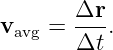
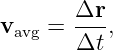
- Average velocity:
Use endpoint displacement, not total distance.
- average speed:
- Instantaneous velocity:
Differentiate the position function or read the tangent slope of a position-time
graph.
- Frame change:
Subtract the frame velocity using a consistent sign convention.
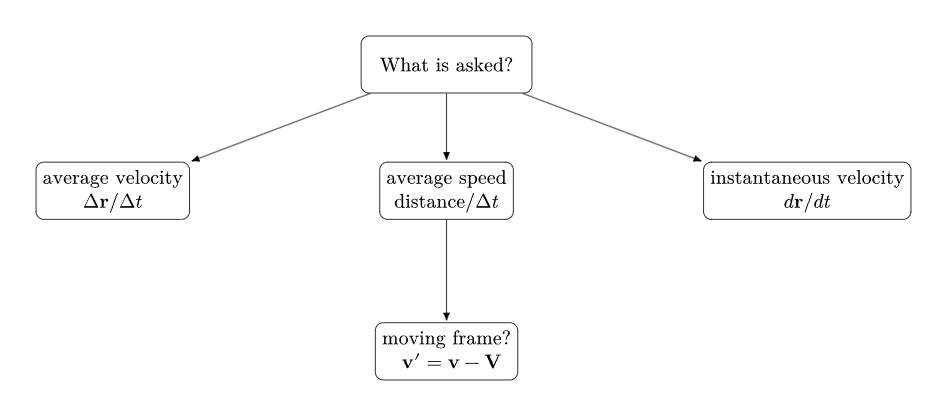
Figure 1. GRE-speed triage: decide first whether the problem asks for displacement over time,
path length over time, a derivative, or a frame transformation.
2 High-frequency traps
- A round trip can have nonzero average speed but zero average velocity.
- On an x-t graph, velocity is the slope, not the height.
- Negative velocity means motion in the negative coordinate direction; speed remains
positive.
- Constant speed does not imply constant velocity if direction changes.
- Zero velocity at one instant does not imply zero acceleration.
- If the coordinate frame moves, velocity changes under a Galilean transformation.
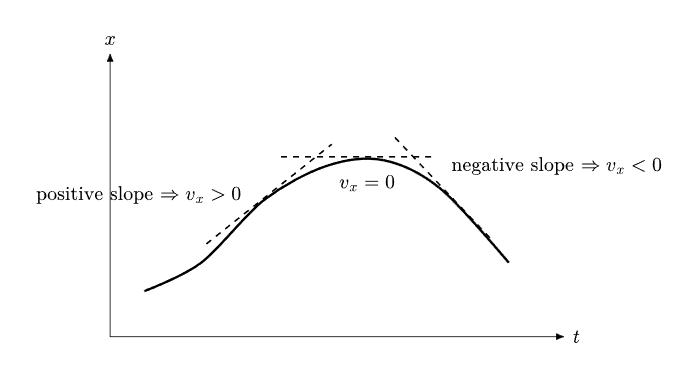
Figure 2. Common GRE graph traps: tangent slope determines instantaneous velocity; sign and
magnitude of the slope encode direction and speed in one dimension.
3 Worked GRE example 1: round trip
A runner moves 100 m east in 20 s and then returns 100 m west in 30 s. Find the average velocity
and average speed.
The total displacement is zero, so
The total distance is 200 m and total time is 50 s, so
GRE shortcut: for a closed trip, average velocity is immediately zero; only the path length is
needed for average speed.
4 Worked GRE example 2: graph derivative without plotting
A particle has position
At what time is the particle instantaneously at rest?
Differentiate:
Set the instantaneous velocity equal to zero:
so
GRE shortcut: a horizontal tangent on an x-t graph means dx∕dt = 0.
5 GRE-speed questions
M01-02G-Q01
A runner completes one lap of a 400 m track in 80 s and stops at the starting point. The average
velocity is
(A) 0 (B) 5 m∕s (C) 10 m∕s (D) 400 m∕s
M01-02G-Q02
A particle has x(t) = 3t2 − 2t. Its velocity at t = 2 s is
(A) 4 m∕s (B) 8 m∕s (C) 10 m∕s (D) 12 m∕s
M01-02G-Q03
A particle moves around a circle at constant speed. Which statement is true?
(A) Its velocity is constant. (B) Its acceleration is zero. (C) Its velocity direction changes.
(D) Its displacement grows at a constant rate in a fixed direction.
M01-02G-Q04
Frame S′ moves at +8 m∕s relative to S. A particle moves at +20 m∕s in S. Its velocity in S′
is
(A) +12 m∕s (B) +28 m∕s (C) −12 m∕s (D) −28 m∕s
M01-02G-Q05
On a position-time graph, the tangent slope at one instant is negative and large in magnitude. At
that instant the particle has
(A) small positive velocity (B) large positive velocity (C) small negative velocity (D)
large negative velocity
6 Answers and brief rationales
- Q01: A. The runner returns to the starting point, so net displacement is zero.
- Q02: C. vx = 6t − 2, hence vx(2) = 10 m∕s.
- Q03: C. Constant speed does not mean constant velocity because the tangent direction
changes.
- Q04: A. v′ = v − V = 20 − 8 = 12 m∕s.
- Q05: D. Slope is velocity; a steep negative tangent means a large negative velocity
component.
7 Test-day summary
The fastest reliable distinctions are
and
If the motion reverses or follows a curved path, check immediately whether the question is asking
for velocity, speed, or one of their averages.
References
[1] PhysicsLibrary, M01-02: Velocity in Mechanics, core companion article.
[2] PhysicsLibrary, Velocity, object id 74.
[3] OpenStax / cnxuniphysics, University Physics Volume 1, archived 2016 BCcampus
clone, CC BY 4.0.
[4] University of California, Davis, Physics 9A: Classical Mechanics, Physics LibreTexts,
CC BY-SA 4.0.

![[parent]](https://images.physicslibrary.org/images/uparrow.png)