GRE Physics Companion: Position and Displacement
This entry is the GRE-oriented companion to M01-01. The core article develops position vectors,
displacement, distance traveled, and coordinate dependence. Here the emphasis is rapid recognition
and endpoint bookkeeping.
1 Fast test-day strategy
For ordinary position/ questions:
- Identify the initial position and final position.
- Compute displacement as final minus initial:
- If the question asks for distance traveled, add the lengths of the path segments
instead.
- For a closed trip, the total displacement is zero.
- In two or three dimensions, subtract vector components, not vector magnitudes.
- A constant shift of the coordinate origin changes position values but not the displacement
between the same two points.
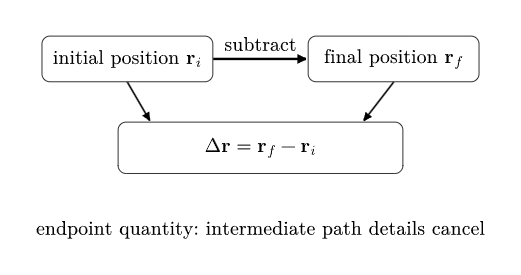
Figure 1. GRE-speed displacement strategy: identify the two endpoints first, then perform final
minus initial.
2 High-frequency traps
- Negative position does not imply negative distance.
- Distance traveled is never negative; one-dimensional displacement can be positive,
negative, or zero.
- Returning to the starting point makes the net displacement zero, not the distance
traveled.
- The magnitude |Δr| is the straight-line endpoint separation, not the length of a curved
path.
- The magnitude of a position vector is distance from the chosen origin, not distance
traveled during motion.
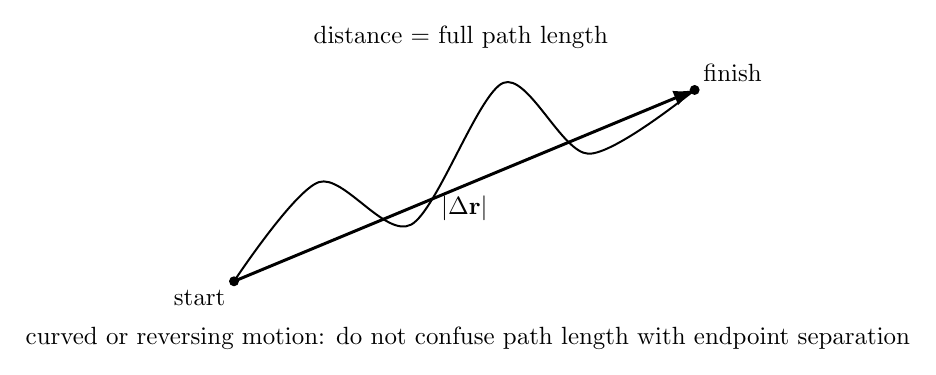
Figure 2. Typical GRE traps contrast path length with the endpoint displacement vector.
3 Worked GRE example 1: reversal on a line
A particle starts at x = −4 m, moves to x = 6 m, and then returns to x = 1 m. Find the total
displacement and total distance traveled.
For displacement, use only the endpoints:
For distance traveled, add the lengths of both legs:
Thus
GRE shortcut: displacement ignores intermediate reversals; distance does not.
4 Worked GRE example 2: quarter-circle motion
A particle moves along a quarter circle of radius R from (R, 0) to (0,R). Which pair gives the
distance traveled and displacement magnitude?
The arc length is
The endpoint displacement is the diagonal of a square with side R:
Therefore
5 GRE-speed questions
M01-01G-Q01
A particle moves from x = −4 m to x = 6 m. Its displacement is
(A) −10 m (B) −2 m (C) +2 m (D) +10 m
M01-01G-Q02
A student walks 3 m east and then 4 m north. The distance traveled and displacement magnitude
are
(A) 5 m, 7 m (B) 7 m, 5 m (C) 7 m, 7 m (D) 5 m, 5 m
M01-01G-Q03
A runner completes one full circle of radius R and stops at the starting point. The total
displacement magnitude is
(A) 0 (B) R (C) 2R (D) 2πR
M01-01G-Q04
A coordinate origin is shifted by a fixed vector while the axes remain parallel. Which quantity for
motion between the same two physical points is unchanged?
(A) initial position vector (B) final position vector (C) displacement vector (D)
distance from the new origin
M01-01G-Q05
A particle moves from (1, 2, 3) m to (4, 6, 3) m. The displacement magnitude is
(A) 3 m (B) 4 m (C) 5 m (D) 7 m
6 Answers and brief rationales
- Q01: D. Δx = 6 − (−4) = 10 m.
- Q02: B. Path length is 3+4 = 7 m; the straight endpoint separation is
 = 5 m.
- Q03: A. Initial and final positions are identical.
- Q04: C. A constant origin translation cancels when final minus initial is formed.
- Q05: C. Δr = (3, 4, 0) m, whose magnitude is 5 m.
7 Test-day summary
The fastest reliable distinction is
while distance traveled follows the entire path. If a problem contains a reversal, curve, or closed
loop, check immediately whether it is asking for a vector displacement or a scalar path
length.
References
[1] PhysicsLibrary, M01-01: Position and Displacement in Mechanics, core companion
article.
[2] OpenStax / cnxuniphysics, University Physics Volume 1, archived 2016 BCcampus
clone, CC BY 4.0.
[3] T. Weideman, UCD Physics 9A - Classical Mechanics, Physics LibreTexts, CC
BY-SA 4.0.

![[parent]](https://images.physicslibrary.org/images/uparrow.png)







