|
|
|
|||||||
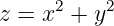
above the rectangle
Find the area of the surface patch.
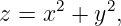
Exercise 2: mass of a curved thin shellA thin shell occupies the portion of
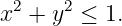
above the disk
Its surface mass density is
with constant σ0. Find the shell mass in terms of σ0.
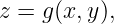
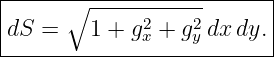
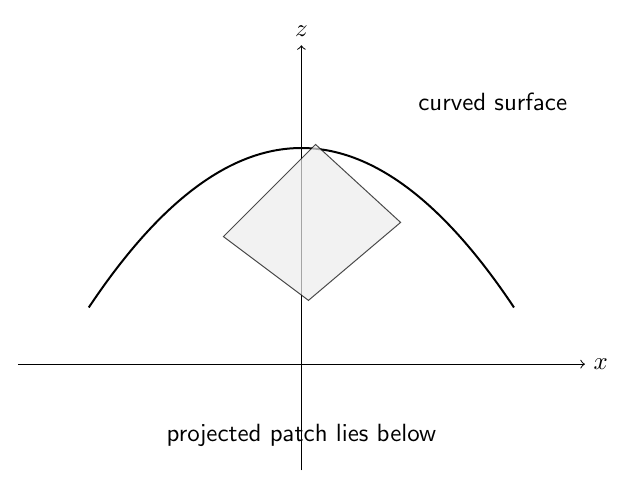
Figure 1. A graph surface has more area than its projection onto the coordinate plane because the local tangent patch is tilted.
Exercise 3: flux through a horizontal rectangleLet
Find the flux through
with upward orientation. Then repeat for downward orientation.
Exercise 4: flux through a tilted planeLet
The surface is
above the triangle
Find the upward flux.
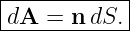
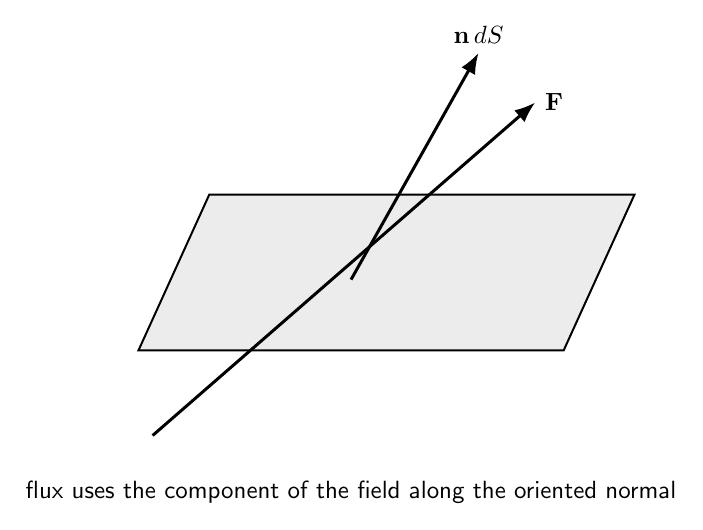
Figure 2. For a tilted graph surface, the oriented vector area element contains both the true area scaling and the normal direction.
Exercise 5: surface area of a sphereUse a spherical parameterization to derive the surface area of a sphere of radius R. Do not quote the result directly.
Exercise 6: flux of a radial field through a sphereLet
Find the outward flux through a sphere of radius R centered at the origin. Then verify the result using the divergence theorem.
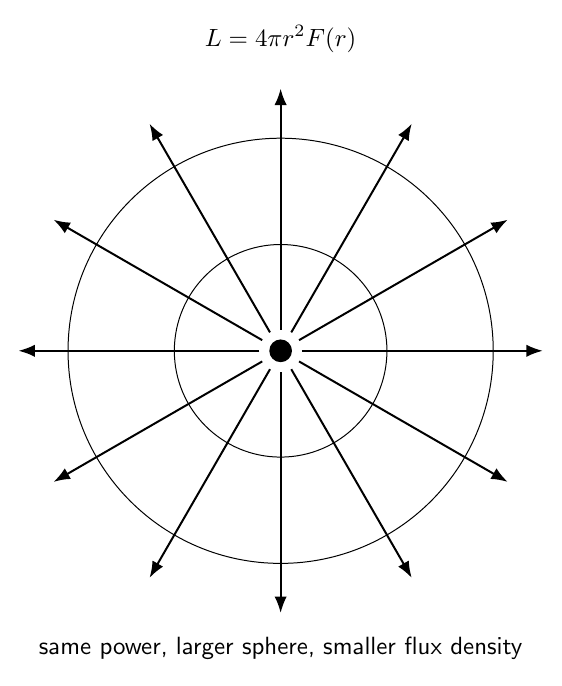
Exercise 7: inverse-square law and luminosityAn isotropic star has luminosity
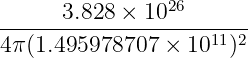
Find the radiative flux at
using
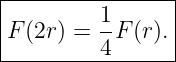
Then show directly from the surface integral that doubling the distance reduces the flux by a factor of four while leaving the total luminosity unchanged.
Figure 3. For an isotropic source, the same total power crosses each centered sphere while the surface area grows as radius squared.
Exercise 8: electric flux of a point chargeA point charge
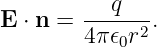
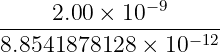
is at the center of a sphere. Use the point-charge field and a surface integral to calculate the electric flux through the sphere. Use
Explain why the answer does not depend on the sphere radius.
Exercise 9: closed flux through a cubeLet
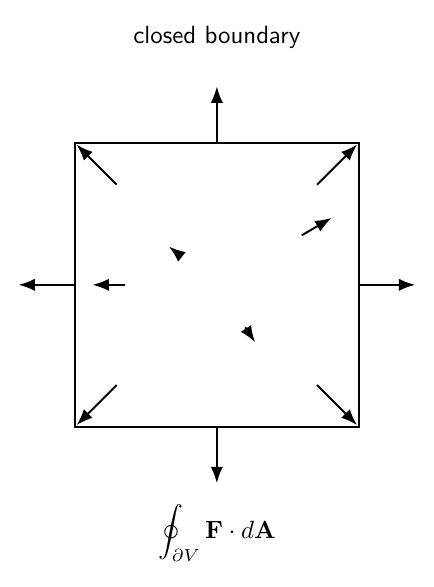
Find the total outward flux through the cube
in two ways:
Figure 4. The net flux through a closed surface can be computed face by face or from the divergence throughout the enclosed volume.
Exercise 10: cylindrical side-surface fluxLet
Find the outward flux through only the curved side of the cylinder
Then use the divergence theorem on the complete closed cylinder to explain why the top and bottom surfaces make no contribution.
Exercise 11: orientation and signLet
Consider the disk
Find the flux for:
Explain physically why the answers differ only by sign.
Exercise 12: Stokes theoremLet
Let S be the unit disk in the plane z = 0, oriented upward. Evaluate
and independently evaluate
Verify Stokes’ theorem.
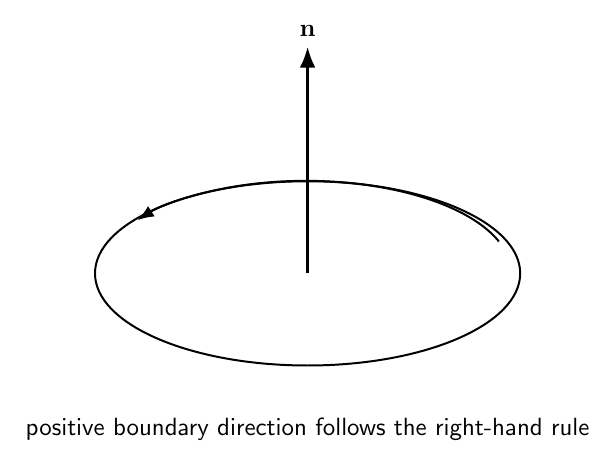
Figure 5. The orientation of the surface normal determines the positive direction around the boundary through the right-hand rule.
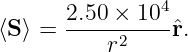
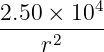
Exercise 13: Poynting flux and radiated powerFar from a source, suppose the time-averaged Poynting vector is radial and has magnitude
where r is measured in meters. Find the total radiated Power through any centered sphere.
Exercise 14: inverse-square singularityConsider
Show that:
State the distributional identity that represents the point source.
Part II: Complete Solutions
Solution 1For
the graph-surface area element is
Here
Therefore
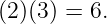
The projected rectangle has area
Hence
Thus
The result is larger than the projected area 6 because the plane is tilted.
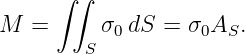
Solution 2The mass is
For
Use polar coordinates:
Then
Let
Therefore
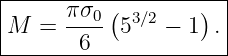
Hence
Solution 3The upward unit Normal is
Thus
The area is
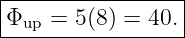
Therefore
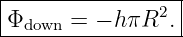
For downward orientation,
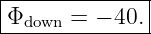
so
Changing orientation reverses the sign but not the magnitude.
Solution 4The surface is
For upward orientation, the vector area element is
Since
we have
Then
The projected triangle has area
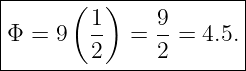
Therefore
Solution 5Parameterize the sphere by
Its area element is
Thus
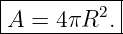
Therefore
Solution 6On the sphere r = R,
The outward normal is
Hence
Thus
Now use the divergence theorem. Since
Therefore
The two methods agree.
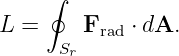
Solution 7For isotropic radiation,
Substitute
Then
The surface-integral statement is
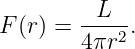
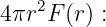
By spherical symmetry,
At radius 2r,
Set this equal to
Therefore
The flux density falls by four, while the integrated luminosity remains L.
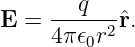
Solution 8The electric field of a point charge is
On a centered sphere,
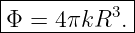
Thus
With
The radius cancels because the field decreases as 1∕r2 while the sphere area grows as r2.
Solution 9The field is
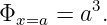
Consider the six cube faces. On x = a,
The face area is a2, so
On x = 0,
Thus
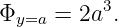
On y = a,
so
The y = 0 face contributes zero. On z = a,
so
The z = 0 face contributes zero. Adding,
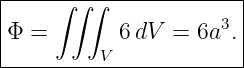
Now use the divergence theorem:
The cube volume is a3. Therefore
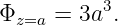
Solution 10On the curved side of the cylinder,
Also,
At ρ = R,
The side area element is
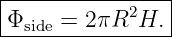
Thus
Therefore
Now
The closed-cylinder volume is
So the divergence theorem gives
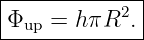
Because F has no z component, the top and bottom normals ±ez satisfy
Therefore all of the closed flux passes through the curved side.
Solution 11On the disk,
so
For upward orientation,
and
The disk area is
Therefore
For downward orientation,
so
The same physical field crosses the same geometric disk. Only the bookkeeping convention for positive crossing direction has changed.
Solution 12The field is
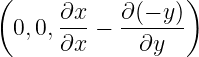
Its curl is
For the upward disk,
Thus
Now parameterize the boundary circle counterclockwise:
Then
On the circle,
Therefore
Hence
Thus
Stokes’s theorem is verified.
Solution 13The time-averaged Poynting vector is radial:
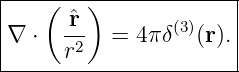
The total radiated power through a sphere is
Therefore
The radius cancels. That cancellation is exactly what one expects for conserved outward power in an inverse-square field.
Solution 14Write
For r≠0, a direct calculation gives
Now calculate the flux through a sphere of radius R. On the sphere,
Therefore
The apparent puzzle is that the divergence is zero everywhere away from the origin, yet the closed flux is nonzero. The resolution is that the field is singular at
The ordinary divergence theorem requires the field to be sufficiently smooth throughout the enclosed volume. A sphere containing the origin violates that hypothesis. In distribution notation,
Therefore
The delta function represents the point source responsible for the nonzero flux.
Part III: Compact Formula SheetFor a parameterized surface,
For a graph
For an oriented surface,
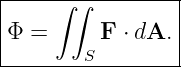
For flux,
For a sphere,
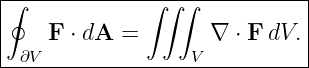
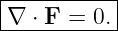
For the divergence theorem,
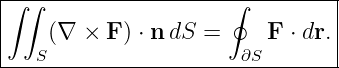
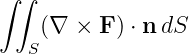
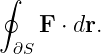
For Stokes’s theorem,
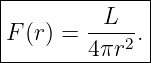
For isotropic luminosity,
References
References
[1] J. Stewart, Calculus: Early Transcendentals, Cengage Learning. [2] H. M. Schey, Div, Grad, Curl, and All That, W. W. Norton. [3] J. E. Marsden and A. J. Tromba, Vector Calculus, W. H. Freeman. [4] D. J. Griffiths, Introduction to Electrodynamics, 4th ed., Pearson, 2013. [5] G. B. Arfken, H. J. Weber, and F. E. Harris, Mathematical Methods for Physicists, Academic Press. "examples of surface integral" is owned by bloftin.
This object's parent. Cross-references: oriented surface, function, boundary, curl, volume, electric field, radiation, vector area element, Normal, polar coordinates, identity, Power, magnitude, vector, Stokes' theorem, unit, charge, surface integral, luminosity, theorem, divergence, flux, mass, surface mass density, graph, section, flux integrals, scalar surface integrals This is version 1 of examples of surface integral, born on 2026-10-07. Object id is 1434, canonical name is ExamplesOfSurfaceIntegral. Accessed 14 times total. Classification:
|
|
|
|
Pending Errata and AddendaNone.
|
DiscussionNo messages.
|
Interact |
![[parent]](https://images.physicslibrary.org/images/uparrow.png)
















































![[∫ ]
2π
dϕ
0](https://images.physicslibrary.org/cache/objects/1434/make4ht/ExamplesOfSurfaceIntegral60x.png)
![[∫ ]
π
sin𝜃 d𝜃
0](https://images.physicslibrary.org/cache/objects/1434/make4ht/ExamplesOfSurfaceIntegral61x.png)









 (4
(4



























 (4
(4


 (4
(4