Electromagnetic Waves, Antennas, and RF: Magnetic Fields - Exercises and Complete Worked
Solutions
This companion article provides self-study exercises for EM09, Magnetic fields. All exercises are
stated first. Complete worked solutions follow in Part II.
The central point-charge magnetic-force law is
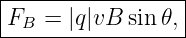
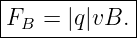
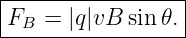
Its magnitude is
where 𝜃 is the angle between v and B. For perpendicular motion in a uniform field,
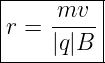
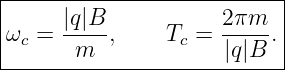
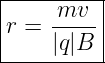
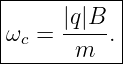
and
For a straight current-carrying segment,
The complete Lorentz force is
These are the same definitions and conventions developed in EM09 [1, 2, 3, 5].
How to use this problem set
Attempt every problem in Part I before consulting Part II. For magnetic-force problems, determine
the vector direction before substituting numbers. A useful workflow is
- identify the directions of v and B;
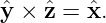
- evaluate v × B with the right-hand rule;
- reverse that direction if the charge is negative;
- then calculate the magnitude.
For circular and helical motion, separate the velocity into components perpendicular and parallel
to the field before choosing a formula.
Part I: Exercises
Exercise 1: vector Lorentz force on a proton
A proton moves with velocity
through a uniform magnetic field
Using
find the complete magnetic-force vector on the proton.
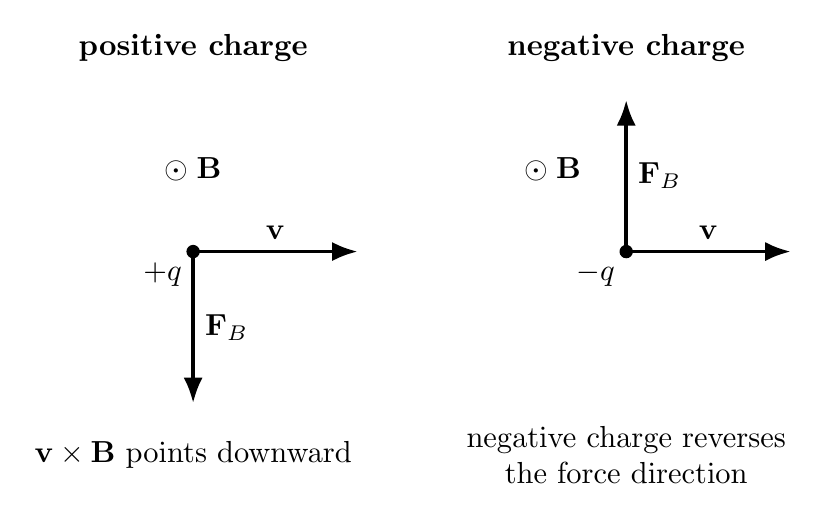
Figure. The direction of v × B is set by the right-hand rule for a positive charge; a
negative charge reverses the result.
Exercise 2: same motion for an electron
An electron has the same velocity and moves through the same field as in Exercise
1.
Find the complete magnetic-force vector on the electron. Explain why its direction differs from the
proton result even though v × B is unchanged.
Exercise 3: magnetic force at an oblique angle
A particle has charge magnitude
Speed
and moves through a magnetic field
The angle between v and B is 40∘. Find the magnetic-force magnitude.
Exercise 4: parallel and perpendicular velocity components
A proton moves at speed
at an angle of 35∘ to a uniform field
Find:
- v∥;
- v⊥;
- the magnetic-force magnitude.
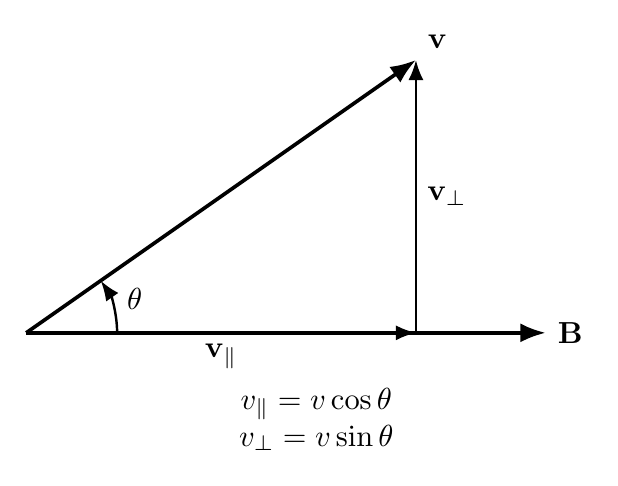
Figure. Only the velocity component perpendicular to B contributes to magnetic force.
Exercise 5: special directions and zero force
For each situation below, state the magnetic-force magnitude relative to the maximum value
|q|vB:
- v ∥ B;
- v ⊥ B;
- v antiparallel to B;
- the charge is stationary.
Explain each result using the cross product.
Exercise 6: show that a magnetic field does no work
Starting with
show that the instantaneous magnetic power
is zero. Explain what this implies for the speed and kinetic energy of a point charge acted on only
by a magnetic field.
Exercise 7: circular orbit radius
A proton moves perpendicular to a uniform magnetic field with
Using
find the radius of the circular orbit.
Exercise 8: electron cyclotron frequency and period
An electron moves perpendicular to a uniform field
Using
find:
- the cyclotron angular frequency ωc;
- the ordinary frequency fc;
- the period Tc.
Exercise 9: helical motion
A proton moves in a uniform magnetic field
with velocity components
Find:
- the helix radius;
- the cyclotron period;
- the helix pitch.
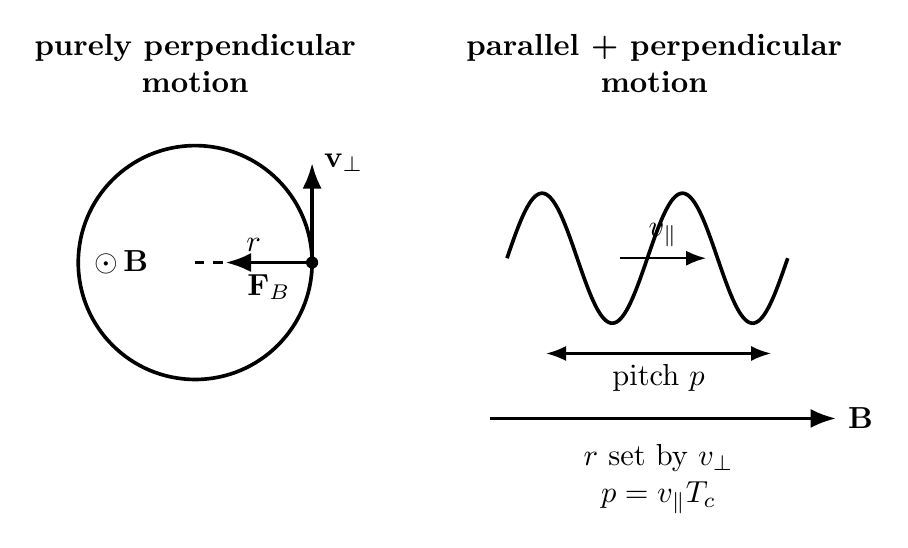
Figure. Perpendicular velocity produces circular motion while the unchanged parallel
component carries the particle along the field, producing a helix.
Exercise 10: infer the magnetic field from an orbit
A proton with speed
moves perpendicular to an unknown uniform magnetic field and follows a circular orbit of
radius
Find the magnetic-field magnitude.
Exercise 11: vector force on a current segment
A straight Conductor segment carries current
and has vector length
It lies in a uniform field
Find the complete force vector on the conductor segment.
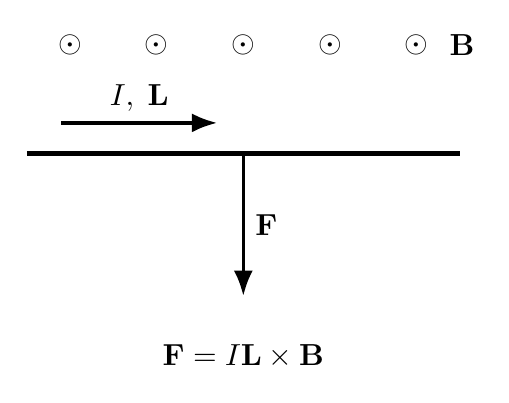
Figure. The conductor force follows F = IL × B, with L pointing in the
conventional-current direction.
Exercise 12: current segment at an oblique angle
A straight conductor of length
carries
through a uniform field
The angle between the conventional-current direction and the magnetic field is 55∘. Find the force
magnitude.
Exercise 13: relate B and H in vacuum
In vacuum the magnetic flux density and magnetic field intensity are related by
where
If
find H in A/m. State why B and H should not be treated as the same physical quantity even
though they are proportional in vacuum.
Exercise 14: full Lorentz-force synthesis
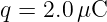
A particle has positive charge
and moves with
The fields are
Find:
- the electric-force vector;
- the magnetic-force vector;
- the total Lorentz-force vector;
- the total force if the charge sign is reversed while the same velocity and fields are
retained.
Part II: Complete Worked Solutions
Solution 1: vector Lorentz force on a proton
The force law is
First determine the direction:
Because the proton charge is positive, the force points in the same direction as v × B.
The magnitude is
| FB | = evB | (39)
|
| = (1.602 × 10⁻¹⁹)(2.5 × 10⁶)(0.18) | (40)
|
| = 7.21 × 10⁻¹⁴ N. | (41) |
Therefore,
Solution 2: same motion for an electron
The cross product is unchanged:
But an electron has negative charge,
Multiplying by a negative scalar reverses the force direction. The magnitude remains the same as
in Exercise 1:
Thus
The right-hand rule gives the direction of v × B; the charge sign must still be applied
afterward.
Solution 3: magnetic force at an oblique angle
Use
Substituting,
| FB | = (3.0 × 10⁻⁶)(250)(0.40) sin 40∘ | (48)
|
| ≈ 1.93 × 10⁻⁴ N. | (49) |
Therefore,
The result is smaller than the maximum value |q|vB because only the velocity component
perpendicular to B contributes.
Solution 4: parallel and perpendicular velocity components
When 𝜃 is measured from the field direction,
and
Thus
| v∥ | = (5.0 × 10⁵) cos 35∘ | (53)
|
| ≈ 4.10 × 10⁵ m/s, | (54) |
so
Similarly,
| v⊥ | = (5.0 × 10⁵) sin 35∘ | (56)
|
| ≈ 2.87 × 10⁵ m/s. | (57) |
Therefore,
Only v⊥ enters the magnetic-force magnitude:
| FB | = ev⊥B | (59)
|
| = (1.602 × 10⁻¹⁹)(2.87 × 10⁵)(0.12) | (60)
|
| ≈ 5.51 × 10⁻¹⁵ N. | (61) |
Thus
Solution 5: special directions and zero force
The magnitude law is
For parallel motion,
so
For perpendicular motion,
so
For antiparallel motion,
so again
For a stationary charge,
and therefore
These are direct consequences of the cross product.
Solution 6: show that a magnetic field does no work
Instantaneous mechanical power is
Insert the magnetic force:
By definition, v × B is perpendicular to v. The dot product of perpendicular vectors is zero,
so
Therefore
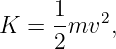
In the nonrelativistic case,
so the speed remains constant. A magnetic field acting alone can bend the trajectory by changing
the direction of velocity, but it cannot change the particle’s kinetic energy.
Solution 7: circular orbit radius
For perpendicular motion,
Substitute the proton values:
| r | = 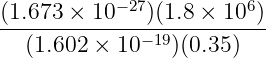 | (78)
|
| ≈ 5.37 × 10⁻² m. | (79) |
Thus
Solution 8: electron cyclotron frequency and period
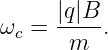
The cyclotron angular frequency is
For the electron,
| ωc | = 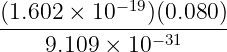 | (82)
|
| ≈ 1.41 × 10¹⁰ rad/s. | (83) |
Therefore,
The ordinary frequency is
| fc | =  | (85)
|
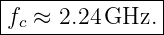
| ≈ 2.24 × 10⁹ Hz. | (86) |
Thus
The period is
| Tc | =  | (88)
|
| ≈ 4.47 × 10⁻¹⁰ s. | (89) |
Hence
Solution 9: helical motion
The radius is determined by the perpendicular velocity:
Therefore,
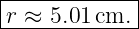
| r | = 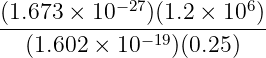 | (92)
|
| ≈ 5.01 × 10⁻² m. | (93) |
Thus
The cyclotron period is
| Tc | =  | (95)
|
| = 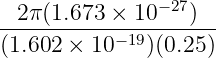 | (96)
|
| ≈ 2.62 × 10⁻⁷ s. | (97) |
Hence
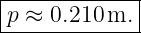
The pitch is the parallel distance traveled during one period:
| p | = v∥Tc | (99)
|
| = (8.0 × 10⁵)(2.62 × 10⁻⁷) | (100)
|
| ≈ 2.10 × 10⁻¹ m. | (101) |
Therefore,
Solution 10: infer the magnetic field from an orbit
Start with
Solve for B:
For the proton,
| B | = 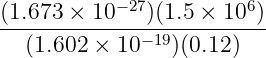 | (105)
|
| ≈ 0.131 T. | (106) |
Thus
Solution 11: vector force on a current segment
The force is
The direction follows
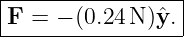
The magnitude is
| F | = ILB | (110)
|
| = (4.0)(0.30)(0.20) | (111)
|
| = 0.24 N. | (112) |
Therefore,
Solution 12: current segment at an oblique angle
Use
Then
| F | = (2.5)(0.50)(0.30) sin 55∘ | (115)
|
| ≈ 0.307 N. | (116) |
Thus
Solution 13: relate B and H in vacuum
In vacuum,
Therefore,
Convert the field magnitude:
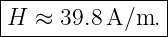
Then
| H | = 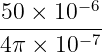 | (121)
|
| ≈ 39.8 A/m. | (122) |
Thus
The quantities are related in vacuum but are not identical: B is magnetic flux density and is
measured in tesla, while H is magnetic field intensity and is measured in A/m. Their distinction
becomes especially important in material media.
Solution 14: full Lorentz-force synthesis
The total Lorentz force is
The electric force is
| FE | = qE | (125)
|
| = (2.0 × 10⁻⁶)(300)x N | (126)
|
| = 6.0 × 10⁻⁴x N. | (127) |
Hence
For the magnetic term,
Its magnitude is
| FB | = qvB | (130)
|
| = (2.0 × 10⁻⁶)(200)(0.50) | (131)
|
| = 2.0 × 10⁻⁴ N. | (132) |
Thus
Both contributions point in +x, so
| F | = FE + FB | (134)
|
| = 8.0 × 10⁻⁴x N. | (135) |
Therefore,
If the charge sign is reversed while E, v, and B remain unchanged, both the electric and magnetic
force terms reverse together. Hence
Common mistakes
- Applying the right-hand rule directly to a negative charge. First find v × B;
then reverse the direction if q < 0.
- Using the full speed in helical-motion radius calculations. The orbit radius
depends on v⊥ only.
- Using v∥ in the magnetic-force magnitude. Parallel velocity contributes no
magnetic force.
- Assuming a magnetic field changes kinetic energy. Magnetic force is
perpendicular to velocity, so it does no work on a point charge.
- Forgetting that L points with conventional current.
- Treating B and H as interchangeable symbols. They have different units and
different roles in material media.
What EM09E reinforces
The central magnetic-force relation is
Its cross-product structure determines both magnitude and direction:
For perpendicular motion,
and
For a straight current segment,
These results prepare the next main lesson, EM10, which asks the complementary question: how do
moving charges and currents generate magnetic fields?
References
[1] David J. Griffiths, Introduction to Electrodynamics, 4th ed., Cambridge University
Press, 2017.
[2] Samuel J. Ling, Jeff Sanny, and William Moebs, University Physics, Volume 2,
OpenStax, 2016, chapters on magnetic fields and sources of magnetic fields.
[3] Edward M. Purcell and David J. Morin, Electricity and Magnetism, 3rd ed.,
Cambridge University Press, 2013.
[4] Richard P. Feynman, Robert B. Leighton, and Matthew Sands, The Feynman Lectures
on Physics, Volume II, Addison-Wesley, 1964, chapters on magnetic fields and moving
charges.
[5] Massachusetts Institute of Technology, 8.02 Physics II: Electricity and Magnetism,
MIT OpenCourseWare, materials on magnetic fields, magnetic force, and charged-particle
motion.

![[parent]](https://images.physicslibrary.org/images/uparrow.png)