|
|
|
|||||||
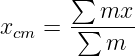
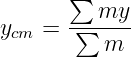
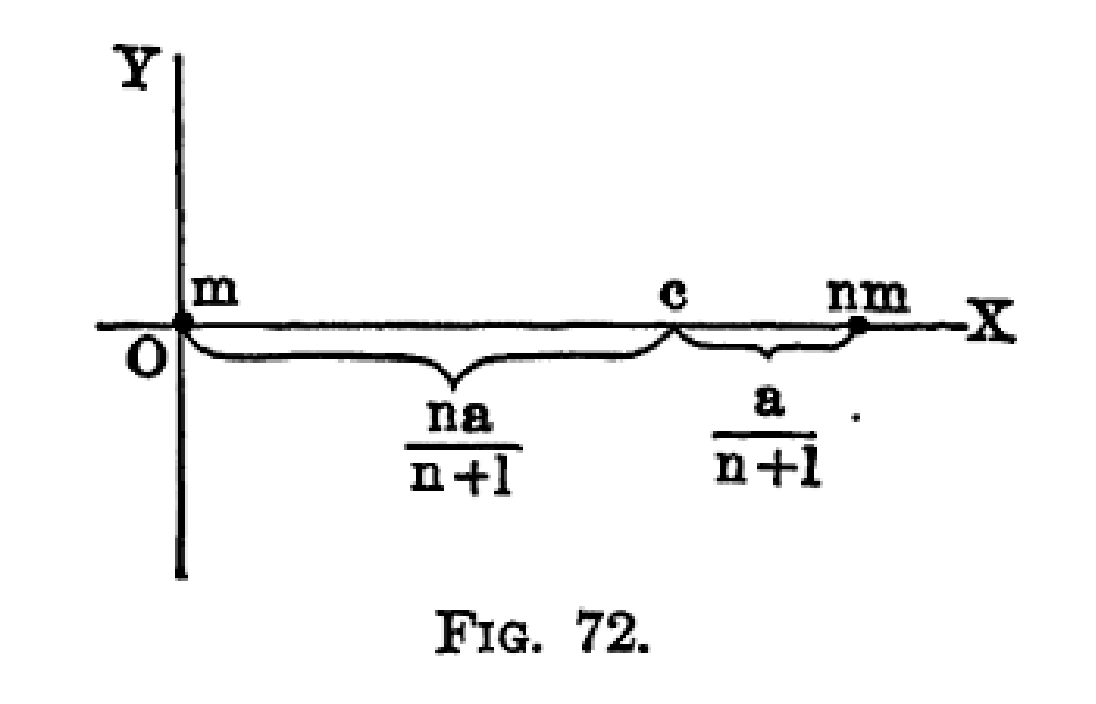
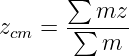 Evidently xcm,ycm,zcm are the coordinates of the center of mass. 0.1 Illustrative Examples1. Find the center of mass of two particles of masses m and nm, which are separated by a distance a. Taking the origin of the axes at the particle which has the mass m, figure 72, and taking as the z-axis the line which joins the two particles we get


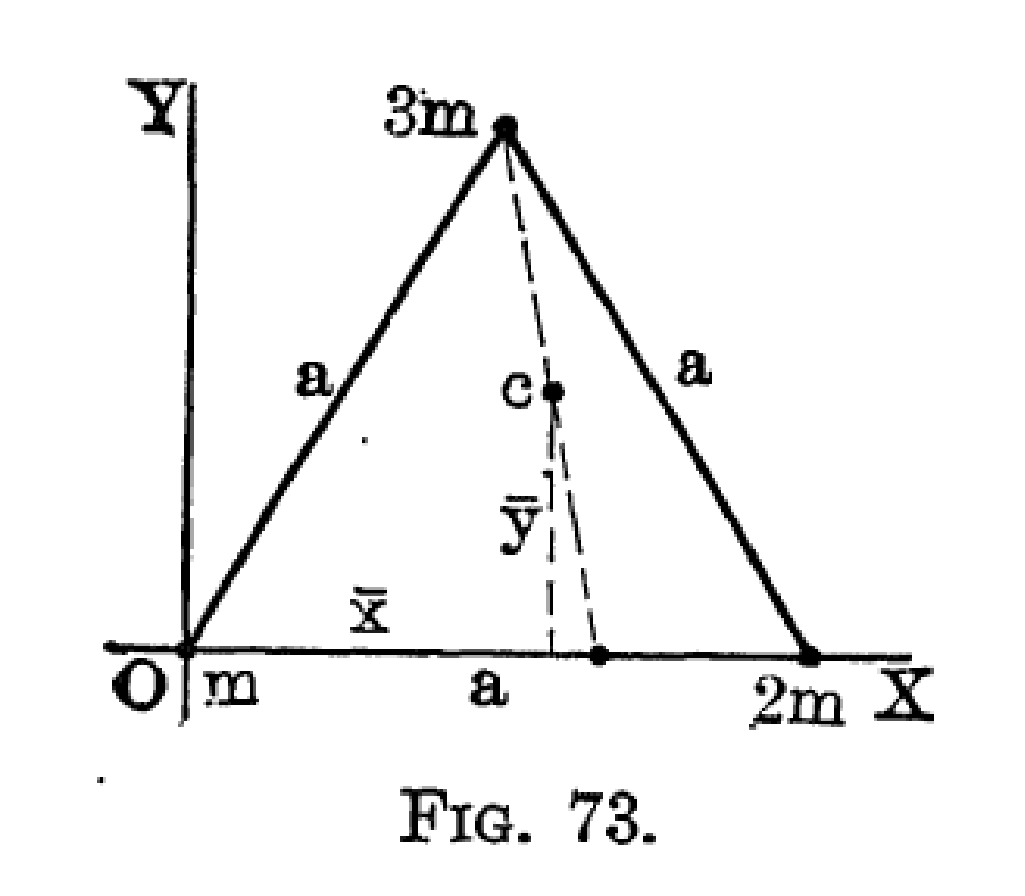
2. Find the center of mass of three particles of masses m, 2m, 3m, which are at the vertices of an equilateral triangle of sides a. Choosing the axes as shown if Fig. 73 we have



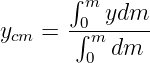
0.2 Center of Mass of Continuous BodiesWhen the particles form a continuous body we can replace the summation signs of equation (1) by integration signs and obtain the following expressions for the coordinates of the center of mass:
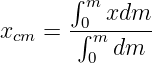
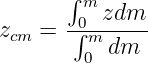 where m is the mass of the body.
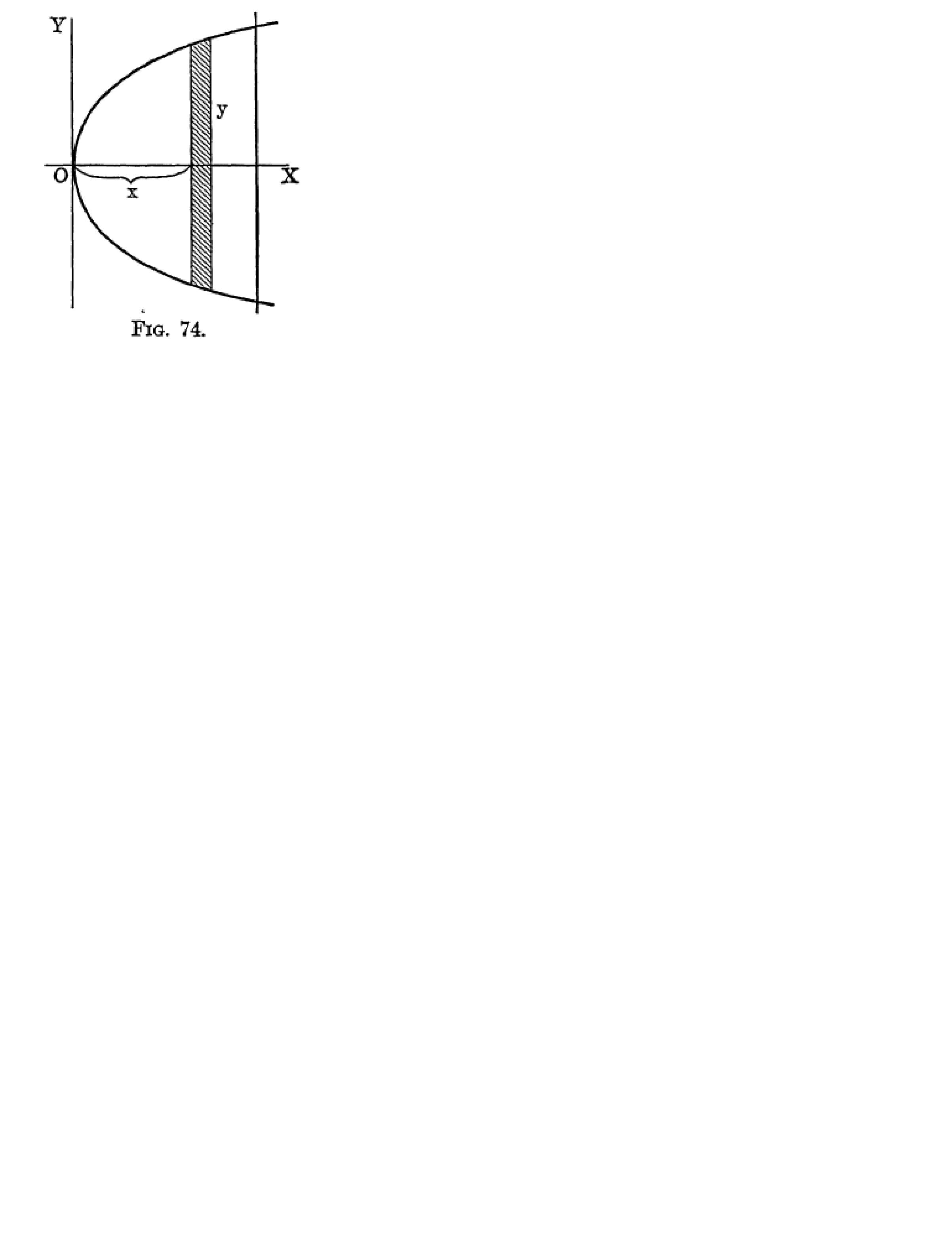
0.3 Illustrative Examples1. Find the center of mass of the parabolic lamina bounded by the curves y2 = 2px and x = a, Fig. 74.
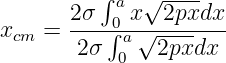
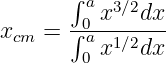
Obviously the center of mass lies on the x-axis. Therefore we need to determine xcm only. Taking a strip of width dx for the element of mass we have
 where σ is the mass per unit area. Therefore substituting this expression of dm in equation (2) nd changing the limits of integration we obtain
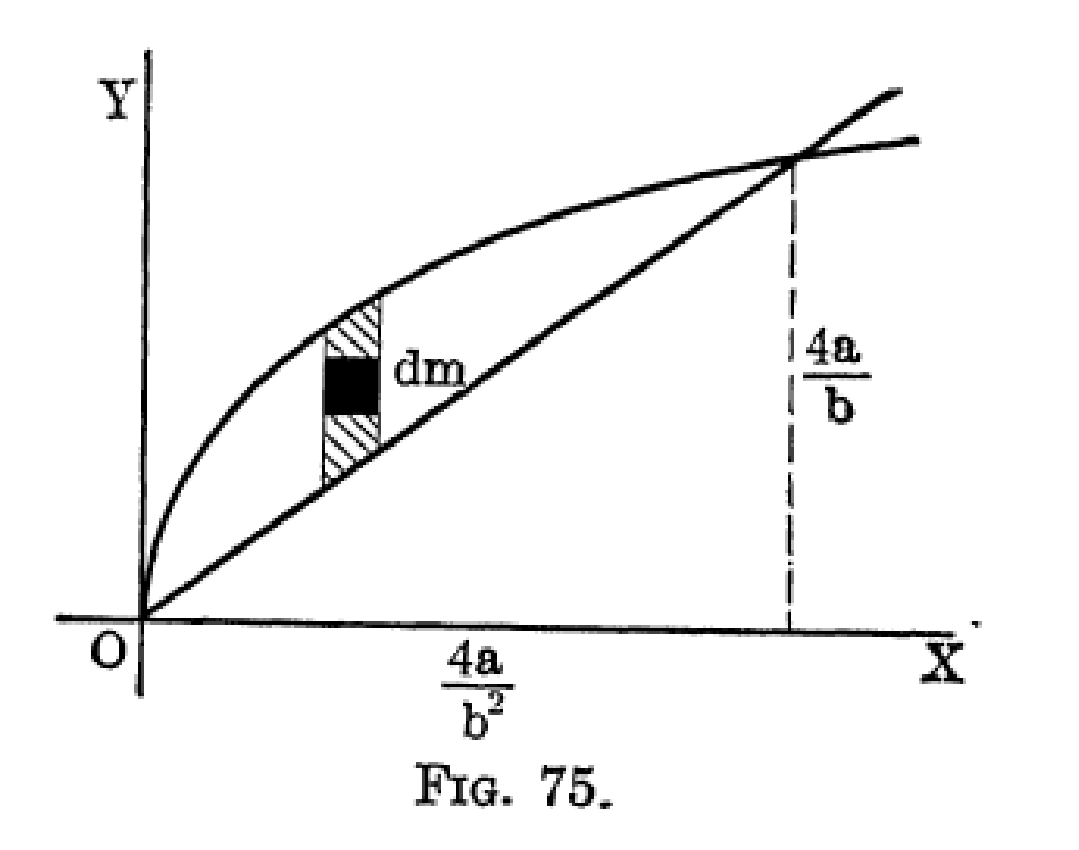
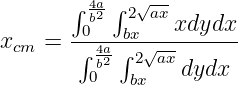
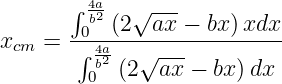
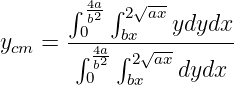
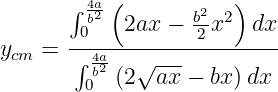
 2. Find the center of mass of the lamina bounded by the curves y2 = 4ax and y = bx, Fig. 75. Let dxdy be the area of the element of mass, then

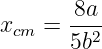
Therefore substituting in equation (2) and introducing the proper limits of integration we obtain
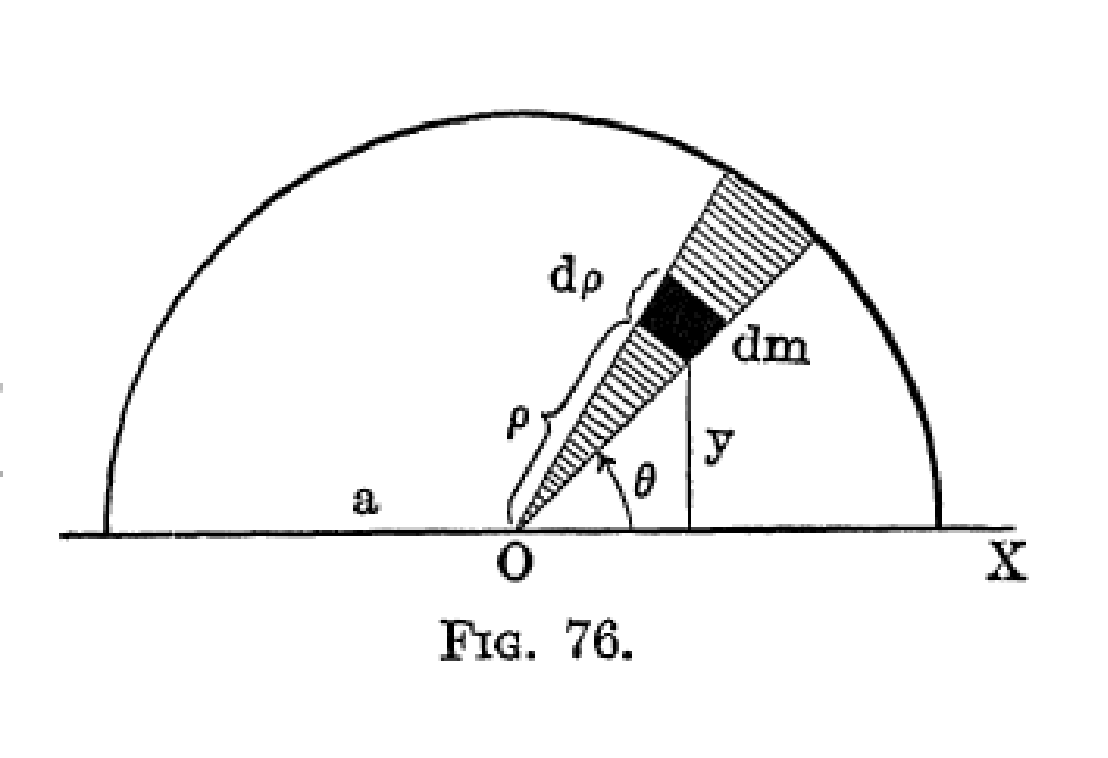
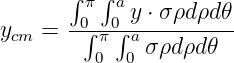
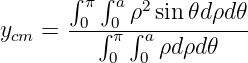
 3. Find the center of mass of a semicircular lamina. Selecting the coordinates and the element of mass as shown in Fig. 76 we have



0.4 ReferencesThis article is a derivative of the public domain work, ”Analytical mechanics” by Haroutune M. Dadourian, 1913. Made available by the internet archive "center of mass examples" is owned by bloftin. This object's parent. Cross-references: mechanics, work, domain, unit, masses, position, particles, system, center of mass This is version 9 of center of mass examples, born on 2006-07-03, modified 2006-07-03. Object id is 192, canonical name is CenterOfMassExamples. Accessed 7067 times total. Classification:
|
|
|
|
Pending Errata and AddendaNone.
|
DiscussionNo messages.
|
Interact |
![[parent]](https://images.physicslibrary.org/images/uparrow.png)