GRE Physics Companion: Coordinate Systems for Mechanics
This companion entry is attached to M00-05: Coordinate Systems for Mechanics. The
core entry develops coordinate systems as part of normal mechanics instruction. This
companion isolates the rapid recognition and conversion skills useful in timed GRE-style
questions.
1 Fast coordinate-choice strategy
Before converting any coordinates, ask what geometry the problem is already giving
you.
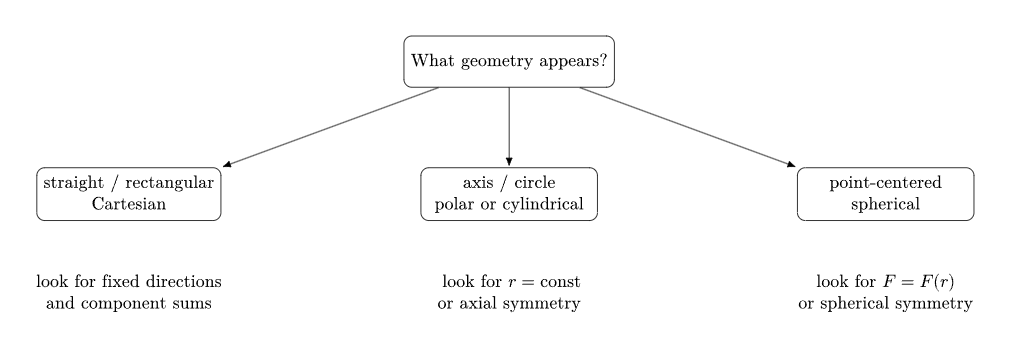
Figure 1. A rapid geometry-first coordinate choice can eliminate unnecessary algebra in timed
mechanics problems.
Useful recognition rules are:
- straight-line, projectile, and rectangular geometry usually favor Cartesian coordinates;
- planar circles and rotation about an axis usually favor polar or cylindrical coordinates;
- inverse-square and other point-centered central-force problems usually favor spherical
coordinates;
- an incline often favors a rotated Cartesian basis rather than a curvilinear system.
2 Fast formulas worth recognizing
For Plane polar coordinates,
and
For cylindrical coordinates,
with z unchanged.
For the spherical convention used in M00-05,
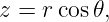
so a point in the equatorial plane has
For a small arc at fixed radius,
with the angle in radians.
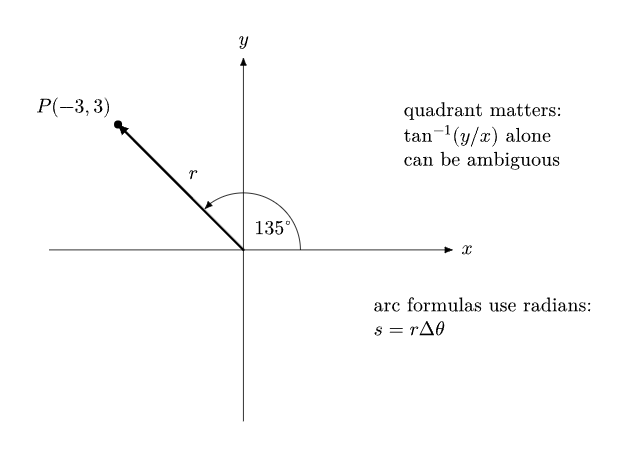
Figure 2. Two common timed-test traps are losing the quadrant when recovering an angle and
using degrees in formulas derived for radians.
3 Worked GRE example 1: arc length without coordinate conversion
A particle moves on a circle of radius 2.00 m through an angle of 30∘. Find the path
length.
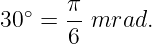
Convert the angular change to radians:
At fixed radius,
so
Thus
No Cartesian conversion was needed.
4 Worked GRE example 2: recognize a central-force coordinate
A force is known to point toward the origin and to have magnitude proportional to 1∕r2. Which
coordinate system most directly exposes the force geometry?
The force depends only on distance from one point and points along the radial direction. Spherical
coordinates therefore make the force take the one-component form
The correct coordinate choice is spherical.
5 GRE-speed questions
MECH-GRE-COORD-001
The point (−3, 3) in the xy plane has polar angle
- 45∘
- 90∘
- 135∘
- 225∘
MECH-GRE-COORD-002
The differential volume element in cylindrical coordinates is
- dρdϕdz
- ρdρdϕdz
- ρ2 dρdϕdz
- r2 sin 𝜃 dr d𝜃 dϕ
MECH-GRE-COORD-003
Using the convention that 𝜃 is measured from +z, a point in the xy plane with r > 0
has
- 𝜃 = 0∘
- 𝜃 = 45∘
- 𝜃 = 90∘
- 𝜃 = 180∘
MECH-GRE-COORD-004
A particle moves around a circle at fixed r with increasing 𝜃. Its instantaneous direction of motion
is along
- er
- −er
- e𝜃
- −e𝜃
6 Answers and brief rationales
- C. The point is in quadrant II, so the polar angle is 135∘.
- B. The azimuthal physical distance is ρdϕ, producing the Jacobian factor ρ.
- C. The equatorial plane is perpendicular to +z, so the polar angle is 90∘.
- C. At fixed radius, increasing 𝜃 points along the transverse unit vector e𝜃.
7 Timed-test cautions
- Do not convert coordinates unless the requested quantity requires it.
- Use quadrant information when reconstructing angles from Cartesian components.
- Check the spherical-angle convention before using a memorized formula.
- Use radians in differential arc formulas.
- Remember that changing coordinate systems does not by itself change the physical
reference frame.
References
[1] PhysicsLibrary, M00-05: Coordinate Systems for Mechanics.
[2] Educational Testing Service, GRE Physics Subject Test Content and Structure, used
only to benchmark timed-test scope.

![[parent]](https://images.physicslibrary.org/images/uparrow.png)