GRE Physics Companion: Units and Dimensional Analysis
This companion entry is attached to M00-03: Units and Dimensional Analysis in Mechanics. The
main entry develops the physics and mathematics in a normal instructional sequence. This
companion focuses only on the kinds of rapid recognition, elimination, scaling, and dimensional
checks that are useful in timed GRE-style mechanics problems.
1 What to recognize quickly
A dimensional-analysis problem can often be reduced to one of four questions:
- Do the two sides of an equation have the same dimensions?
- Which answer choice has the required dimensions?
- How does a quantity scale when one variable changes?
- Which combination of variables is dimensionless?
In mechanics, the most useful base dimensions are
Frequently used derived dimensions are
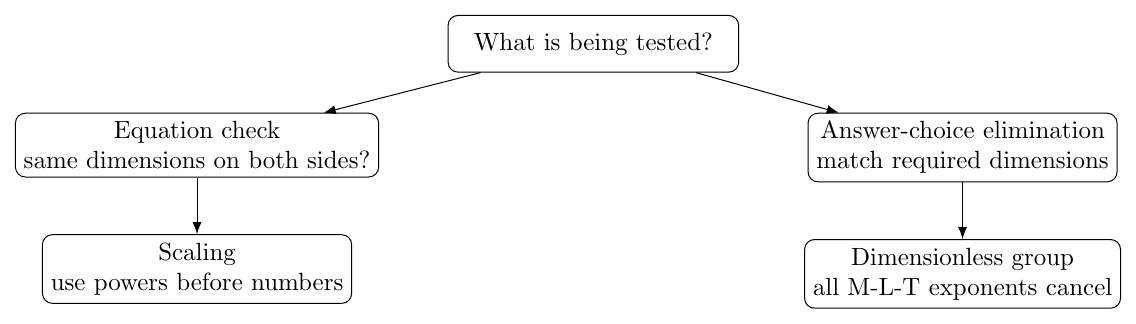
Figure 1. A fast dimensional-analysis decision path for timed problems.
2 GRE shortcut 1: eliminate by dimensions before calculating
Suppose a speed is known to depend only on gravitational acceleration g and a length L. Before
doing any derivation, compare dimensions:
Taking a square root gives
which is the dimension of speed. Any answer choice with a different dimensional form can be
eliminated immediately.
3 GRE shortcut 2: scaling is often faster than substitution
If
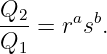
and x changes by a factor r while y changes by a factor s, then
For geometrically similar objects,
At constant density, mass also scales as s3.
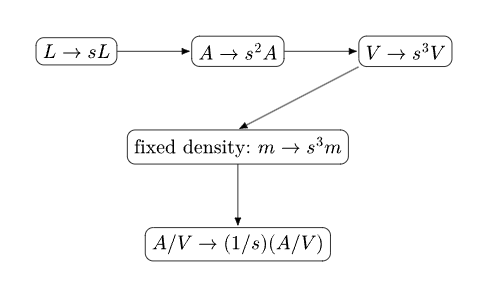
Figure 2. Common mechanics scaling patterns worth recognizing before performing numerical
calculations.
4 Worked GRE example 1: choose the only possible period
A hypothetical oscillation period T depends only on a mass m and a spring constant k,
where
Which expression can have the dimensions of time?
- mk
- m∕k


Since
we obtain
Therefore the correct choice is C.
5 Worked GRE example 2: scaling without recomputing
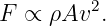
A drag-force scale obeys
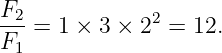
The density is unchanged, the area increases by a factor of 3, and the speed doubles.
Then
So the force scale increases by a factor of 12.
6 GRE-speed questions
MECH-GRE-FOUND-001
Which expression has the dimensions of speed?
- gL
- g∕L


MECH-GRE-FOUND-002
A family of geometrically similar objects has constant density. If all linear dimensions double, the
mass changes by a factor of
- 2
- 4
- 8
- 16
MECH-GRE-FOUND-003
For small oscillations, a pendulum period scales as T ∝ . If L increases by a factor of 9, T
changes by a factor of
. If L increases by a factor of 9, T
changes by a factor of
- 3
- 9
- 1/3
- 81
MECH-GRE-FOUND-004
From Newton’s gravitational law, the dimensions of G are
- ML−2T−2
- L3M−1T−2
- M−1LT−1
- ML2T−1
MECH-GRE-FOUND-005
Which quantity is dimensionless?
- v∕g
- v2∕(gL)
- gL
- vL
MECH-GRE-FOUND-006
Suppose a drag-force scale obeys F ∝ ρAv2. If density is unchanged, area triples, and speed
doubles, the force scale changes by a factor of
- 6
- 8
- 12
- 24
MECH-GRE-FOUND-007
The dimensions of impulse are the same as the dimensions of
- energy
- momentum
- power
- acceleration
MECH-GRE-FOUND-008
A quantity has dimensions L2T−2. Which is a possible interpretation?
- acceleration
- speed
- specific energy, energy per unit mass
- force
MECH-GRE-FOUND-009
For geometrically similar bodies of fixed density, the ratio A∕V scales with linear size L
as
- L
- L2
- 1∕L
- 1∕L2
MECH-GRE-FOUND-010
If a characteristic time obeys T ∝ L1∕2g−1∕2 and g is unchanged, increasing L by a factor of 16
changes T by a factor of
- 2
- 4
- 8
- 16
7 Answer key and brief rationale
- C.
 has dimensions LT−1.
- C. Mass scales with volume, hence as the cube of length.
- A.
 = 3.
= 3.
- B. From F = Gm1m2∕r2.
- B. v2 and gL have the same dimensions.
- C. The factor is 3 × 22 = 12.
- B. Impulse has dimensions force times time, equal to momentum.
- C. Energy per mass has dimensions L2T−2.
- C. Area scales as L2, volume as L3.
- B.
 = 4.
= 4.
8 Use with the main article
Use this entry after M00-03, not instead of it. The main article supplies the conceptual and
mathematical development; this companion supplies timed recognition and elimination
practice.
References
[1] PhysicsLibrary, M00-03: Units and Dimensional Analysis in Mechanics.
[2] J. R. Taylor, Classical Mechanics, University Science Books, 2005.

![[parent]](https://images.physicslibrary.org/images/uparrow.png)

![[v] = LT− 1,](https://images.physicslibrary.org/cache/objects/1299/make4ht/GREPhysicsCompanionUnitsAndDimensionalAnalysis1x.png)
![[a] = LT− 2,](https://images.physicslibrary.org/cache/objects/1299/make4ht/GREPhysicsCompanionUnitsAndDimensionalAnalysis2x.png)
![[F ] = MLT −2,](https://images.physicslibrary.org/cache/objects/1299/make4ht/GREPhysicsCompanionUnitsAndDimensionalAnalysis3x.png)
![[E ] = ML2T −2,](https://images.physicslibrary.org/cache/objects/1299/make4ht/GREPhysicsCompanionUnitsAndDimensionalAnalysis4x.png)
![[P ] = ML2T −3.](https://images.physicslibrary.org/cache/objects/1299/make4ht/GREPhysicsCompanionUnitsAndDimensionalAnalysis5x.png)
![[gL ] = L2T −2.](https://images.physicslibrary.org/cache/objects/1299/make4ht/GREPhysicsCompanionUnitsAndDimensionalAnalysis6x.png)
![---
[∘ gL ] = LT −1,](https://images.physicslibrary.org/cache/objects/1299/make4ht/GREPhysicsCompanionUnitsAndDimensionalAnalysis7x.png)



![[k] = MT −2.](https://images.physicslibrary.org/cache/objects/1299/make4ht/GREPhysicsCompanionUnitsAndDimensionalAnalysis13x.png)
![[ ]
m- = --M--- = T2,
k MT −2](https://images.physicslibrary.org/cache/objects/1299/make4ht/GREPhysicsCompanionUnitsAndDimensionalAnalysis16x.png)
![[∘ ----]
m ∕k = T.](https://images.physicslibrary.org/cache/objects/1299/make4ht/GREPhysicsCompanionUnitsAndDimensionalAnalysis17x.png)