Wave Mechanics: Why Amplitude Is Not Energy
In elementary wave discussions one often hears statements such as
“The energy of a wave is proportional to the square of its amplitude.”
That statement is useful, but incomplete. It is a scaling statement, not an identification of
amplitude with energy.
For a sinusoidal traveling wave on a particular string at a particular frequency, average energy
density and average power do indeed scale as A2. But amplitude by itself does not determine either
quantity. Frequency, wave speed, linear density, Tension, and even the type of wave field can
matter [1, 2, 4, 6].
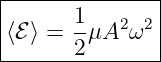
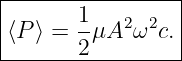
The central message of this article is therefore
More precisely,
Those two statements are not contradictory. WM23 explains the distinction carefully.
1 Amplitude is a kinematic measure
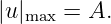
For a transverse string wave u(x,t), the displacement amplitude A measures the largest magnitude
of transverse displacement for a simple sinusoidal wave:
Its SI unit is length:
Energy, by contrast, has units
Energy per unit length has units
and Power has units
Dimensional analysis alone therefore shows that amplitude cannot literally be energy.
The more important physical distinction is that amplitude describes how far the field moves from
equilibrium, while energy describes a combination of motion and deformation.
2 The string-energy formula contains derivatives, not displacement alone
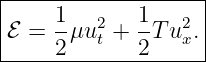
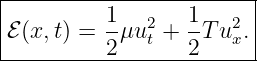
WM18 derived the energy density of an ideal stretched string:
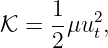
The first term is kinetic energy per unit length,
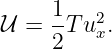
and the second is elastic potential energy per unit length,
Notice what does not appear directly: the displacement u itself.
The energy depends on
- how rapidly the string moves, through ut,
- how strongly it is locally tilted or deformed, through ux,
- the medium parameters μ and T.
This is the first major reason amplitude alone cannot determine energy.
3 Why the square of amplitude appears for a sinusoidal wave
Consider the right-moving sinusoidal wave
Define
Then
and
Substituting into the energy-density formula gives
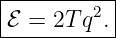
| ℰ | =  μA2ω2 sin 2𝜃 + μA2ω2 sin 2𝜃 +  TA2k2 sin 2𝜃. TA2k2 sin 2𝜃. | (15) |
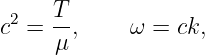
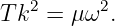
For an ideal string,
so
Therefore
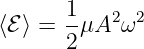
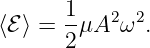
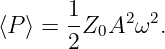
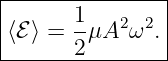
Averaging over a complete cycle gives
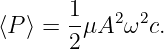
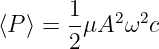
WM20 similarly obtained
The factor A2 appears because both u
t and ux are proportional to A, while kinetic and elastic
energies are quadratic in those quantities.
This is the origin of the square law.
4 The phrase “proportional to amplitude squared” has hidden conditions
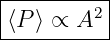
From
we may correctly say
only when the other relevant quantities are held fixed.
That means, for this formula, holding fixed
Equivalently, if the same string and the same frequency are being compared, doubling amplitude
multiplies average power by four.
But if frequency or the medium changes at the same time, amplitude alone is insufficient.
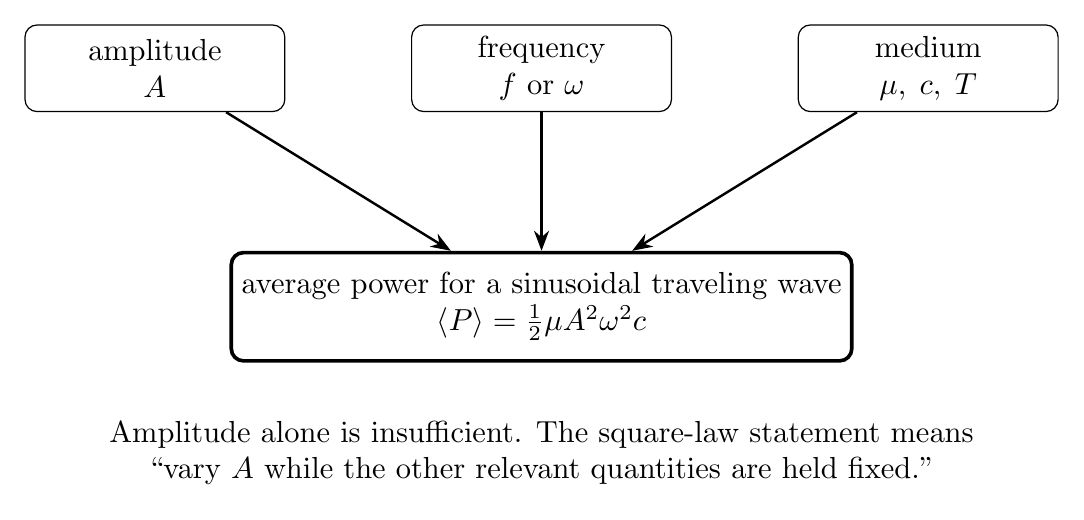
Figure. The amplitude A is only one input to the average-power relation. Frequency and
medium properties are also required.
5 Counterexample 1: same amplitude, different frequency
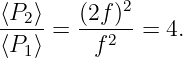
Suppose two sinusoidal traveling waves exist on the same ideal string and have the same amplitude
A. Let their frequencies be f and 2f.
Because
the ratio of powers is
Thus
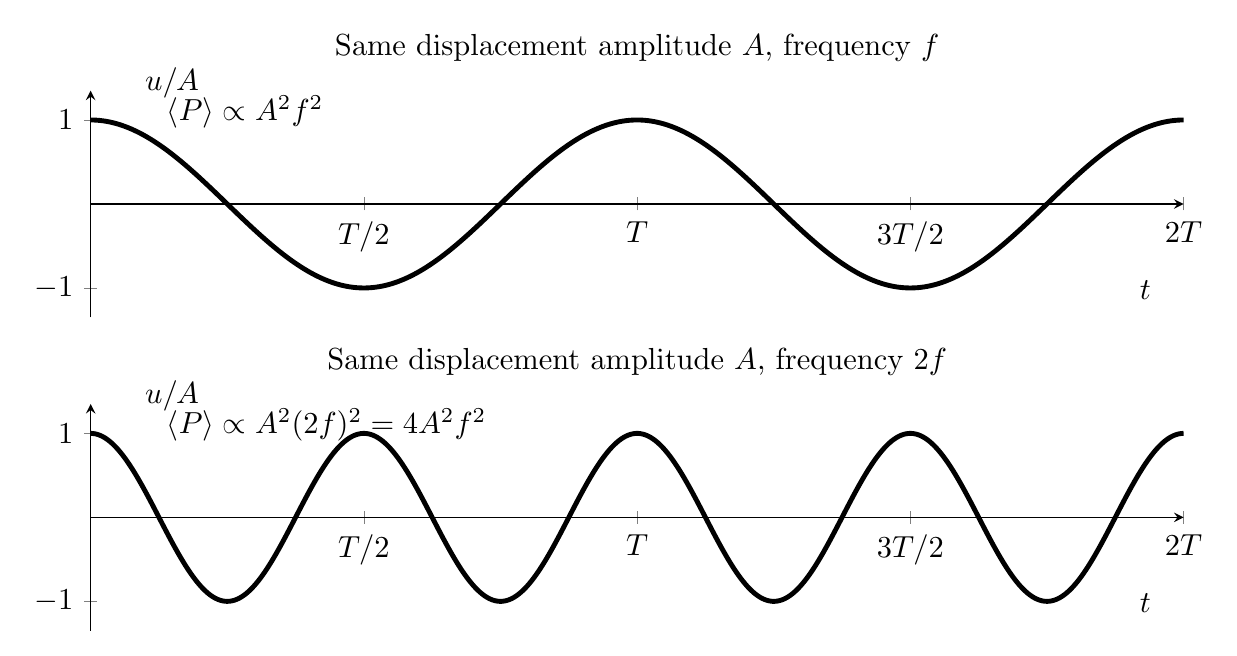
Figure. Two waves can have the same displacement amplitude while carrying different
average power. On the same string, doubling frequency at fixed amplitude multiplies
average power by four.
The physical reason is that the higher-frequency wave moves the string transversely more
rapidly. Since kinetic energy depends on velocity squared, that increased motion matters
strongly.
6 Counterexample 2: same amplitude and frequency, different medium
Now suppose two sinusoidal waves have the same amplitude and angular frequency but travel in
different media.
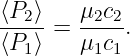
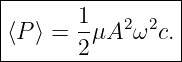
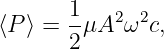
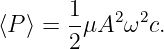
The average power is
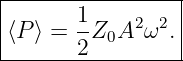
Using the characteristic impedance from WM22,
we may write
Therefore two waves with identical A and ω can carry different power whenever their characteristic
impedances differ.
Again,
7 Counterexample 3: zero displacement can coincide with maximum energy density
A particularly useful misconception check comes from the sinusoidal traveling wave
itself.
For
the energy density is
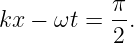
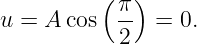
At
we have
but
Thus
At a crest or trough,
but ut = 0 and ux = 0 for the traveling sinusoid at that instant, so
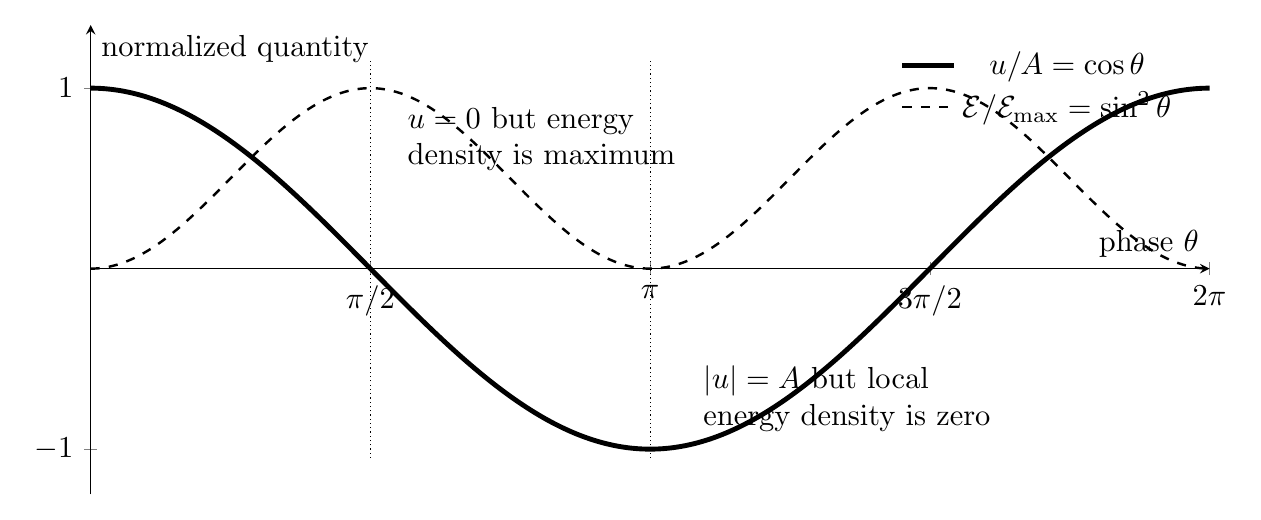
Figure. For a sinusoidal traveling wave, the displacement itself and the local energy
density do not peak at the same phase. Zero displacement can coincide with maximum
local energy density.
This example makes the distinction especially clear: instantaneous displacement magnitude is not a
local energy meter.
8 Standing waves make the distinction even sharper
Consider the Standing Wave
At nodes,
so
for all time.
It might therefore be tempting to say that a node contains no wave energy. That conclusion is
wrong.
The slope is
At a node, | sin(kx)| = 1, so the elastic potential energy density becomes
This is generally nonzero and can reach a maximum.
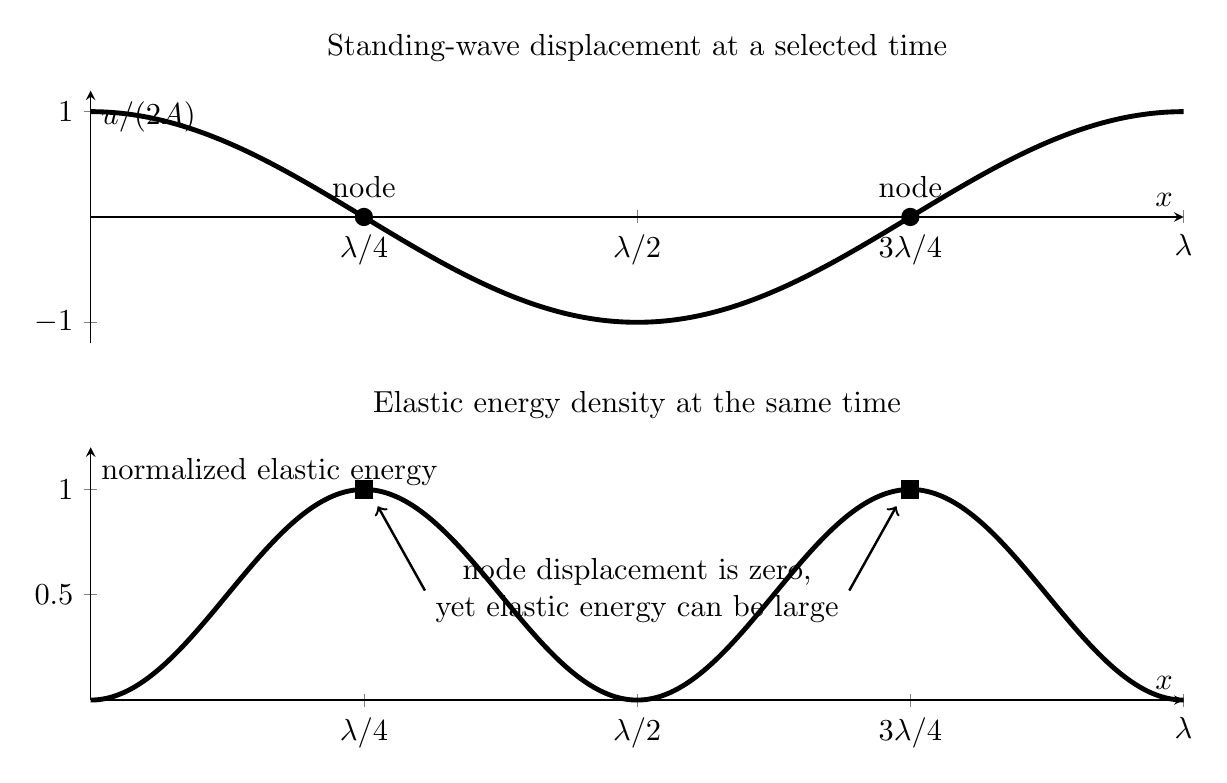
Figure. A standing-wave node has zero displacement amplitude, yet it can store
substantial elastic energy because the string slope is large there.
Thus even zero displacement amplitude at a point does not imply zero local energy
density.
9 Superposition: cancellation of displacement is not disappearance of energy
Suppose a right-moving and a left-moving wave overlap:
WM18 showed that the total energy density is
The cross terms cancel between kinetic and elastic contributions.
Therefore the two component waves can cancel in displacement at some location and
time,
without their total energy vanishing.
This is another reason not to infer energy directly from the instantaneous observed
displacement.
10 Amplitude squared is a scaling factor, not an energy variable
The safest interpretation of statements such as
is:
Within a specified wave model, if every relevant parameter except amplitude
is held fixed, the energy measure under discussion changes as the square of
amplitude.
For the ideal sinusoidal string wave,
and
Therefore
implies
provided the other parameters remain unchanged.
This is the precise meaning of the square law.
11 What information is needed to infer energy from amplitude?
If the wave is known to be a sinusoidal traveling wave on an ideal string, the amplitude becomes
useful only when accompanied by additional information.
For average energy density, one needs
because
For average power, one additionally needs the wave speed, or equivalently the characteristic
impedance:
or
Thus an amplitude measurement can contribute to an energy estimate, but it does not by itself
provide that estimate.
12 Worked Example 1: same amplitude, different frequency
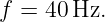
Two right-moving sinusoidal waves travel on the same string. They have the same amplitude,
but their frequencies are
Find the ratio of their average powers.
For the same string and the same amplitude,
Therefore
 | =  2 2 | (59)
|
| =  2 2 | (60)
|
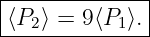
| = 9. | (61) |
Hence
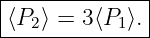
The waves have identical displacement amplitude, but one carries nine times the average
power.
13 Worked Example 2: same amplitude and frequency, different string
Two right-moving sinusoidal waves have
and
Wave 1 travels on a string with
while wave 2 travels on a string with
Because A and ω are the same,
Thus
 | = 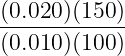 | (68)
|
| = 3. | (69) |
Therefore
Equal amplitude and equal frequency still do not guarantee equal power when the medium
changes.
14 Worked Example 3: zero displacement, maximum local energy density
A right-moving sinusoidal wave is
At a particular point and time,
The displacement is
But
Hence
The zero displacement does not indicate zero energy.
15 Worked Example 4: a standing-wave node stores elastic energy
Consider
Choose a node where
At the node,
for all time.
However,
so at the node,
The elastic energy density is
| 𝒰 | =  Tux2 Tux2 | (81)
|
| =  T(4A2k2 cos 2ωt) T(4A2k2 cos 2ωt) | (82)
|
| = 2TA2k2 cos 2ωt. | (83) |
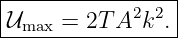
Its maximum is therefore
The displacement amplitude at the node is zero, yet the local elastic energy can be
large.
16 Worked Example 5: infer amplitude from a target average power
A sinusoidal traveling wave on a string has
What amplitude is required to carry
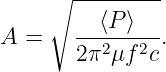
Use
Solve for A:
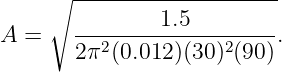
Substituting,
This gives approximately
The example demonstrates the reverse point: amplitude can be inferred from energy transport only
after frequency and medium properties are specified.
17 Worked Example 6: destructive displacement interference does not erase energy
Let
with, at one particular point and time,
The total displacement is
Suppose at that same event
The energy density is
Therefore
Although the displacement cancels exactly, the field can still contain nonzero energy.
18 Common mistakes
- Mistake: saying “amplitude squared equals energy.” The dimensions are wrong, and
the physical statement is incomplete.
- Mistake: comparing two amplitudes without checking whether frequency and medium
properties are the same.
- Mistake: assuming u = 0 means local wave energy is zero.
- Mistake: assuming a standing-wave node contains no energy because its displacement
is always zero.
- Mistake: treating destructive interference of displacement as destruction of conserved
energy.
- Mistake: using the sinusoidal square-law relation outside the assumptions under which
it was derived.
19 Summary
Amplitude is a measure of field excursion. Energy is a mechanical quantity built from motion,
deformation, and medium properties.
For the ideal string,
For a sinusoidal traveling wave,
and
Thus the statement
is correct only as a conditional scaling law when the other relevant quantities are fixed.
The broader lesson is
This distinction becomes increasingly important in acoustics, electromagnetic waves, optics, and
quantum wave mechanics, where different wave variables can have different relationships to
transported or stored energy.
References
References
[1] A. P. French, Vibrations and Waves, M.I.T. Introductory Physics Series, W. W.
Norton & Company, 1971.
[2] Frank S. Crawford, Jr., Waves, Berkeley Physics Course, Volume 3, McGraw-Hill,
1968.
[3] Howard Georgi, The Physics of Waves, Prentice Hall, 1993.
[4] William Moebs, Samuel J. Ling, and Jeff Sanny, University Physics, Volume 1,
OpenStax, 2016, Section 16.4, “Energy and Power of a Wave.”
[5] Richard P. Feynman, Robert B. Leighton, and Matthew Sands, The Feynman Lectures
on Physics, Volume I, Chapters 47–49 on wave motion and modes.
[6] Massachusetts Institute of Technology, 8.03SC Physics III: Vibrations and Waves,
MIT OpenCourseWare, materials on traveling waves, standing waves, and energy
transport.



![[A ] = m.](https://images.physicslibrary.org/cache/objects/1193/make4ht/WaveMechanicsWhyAmplitudeIsNotEnergy3x.png)
![[E ] = J.](https://images.physicslibrary.org/cache/objects/1193/make4ht/WaveMechanicsWhyAmplitudeIsNotEnergy4x.png)
![[ℰ] = J∕m,](https://images.physicslibrary.org/cache/objects/1193/make4ht/WaveMechanicsWhyAmplitudeIsNotEnergy5x.png)
![[P ] = W.](https://images.physicslibrary.org/cache/objects/1193/make4ht/WaveMechanicsWhyAmplitudeIsNotEnergy6x.png)
























![|---------′-------2-------′--------2-|
-ℰ-=--T[F-(x-−-ct)]-+-T-[G-(x-+-ct)]-.|](https://images.physicslibrary.org/cache/objects/1193/make4ht/WaveMechanicsWhyAmplitudeIsNotEnergy45x.png)