The Direction Cosines define the orientation of a vector with respect to a coordinate
reference frame. Each direction cosine is the cosine of the angle between the vector and its
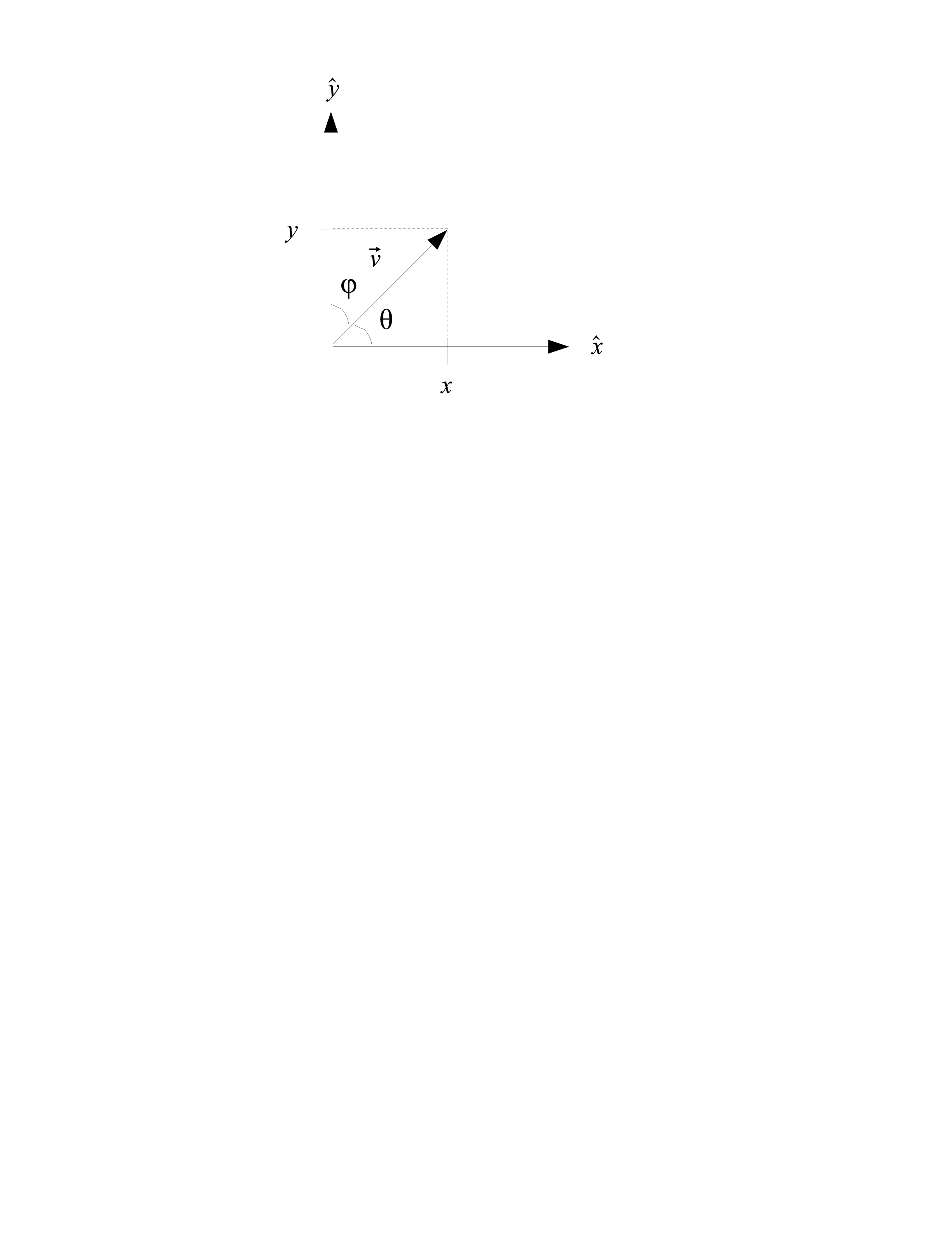
corresponding coordinate axis. Let us first look at a two dimensional example in figure 1:
Figure 1:2D - Direction Cosines
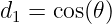
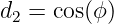
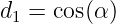
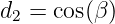
The direction cosines of v are
(1)
(2)
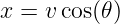
The x coordinate is given from simple trigonometry by
(3)
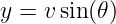
where v is the magnitude of the vector v . Similarily, the y coordinate is given by
(4)
but we can convert this to a cosine through the trigonometric identity that
(5)
From figure 1 we see that
(6)
which can be subsitituded into 3 to get
(7)
Note that ϕ is the angle between the y-axis and v, so our vector v can be represented in this 2D
coordinate frame by
(8)
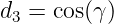
Extending this concept to three dimensions is quite easy, from figure 2 we can define v with respect
t x,ŷ,ẑ coordinate frame by
An important property of the direction cosines is that
(17)
One important application is to use the direction cosines to define a coordinate system with
reference to another. This can be accompished by defining the location of each coordinate axis unit
vector with respect to the ’parent’. Once these nine direction cosines are determined (3 for each
unit vector), than a transformation matrix exists to carry out coordinate transformations between
the child frame and the parent frame.
This is version 13 of direction cosines, born on 2004-12-28, modified 2006-03-30.
Object id is 26, canonical name is DirectionCosines.
Accessed 13794 times total.