1 Introduction
The notions of observables and states are fundamental to mechanics. In this entry, we shall begin
with the conceptual background to these ideas, then proceed to examine how these notions work in
classical, statistical, and quantum mechanics.
The basis for these notions lies in making numerical measurements on physical systems and
comparing the observed values with predicted theoretical values. The value measured will
depend on the quantity being measured and upon the initial and boundary conditions
imposed on the system. To account for this dependence, we introduce observables and
states—an observable is a mathematical entity in a theory which represents a measurement
which can be made on the physical system described by that theory, and a state is a
mathematical entity which encodes conditions placed on that system. A theory of a system will
provide the set of observables and the set of states for that system, describe how they
evolve with time, and specify how to obtain numerical values by combining states and
observables.
To make this discussion concrete, we may consider an elementary example—the freely
falling body. Here, examples of observables would include the height and velocity of
the object. The state of the system may be specified by stating the initial height and
velocity or by specifying the height at an initial time and at a final time. Given such a
specification, we can then compute the values of velocity and position at any time using these
formulae:
| h − h0 | =  g(t − t0)2, g(t − t0)2, | |
|
| v − v0 | = g(t − t0). | | |
The values so obtained may then be compared with experiment.
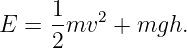
In addition to the height and velocity, there are other observables such as energy. However, it is
possible to express these observables algebraically in terms of the height and velocity. Note that
this requires use of the equations of motion:
2 Quantum Operators as Observables in Quantum Theories
Remark 2.1. representations of Banach ∗-algebras defined on Hilbert spaces are closely
related to C∗-algebra representations, which provide a useful approach to defining quantum
space-times.
2.1 Quantum operator algebras in quantum field theories: QOA role in QFTs
Important examples of quantum operators are the Hamiltonian operator (or Schrödinger
operator), the position and momentum operators, Casimir operators, unitary operators, and spin
operators. Observable operators are also self-adjoint. More general operators were later defined,
such as Prigogine’s superoperators. The observable corresponding to the Hamiltonian operator of a
closed, conservative system is its energy.
Another development in quantum theories was the introduction of Fréchet nuclear spaces or
“rigged” Hilbert spaces (Hilbert bundles).
2.2 Basic mathematical definitions in QOA
[more to come]
References
[1] E. M. Alfsen and F. W. Schultz: Geometry of State Spaces of Operator Algebras,
Birkhäuser, Boston–Basel–Berlin (2003).
[2] I. Baianu: Categories, Functors and Automata Theory: A Novel Approach
to Quantum Automata through Algebraic–Topological Quantum Computations,
Proceedings of the 4th International Congress LMPS (August–September 1971).
[3] I. C. Baianu, J. F. Glazebrook, and R. Brown: A Non–Abelian, Categorical Ontology
of Spacetimes and Quantum Gravity, Axiomathes 17(3–4), 353–408 (2007).
[4] F. A. Bais, B. J. Schroers, and J. K. Slingerland: Broken quantum symmetry and
confinement phases in planar physics, Phys. Rev. Lett. 89, No. 18, 181–201 (2002).
[5] M. Chaician and A. Demichev: Introduction to Quantum Groups, World Scientific
(1996).
[6] A. Connes: Noncommutative Geometry, Academic Press (1994).
[7] L. Crane and I. B. Frenkel: Four-dimensional topological quantum field theory, Hopf
categories, and the canonical bases, J. Math. Phys. 35(10), 5136–5154 (1994).
[8] W. Drechsler and P. A. Tuckey: On quantum and parallel transport in a Hilbert
bundle over spacetime, Classical and Quantum Gravity 13, 611–632 (1996). doi:
10.1088/0264–9381/13/4/004.
[9] V. G. Drinfel’d: Quantum groups, in Proceedings of the International Congress of
Mathematicians, Berkeley 1986, A. Gleason (ed.), 798–820 (1987).
[10] G. J. Ellis: Higher dimensional crossed modules of algebras, J. Pure Appl. Algebra
52, 277–282 (1988).
[11] P. I. Etingof and A. N. Varchenko: Solutions of the Quantum Dynamical
Yang–Baxter Equation and Dynamical Quantum Groups, Commun. Math. Phys. 196,
591–640 (1998).
[12] P. I. Etingof and A. N. Varchenko: Exchange dynamical quantum groups, Commun.
Math. Phys. 205(1), 19–52 (1999).
[13] P. I. Etingof and O. Schiffmann: Lectures on the dynamical Yang–Baxter equations,
in Quantum Groups and Lie Theory (Durham, 1999), pp. 89–129, Cambridge University
Press, Cambridge (2001).
[14] B. Fauser: A treatise on quantum Clifford algebras, Konstanz, Habilitationsschrift
(2002). arXiv:math.QA/0202059.
[15] J. M. G. Fell: The Dual Spaces of C∗–Algebras, Transactions of the American
Mathematical Society, 94, 365–403 (1960).
[16] F. M. Fernandez and E. A. Castro: (Lie) Algebraic Methods in Quantum Chemistry
and Physics, CRC Press, Boca Raton (1996).
[17] R. P. Feynman: Space–Time Approach to Non–Relativistic Quantum Mechanics,
Reviews of Modern Physics, 20, 367–387 (1948).
[18] I. Gel’fand and M. Naimark: On the Imbedding of Normed Rings into the Ring of
Operators in Hilbert Space, Recueil Mathématique [Matematicheskii Sbornik] Nouvelle
Série, 12 [54], 197–213 (1943).
[19] R. Gilmore: Lie Groups, Lie Algebras and Some of Their Applications, Dover
Publications, Mineola and New York (2005).
[20] P. Hahn: Haar measure for measure groupoids, Trans. Amer. Math. Soc. 242, 1–33
(1978).
[21] P. Hahn: The regular representations of measure groupoids, Trans. Amer. Math.
Soc. 242, 34–72 (1978).
[22] R. Heynman and S. Lifschitz: Lie Groups and Lie Algebras, Nelson Press, New York
and London (1958).
[23] C. Heunen, N. P. Landsman, and B. Spitters: A topos for algebraic quantum theory
(2008). arXiv:0709.4364v2 [quant-ph].